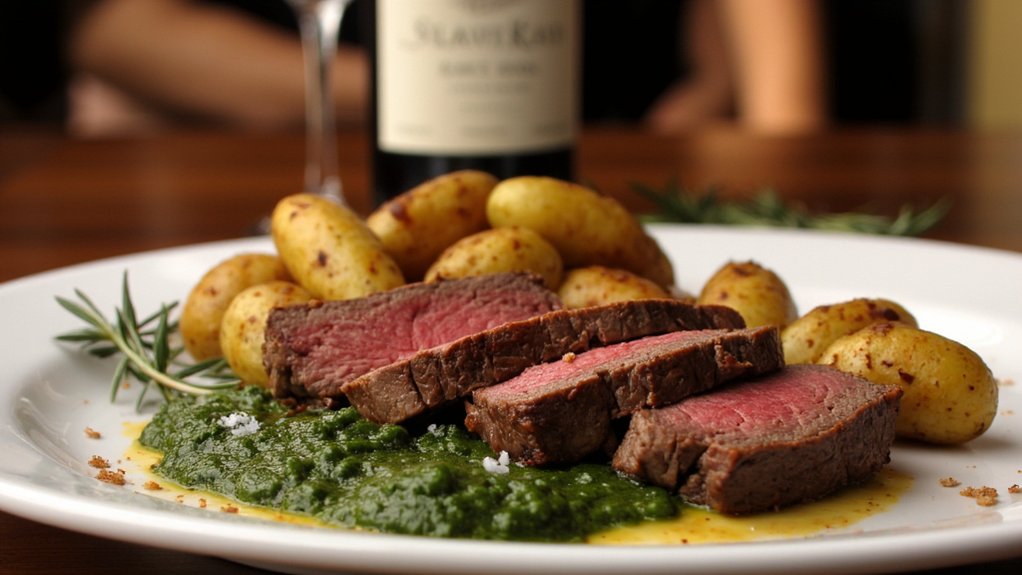
You can’t just throw any wine at grilled flank steak and call it a day. You need backbone. Cabernet Sauvignon’s bold tannins cut through char and richness like a champ, while Malbec brings smoky fruitiness that echoes the grill marks. If you’re going lighter, Pinot Noir’s bright acidity keeps things fresh on summer nights. Pro tip: chill your reds around 60–65°F instead of room temp, slice against the grain, and match the wine to your steak’s doneness. There’s way more to discover about finding your perfect match.
Key Takeaways
- Cabernet Sauvignon’s bold tannins and oak scorch complement flank steak’s char marks and smoky grilled intensity perfectly.
- Serve medium-rare flank steak (130–135°F) with structured mid-bodied reds like Cabernet or Merlot for optimal flavor contrast.
- Pinot Noir offers bright acidity and lighter body ideal for summer grilling without overpowering charred steak flavors.
- Malbec’s smoky fruitiness and robust acidity mirror charred edges while matching herb-marinated flank steak’s bold grilled character.
- Chill wines to 60–66°F and slice steak against the grain to maximize mouthfeel and wine-pairing interaction.
Why Flank Steak Needs the Right Wine

Because flank steak’s got that lean, beefy intensity and a bit of chew to it, you really can’t just pair it with any old wine and expect magic to happen. The meat’s fiber direction actually plays a role in how it interacts with what you’re drinking. You need a wine that’ll create a mouthfeel contrast, cutting through that richness while complementing the bold flavors. A wimpy wine? It’ll get totally overpowered. Think about it like this: you’re looking for something with enough backbone to stand up to the steak without clashing. The right pairing’ll make both the food and wine taste better than they would alone. That’s when you know you’ve nailed it. Get it wrong, and you’re left with a forgettable meal. The tannins in wine provide a cleansing effect that cuts through the steak’s richness, enhancing the freshness of each bite.
Cabernet Sauvignon: The Classic Pairing
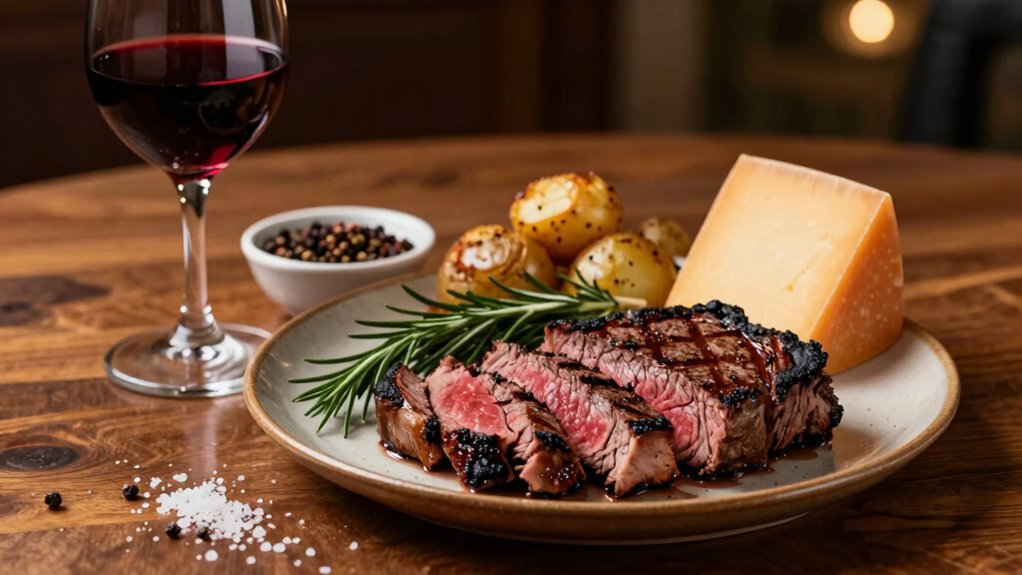
Cabernet Sauvignon’s got those bold tannins that basically were born to tango with flank steak’s beautiful char marks, creating this really satisfying contrast that makes both the wine and meat taste even better. Here’s the cool part: as your Cabernet ages, it softens and develops deeper flavors that actually complement how flank steak’s taste deepens when you let it rest after cooking, so you’re getting this nice back-and-forth improvement happening on both sides of your plate. The high tannins and acidity in Cabernet act as natural preservatives, which is why these wines maintain their quality throughout your meal and beyond. Just make sure you’re serving your Cabernet at around 64-66°F and your flank steak fresh off the grill while it’s still got that warmth, because that’s when the magic really kicks in and the pairing just clicks.
Tannins Meet Char Marks
Harmony between wine and meat happens when you’ve got the right match, and here’s where Cabernet Sauvignon really shines with flank steak. When you grill that steak, you’re creating something special. Those char marks aren’t just pretty, they’re flavor bombs. And Cabernet? It’s got the muscle to stand up to all that smokiness.
Here’s what makes this pairing work so well:
- Fruit tannins grip onto the charred edges, creating this amazing dance of flavors
- Oak scorch from the wine complements those grill marks perfectly
- Bold structure in Cabernet matches the steak’s meaty intensity
- Acidity cuts through the richness, keeping your palate fresh
You’re basically getting a flavor conversation happening on your tongue. The wine’s not backing down, the meat’s not backing down. They’re meeting as equals, and that’s what makes it work. For the best results, choose a Cabernet Sauvignon that has been aged at least 5-7 years to ensure the tannins have softened and integrated properly with the wine’s fruit flavors.


Aging Enhances Both Flavors
When you let both your flank steak and Cabernet Sauvignon age, something pretty magical happens on the molecular level. The dry aging benefits for steak are real—moisture evaporates, concentrating those beefy flavors while enzymes work their magic. Meanwhile, your Cabernet’s been doing its own thing in the bottle, softening those aggressive tannins and developing complex layers.
Here’s where it gets good. The enzymatic breakdown effects in aged steak create tender, intensified meat that perfectly complements the wine’s matured smoothness. You’re not just pairing two separate things anymore, you’re bringing together two ingredients that’ve both reached their peak potential. Similar to how balanced tannins enhance rich dishes, the interplay between your aged steak and Cabernet creates a sophisticated dining experience that transcends simple food and wine matching. The result? A harmony that makes your taste buds genuinely happy. That’s when you know you’ve nailed it.
Temperature and Serving Tips
Getting the temperature right is absolutely crucial if you want that aged Cabernet to show off what it’s been working on all these years. You’ve got to nail the serving temp, or you’re basically wasting some seriously good wine and meat.
Here’s what you’re actually looking at:
- Pull your flank steak off the grill when it hits 130-135°F for medium-rare perfection
- Let that resting temp settle for about five minutes, which keeps everything juicy and tender
- Serve your Cabernet around 60-65°F, not straight from the fridge like some kinda amateur
- Cut against the grain so each bite’s got maximum flavor and that wine really sings
Getting these details right transforms your whole meal. The steak stays warm enough, the wine opens up nicely, and everything just works together like they’re old friends reuniting. Remember that robust tannins in Cabernet Sauvignon are essential for cutting through the richness of the meat and enhancing the overall dining experience.
Malbec: A Bold Wine for Smoky Char
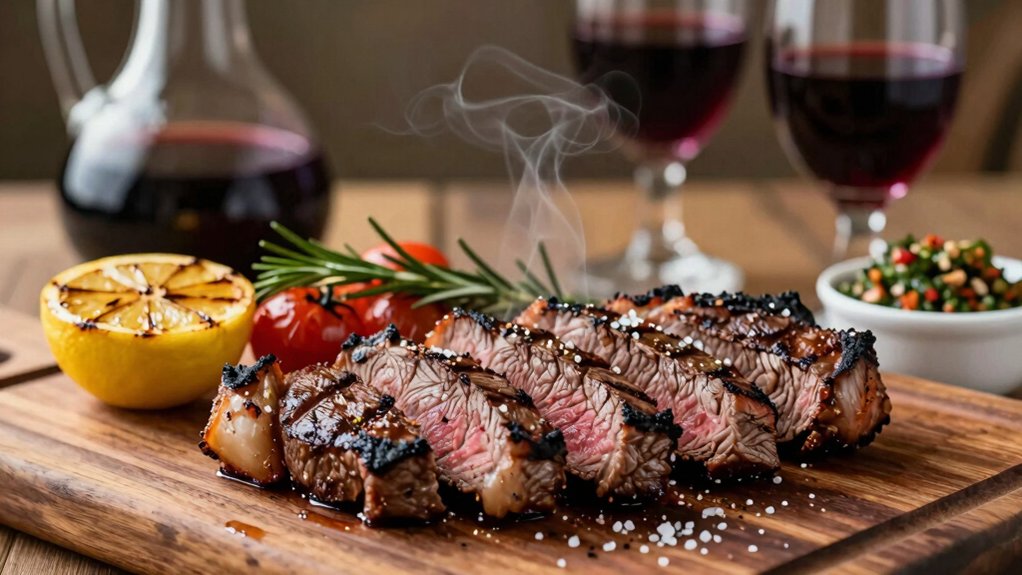
Malbec’s basically your answer when you’ve got a flank steak that’s been kissed by serious heat and char. This Argentine wine brings smoky fruitiness that mirrors those charred edges perfectly, creating this natural harmony on your palate. You’re getting rich plum and blackberry notes wrapped up with that robust acidity that cuts through the meat’s fattiness like a champ.
Here’s the thing: Malbec doesn’t back down from bold flavors. It matches your grilled steak’s intensity without overshadowing it. The wine’s tannins grip onto the smoky char, amplifying everything that makes that sear so satisfying. Whether you’re grilling outdoors or hitting it hard in a cast iron, Malbec’s got your back with a full-bodied presence that feels substantial and rewarding.
Syrah and Grenache: Mediterranean Wines for Herb-Marinated Steak
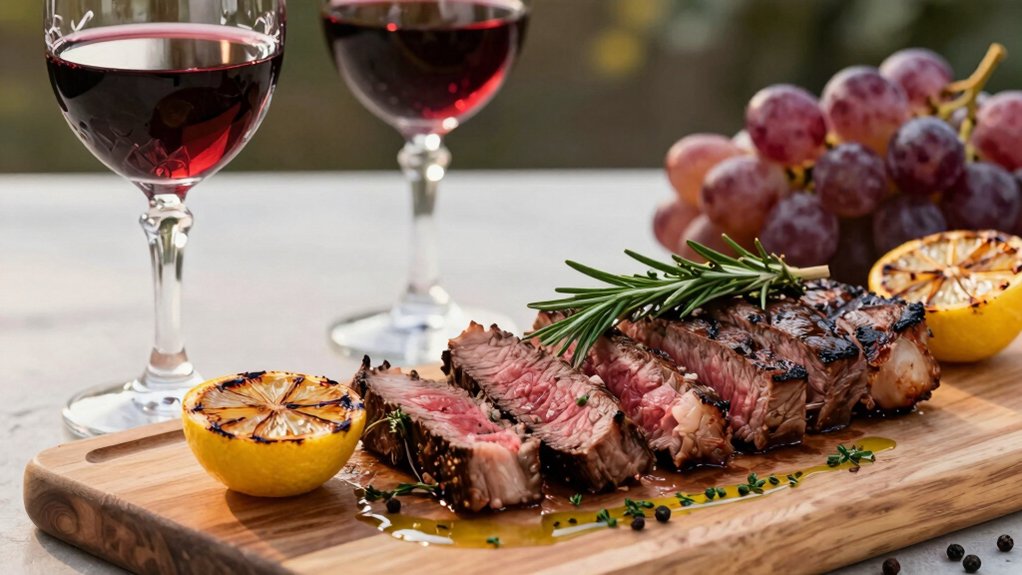
Now if you’re working with a herb-marinated flank steak, you’ll want to shift gears from those big, smoky wines. Syrah and Grenache bring that Mediterranean charm you’re looking for. These wines pair beautifully with Mediterranean herbs and Provençal spices rubbed into your meat.
Here’s why they work so well:
- Syrah’s peppery notes echo the herbs in your marinade
- Grenache’s subtle sweetness balances savory herb flavors perfectly
- Both wines have acidity that cuts through the char without overwhelming it
- Their earthy undertones complement garlic and rosemary marinades
You’ll find these wines aren’t as aggressive as Malbec, which means they won’t overpower your carefully seasoned steak. Instead, they’ll dance alongside it, enhancing rather than dominating the flavors you’ve worked hard to build into that marinade.
Pinot Noir: The Lighter Choice for Summer Grilling
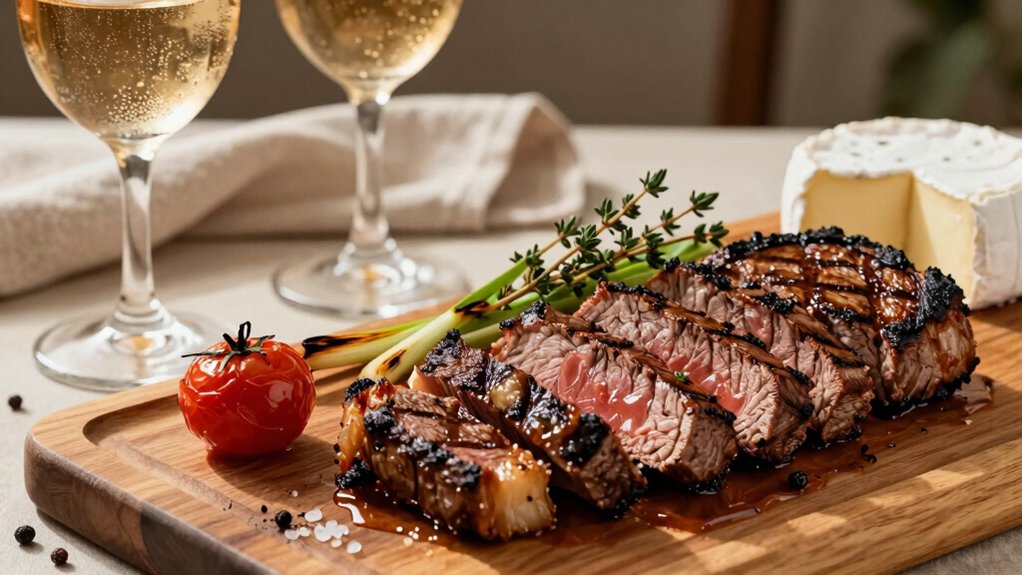
When you’re firing up the grill on a warm evening, you’ll want something that won’t weigh you down, and that’s where Pinot Noir really shines. Its bright acidity cuts through the char and caramelization of your flank steak without overpowering the lighter, fresher flavors that summer grilling brings out. You’re basically getting all the complexity of a good red wine with the invigorating quality of something you could almost sip poolside.

Pinot Noir’s Bright Acidity
Why does Pinot Noir deserve a spot on your summer grilling menu? It’s all about that bright acidity that’ll make your grilled flank steak sing. You’re getting a wine that cuts through rich, charred meat like nobody’s business.
Here’s what makes Pinot Noir’s acidity your new best friend:
- It cleanses your palate between bites, keeping flavors fresh and exciting
- The crispness complements smoky, grilled notes without overpowering them
- Chilled service brings out even more vibrant, invigorating qualities
- It won’t compete with your meat’s natural flavors, just enhance ’em
The beauty here? You don’t need anything fancy or expensive. A solid mid-range Pinot will do wonders. Serve it nice and cold, and you’ve basically got the perfect summer pairing locked down.
Summer Grilling Flavor Match
Pinot Noir really shines when you’re grilling up flank steak on those warm summer evenings, and here’s why. This wine’s got this beautiful lightness that won’t overpower your meal, especially when you’re working with citrus rubs that bring out bright, zesty flavors. The thing is, Pinot Noir’s delicate nature actually complements wood smoke without getting lost in it. You’re looking at a wine that’s got enough body to stand up to your grilled steak but stays invigorating enough that you’ll actually want another sip between bites. The wine’s subtle berry notes dance nicely with charred edges and smoky undertones. It’s basically the perfect companion for those lazy summer cookouts where you want something tasty but not too heavy.
Acidic vs. Rich Marinades: How Prep Changes Your Pick
How you prep your flank steak makes a bigger difference than you might think when it comes to picking the right wine. Your marinade choice literally shapes which bottles’ll work best alongside your meal.
- Acidic vinaigrette marinades pair beautifully with crisp, high-acid whites like Sauvignon Blanc, which echo those tangy flavors
- Rich umami glaze preparations call for medium-bodied reds like Merlot to match their savory depth
- Citrus-based marinades work wonderfully with unoaked Chardonnay, creating brightness on your palate
- Soy-forward glazes deserve Pinot Noir’s earthy notes and subtle tannins
Think of it this way: acidic preps need wines that won’t feel flabby, while umami-heavy glazes require wines with enough structure to stand up. You’re basically setting the tone before you even light the grill, so choose wisely.
Rare, Medium, or Well-Done: Doneness Affects Wine Selection
Just like your marinade sets the stage for flavor, the doneness of your flank steak dramatically shifts which wines’ll complement your plate. The doneness spectrum matters more than you’d think when picking wine pairings.
| Doneness Level | Wine Pairing |
|---|---|
| Rare | Pinot Noir, Gamay |
| Medium-Rare | Cabernet Sauvignon, Merlot |
| Medium | Syrah, Côtes du Rhône |
| Medium-Well | Zinfandel, Grenache |
| Well-Done | Bold Cabernet, Petit Sirah |
A rare steak’s cool plate temperature calls for lighter reds with bright acidity. As your meat gets more cooked, bolder wines handle the increased char and developed flavors better. The hotter plate temperature from well-done meat actually pairs beautifully with full-bodied reds that won’t get overwhelmed. Think of it like matching energy levels, really.
Best Budget Wines for Grilled Flank Steak
You don’t need to drop serious cash to find wines that’ll make your grilled flank steak sing. Some seriously good bottles won’t wreck your wallet, and honestly, that’s where the real fun happens.
- Boxed cabs are totally underrated—grab a decent one and you’re golden for casual grilling sessions
- Fruit forward malbecs punch way above their price point, bringing bold flavors without the fancy price tag
- Spanish garnacha offers earthy notes that complements the char on your steak beautifully
- Argentine syrah delivers smoky undertones that’ll match your grilling technique perfectly
The secret’s finding wines with character and personality rather than fancy labels. Your flank steak’s already got flavor, so you just need something that plays nice with those smoky, savory notes. Skip the pretentious stuff and grab what tastes good to you.
Common Pairing Mistakes and How to Avoid Them
While it’s tempting to just grab any red wine and call it a day, there’s actually a pretty common lineup of mistakes that’ll make your flank steak dinner feel like a missed opportunity.
First, avoid wines with overpowering oak that’ll steamroll your meat’s flavors. You don’t want the wine showing off more than the steak itself. Steering clear of sweet wine is equally important because that sugary vibe clashes hard with savory beef. Another rookie move? Serving too warm. Chilled reds around 60 degrees work way better than room temperature bottles that taste flabby.
Don’t ignore acidity either. You’ll want wines with enough brightness to cut through that richness and refresh your palate between bites. Skip the heavy-handed choices and you’re golden.
Frequently Asked Questions
What wines pair best with flank steak?
Medium-bodied red wines work exceptionally well with flank steak. Cabernet Sauvignon, Malbec, and Syrah are top choices due to their tannin structure and ability to complement the meat’s bold flavors. Zinfandel also pairs nicely for a slightly fruitier option.
Can white wine pair with flank steak?
While red wine is traditional, full-bodied white wines like Chardonnay or Albariño can work with lighter preparations of flank steak, particularly if it’s marinated in citrus or herbs.
Does the preparation method affect wine pairing?
Yes. Grilled flank steak with a charred crust pairs well with bolder wines like Cabernet Sauvignon. Marinated or Asian-inspired preparations may call for wines with higher acidity, such as Pinot Noir or even Rosé.
What about Pinot Noir with flank steak?
Pinot Noir is an excellent choice. Its lighter tannins and bright acidity balance the meat’s richness without overpowering it, making it ideal if you prefer wines less intense than Cabernet Sauvignon.
Should I choose an expensive wine?
Price doesn’t determine pairing quality. Mid-range wines in the recommended varietals often pair just as well as premium options. Focus on the wine’s characteristics rather than its cost.
How does seasoning influence wine selection?
Heavily spiced or peppered flank steak pairs better with wines like Syrah or Zinfandel that have peppery or spicy notes. Simpler seasoning allows for more versatile pairings.
What Wine Works Best?
Choosing the right wine to pair with flank steak can feel a bit intimidating, but it’s honestly simpler than you might think. You’re basically looking for wines that can stand up to the meat’s bold flavors without getting overpowered.
Here’s what works:
- Cabernet Sauvignon with its oak influence and structure complements the steak’s richness perfectly
- Malbec offers fruit forward characteristics that enhance grilled flavors beautifully
- Syrah brings peppery notes that match the meat’s charred exterior
- Zinfandel delivers enough body and tannins to handle flank steak’s chewier texture
The key? You want wines with enough backbone to match your grilled meat. Don’t overthink it. A solid red from any of these varieties will make your dinner taste seriously good. Trust your gut and grab whatever sounds appealing.
How Do I Grill Properly?
Grilling flank steak isn’t rocket science, but there are definitely some moves that’ll take you from okay to actually impressive. First things first: you’ll want high heat searing to lock in those delicious juices and create that mouth-watering crust. Get your grill screaming hot before the meat touches down.
| Temperature | Time | Result |
|---|---|---|
| 450°F+ | 5-7 min per side | Perfect crust |
| Medium heat | 8-10 min per side | Overdone |
| Hot grill | 1 min rest | Not enough |
| Screaming hot | 5 min resting times | Ideal texture |
| Inconsistent | Random | Disappointment |
Don’t skip resting times after cooking. Let that steak sit for five minutes, giving the fibers a chance to relax and retain moisture. Slice against the grain for maximum tenderness, and you’re golden.
Can I Use Other Cuts?
So you’re wondering if flank steak’s really the only player in the game, huh? You’re not alone. While flank steak is fantastic for grilling, plenty of alternate cuts work just as well.
Here’s your breakdown of steak swaps worth trying:
- Skirt steak – super flavorful and cooks quick, perfect for wine pairing
- Hanger alternatives – tender and juicy when grilled hot and fast
- Sirloin tip – leaner option that still delivers great taste
- Tri-tip – a hidden gem offering incredible flavor and texture
Each cut brings its own personality to the table. Skirt options tend to absorb marinades better, while hanger alternatives come with richer marbling. The beauty of experimenting with different cuts is you’ll discover what your palate loves most, and honestly, your wine pairings’ll adjust accordingly.
What About Red Wine Alternatives?
What if red wine isn’t your thing, or you’re just curious what else pairs beautifully with flank steak? You’ve got plenty of sparkling alternatives worth exploring. Champagne or prosecco brings effervescence and acidity that cuts through the meat’s richness, creating a revitalizing contrast. Rosé suggestions are also fantastic, especially drier styles that offer enough body without being too heavy. The wine’s fruit-forward notes complement grilled flavors nicely.
If you’re looking beyond wine entirely, consider light beers or even a crisp sake. These options work surprisingly well with flank steak’s bold, charred exterior. You’re not limited to traditional pairings, honestly. The best choice? Whatever you actually enjoy drinking. Your palate matters more than any rule, so don’t hesitate experimenting with different options until you find your perfect match.
How Long Should I Marinate?
Marinating flank steak isn’t rocket science, but timing really does make a difference in how tender and flavorful your meat turns out. You’ll want to balance getting maximum flavor without overdoing it.
Here’s what you should know:
- Minimum time is 2-4 hours for a basic marinade to penetrate the meat
- Overnight marination (8-12 hours) works great for deeper, richer flavors
- Don’t exceed 24 hours or your citrus infusion will start breaking down the proteins too much, making things mushy
- If you’re short on time, even 30 minutes helps, though it’s mostly surface-level
The sweet spot? Overnight marination gives you that perfect tenderness without any weird texture issues. Just pop your steak in the fridge before bed, and you’re golden come dinner time.
Conclusion
You’ve got this. Pick a wine you actually like—whether that’s a bold Cabernet or a lighter Pinot Noir—and don’t stress too much about the “rules.” Your grilled flank steak’s gonna taste great with pretty much any decent red wine. The real magic happens when you’re enjoying good food with people you care about, so grab a bottle, fire up that grill, and have fun with it.