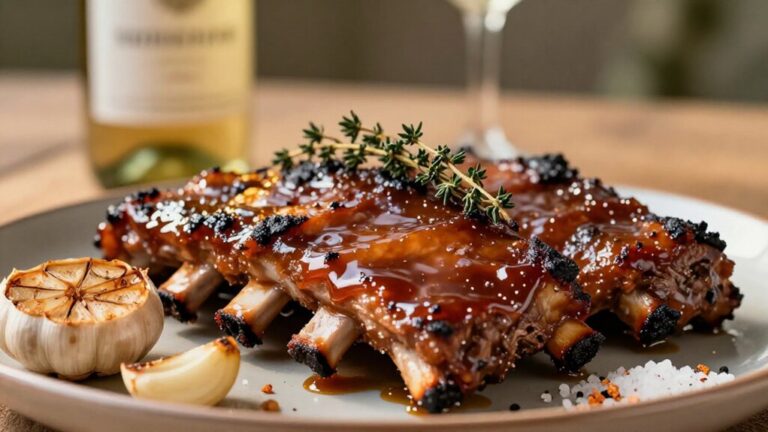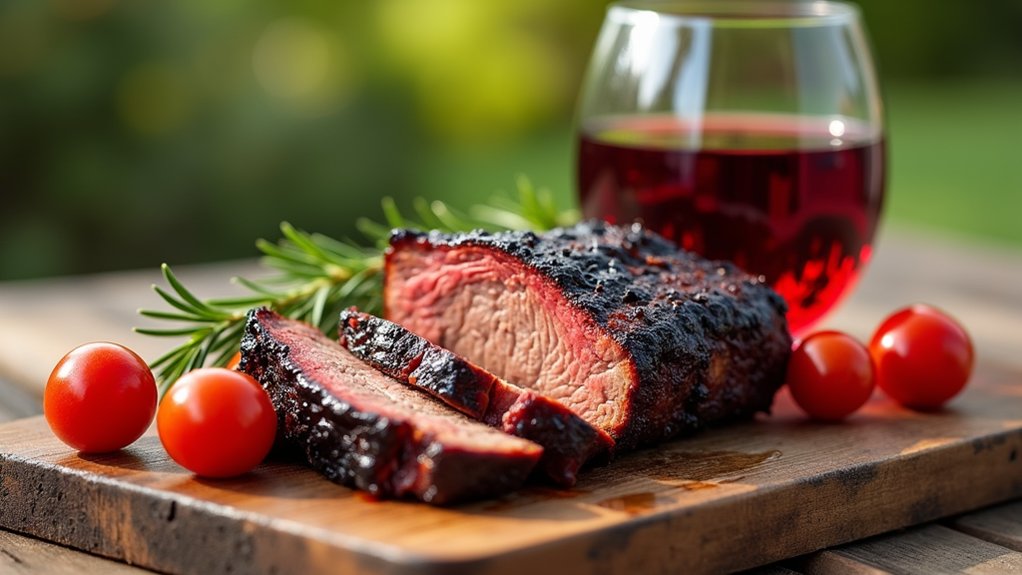
You’ve crafted the perfect BBQ brisket, that melt-in-your-mouth masterpiece with a smoky bark that makes your tastebuds dance. But what wine should you pour? It’s not just about grabbing any red bottle from your rack – the right pairing can enhance your brisket experience from “mmm, good” to “HOLY COW, that’s amazing!” The interaction between the fatty richness of the meat and those wine tannins creates a flavor symphony that’s worth understanding.
Key Takeaways
- Bold red wines like Cabernet Sauvignon, Zinfandel, and Syrah complement brisket’s rich umami flavors best.
- Tannins in wine bind with brisket fat, creating a cleansing effect that enhances each bite.
- Match wine intensity to your brisket preparation – fattier cuts need more tannic wines.
- Sauce choices significantly impact pairing: sweet sauces need fruity wines, vinegar-based need high acidity wines.
- Unconventional pairings like spicy whites (Gewürztraminer) or dessert wines can offer surprisingly delightful experiences.

Smoky Meat’s Umami Characteristics
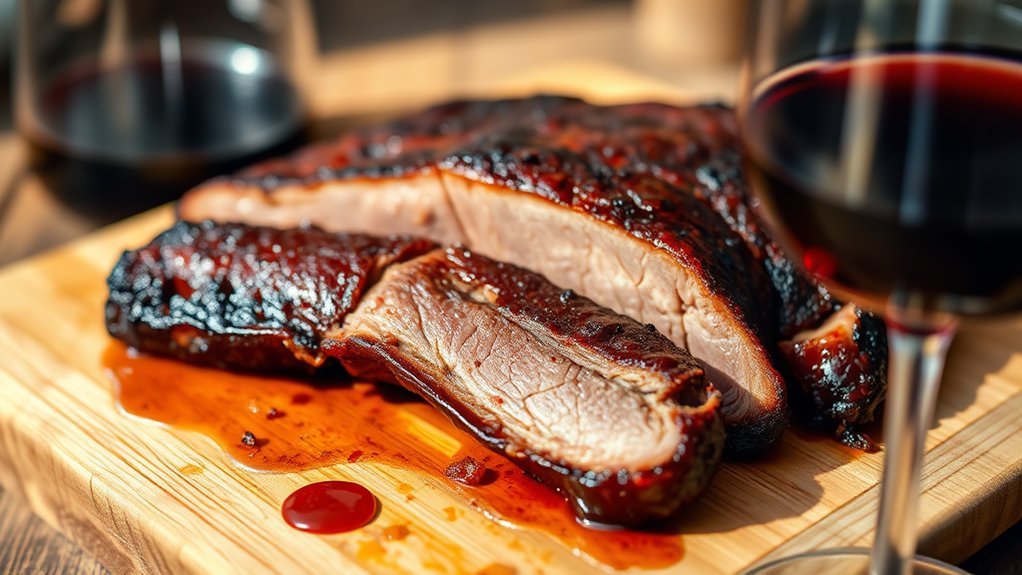
When you’re sinking your teeth into perfectly smoked brisket, there’s a magical flavor explosion happening that’s worth understanding. That rich, savory sensation coating your tongue? That’s umami depth at work – the fifth taste that makes BBQ so darn addictive!
The slow smoking process transforms the meat’s proteins through somethin’ called the Maillard reaction, creating complex compounds that amplify flavor enhancement. It’s like your taste buds are suddenly wearing magnifying glasses! Those smoky, carmelized outer edges (the bark) pack the biggest umami punch, while the rendered fat distributes these flavors throughout each bite.
This depth is why your typical light white wine might get bulldozed by brisket – you need something robust enough to dance with that meaty richness without getting lost in the shuffle.
Tannin Vs Fat Balancing Act
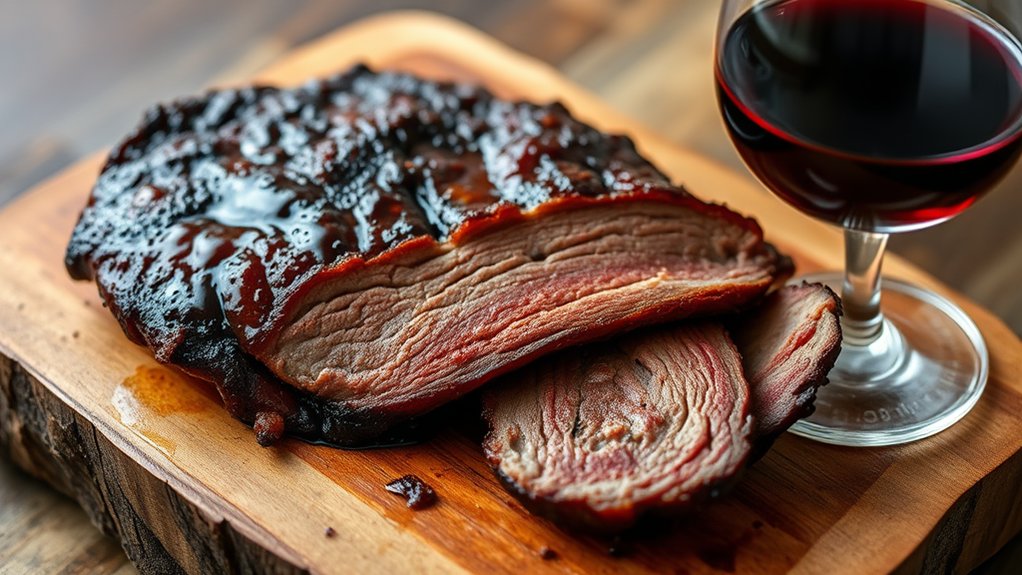
Although most folks don’t think about chemistry when plannin’ a BBQ, there’s a fascinating dance happening between your wine’s tannins and that beautiful brisket fat.
When you sip a red with good tannin structure alongside a fatty slice of brisket, somethin’ magical happens! Those astringent tannins bind with the rich fat content, creating a cleansing effect that’ll make each bite taste fresher than the last. It’s like the wine’s scrapin’ your tongue clean, ready for the next flavor explosion.
You don’t need a science degree to notice this—just pay attention to how a bold Cabernet cuts through that buttery brisket. The fattier your meat, the more tannic your wine should be. It’s all about ballance, y’all! This is why your backyard BBQ deserves better than just any old beer.
Sauce Complexity Transforms Pairings
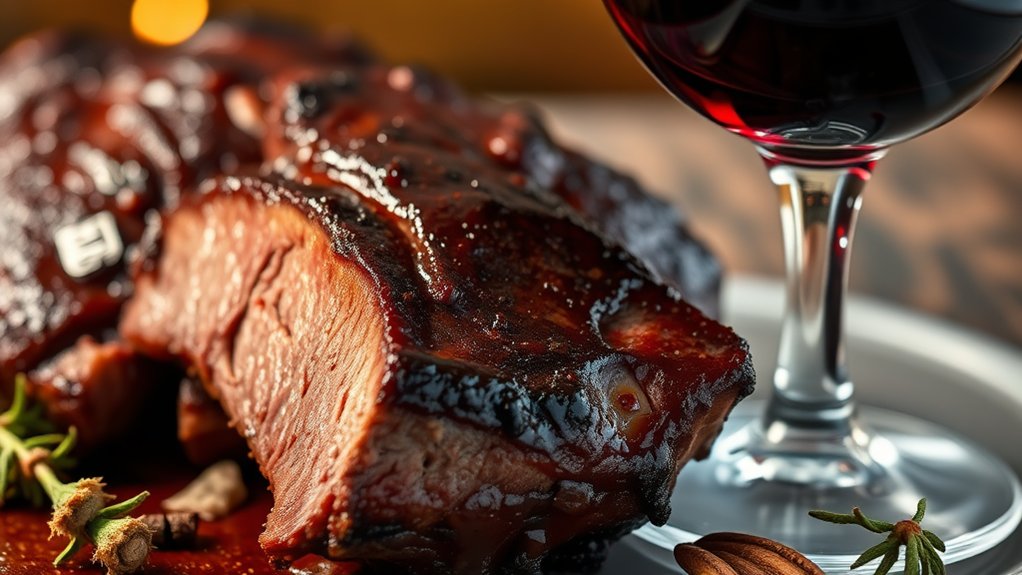
The sauce you choose for your brisket completely changes the wine pairin’ game, folks! Those sauce ingredients blend with the smoky meat to create unique flavor profiles that demand different wine matches. When you’re slathering on that special sauce, remember that sweetness, acidity, and spice all transform your perfect pour.
Here’s what to evaluate:
- Sweet tomato-based sauces need wines with good fruit to balance
- Vinegar-forward Carolina sauces call for high-acid wines
- Spicy sauces require lower alcohol wines to prevent heat overload
| Sauce Type | Flavor Profile | Ideal Wine Match |
|---|---|---|
| Sweet KC | Molasses, brown sugar | Zinfandel |
| Vinegar Carolina | Tangy, sharp | Riesling |
| Mustard SC | Pungent, earthy | Chenin Blanc |
| Texas Mop | Beefy, peppery | Syrah |
| White Alabama | Creamy, peppery | Chardonnay |
Wine Recommendations
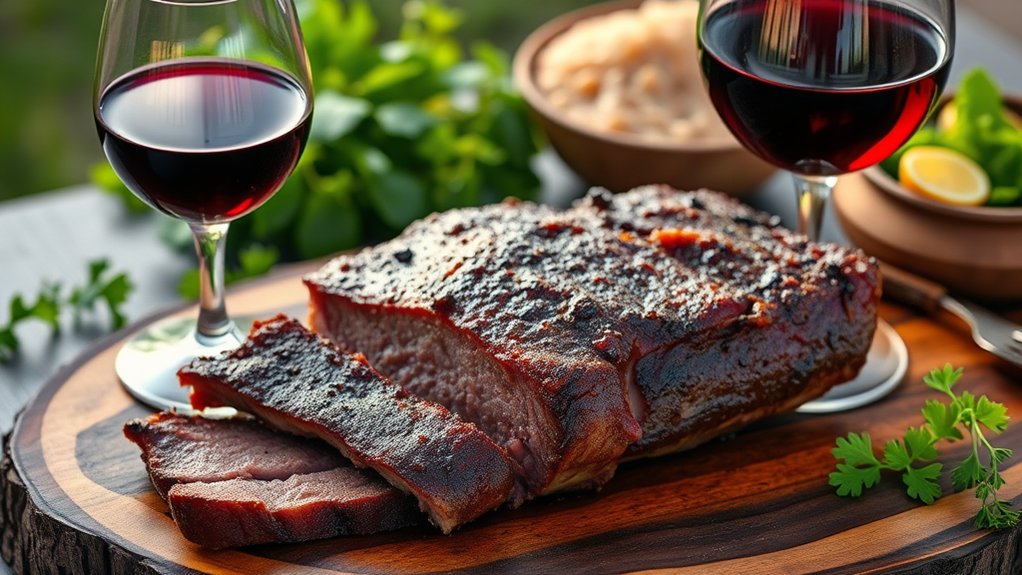
When it comes to selecting the perfect wine for your brisket, you’ll want to lean toward bold reds with enough fruit to balance that gorgeous smoke flavor. Zinfandel, with its jamminess and spice, stands tall beside Texas-style brisket, while a Syrah from Washington State brings enough punch to complement those crispy, charred edges. Don’t forget to take into account regional pairings too—a Malbec works wonders with spicier rubs, and a robust Cabernet might be your new BBQ bestfriend!
Bold Reds Rule
Robust reds stand as undefeated champions when you’re serving up that gorgeous, smoky brisket you’ve labored over. The bold red varietals bring enough muscle to the table to stand up against those intense, fatty flavors that make brisket so irresistable. Think about it—would you bring a lightweight pinot to an arm-wrestling match with smoked meat? I don’t think so!
The basic pairing principles here are simple: match intensity with intensity, fat with tannins. Your Cabernet Sauvignon, Syrah, or a peppery Zinfandel will dance beautifully with each bite, cutting through the richness while complementing the smoky char. Don’t overthink it—if the wine could bench press a car, it’ll probably work with your brisket. After all, you didn’t spend 12 hours smoking that beauty to pair it with anything less than a rockstar!
Smoke Needs Fruit
While bold reds bring the muscle, let’s not forget that smoky brisket also craves a fruity counterpoint! The secret to a perfect pairing is finding fruit forward wines that dance with that gorgeous smokiness. You’ll want something juicy enough to stand up to the rich, fatty meat while complementing—not fighting—the smoke integration.
Try a Zinfandel with its jammy blackberry notes, or grab an Australian Shiraz that’s bursting with plum and black cherry goodness. Even a ripe Merlot can do the trick! The fruit in these wines acts like the sweet BBQ sauce on your plate, creating a harmony that’ll make your taste buds do a little happy dance.
Trust me, when smoke meets fruit, it’s like they were ment for each other all along!
Regional Wine Considerations
Just as the regional style of BBQ varies across the country, your wine choices should reflect where your brisket’s flavor profile lands on the map! Texas-style brisket, with its simple salt and pepper rub, pairs beautifully with bold California Zinfandels that can handle the smoke while complimenting the beef’s richness.
For sweeter Kansas City-style sauces, you’ll want to evaluate local varietals from Missouri or the terroir influence of Washington State Merlots that won’t get lost behind that molasses-heavy goodness.
If you’re enjoying Carolina-style brisket with vinegar tang, reach for something with bright acidity—maybe an Oregon Pinot Noir that balances fruitiness with earthy undertones!
Unconventional Brisket Wine Matches
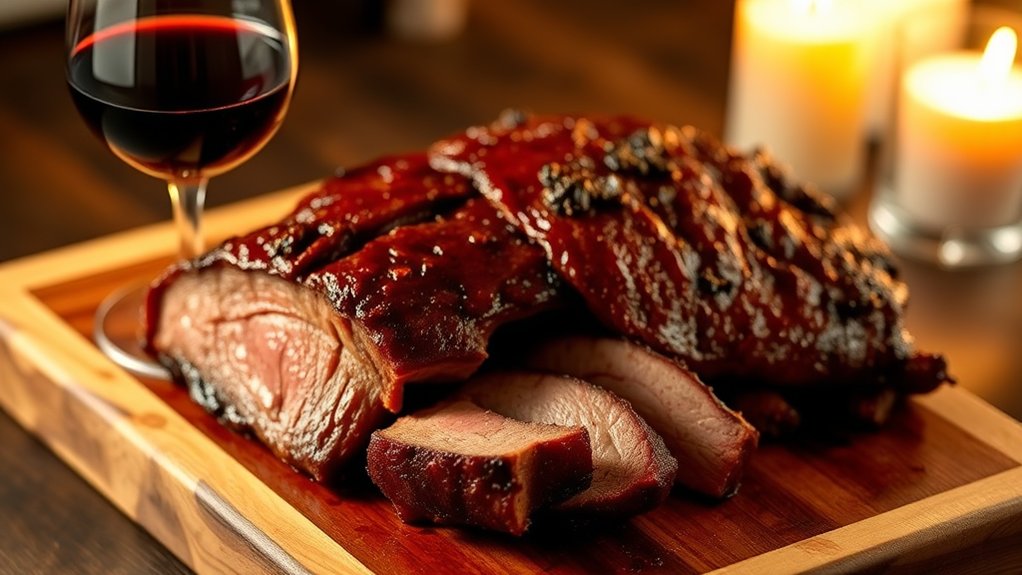
Ever wondered what happens when you break all the rules with brisket and wine pairings? While red wines get all the glory, don’t sleep on spicy whites like Gewürztraminer or Viognier! These aromatic rebels cut through fatty brisket like a hot knife through butter, offering a revitalizing contrast that’ll make your tastebuds do a happy dance.
And here’s the real shocker – dessert wines can actually work! A slightly sweet Riesling or even a Port can complement smoky, bark-crusted brisket in ways you’d never expect. It’s like that weird couple everyone doubts but somehow works perfectly together!
Don’t be afraid to experiment—sometimes the most memorable pairings come from breaking tradition. Your backyard BBQ might just become the talk of the neighborhood!
Temperature Affects Compatibility
Temperature isn’t just a setting on your wine fridge—it’s a game-changer for your entire brisket experience! When pairing wines with that smoky, tender brisket, the serving temperature of your wine dramatically affects how flavors interact with those rich, fatty meat notes. Think about it: a too-cold red loses its expressiveness, while an overly warm white wine misses those invigorating cooling effects that balance the meat’s richness.
Here’s how to nail the temperature sweet spot:
- Reds like Zinfandel or Syrah should be served slightly cool (60-65°F)—not room temperature!
- Whites with enough body for brisket benefit from being slightly warmer (50-55°F) than refrigerator cold
- Rosés hit their stride at 55°F, where their fruit notes complement the smoky bark
You’ll be amazed how the perfect temperature transforms an okay pairing into a revelation!
Frequently Asked Questions
Can I Pair Rosé Wines With BBQ Brisket?
Rosé wines make excellent companions for BBQ brisket, offering strategic contrasts that enhance the dining experience. The natural acidity and bright fruit characteristics in rosé effectively cut through the rich fattiness of brisket, while providing a refreshing counterpoint to the meat’s smoky intensity. Look for medium-bodied rosés with enough structure to stand up to the robust flavors, yet maintain the refreshing qualities that make them ideal for barbecue settings. Rosés from Provence, Spanish Rosados, or New World versions with slight berry sweetness can particularly complement the caramelized exterior and tender texture of well-prepared brisket.
How Early Should I Decant Red Wine Before Serving With Brisket?
When serving brisket, decant robust red wines like Cabernet Sauvignon or Syrah 1-2 hours before the meal to complement the rich, smoky flavors of the meat. Younger, tannic wines that stand up to brisket’s fat content benefit from longer decanting time, allowing their structure to soften and flavors to open up. Aged reds that pair beautifully with brisket need just 30 minutes of breathing time to reveal their complex notes that enhance the slow-cooked meat.
Are There Non-Alcoholic Alternatives That Pair Well With Brisket?
Full-bodied red wines with robust tannins complement brisket’s richness perfectly. Cabernet Sauvignon or Syrah varieties offer fantastic flavor contrasts with the smoky, savory meat, while their dark fruit notes enhance the brisket’s caramelized exterior.
Should Wine Glasses Be Different for Brisket Pairings?
When pairing wine with brisket, glass selection enhances the experience. For robust reds that complement the smoky, rich flavors of brisket, choose glasses with larger bowls that allow the wine to breathe at room temperature. If opting for a crisp white wine with your brisket, select narrower glasses and serve the wine cooler to preserve its refreshing qualities and create a pleasant contrast with the hearty meat.
How Does Dry-Aged Versus Wet-Aged Brisket Affect Wine Selection?
When selecting wines for brisket, consider its aging method. Dry-aged brisket’s concentrated, intense flavors call for robust red wines like Cabernet Sauvignon, Syrah, or aged Bordeaux blends that can match its complexity. Wet-aged brisket, with its juicier, milder profile, pairs beautifully with more approachable, fruit-forward options such as Merlot, Zinfandel, or even a medium-bodied Pinot Noir that won’t overwhelm the meat’s natural qualities.