You’re about to discover a thrilling world of white wines that’ll dazzle your senses and transform your dining experiences. From the buttery richness of Chardonnay to the zesty punch of Sauvignon Blanc, white wines offer an incredible spectrum of flavors and personalities. Whether you’re sipping crisp Pinot Grigio with seafood or pairing sweet Riesling with spicy dishes, each bottle tells its own unique story. Let’s uncork the secrets of these bright, vibrant treasures together.
Key Takeaways
- White wine comes in five main varieties: Chardonnay, Sauvignon Blanc, Pinot Grigio, Riesling, and Viognier, each offering distinct flavor profiles.
- Learn proper tasting techniques: hold by stem, observe color, swirl, sniff, and savor to detect unique characteristics.
- Temperature-controlled fermentation and different aging vessels (steel, oak, concrete) create diverse styles and flavor expressions.
- Famous regions like Loire Valley, Burgundy, and Marlborough produce distinctive white wines reflecting their unique terroir.
- Light whites pair with seafood, full-bodied with cream sauces, and sweet varieties complement spicy dishes.


The Main White Wine Grape Varieties
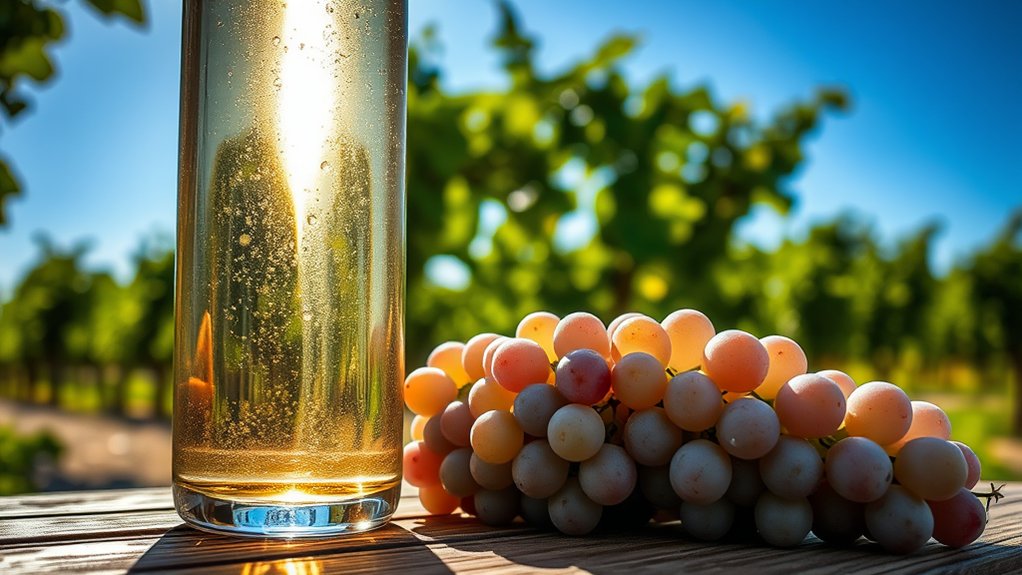
When you’re diving into the world of white wine, getting to know the major grape varieties is like meeting the cast of characters in your favorite show – each one has its own personality and charm. You’ll find Chardonnay characteristics ranging from buttery oak-aged versions to crisp, mineral-driven styles, while Sauvignon Blanc styles dazzle with their zesty citrus and grass notes. Don’t overlook Pinot Grigio profiles, which offer invigorating pear and stone fruit flavors that’ll make your taste buds dance. Riesling sweetness levels run the gamut from bone-dry to decadently sweet, and Viognier aromas will seduce you with their honeysuckle and peach perfume. For a truly exotic adventure, explore Gewürztraminer uniqueness – it’s like sipping liquid roses and lychees! Additionally, understanding the main white wine grape varieties can enhance your appreciation for these delightful bottles.
Understanding White Wine Production Methods
Each grape variety’s unique personality comes alive through careful winemaking techniques, and that’s where the real magic happens in your glass. You’ll find that modern fermentation techniques have revolutionized how we create those crisp, revitalizing whites you love, from temperature-controlled tanks that preserve delicate aromas to specially selected yeasts that enhance specific flavors.
The aging processes are where things get really interesting – think of them as your wine’s spa treatment! While some whites dance straight from tank to bottle to preserve their youthful zest, others luxuriate in oak barrels, soaking up vanilla and toasty notes that’ll make your taste buds sing. Whether it’s stainless steel, concrete eggs, or traditional oak, each vessel imparts its own special character to your future sipping pleasure.
Key Wine Regions for White Wines

As you explore the world of white wines, you’ll discover that certain regions have gained legendary status for their exceptional offerings. From the crisp Rieslings of Germany’s Mosel Valley to the zesty Sauvignon Blancs of New Zealand’s Marlborough region, regional differences create distinctive flavor profiles that’ll make your taste buds dance. Even emerging regions like Oregon’s Willamette Valley are making waves with their unique expressions of Chardonnay.
| Region | Famous Styles | Signature Characteristics |
|---|---|---|
| Loire Valley | Sancerre | Flinty, citrusy, mineral |
| Burgundy | Chablis | Lean, elegant, chalky |
| Mosel | Riesling | Sweet-dry, slate, floral |
| Marlborough | Sauvignon Blanc | Tropical, grassy, vibrant |
| Alto Adige | Pinot Grigio | Crisp, alpine, fresh |

White Wine Tasting Basics
Ready to reveal the secrets of white wine tasting? Let’s plunge into the essential tasting techniques that’ll transform you from a casual sipper to a savvy connoisseur. First, hold your glass by the stem (those fingerprints on the bowl are a wine’s worst nightmare) and take a good look at the color – from pale straw to deep gold, it’s like nature’s liquid jewelry.
Now, here’s where the fun begins: swirl, sniff, and savor! Your nose knows best when it comes to detecting those gorgeous flavor profiles, from crisp green apple to tropical pineapple. Take a sip and let it dance across your tongue, paying attention to acidity, sweetness, and body. Don’t worry about sounding pretentious – if you taste banana bread in your Chardonnay, that’s what you taste!
Food and White Wine Pairing Essentials

The magic of pairing food with white wine lies in creating perfect harmony on your palate. When you’re matching wine acidity with food flavors, you’ll discover endless delicious possibilities that’ll make your taste buds dance with joy.
Here’s your foolproof guide to nailing those pairings every time:
- Light, crisp whites like Pinot Grigio are perfect with seafood and fresh salads
- Full-bodied Chardonnay stands up beautifully to creamy pasta and roasted chicken
- Zesty Sauvignon Blanc complements goat cheese and asparagus dishes like they were made for each other
- Sweet Riesling tames the heat of spicy Asian cuisine while highlighting subtle food flavors
Serving and Storage Tips for White Wines
While proper wine storage might seem like rocket science, you’ll be thrilled to discover it’s actually quite simple to keep your whites in perfect drinking condition. Just remember to store them at a cool 45-55°F, away from direct sunlight and vibration, and you’re halfway there!
When it’s time to serve, temperature guidelines are your best friend. Take your white wine out of storage about 30 minutes before serving to reach that sweet spot of 45-50°F – any warmer and you’ll miss those crisp, invigorating notes. For glass selection, opt for tulip-shaped vessels that’ll capture those delicate aromas. And here’s a pro tip that’ll make your wine-snob friends jealous: don’t automatically assume white wines need to be ice-cold – some fuller-bodied whites actually shine at slightly warmer temperatures!
Decoding White Wine Labels

Standing before a wall of white wines can feel like trying to decode ancient hieroglyphics, but don’t let those fancy labels intimidate you! Understanding label terminology and label symbolism is easier than you’d think, and you’ll be maneuvering through wine aisles like a pro in no time.
Here’s what those mysterious labels are trying to tell you:
- The producer’s name usually takes center stage, showing who made your delightful bottle
- The vintage (that’s the year) tells you when the grapes were harvested
- The region reveals where your wine’s grapes were grown, which hugely influences taste
- The alcohol content, typically ranging from 11-14%, gives you a heads up on potency
Once you’ve got these basics down, you’ll feel much more confident making your selection!
Common White Wine Styles and Their Characteristics
Now that you’ve mastered wine labels, let’s explore the exciting world of white wine styles! You’ll discover that each variety has its own personality, from the zesty Crisp Sauvignon with its grapefruit and grass notes, to the Rich Chardonnay showing off its vanilla and oak character. If you’re craving something sweet and aromatic, the Fruity Riesling and exotic Floral Gewürztraminer will dance on your taste buds. Love that silky mouthfeel? The Buttery Pinot Gris is your new best friend. For those seeking something unique, try the Mineral Gruner with its white pepper kick, or the Herbaceous Verdejo with its fresh-cut grass charm. And don’t forget the Sweet Moscato, which proves that sometimes life’s sweetest moments come in a glass!
Best White Wines for Every Season

Just like your wardrobe changes with the seasons, your white wine choices should too! Seasonal wine selections aren’t just about following rules – they’re about maximizing your enjoyment based on temperature considerations and the foods you’re craving.
- Spring: Embrace crisp Verdicchio or Chablis, perfect with fresh garden salads and those first outdoor brunches
- Summer: Reach for zesty Pinot Grigio or Vinho Verde – they’re like a revitalizing dip in the pool on a hot day
- Fall: Savor fuller-bodied Viognier or oaked Chardonnay alongside harvest vegetables and hearty soups
- Winter: Don’t shy away from rich Marsanne or aged white Rioja, which pair beautifully with creamy winter dishes
You’ll find that matching your whites to the season makes every sip more memorable!
Building Your White Wine Collection
Whether you’re new to wine collecting or looking to expand your cellar, building a white wine collection is an exciting journey that’ll transform your home into a treasure trove of liquid gold. Start with essential collecting tips: invest in proper storage with temperature control, and remember that not all whites are meant for aging – focus on varieties like Chardonnay, Riesling, and premium Chablis.
When it comes to wine investment, don’t just chase prestigious labels; instead, research emerging regions and rising stars. You’ll often find hidden gems in places like New Zealand and Austria that’ll make both your palate and wallet happy. And hey, the best part about collecting whites? If your investment strategy doesn’t pan out, you can always host an impromptu tasting party – problem solved!
Frequently Asked Questions
Why Do Some White Wines Have a Slight Fizzy Sensation?
You’ll discover that sparkling whites can dance on your tongue, but some still wines get this tickle through carbonic maceration, where CO2 sneaks in during fermentation.
Can White Wines Improve With Age Like Red Wines?
You’ll find that some white wines can age beautifully, but most are best enjoyed young. Those with aging potential need perfect storage conditions to develop complex flavors over time.
Are White Wines Always Made From White Grapes?
Surprisingly, your favorite white wines don’t always need white grape varieties. Wine production techniques let you craft white wines from red grapes by removing grape skins during fermentation.
Why Do Some White Wines Taste Sweeter Than Their Label Indicates?
Your taste perception of sweetness can be influenced by factors beyond residual sugar, like alcohol, acidity, and fruitiness, making some wines seem sweeter than they actually are.
What Causes White Wine to Turn Brownish or Darker in Color?
Ever notice how time changes everything? Your white wine’s browning color comes from oxidation effects and the natural aging process when oxygen interacts with the wine over time.