For your St. Patrick’s Day feast, you’ll want a wine that can handle corned beef’s rich, briny flavor while complementing the tender cabbage. Your best bets include medium-bodied reds like Beaujolais and Pinot Noir, or crisp whites such as Riesling and Gewürztraminer. The key is finding wines with bright acidity to cut through the richness, served at the proper temperature for maximum enjoyment. There’s a whole world of perfect pairings waiting to enhance your Irish celebration.
Key Takeaways
- Beaujolais and Pinot Noir offer ideal medium-bodied red options that won’t overpower the dish’s delicate balance of flavors.
- Dry Riesling pairs exceptionally well, offering bright acidity and mineral notes that cut through the corned beef’s richness.
- Serve red wines at 60-65°F and white wines at 45-50°F for optimal flavor enhancement with corned beef.
- Look for wines with moderate tannins and high acidity to refresh the palate between bites of this hearty dish.
- Gewürztraminer’s herbal notes and spice profile complement both the briny meat and tender cabbage perfectly.

Understanding the Flavor Profile of Corned Beef and Cabbage

The rich, salty flavors of corned beef paired with tender cabbage create a quintessential comfort food combination that’s more complex than you might think. When you bite into perfectly prepared corned beef, you’ll notice a delightful interplay of briny, peppery, and savory notes that dance on your tongue. The meat’s distinctive corned beef flavors come from its signature curing process, which infuses it with a robust, mouth-watering complexity.
Meanwhile, the cabbage textures offer a beautiful contrast – soft yet slightly crisp, with a mild sweetness that balances the meat’s intensity. You’ll find that when cooked just right, the cabbage becomes a tender companion to the beef, soaking up all those wonderful cooking juices and spices. It’s like they were meant to be together, like Ireland’s answer to peanut butter and jelly!
Key Wine Characteristics to Consider
With such bold and complex flavors in your corned beef and cabbage, you’ll want to select wine characteristics that can hold their own at the table. The tannin structure of your wine shouldn’t be too aggressive – you’re not tackling a ribeye here, folks! Instead, focus on finding a wine with medium tannins that won’t overpower your perfectly cooked meat.
The acidity level is where things get interesting. You’ll need a wine with enough zip to cut through the richness of the corned beef while complementing the tangy cabbage. Think of it as finding a dance partner who can keep up with both slow and fast moves! Look for wines with moderate to high acidity that’ll refresh your palate between bites.
Top Red Wine Recommendations
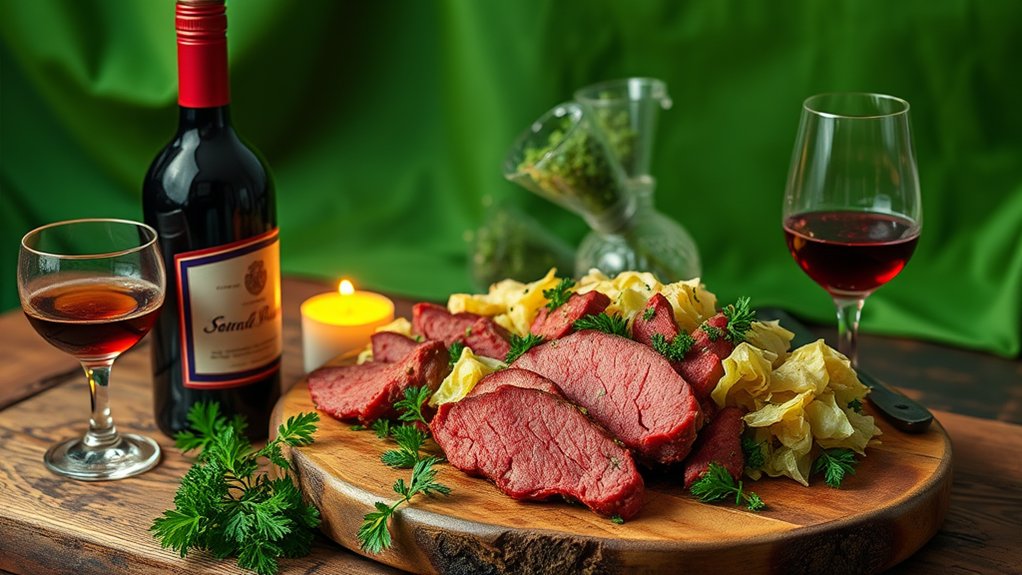
Several standout red wines deserve a place at your corned beef feast, each bringing something special to the party. While you might think full bodied reds would overwhelm this hearty dish, you’ll be surprised at how well they complement the salty, savory flavors.
- Beaujolais: A light-bodied French red with fruity undertones that won’t overpower your meal
- Zinfandel: California’s gift to corned beef, packed with jammy goodness
- Pinot Noir: The crowd-pleasing choice that dances between light and medium body
- Grenache: A Spanish charmer with just enough spice to keep things interesting
- Syrah: When you’re feeling bold and want those peppery notes to shine
These wines aren’t just good matches; they’re like your meal’s backup dancers, ready to make every bite a show-stopping performance.

White Wine Pairing Options
Looking for a crisp companion to your corned beef and cabbage? White wines can be surprisingly delightful with this hearty Irish classic. You’ll want to focus on bottles that offer crisp acidity to cut through the rich, salty meat while complementing the cabbage’s earthy character.
| White Wine | Key Features | Best Served |
|---|---|---|
| Riesling | Bright citrus, mineral notes | Slightly chilled |
| Pinot Grigio | Light, crisp acidity | Well chilled |
| Gewürztraminer | Herbal notes, spice | Cool room temp |
For a foolproof match, grab a dry Riesling – it’s like having a leprechaun’s secret weapon in your glass! The wine’s vibrant acidity and subtle herbal notes will dance with your dish, while its touch of sweetness tames any boldness from the brine.
Perfect Rosé Selections for Your Irish Feast

Rosé wines might seem like an unconventional choice for corned beef and cabbage, but they’re actually secret winners for this traditional Irish dish. When exploring food pairings, you’ll find that dry rosé varieties offer the perfect balance between red and white wines, making them incredibly versatile for this hearty meal.
Here are some fantastic rosé options that’ll make your taste buds dance:
- Provence rosé with its crisp minerality and subtle berry notes
- Spanish Garnacha rosado bringing bright strawberry flavors
- Austrian Zweigelt rosé offering tart cherry and spice
- California Pinot Noir rosé delivering light floral touches
- Loire Valley Cabernet Franc rosé adding herbal complexity
Trust me, your guests will be pleasantly surprised when you serve these pink beauties alongside your St. Patrick’s Day feast!
Regional Wine Pairings From Around the World
While different cultures around the world have their own unique wine traditions, you’ll be amazed at how beautifully these international varieties complement corned beef and cabbage.
For Italian Pairings, you can’t go wrong with a robust Chianti Classico or a vibrant Barbera that’ll cut through the meat’s richness. French Selections like a bold Côtes du Rhône or playful Beaujolais work wonders, while Spanish Choices such as Rioja add a delightful oak-kissed dimension. South American Wines, particularly Chilean Carmenere, bring an unexpected spicy kick that’ll make your taste buds dance. Down under, Australian Varieties like Shiraz offer bold fruit flavors, and New Zealand Styles, especially their fantastic Pinot Noirs, provide an elegant match that’ll have you forgetting about green beer altogether!
Tips for Serving Temperature and Timing

To maximize your corned beef and cabbage wine pairing experience, serving your chosen bottle at the perfect temperature is absolutely crucial. When it comes to timing considerations, you’ll want to plan ahead to guarantee your wine is ready when that steaming plate hits the table.
- Red wines should be served at 60-65°F (take them out of storage 30 minutes before dinner)
- White wines are best at 45-50°F (remove from fridge 15 minutes prior)
- Rosé wines shine at 50-55°F (pull from the refrigerator 20 minutes ahead)
- Sparkling wines need to be well-chilled at 40-45°F (keep them cold until serving)
- Fortified wines like Port serve beautifully at 55-60°F (give them 25 minutes to adjust)
Frequently Asked Questions

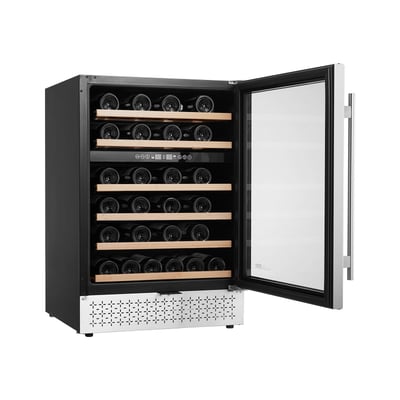
How Long Can I Store an Opened Bottle of Wine After Dinner?
You’ve got millions of wine moments ahead, but that opened bottle won’t last forever! For ideal wine freshness, you’ll want to re-cork and refrigerate your bottle right after dinner. White wines typically stay good for 3-5 days, while reds last 2-4 days. For best bottle storage, keep it upright in the fridge, and if you’re feeling fancy, grab a vacuum sealer to extend its life.
Can I Substitute Non-Alcoholic Wine Alternatives for Traditional Wine Pairings?
You can absolutely enjoy wine pairings without alcohol! Today’s non-alcoholic alternatives have come a long way, offering sophisticated flavor profiles that can complement your meals just like traditional wines. Try sparkling grape juice for celebrations, dealcoholized wines for complex food pairings, or kombucha for that fermented kick. You’ll find that many alcohol-free options can mimic the acidity, tannins, and body of regular wines.
Should I Serve Different Wines if My Corned Beef Is Homemade Versus Store-Bought?
You’re barking up the right tree by considering the difference in preparation methods! Homemade corned beef tends to have more nuanced flavors and less sodium, so you’ll want a lighter wine that won’t overshadow those subtle tastes – think Pinot Noir or Rosé. With store-bought choices, which often pack more salt and stronger seasonings, you can go bolder – try a robust Cabernet Sauvignon or Syrah that’ll stand up to those intense flavors.
What Glass Shape Is Best for Serving Wine With Corned Beef?
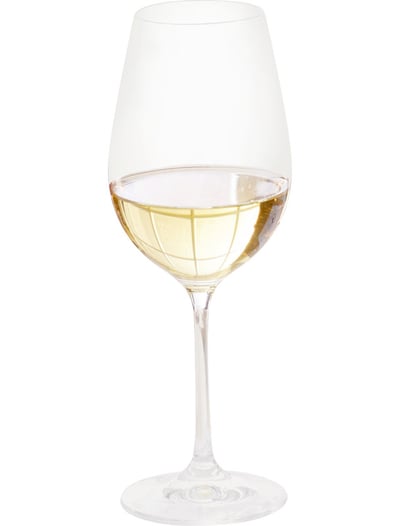
For red wines, you’ll want to use a standard red wine glass with a wider bowl to let those robust flavors breathe at room temperature. If you’re going with a crisp white wine, reach for a tulip-shaped glass and serve it slightly chilled – around 45-50°F. Don’t stress too much about glass types though; your corned beef won’t judge you for using whatever wine glasses you’ve got handy!
Are There Any Wine and Irish Cheese Combinations to Serve as Appetizers?
Don’t let anyone tell you Irish cheese isn’t sophisticated! You’ll love pairing a crisp Sauvignon Blanc with aged Irish Cheddar for its perfect balance of sharp and fruity notes. For a bolder experience, try matching an Irish Blue Cheese pairing with a robust Port wine – the sweet and salty combination will make your taste buds dance. These combinations work beautifully as pre-dinner nibbles that’ll have your guests asking for more.