Pairing wine with soup isn’t just for gourmet chefs—you can crush it at home! Go classic with chicken noodle and Chardonnay. Creamy tomato loves a zingy Chianti, while onion soup’s BFF is Cabernet Sauvignon. Butternut squash is swoon-worthy with Viognier, and hearty beef stew just begs for Malbec. Lobster bisque? Bring on the Champagne, baby. Earthy lentil digs Merlot, minestrone gets flirty with Sangiovese, and mushroom soup waltzes with Pinot Noir. Want to master soup bliss? Let’s keep stirring things up.
Key Takeaways
- Match creamy chicken noodle soup with Chardonnay to enhance gentle flavors and create a harmonious pairing.
- Pair rich tomato soup with Chianti to balance acidity and complement its natural sweetness and herbal notes.
- Hearty beef stew pairs best with Malbec, whose bold tannins and smoky notes balance the stew’s richness.
- Spicy Thai coconut soup is ideally matched with Riesling, as its sweetness cools the heat and lifts aromatic flavors.
- Mushroom soup and Pinot Noir make a classic pair, with the wine’s earthy notes enhancing the soup’s umami depth.



Classic Chicken Noodle Soup With Chardonnay

If you’ve ever cozied up with a steaming bowl of classic chicken noodle soup on a chilly evening, you know it’s basically a hug in a bowl. The trick? Keep your soup temperature just hot enough to warm your soul without scorching your tongue—nobody likes a tastebud casualty. Now, let’s talk wine. Chardonnay is a superstar here. Serve it at the right wine serving temperature, which is about 50–55°F, and you’ll reveal gentle flavors that beautifully dance with the soup’s savory broth and tender chicken. Too cold, and the wine’s shy; too warm, and it’s a diva. When the wine’s crisp apple notes and creamy finish meet that cozy soup, you’ll wonder why you ever settled for just water. Go ahead, slurp and sip. Additionally, pairing your dish with proper serving temperatures can elevate your culinary experience even further.
Creamy Tomato Soup With Chianti

You’re about to see why creamy tomato soup and Chianti are basically the power couple your taste buds didn’t know they needed. It’s all about that zippy acidity from the wine cutting through the soup’s rich, velvety base—think of it as a palate cleanse with every delicious spoonful. Plus, let’s be honest, if you can make tomatoes taste even better, you’re basically winning at life. To elevate this pairing even further, consider how the bright acidity of the wine enhances the overall dining experience.
Balancing Acidity and Creaminess
Although creamy tomato soup is already a classic comfort food, pairing it with wine can make it feel like you’re hosting a dinner party for your taste buds. The trick is balancing acidity and creaminess. Tomato soup can be tangy, but when you swirl in cream, it gets silky—almost dreamy. So, why Chianti? Well, Chianti’s lively acidity loves creamy textures. It’s like a dance-off in your mouth: the wine cuts through the soup’s richness, giving you a texture contrast that’s just plain fun.
Flavor enhancement is the name of the game. The wine’s cherry notes and herbal whispers coax out hidden flavors in the soup. Suddenly, every spoonful is a mini celebration. Who knew dinner could be so dramatic? Grab your spoon, raise your glass!


Enhancing Tomato Richness
When creamy tomato soup meets a bold glass of Chianti, something magical happens—like a jazz duet where both players actually listen to each other. You’ll notice how the wine’s cherry and plum notes bring out the tomato’s natural sweetness, but wait, there’s more. Chianti has just enough spice enhancement to tease out those hidden hints of basil and thyme in the soup. Each sip adds a new layer of flavor complexity, making the soup richer and more satisfying. It’s like your taste buds are at a party, and everyone’s dancing. Don’t be shy—swirl your wine, dunk your bread, and savor the way everything just clicks. Who knew creamy tomato could be this exciting? Go ahead, pour another glass.
French Onion Soup With Cabernet Sauvignon

If you’ve ever dipped a spoon into a steaming bowl of French onion soup, you know it’s not just soup—it’s a whole dang mood. The rich broth, sweet onions, gooey cheese, and toasted bread make you wanna sing. Now, pair that with Cabernet Sauvignon, and you’ve got yourself a flavor duet that pretty much deserves a standing ovation. Here’s how to make your experience even more epic:
- Serve the soup piping hot; the temperature makes the cheese extra dreamy.
- Go for a larger wine glass to let the Cab breathe (no tiny glasses, please).
- Pick a Cabernet that’s bold but not over-the-top.
- Try a crusty baguette on the side for bonus points.
- Don’t forget a napkin—melty cheese gets wild. Additionally, consider that Riesling’s food-pairing versatility allows it to complement various flavors if you want to explore beyond the classic Cabernet.
Butternut Squash Soup With Viognier

So, you’re wondering what magic happens when butternut squash soup meets Viognier? It’s all about finding that sweet spot, where the wine’s peachy aromas play tag with the creamy soup, and a gentle kick of spice just keeps things interesting—like a flavor party where everyone actually gets along. Trust me, your spoon and your glass are about to become best friends, and you might even catch them winking at each other. The smooth texture of Viognier beautifully enhances the soup’s creamy texture, making every sip a delightful experience.
Balancing Sweetness and Spice
Although you might not think of soup as a dance partner for wine, butternut squash soup and Viognier practically waltz together across your palate. The soup’s natural fruit sweetness cozies up to Viognier’s lively notes, while the wine’s gentle acidity keeps things from getting too syrupy. And if your soup’s got a kick of spice—maybe a dash of nutmeg or cayenne—Viognier’s lushness swoops in for spice enhancement, smoothing out the heat with a silky touch.
Here’s why this pair is a winning combo:
- Fruit sweetness in both soup and wine sync up
- Viognier’s acidity lifts creamy textures
- Spice enhancement is real—heat feels smoother
- The floral notes make the soup taste even richer
- It’s just plain fun to eat and sip
Viognier’s Aromatic Harmony
Once you lift a spoonful of butternut squash soup to your lips and take a sip of Viognier, your senses just light up—it’s like the soup and wine have been swapping secrets behind your back. The Viognier’s aroma is almost flirtatious, teasing out the soup’s natural sweetness and dialing up the flavor complexity. You’ll notice how the wine’s floral notes and peachy hints mingle with the earthy, roasted squash, creating a wild little dance in your mouth. It’s aroma enhancement at its finest. Check out this emotional rollercoaster:
| Sensation | Emotion | Surprise Level |
|---|---|---|
| Warmth | Cozy | 6 |
| Sweetness | Joyful | 7 |
| Aroma | Uplifted | 8 |
| Harmony | Amazed | 9 |
| Finish | Satisfied | 10 |
Honestly, who knew soup could feel so romantic?
Enhancing Creamy Texture
If you’ve ever wondered what it’s like to eat velvet, just dip into a bowl of butternut squash soup—then grab a glass of Viognier and get ready for a texture party. The creamy soup wraps your tongue in a cozy blanket, and Viognier jumps in with its luscious, peachy vibes, bringing texture contrast and flavor enhancement that’s just—wow. It’s like a pillow fight in your mouth, but everyone’s winning.
- Creaminess of the soup meets Viognier’s fresh acidity for a lively texture contrast.
- Viognier’s floral notes tease out the soup’s natural sweetness.
- The wine’s body stands up to the soup, keeping things balanced.
- Subtle spice in the soup? Viognier says, “I got you.”
- Every sip and spoonful is a little celebration.
Hearty Beef Stew With Malbec
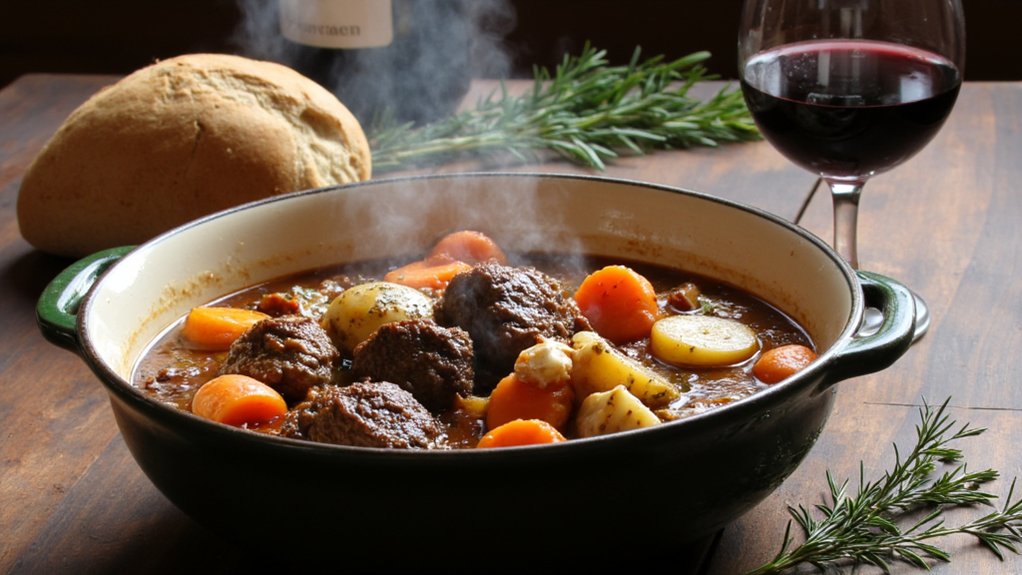
When you’re craving something bold and cozy, hearty beef stew and Malbec are basically the culinary equivalent of a bear hug in a bowl—only tastier and with less risk of actual bear involvement. The rich soup ingredients like tender beef, earthy potatoes, and carrots soak up flavor and practically beg for a wine that can keep up. That’s where Malbec struts in. Its lush fruit and smoky notes, born from particular wine aging processes, don’t just play along—they lead the dance. You’ll notice Malbec’s tannins help cut through the stew’s richness, making every bite and sip feel balanced and satisfying. Honestly, it’s like your taste buds went on a camping trip, but remembered to pack the good stuff. For an even more delightful pairing experience, consider how bold red wines like Malbec enhance hearty dishes with their robust characteristics.
Spicy Thai Coconut Soup With Riesling

You’ve got a bowl of spicy Thai coconut soup—creamy, fiery, and oh-so-aromatic—and now you’re wondering what to pour. Well, Riesling is your new best friend here, balancing that heat with sweetness and cooling things down like a firefighter at a chili cook-off. Plus, its fruity notes play so well with the soup’s lemongrass and ginger that you might just hear a tiny orchestra of flavor in your mouth. To enhance your dining experience, consider how the wine pairing principles can elevate different dishes beyond just soup.
Balancing Spice and Sweetness
Imagine this: a bowl of spicy Thai coconut soup, steam curling up with the scents of lemongrass, chili, and creamy coconut, and right beside it, a chilled glass of Riesling just waiting for its moment to shine. You’re about to experience that magical spicy sweet balance everyone raves about. The soup’s heat dances on your tongue, but the wine’s sweetness swoops in for the rescue, cooling things down and making every bite more exciting. It’s flavor harmony, like a tropical band playing your tastebuds.
Here’s why this combo works so well:
- Riesling’s sweetness tames spicy soup heat
- Coconut’s creaminess and wine’s crispness are best pals
- Lemongrass notes get a citrusy boost
- Chili fire meets sweet relief
- Each sip preps you for another spicy spoonful
Aromatic Harmony in Pairing
Although it might sound like an odd couple at first, the flavors dancing between spicy Thai coconut soup and a zippy Riesling are pure aromatic magic. You’re not just sipping wine and slurping soup—you’re inviting a whole garden of flavors to mingle at your table. The Riesling’s bright fruitiness grabs the herbal nuances in the soup, like lemongrass and cilantro, and waltzes with them across your tongue. Then, just as you think it’s over, the wine picks up the spicy undertones from chili and ginger, giving them a friendly nudge instead of a fiery punch. The result? You get this harmonious blend that’s both lively and soothing. Who knew dinner could feel like a musical number—with a bit of a spicy kick?
Riesling’s Cooling Effect
So, you’ve got this bowl of spicy Thai coconut soup steaming in front of you, swirling with fiery chili heat and all those fragrant herbs, and you might be thinking, “Is my tongue about to burst into flames?” Here’s where Riesling totally steps in as the hero. That cooling sensation you crave is right there in your glass, ready to swoop in and save your tastebuds. Riesling’s hint of sweetness and its crisp, invigorating nature work wonders with spicy food. You’ll love the temperature contrast, too—hot soup, chilled wine, pure magic. Here’s what makes Riesling perfect:
- Cuts through the spice, fast
- Adds a cooling sensation with each sip
- Sweetness soothes the heat
- Refreshing acidity balances richness
- Enhances herbal flavors brilliantly
Lobster Bisque With Champagne
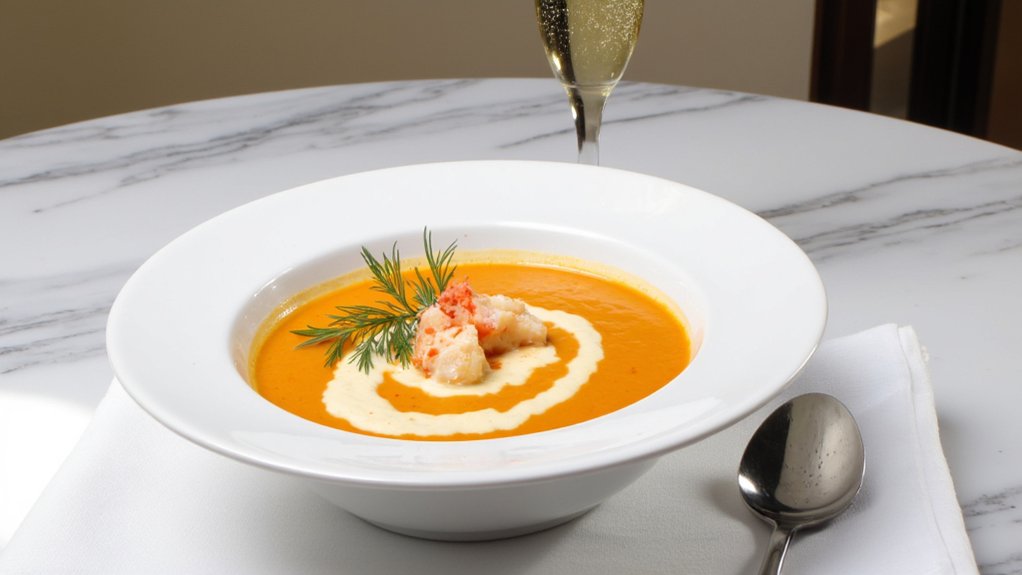
When you bring together lobster bisque and Champagne, something pretty magical happens. You’re treating yourself to seafood elegance and a bubbly celebration in every spoonful and sip. The creamy, dreamy richness of lobster bisque just begs for a companion that can cut through its velvety texture. That’s where Champagne comes in—bright, zippy, with just enough sparkle to make your taste buds do a happy dance.
Picture it: you’re dipping your spoon into that luxurious soup, then taking an invigorating sip. Those bubbles lift the flavors, making everything taste lighter, fancier, and—let’s be honest—a little more fun. It’s dinner and a party at the same time. You don’t need a tuxedo, but you’ll feel like you’re wearing one. Now, isn’t that magic? Additionally, the acidity in Champagne helps to balance the richness of the bisque, enhancing the overall dining experience with proper pairing principles.
Lentil Soup With Merlot
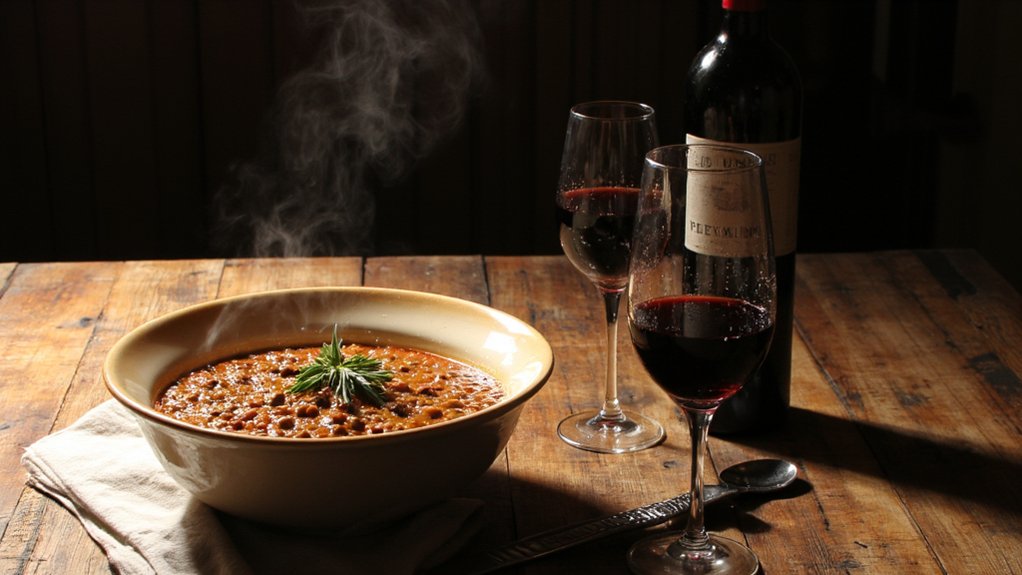
Ever wondered what happens when earthy comfort meets a glass of smooth, velvety red? Picture yourself with a steaming bowl of lentil soup, rich and hearty, and a generous pour of Merlot. It’s magic. Merlot’s ripe fruit flavors and gentle wine tannins wrap around the soup’s rustic notes like a cozy blanket. But wait—there’s an art to this pairing! Here’s how you can nail it:
- Serve your lentil soup hot, not lava-level, so flavors don’t clash.
- Choose a Merlot with softer tannins to avoid a bitter brawl.
- Add a splash of lemon to the soup for zing; Merlot loves it!
- Don’t forget crusty bread. It’s basically the referee.
- Savor, laugh, repeat—never take soup too seriously! Plus, pairing it with medium-bodied reds like Merlot enhances the experience, making it a delightful match for your comforting bowl of lentil goodness.
Minestrone With Sangiovese

A steaming bowl of minestrone, brimming with chunky veggies and tender beans, just begs for a partner in wine crime. You’re not just slurping soup here; you’re taking a trip to Italy with every bite. Minestrone’s cultural significance is big—families have argued for generations about what truly belongs in the pot. With regional variations from Milan to Naples, no two bowls taste quite the same. But one thing’s universal: Sangiovese is your go-to wine. Its bright cherry notes and zippy acidity love the soup’s medley of tomatoes, garlic, and herbs. You’ll notice how the wine lifts those earthy flavors, invigorating your palate so you’re always ready for the next spoonful. Trust me, it’s amore at first sip! Additionally, the right wine selection can elevate the dining experience by complementing the soup’s rich flavors.
Mushroom Soup With Pinot Noir

Although you might think mushroom soup is just a cozy, rainy-day standby, wait till you taste it with Pinot Noir—you’ll wonder why you ever settled for water. Seriously, this pairing is a game-changer. The earthy mushroom flavor and the silky, fruity notes of Pinot Noir are like two puzzle pieces that just snap together. Here’s why you need to give it a go:
- The gentle wine tannins in Pinot Noir won’t overpower your soup.
- Earthy flavors in both the wine and soup create a harmonious vibe.
- Pinot’s light body keeps things fresh, not heavy.
- Any creamy texture in the soup gets a little lift from the wine’s acidity.
- It’s a conversation starter—trust me, your friends will think you’re a genius chef. Plus, the optimal serving temperature of Pinot Noir enhances its fruity characteristics, making it a perfect match for the comforting depth of mushroom soup.
Frequently Asked Questions
Can You Pair Soup With Rosé or Sparkling Red Wines?
You’re probably wondering about rosé compatibility and sparkling red suitability with soups. Yes, you can pair them! Rosé’s freshness and sparkling red’s fruitiness complement many soups, especially those with tomato, seafood, or slightly spicy flavors.
Are There Non-Alcoholic Wine Alternatives for Soup Pairing?
If you’re looking for non alcoholic wines to enjoy with your meal, you’ve got plenty of soup alternatives. Try dealcoholized wines or sparkling grape juices—they’ll complement your soup without the alcohol, keeping things flavorful and festive.
How Does Soup Temperature Affect Wine Pairing Choices?
You’ll want to contemplate the soup’s serving temperature, since hotter soups can make wines taste more alcoholic, while cold soups might dull flavors. A temperature contrast can enhance balance, so choose wines that complement the soup’s warmth or chill.
What Wine Pairs Best With Cold Soups Like Gazpacho?
When you’re enjoying cold soups like gazpacho, you’ll want chilled beverage options such as a crisp Sauvignon Blanc or dry rosé. These wines offer cold soup flavor enhancement, complementing freshness and acidity without overpowering delicate ingredients.
Is It Necessary to Match Wine Sweetness to Soup Sweetness?
You don’t have to match wine sweetness exactly to your soup’s sweetness, but considering sweetness balance really helps. Aim for flavor harmony by ensuring your wine isn’t overly dry or sweet compared to your soup’s profile.