You might think wine pairing for Easter dinner is just too complicated, but it's actually one of the most enjoyable parts of planning your celebration! With a few simple tips, you'll transform a tasty meal into a memorable feast that'll have everyone raving. The right glass can highlight those delicate herbs in your lamb or bring out the sweetness in that spiral ham – and you don't need to be a sommelier to nail it. Just wait til you discover how the perfect pour can change everything…
Key Takeaways
- Pair honey-glazed ham with Riesling to complement sweetness, while herb-crusted lamb works best with Syrah or Malbec.
- Serve red wines at 60-65°F and white wines at 45-50°F to enhance flavors and aromas.
- Choose Sauvignon Blanc or unoaked Chardonnay for seafood dishes and spring vegetables.
- Select dessert wines sweeter than your desserts—Port for chocolate, Moscato d'Asti for light pastries.
- Consider vegan-friendly wines like organic whites and sparkling rosés for plant-based Easter meals.

Savoring Easter's Rich Traditions

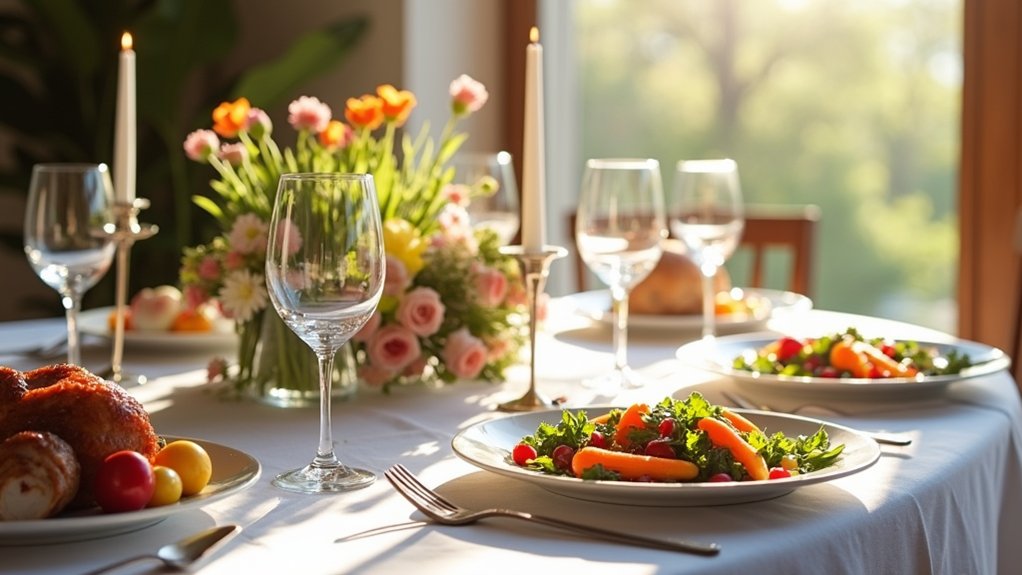
As Easter approaches, you'll find yourself immersed in a tapestry of rich traditions that have evolved over centuries, each one adding depth to this springtime celebration. From bustling family gatherings to elaborate festive meals, Easter's cultural significance shines through in every bite and sip!
Your grandmother's heritage recipes might take center stage, transforming seasonal ingredients into memorable dishes that everyone looks forward to each year. Whether it's a glazed ham that's been perfected over generations or that slightly wobbly dessert that nobody can resist, these symbolic foods create the perfect backdrop for communal feasting. The beauty of Easter traditions isn't just in the eating, though – it's in the gathering, the sharing, and yes, the occasional debate about whose deviled eggs are actually the best! A well-paired wine can elevate the entire meal, enhancing flavors and creating a harmonious dining experience, especially if you consider key wine pairings that complement the dishes served.
Decoding Wine's Taste Signatures

Wine's flavor profiles can be a delightful mystery to unravel, especially when you're planning the perfect Easter feast! Understanding basic taste profiles will transform you from confused shopper to confident connoisseur in no time. When you're examining wine descriptions, look for specific flavor notes that complement your menu – fruity, earthy, or spicy characteristics each play differently with various dishes.
You'll notice some wines boast berry undertones while others hint at chocolate or pepper, and that's where the magic happens! Your palate might detect these subtle differences even if you're not a seasoned wine buff. Don't worry about getting it "perfect" – half the fun is in the experimentation! Remember, those flavor notes on the bottle aren't just fancy marketing; they're your roadmap to creating memorable Easter pairings that'll have everyone raising their glasses in approval. To further enhance your selections, consider exploring optimal serving temperature for red wines to ensure every sip is enjoyed at its best.
Sweet-Savory Balance Fundamentals

Now that you've got the flavor profiles down, let's talk about the dance between sweet and savory that makes Easter dinner wine pairing so exciting! When your honey-glazed ham meets the right wine, it's like a flavor explosion in your mouth. The sweet balance of a slightly off-dry Riesling can complement those caramelized edges, while the savory contrast of a Pinot Noir enhances the meat's depth. Additionally, understanding cheddar's flavor profiles can further enhance your wine selection for Easter dinner, ensuring a delightful experience.
- Think of sweet and savory as dance partners—they should complement, not step on each other's toes
- Your wine's acidity cuts through fatty foods, cleansing your palate between bites
- The right pairing raises both wine and food, creating a "1+1=3" experience
| Food Element | Sweet Wine | Savory Wine | Sweet-Savory Balance | Best Pairing |
|---|---|---|---|---|
| Glazed Ham | Riesling | Pinot Noir | Sweet balances salt | Riesling |
| Lamb | None | Syrah | Savory enhances savory | Syrah |
| Deviled Eggs | Prosecco | Sauvignon Blanc | Acid cuts richness | Sauvignon Blanc |
| Asparagus | Gruner Veltliner | Verdejo | Herbal complements | Gruner Veltliner |
| Carrot Cake | Sauternes | Tawny Port | Sweet with sweet | Sauternes |

Wine Recommendations
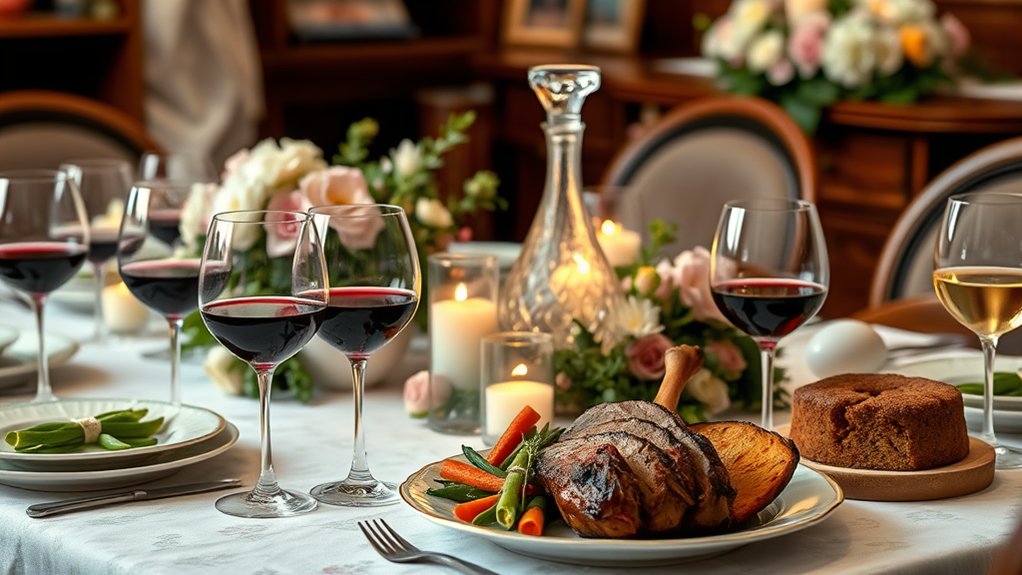
Let's look at some fantastic wine choices that'll make your Easter meal truly shine. Whether you're serving a traditional honey-glazed ham, herb-crusted lamb, a seafood feast, or a vegetarian spread, there's a perfect bottle waiting to enhance those festive flavors. You'll also want to take into account some special dessert wines that complement those chocolate eggs and hot cross buns, because nothing says "celebration" quite like ending your Easter meal with a harmonious sweet sip! For seafood dishes, consider pairing with classic white wine pairings that elevate the flavors of your meal.
Traditional Ham Pairings
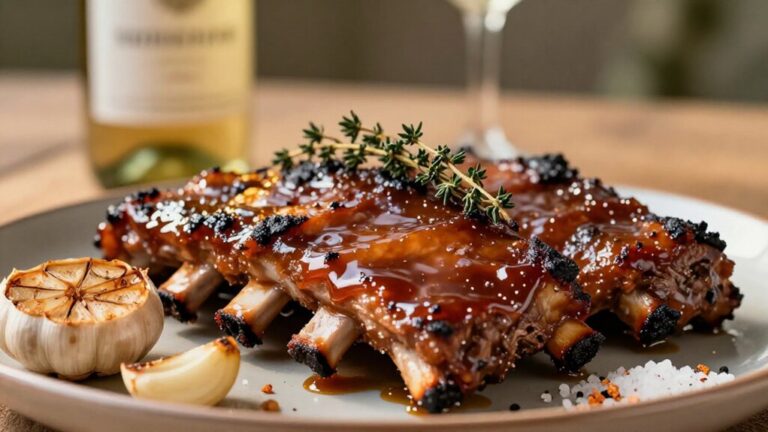
Three exceptional wine varieties stand out when pairing with traditional Easter ham, each bringing something magical to your holiday feast. Riesling, with its perfect balance of sweetness and acidity, complements honey-glazed ham varieties beautifully, cutting through the saltiness while enhancing the sweetness. Pinot Noir, a red that's not too bold, plays wonderfully with smoky ham glazed with brown sugar or maple, bringing out those caramelized flavours without overpowering. Don't overlook Rosé, which might be your secret weapon with fruity glaze options like cherry or pineapple – it's revitalizing and versatile!
Lamb Companions
When it comes to complementing your succulent Easter lamb, the wine selection becomes an artful dance of flavors that'll transform your meal into a memorable experience. Whether you're roasting with rosemary and garlic or going bold with Moroccan spices, your lamb preparation techniques deserve a worthy wine partner!
For herb-crusted cuts, reach for a medium-bodied Syrah – it's like they were made for eachother! Seasoning options like mint and thyme? Try a juicy Malbec that'll make your tastebuds do the happy dance. If you've gone for a more robust marinade with cumin or paprika, don't be shy about popping open that Cabernet Sauvignon you've been saving.
Seafood Wine Matches
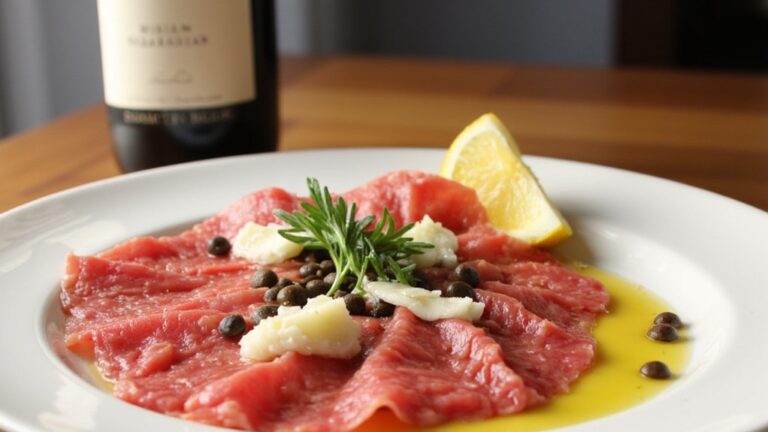
Why limit your Easter feast to land-based proteins when the bounty of the sea offers such spectacular dining possibilities? For lighter seafood varieties like oysters, shrimp cocktail, or delicate white fish, reach for a crisp Sauvignon Blanc or unoaked Chardonnay that won't overwhelm their subtle flavor profiles. If you're serving salmon or tuna, you'll want something with a bit more body—try a Pinot Noir or even a dry rosé, which bridges the gap beautifully between red and white!
Spicier seafood dishes, like cajun shrimp or blackened fish, pair wonderfully with an off-dry Riesling that can tame the heat while complimenting the seasoning. And don't forget about bubbles! A glass of Prosecco or Cava isn't just festive, it's practically made for seafood platters—the effervesence cuts through richness and cleanses your pallete between bites.
Vegetarian Easter Options
While many traditionalists focus on ham or lamb for Easter dinner, vegetarian options deserve equally thoughtful wine pairings that celebrate spring's harvest! Your meat-free feast can shine with the right bottles on the table.
For vegetarian appetizers like spring pea crostini or artichoke dip, reach for a crisp Sauvignon Blanc or unoaked Chardonnay. The bright acidity cuts through creamy textures while highlighting the freshness of seasonal vegetables. When serving mushroom Wellington or asparagus tarts as mains, try a light Pinot Noir or earthy Beaujolais – they've got just enough body without overwhelming delicate flavors.
Don't forget about rosé! It's practically Easter in a glass, with it's pretty pink hue and versatile fruit profile that complements everything from roasted carrots to spinach quiche.

Dessert Wine Selections
As the final course of your Easter feast approaches, you'll want to select dessert wines that complement those sweet treats without competing for attention. For chocolate desserts, port is your best friend, with its rich, berry notes creating magic in every bite. If you're serving fruity desserts like tarts, consider a late-harvest Riesling that'll dance alongside those bright flavors.
Among popular dessert wine styles, Sauternes pairs beautifully with creamy cheesecake, while Moscato d'Asti works wonders with light pastries. Don't overthink your dessert pairings – the rule of thumb is that your wine should be sweeter than your dessert, otherwise it'll taste bitter by comparision! And remember, serving these gems in smaller glasses isn't being stingy, it's actually the proper way to enjoy these liquid treasures.
Vegan-Friendly Options

If you're serving a vegan-friendly Easter feast, you've got some exciting wine options to explore, from sparkling rosé alternatives to organic whites and biodynamic reds that'll compliment your plant-based dishes perfectly. You'll find that sulfite-free wine selections aren't just better for some guests' sensitivities, they're often produced with more earth-friendly methods that align with vegan values. Whether you're pairing with mushroom wellington or roasted vegetable tarts, there's a cruelty-free wine that'll enhance your compassionate celebration!
Sparkling Rosé Alternatives
For those seeking vegan-friendly options beyond traditional sparkling rosé, you're in luck! Many producers now craft delicious sparkling alternatives that don't use animal-derived fining agents like gelatin or isinglass. Look for bottles specifically labeled "vegan" or research the producer's methods beforehand.
Some fantastic vegan rosé varieties include Crémant d'Alsace Rosé, which offers crisp apple notes with a hint of strawberry, or Spanish Cava Rosado that won't break the bank but still delivers those celebratory bubbles. You'll find that Australian sparkling shiraz provides a unique twist—it's purple-red rather than pink, with rich berry flavors that pair beautifly with hearty Easter mains!
Organic Whites Matter
When choosing organic white wines for your Easter celebration, you'll discover a whole world of vegan-friendly options that don't sacrifice flavor for ethics! Many winemakers are embracing organic farming techniques that avoid synthetic pesticides and fertilizers, creating wines that're kinder to the planet and your body.
Look for bottles with organic certification on the label, which guarentees sustainable practices from vine to glass. Crisp Sauvignon Blancs and mineral-driven Grüner Veltliners make fantastic pairings with spring vegetables and light appetizers. You'll be amazed how these clean, bright whites can transform your Easter feast—who knew being eco-conscious could taste so good? Your guests will appreciate both your environmental consciousness and your excellent taste, a win-win that'll have everyone raising their glasses!
Biodynamic Red Choices
Shifting from those crisp organic whites, let's explore the world of biodynamic reds that'll bring richness and depth to your Easter table! These earthy gems are made following biodynamic practices that go beyond organic, fundamentally treating the vineyard as one living organism—think cosmic farming with a touch of mysticism, but boy do they deliver!
You'll love how a peppery Syrah or robust Malbec complements your lamb dishes, with flavor profiles ranging from dark berries to chocolate and spice. Many wineries like Benziger and Quivira offer vegan-friendly options that avoid animal-based fining agents, so everyone at your table can indulge guilt-free. Look for the Demeter certification on the bottle, and don't be afraid to tell your dinner guests you've gone all cosmic with your wine selection—it's a conversation starter!
Plant-Based Food Pairings
Vegans at your Easter celebration deserve spectacular wine pairings, too! When serving plant based proteins like seitan roasts or lentil loafs, reach for a medium-bodied red that won't overpower the subtler flavors—Pinot Noir and Grenache are your new best friends. These wines have enough personality to stand up to hearty dishes but won't steal the show.
For those gorgeous seasonal vegetables like asparagus, artichokes, and spring peas, you'll want something crisp and vibrant. A unoaked Chardonnay or Grüner Veltliner cuts through earthy flavors with invigorating acidity, while Sauvignon Blanc practically high-fives anything green on the plate! Trust me, your vegan guests will be thrilled that you've thought beyond the "just serve them anything" approach that's sadly all too common.
Sulfite-Free Wine Selections
Speaking of mindful choices for your guests, let's talk about sulfite-free wine options that'll make everyone's Easter celebration even more special! Sulfites occur naturally in wine as a byproduct of fermentation, but many producers add extra sulfite sources as preservatives, which some guests might be sensitive to.
Brands like Frey Vineyards and Our Daily Red offer delicious organic options without added sulfites. The health benefits of going sulfite-free can include fewer headaches and allergic reactions for sensitive guests – plus, these wines are often vegan-friendly too!
You'll notice these wines might have a slightly different flavor profile, sometimes more vibrant and fruit-forward. Don't worry about sacrificing quality though – today's sulfite-free wines are absolutley delightful and pair wonderfully with your plant-based Easter dishes!
Temperature Matters for Pouring
While many wine enthusiasts focus exclusively on selecting the perfect bottle, the temperature at which you're serving that gorgeous vintage is just as critical to your Easter dinner success. Following wine serving temperature guidelines can dramatically transform your sipping experience, bringing out the intended flavors and aromas of each variety.
- Red wines aren't meant to be "room temperature" (that's actually too warm!) – aim for 60-65°F, which means popping them in the fridge for 15 minutes before serving
- White wines shine at 45-50°F, just slighly warmer than your refridgerator's standard setting
- Sparkling wines need to be properly chilled at 40-45°F to maintain those delightful bubbles and prevent an explosive opening!
Frequently Asked Questions
Should I Serve Different Wines With Appetizers and Dessert?
When pairing wines throughout your meal, changing selections enhances the experience. Start with appetizers, which pair beautifully with crisp whites or light rosés that won't overwhelm delicate flavors. For dessert, transition to dedicated sweet wines designed to complement rather than compete with your final course's sweetness. This progression creates a more harmonious tasting journey from beginning to end.
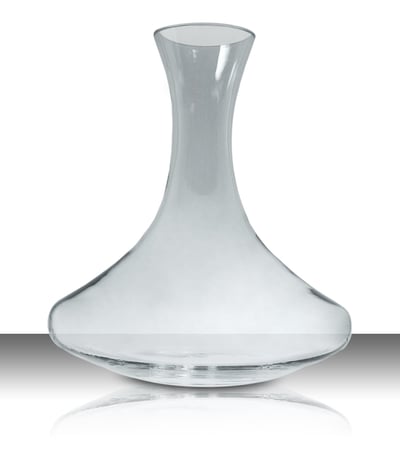
How Far in Advance Should I Decant Red Wines?
Different wines require different decanting times to best complement your meal. When pairing with rich, hearty dishes like steak or lamb, decant full-bodied reds 1-2 hours before serving to allow their robust flavors to fully develop. For lighter fare such as grilled chicken or pasta with tomato sauce, lighter reds need just 30 minutes of decanting. This aeration process softens tannins, resulting in smoother wines that won't overpower your food but rather enhance the dining experience with better balanced flavors.
Can I Serve Boxed Wine for Easter Dinner?
When selecting boxed wines for your Easter dinner, consider rich reds like Cabernet Sauvignon or Merlot to complement traditional ham, while Pinot Noir offers versatility with both lamb and vegetable sides. For a lighter option, boxed Sauvignon Blanc or unoaked Chardonnay pairs beautifully with spring vegetables and seafood courses. Many premium boxed varieties now rival their bottled counterparts in quality while offering extended freshness – perfect for serving throughout your Easter celebration.
What Wine Works With Chocolate Easter Treats?
When pairing wine with chocolate Easter treats, opt for dessert wines that complement the rich cocoa flavors. Port offers deep fruit notes that enhance milk chocolate, while Madeira's caramel undertones work beautifully with darker varieties. Late-harvest Zinfandel brings berry characteristics that highlight chocolate's natural sweetness. These wine selections create balanced flavor combinations by matching the intensity of chocolate Easter confections with appropriately sweet, robust wine profiles.
Are There Non-Alcoholic Options That Pair Well With Lamb?
When savoring the rich, distinctive flavors of lamb, certain wines create exceptional harmony on the palate. A robust Cabernet Sauvignon with its tannic structure or a peppery Syrah perfectly balances lamb's gamey character. For herb-crusted preparations, consider a Bordeaux blend whose complexity mirrors the dish's depth. Mediterranean-style lamb finds its match in Tempranillo's earthy notes, while mint-accompanied lamb calls for the bright fruit profiles of Merlot or Pinot Noir.