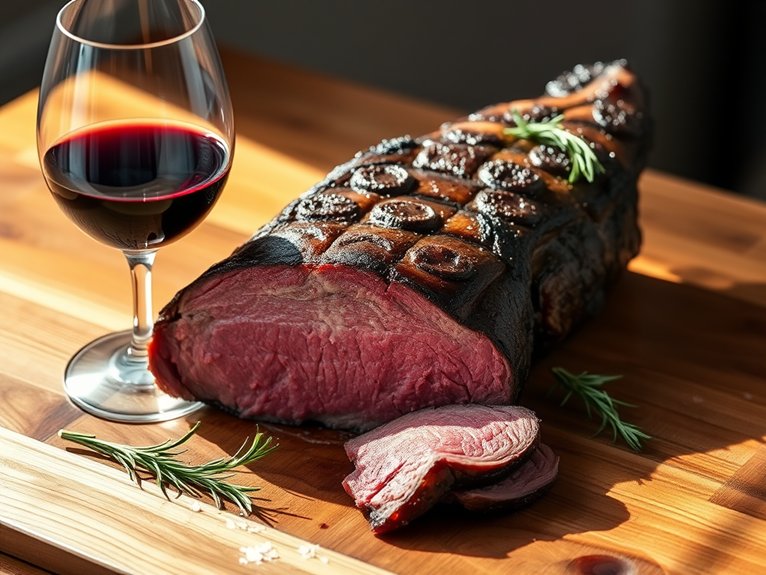
Like Romeo and Juliet's perfect match, roast beef and wine create a love story on your palate that's worth getting right. You've probably stood in the wine aisle, scratching your head over which bottle will best complement your carefully prepared roast. Don't worry – you're not alone in this culinary quest. From bold Cabernets to surprising white wine options, there's a whole world of perfect pairings waiting to transform your next beef dinner into a memorable feast.
Key Takeaways
- Cabernet Sauvignon pairs exceptionally well with roast beef due to its bold tannins and dark fruit flavors.
- For rare, pan-seared beef, choose young red wines with robust character to complement the meat's intensity.
- Match slow-roasted, well-done cuts with mellower, aged wines that won't overpower the meat's developed flavors.
- Consider your sauce: mushroom gravy pairs with Syrah, while horseradish sauce works beautifully with Pinot Noir.
- Merlot blends offer a sophisticated pairing for herb-seasoned roast beef, featuring velvety texture and plummy notes.
Understanding Different Cuts of Roast Beef
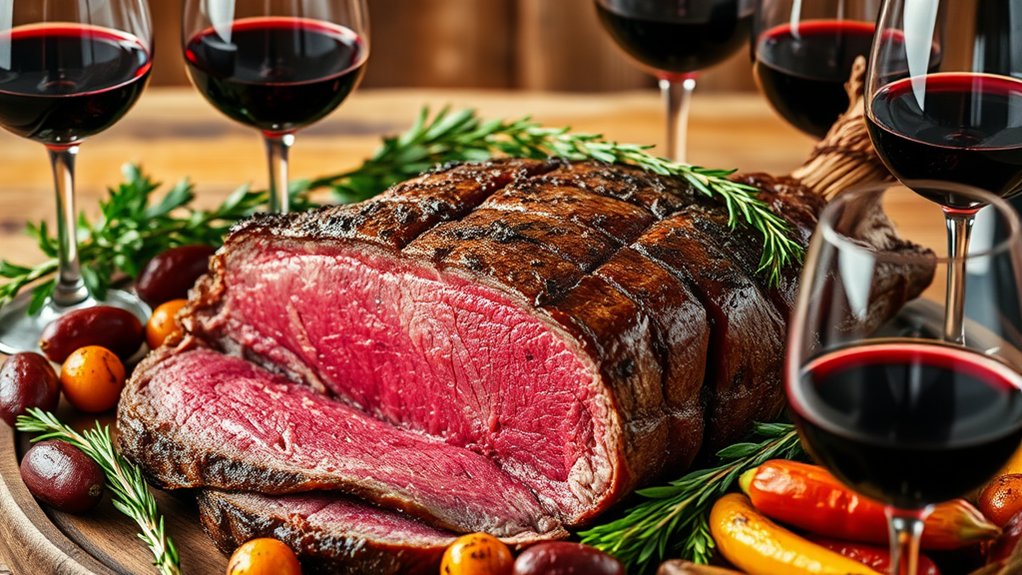
When it comes to selecting the perfect cut of roast beef, you'll find yourself faced with a mouth-watering array of options, each with its own unique characteristics and flavor profile. From the budget-friendly chuck roast, perfect for slow cooking and delivering rich, beefy goodness, to the elegant sirloin steak that's just begging to be roasted to medium-rare perfection, you've got choices that'll make your inner chef dance with joy.
If you're feeling fancy, there's the prime rib that'll have your dinner guests swooning, or the tender tenderloin that practically melts in your mouth. Don't let the names intimidate you – whether you're team "rare and juicy" or "well-done and hearty," there's a cut that's destined to become your new best friend in the kitchen.
The Science Behind Wine and Beef Pairing
Although pairing wine with roast beef might seem like a mysterious art reserved for sommelier wizards, there's actually some fascinating science behind why certain wines make your roast beef sing while others fall flat. It's all about creating that perfect flavor intensity balance between your wine and meat.
Here's what's happening on your taste buds when you pair wine with beef:
- Tannins in red wine bind with proteins in the meat, cleansing your palate
- Wine's acidity cuts through the beef's richness, creating brightness
- Complex flavor compounds in both interact to create new taste sensations
- High alcohol content in wine helps dissolve fat-soluble flavor molecules
- The wine's temperature affects how volatile compounds release their aromas
Additionally, the proper serving temperature of wine can enhance these flavor interactions, ensuring that both the wine and the beef reach their full potential. You'll notice these interactions working together to create that "perfect bite" experience you're craving!
Classic Red Wine Selections for Roast Beef

Since you're ready to elevate your roast beef dinner to new heights, let's explore the time-tested red wines that'll make your taste buds dance with joy. You can't go wrong with a bold Cabernet Sauvignon, which brings robust tannins and dark fruit flavors that'll hug your roast like a warm blanket on a chilly evening.
If you're feeling a bit adventurous, try a sophisticated Merlot blend that'll knock your socks off with its velvety texture and plummy notes. These wines are like the perfect dance partners for your beef – they know all the right moves and won't step on your meal's toes! Whether you choose the powerful Cab or the smooth-talking Merlot blend, you're in for a flavor party that'll have your dinner guests begging for seconds. Additionally, enjoying red wine in moderation may offer health benefits, including support for heart health and cognitive function.
How Cooking Methods Affect Wine Choice
The way you cook your roast beef can make a world of difference in your wine selection, much like how changing dance shoes can transform your moves on the dance floor. Different grilling methods and braising techniques create unique flavor profiles that'll dance differently with various wines.
- Rare, pan-seared beef loves bold, young reds that can match its robust, bloody character.
- Slow-roasted, well-done cuts pair beautifully with mellower, aged wines.
- Braised beef with rich gravy calls for full-bodied wines with higher tannins.
- Grilled beef with charred exterior needs smoky, intense wines to complement.
- Sous vide preparations work best with medium-bodied, fruit-forward options.
It's also essential to consider how different production methods can influence the overall experience of wine pairing. You'll want to take into account how your cooking method affects the meat's texture and intensity before picking your perfect wine partner. It's like matchmaking for your taste buds!
Seasonings and Sauces: Matching Wine Accordingly
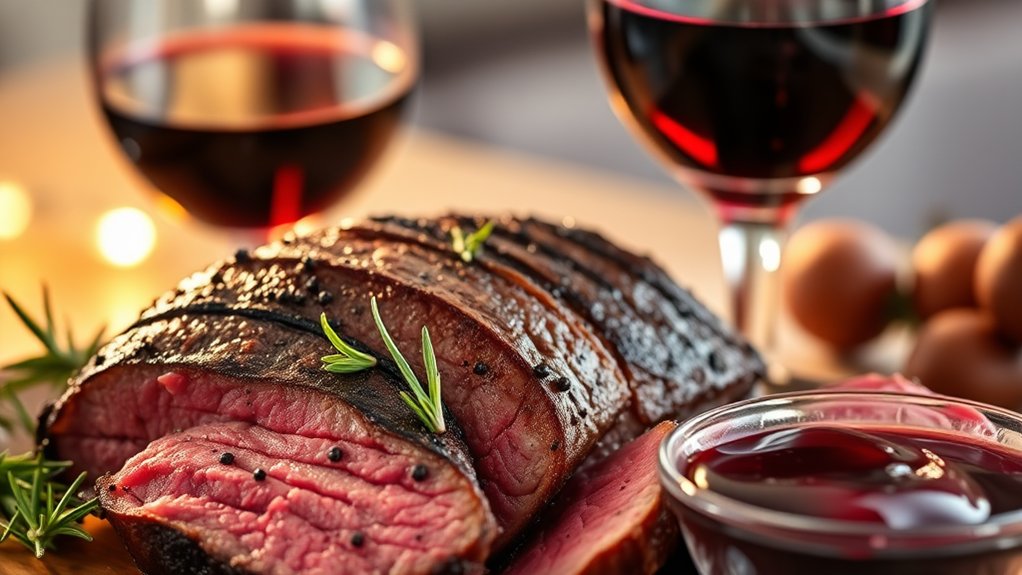
When it comes to seasoning your roast beef, your choice of wine needs to shift gears just as dramatically as your spice selection. If you're going bold with black pepper and garlic, you'll want a robust Cabernet Sauvignon that can stand up to those punchy seasoning profiles. For herbs like rosemary and thyme, a medium-bodied Merlot will dance perfectly with those earthy notes.
Don't forget about your sauce types! A rich mushroom gravy calls for an equally complex Syrah, while a tangy horseradish sauce pairs beautifully with a crisp Pinot Noir. Here's a fun tip: if you're slathering your roast in a wine-based sauce, you can't go wrong pairing it with the same wine you've used in cooking – it's like they're already best friends! Additionally, consider serving your wine at optimal temperatures to enhance its flavors even further.
White Wine Options for Beef Dishes
Most wine lovers strictly stick to reds when serving beef, but you're about to discover some amazing white wine options that'll make your taste buds do a happy dance! While unconventional, these white wines can create fantastic pairings with your perfectly cooked roast.
Here's what you'll want to try:
- Full-bodied Chardonnay options from California or Burgundy that'll stand up to rich, buttery beef.
- Aged white Bordeaux that brings nutty complexity to complement herb-crusted roasts.
- An oaked Sauvignon Blanc that adds a zesty twist to pepper-crusted cuts.
- Viognier that'll dance beautifully with garlic and rosemary seasonings.
- White Rhône blends that pack enough punch to handle robust beef flavors.
Additionally, these white wines often showcase unique characteristics influenced by fermentation techniques and aging processes. Don't let wine snobs tell you whites can't hang with beef – these pairings might just become your new favorites!
Regional Wine and Roast Beef Traditions
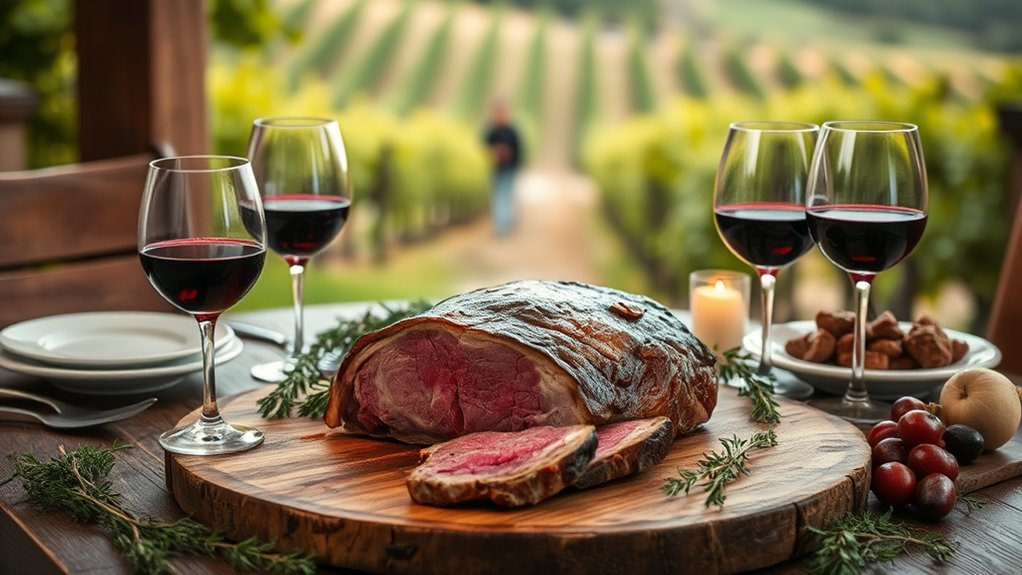
Different regions around the world have developed their own delightful marriage of local wines and roast beef preparations, creating culinary traditions that'll make you want to book a flight immediately. You'll find French traditions pairing their succulent beef with bold Bordeaux wines, while Italian pairings often feature Chianti Classico alongside herb-crusted roasts.
The regional variations you'll encounter reflect fascinating cultural influences, from England's Sunday roast with Port wine to Argentina's asado served with robust Malbec. You haven't lived until you've tried Spain's roasted vaca vieja with a glass of aged Rioja! Each region's unique approach shows how local tastes and available ingredients have shaped these perfect matches over centuries, giving you countless delicious combinations to explore.
Expert Tips for Perfect Wine Temperature and Service
To access the full potential of your wine pairing experience, serving temperature and presentation make all the difference in the world! You'll want to master these wine service techniques to elevate your roast beef dinner from good to absolutely spectacular. Remember, even the finest wines can fall flat if they're not served at their sweet spot temperature.
- Red wines should be served at "room temperature" (60-65°F), not the balmy 72°F of your dining room
- Decant full-bodied reds 30-45 minutes before serving to let them "breathe"
- Hold wine glasses by the stem to avoid warming the wine with your hands
- Store opened bottles with a vacuum sealer to preserve freshness
- Use a wine thermometer if you're serious about nailing the perfect temperature
- For fortified wines, the ideal serving temperature is typically around 55°F for sweet varieties, enhancing their rich flavors.
These simple tricks will transform you from wine rookie to home sommelier in no time!

Frequently Asked Questions
How Long Can I Store Leftover Roast Beef With Wine-Based Sauce?
You can safely store your leftover roast beef with wine sauce in the refrigerator for 3-4 days. For longer leftover storage, freeze the meat and sauce separately for up to 3 months.
Can Pregnant Women Consume Dishes Cooked With Wine and Roast Beef?
You can safely eat fully-cooked roast beef while pregnant, but seek wine alternatives for cooking, as alcohol doesn't completely evaporate. Follow health guidelines and consult your doctor for specific recommendations.
Is It Acceptable to Serve Boxed Wine With Roast Beef?
You can serve boxed wine with roast beef if it's good quality. While some boxed wines match well with beef's rich flavor, you'll want to choose one that's received positive reviews.
Should I Let Guests Bring Their Own Wine to a Roast Dinner?
You'll find that letting guests bring wine shows thoughtful wine etiquette, as it respects guest preferences. However, you're welcome to provide your own selection as the primary offering.
How Much Wine Should I Budget per Person for a Roast Dinner?
You'll want to budget one-half bottle (375ml) of wine per guest for a standard dinner. For longer events, plan on one bottle per person for proper wine serving.