You’ll discover that ice wine is winter’s most precious nectar, traditionally crafted in Germany and Canada when temperatures plunge below -8°C (17°F). Brave harvesters work through frigid nights to gather naturally frozen grapes, which are then gently pressed to release concentrated drops of sweetness. This labor-intensive process yields a luxurious dessert wine bursting with honey, apricot, and tropical fruit flavors. Let’s uncork the fascinating world of this frozen treasure together.
Key Takeaways
- Ice wine is a dessert wine produced from grapes naturally frozen on the vine at temperatures below -8°C (17°F).
- Harvesting occurs before dawn when grapes are frozen solid, requiring skilled crews to hand-pick fruit in extreme conditions.
- Main producers include Germany and Canada, with the Niagara Peninsula being particularly renowned for high-quality ice wines.
- Flavors typically include honey, apricot, and tropical fruits, making it ideal for pairing with blue cheese and desserts.
- Production costs are high due to specialized equipment, labor-intensive harvesting, and limited juice yield from frozen grapes.

The Origins and History of Ice Wine

Over a thousand years ago, while medieval winemakers were probably just trying to salvage their frozen grapes, they accidentally stumbled upon what would become one of the world’s most luxurious wines. You’ll find this happy accident rooted in ancient traditions throughout Germany’s wine regions, where vintners first discovered that pressing frozen grapes created an intensely sweet, concentrated nectar.
As you explore ice wine’s cultural significance, you’ll discover how these determined winemakers turned winter’s harsh bite into liquid gold. They’d brave freezing temperatures before dawn, racing against the sun to harvest perfectly frozen grapes. It’s amazing to think that what started as a desperate measure in medieval Europe has evolved into a prestigious craft that’s now mastered in places like Canada’s Niagara Peninsula.
How Ice Wine Is Made: a Labor of Love
Making ice wine demands a perfect storm of patience, precision, and perhaps a dash of madness, as winemakers wait for temperatures to plummet to exactly -8°C (17°F) or below. You’d think these dedicated souls were a bit frostbitten in the head, bundling up in the dead of night to hand-pick frozen grapes that are hard as marbles!
The harvesting techniques are where things get really interesting – you’ll find entire crews racing against time, their headlamps bobbing like fireflies through dark vineyards. Once the precious frozen berries are gathered, they’re quickly pressed while still frozen, yielding mere drops of intensely concentrated juice. The fermentation processes are painfully slow, sometimes taking months, as the high sugar content makes those poor yeasts work overtime. It’s nature’s candy-making workshop, with winemakers as the cold-weather confectioners. The result is a unique dessert wine that embodies the essence of dessert wines crafted from nature’s winter harvest.
Key Growing Regions Around the World

While Germany and Canada proudly wear the crown as ice wine royalty, you’ll find these liquid gold makers scattered across several of the world’s chillier wine regions. Germany’s vineyards along the Rhine have perfected the art over centuries, while Canada’s unique terroir, especially in Ontario and British Columbia, produces some of the world’s most sought-after bottles.
You’ll discover that Austria enforces some of the strictest regulations for ice wine production, ensuring exceptional quality in every bottle. In the United States, production clusters mainly in the Finger Lakes region and Michigan, where winter’s icy grip creates perfect conditions. Even Japan’s getting in on the action, adapting traditional techniques to their climate, while Switzerland’s alpine climate offers ideal conditions for these frozen treasures – though good luck finding these rare Swiss gems outside their borders!


The Science Behind Frozen Grapes
The fascinating science of ice wine starts with a simple yet essential moment: the precise instant when water molecules within grape cells form into ice crystals. You’ll find it amazing how nature’s deep freeze concentrates the grape sugar while the water remains trapped in icy crystals, leaving behind an incredibly sweet nectar that’s perfect for frozen fermentation.
Think of it as nature’s way of doing all the hard work – you’re basically getting a grape essence that’s been naturally concentrated by Jack Frost himself! When temperatures hit around -8°C (17°F), the magic happens as the water freezes but the sugars don’t. It’s like getting Mother Nature to perform her own sweet chemistry experiment, resulting in juice that’s more concentrated than your morning coffee after pulling an all-nighter. The process of frozen fermentation allows winemakers to craft a truly unique and exquisite beverage that highlights the flavors of the grapes.
Ice Wine Grape Varieties

Ice wine wizards traditionally favor specific grape varieties that can withstand winter’s icy grip while maintaining their distinctive flavors. You’ll find Riesling characteristics shining through with their perfect balance of acidity and unique sweetness, making it the superstar of ice wine production. If you’re exploring ice wine territory, you can’t miss Vidal Blanc, the hardy hybrid that laughs in the face of harsh vineyard conditions while delivering honey-like notes that’ll make your taste buds dance.
For those craving something different, there’s Cabernet Franc, the red grape variety that proves ice wine isn’t just a white wine’s game. The timing of grape harvesting is essential with these varieties – you’ve got to wait until Mother Nature delivers that perfect frost, usually when you’re cozied up in your warm bed at 3 AM!
Tasting Notes and Flavor Profiles
Savoring your first sip of ice wine reveals an astonishing symphony of flavors that’ll dance across your palate like sugar-coated ballerinas in toe shoes. You’ll discover concentrated bursts of honey, apricot, and tropical fruits, all wrapped in a luxurious, nectar-like sweetness that’s perfectly balanced by invigorating acidity.
When practicing proper tasting techniques, you’ll want to let the wine linger on your tongue to reveal its flavor nuances. Notice how the initial honeyed sweetness evolves into layers of candied citrus, caramelized peach, and exotic lychee. Don’t be surprised if you catch hints of butterscotch, toasted nuts, or even a whisper of vanilla – these little flavor surprises are what make ice wine tasting feel like unwrapping a delicious present for your taste buds!
Food Pairing Recommendations
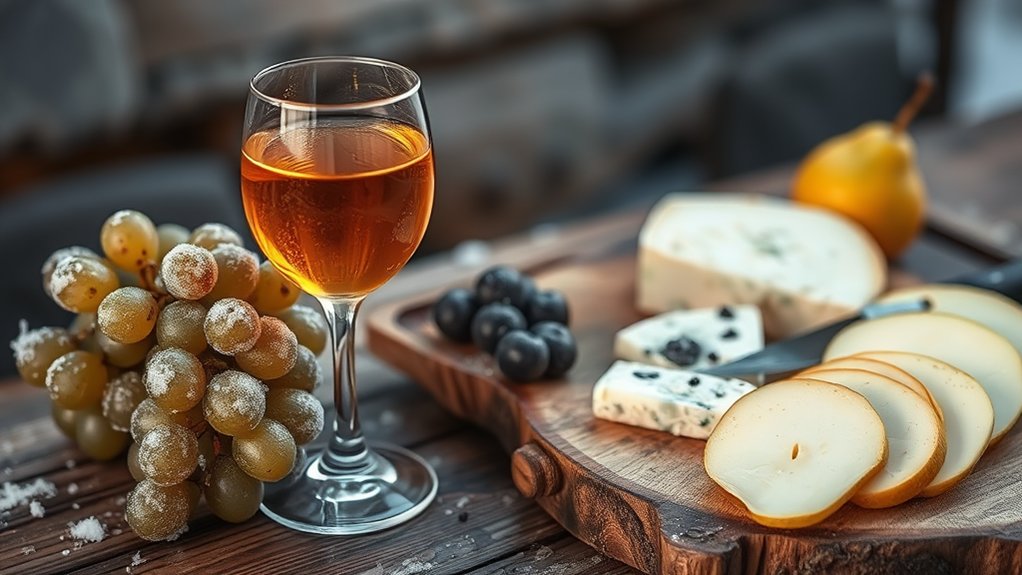
While these remarkable flavors make ice wine a stunning standalone sipper, pairing it with the right foods will take your tasting experience to new heights. You’ll find that ice wine’s honeyed sweetness and bright acidity create magical moments with both savory dishes and dessert pairings. The key is balancing the wine’s intensity with complementary or contrasting flavors that’ll make your taste buds dance.
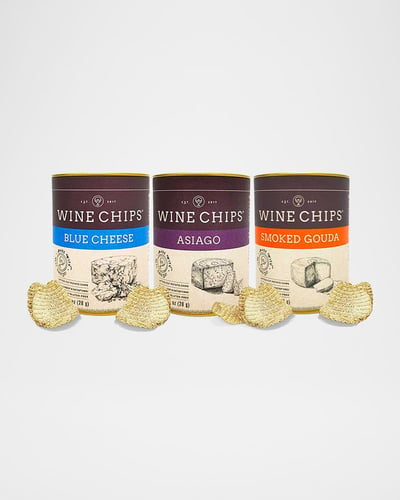
- Creamy blue cheeses and aged cheddars, which create a heavenly sweet-and-salty tango
- Fresh fruit tarts or poached pears that echo the wine’s natural fruit notes
- Dark chocolate truffles or flourless chocolate cake for an indulgent contrast
- Spicy Asian cuisine, where the wine’s sweetness tames the heat
- Foie gras or pâté, because let’s face it, you’re already feeling fancy with that ice wine!
Serving and Storage Guidelines
To get the most from your precious ice wine investment, you’ll want to master the art of proper serving and storage techniques. When it comes to serving temperature, think Goldilocks – not too warm, not too frozen, but just right at 6-8°C (43-46°F). You’ll reveal the wine’s full potential by chilling it for about 30 minutes before pouring.
For storage conditions, treat your ice wine like the liquid gold it is. Keep bottles away from light and heat, storing them horizontally in a cool, dark place around 12°C (54°F). While most wines beg to be opened immediately, your ice wine will happily age for 10+ years when stored properly. Just don’t forget about that special bottle hiding in your cellar – life’s too short to save the good stuff forever!
The Economics of Ice Wine Production

Making ice wine isn’t just a labor of love – it’s an expensive gamble that keeps winemakers on their toes and accountants reaching for antacids. With soaring production costs and unpredictable weather, you’ll find that creating this liquid gold requires deep pockets and even deeper patience. Market demand keeps growing, though, and savvy producers are developing clever pricing strategies to compete in both local and export markets.
- You’ll need about 8-10 times more grapes for ice wine than regular wine
- Specialized harvesting equipment can cost upwards of $100,000
- Labor costs skyrocket due to midnight harvesting requirements
- Storage facilities need precise temperature controls year-round
- Marketing expenses are higher due to premium positioning
As consumer trends shift toward unique luxury experiences, ice wine’s position in regional competition remains strong, especially in prestigious markets like Asia where it commands top dollar.
Climate Change Impact on Ice Wine’s Future
As global temperatures continue to rise, ice wine producers face an increasingly uncertain future that’s putting their centuries-old craft on thin ice – pun absolutely intended. You’ll find that climate variability effects are wreaking havoc on traditional ice wine regions, where unpredictable winter patterns make harvesting a nail-biting gamble.
The warming temperatures challenges aren’t just giving vintners sleepless nights; they’re forcing some to contemplate hanging up their frozen grape-picking mittens for good. In regions like Germany’s Rheingau and Canada’s Niagara Peninsula, you’re seeing fewer days that reach the essential -8°C (17.6°F) needed for harvest. While some producers are exploring high-altitude vineyards or new hybrid grape varieties, others are turning to artificial freezing – though purists might give that idea the cold shoulder!
Frequently Asked Questions
Can Ice Wine Be Made From Artificially Frozen Grapes?
You’ll find that artificial freezing of grapes isn’t permitted for true ice wine production. It ruins the grape quality and defeats the natural process that makes this precious dessert wine so special.
Is Ice Wine Always Sweet, or Are There Dry Versions?
You’ll always find ice wine to be sweet, as the production process concentrates sugars in frozen grapes. There aren’t any dry varieties because sweetness levels are essential to authentic ice wine.
Why Don’t More Wineries Produce Ice Wine?
You’d be surprised that making ice wine isn’t profitable for most wineries. Beyond limited market demand, you’ll face risky production challenges: freezing temperatures must arrive at precisely the right time.
How Long Can an Opened Bottle of Ice Wine Last?
You’ll get 3-5 days of opened longevity from your ice wine if you store it properly. Keep it refrigerated with a tight cork, and the storage conditions will help maintain its sweet flavors.
Does Ice Wine Improve With Age Like Regular Wine?
You’ll find most ice wines don’t improve greatly with age. While they have some aging potential, their vibrant fruit-forward flavor profile is best enjoyed within 5-10 years of bottling.