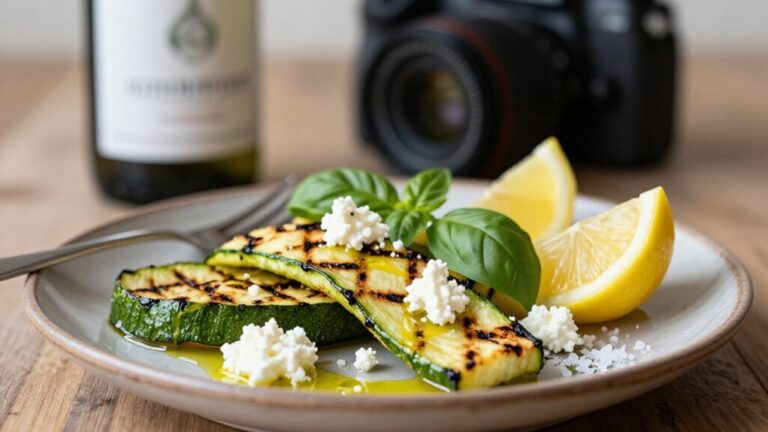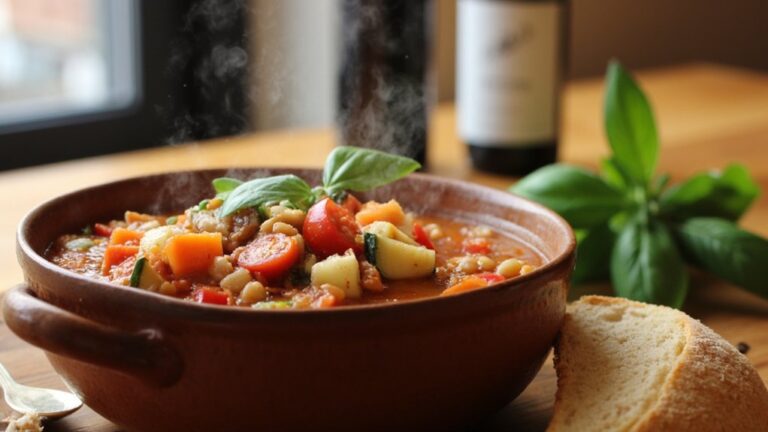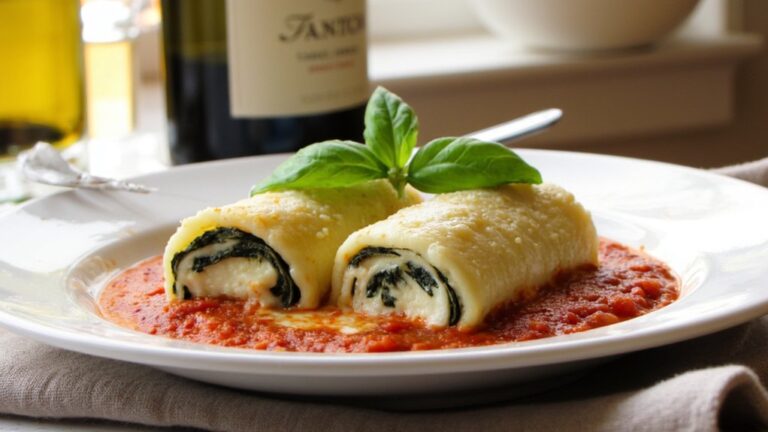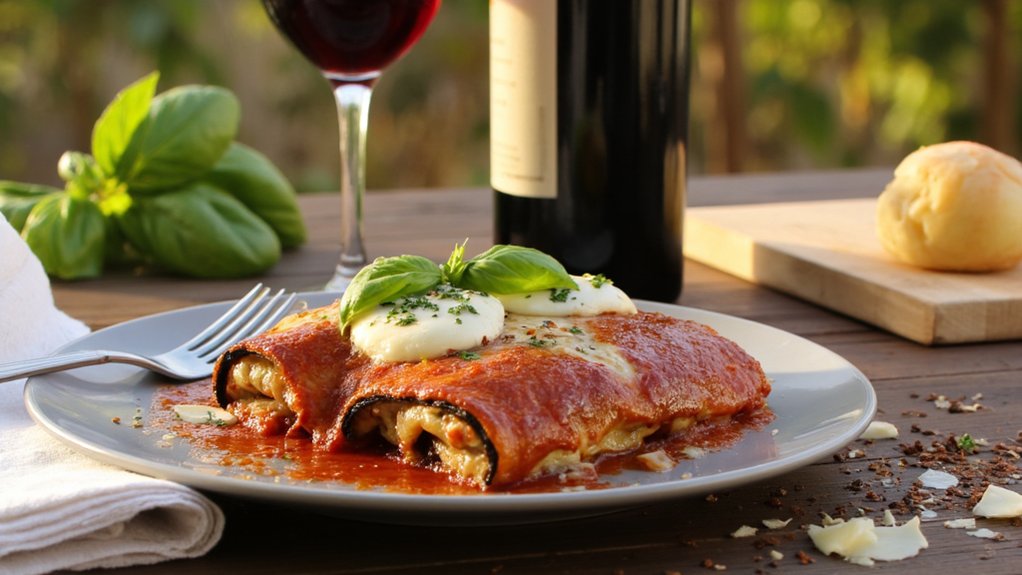
You’ll want a wine that cuts through the richness without overshadowing those delicate eggplant flavors you worked hard to nail. Acidic wines are your best friend here—they’ll cleanse your palate between bites and keep the creamy cheese filling from feeling too heavy. Try a medium-bodied red like Pinot Noir or Barbera for earthy minerality that echoes the roasted eggplant, or go lighter with a crisp Sauvignon Blanc if you’re after something fresher. The key’s finding balanced acidity that won’t compete with your dish, though there’s definitely more to discover about what makes these pairings truly shine.
Key Takeaways
- Medium-bodied wines with good acidity—like Pinot Noir, Barbera, or crisp whites—cut through cheese richness without overwhelming delicate eggplant flavors.
- Acidity cleanses the palate between bites, preventing heaviness and making each forkful taste fresher while complementing the tomato sauce.
- Choose wines with herbal undertones and earthy minerality that echo basil, oregano, and eggplant’s subtle earthiness for harmonious pairing.
- Avoid high-tannin reds that clash with creamy filling; select structured but smooth wines that complement the dish’s luxurious mouthfeel.
- Prioritize balanced acidity and wine structure over label prestige; white wines keep pairings light while reds provide more body for fall.
Understanding Eggplant Rollatini’s Flavor Profile
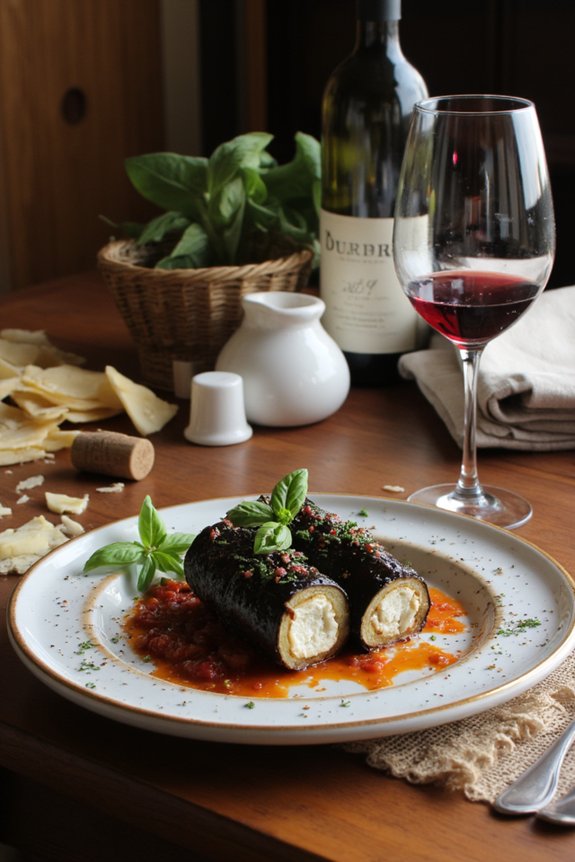
When you bite into a piece of eggplant rollatini, you’re getting this really interesting mix of flavors and textures that makes it so much more than just “eggplant wrapped in stuff.” The eggplant itself has this subtle, slightly earthy taste that’s almost creamy when it’s cooked right, and it pairs beautifully with the rich ricotta or cheese filling that’s usually tucked inside. You’ve also got that smoky bitterness from the grilled or fried eggplant skin adding depth. The herbaceous aroma from basil and oregano brings brightness to every bite. Tomato sauce ties everything together, bringing acidity and sweetness. There’s also mozzarella’s mild creaminess. All these layers—earthy, smoky, herby, tangy, creamy—create this complex flavor symphony that’s honestly pretty hard to match with wine if you’re not thinking strategically about it. Like eggplant parmesan, the rich cheese layers in rollatini demand wines with enough structure to cut through the richness without overwhelming the delicate eggplant.
The Importance of Acidity in Wine Selection
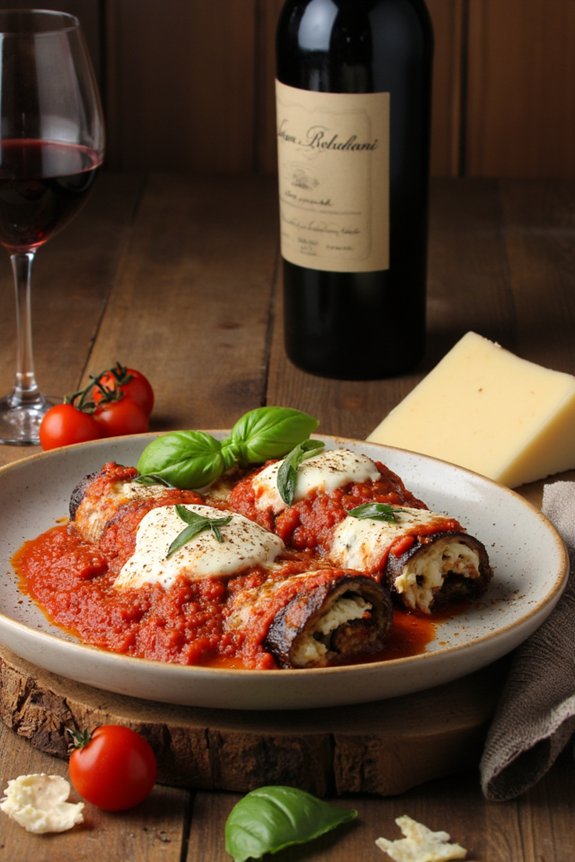
Why does acidity matter so much when you’re picking a wine for eggplant rollatini? It’s actually pretty simple. The rich, creamy cheese filling needs something sharp to cut through all that heaviness. That’s where an acidic wine comes in handy. You want something with real citrus brightness that’ll balance the dish instead of making it feel like a food coma waiting to happen. Think of acidity as your palate’s best friend here. It cleanses your mouth between bites and makes each forkful taste fresher. An acidic wine won’t compete with the eggplant’s subtle earthiness either. Instead, it’ll complement those roasted flavors beautifully while keeping everything from feeling too dense. Similar to how crisp Italian whites enhance Mediterranean dishes by cutting through rich ingredients, the right acidic wine transforms your dining experience. Basically, you’re not just drinking wine—you’re actually improving your entire meal experience.
Red Wines That Pair Perfectly With Rollatini
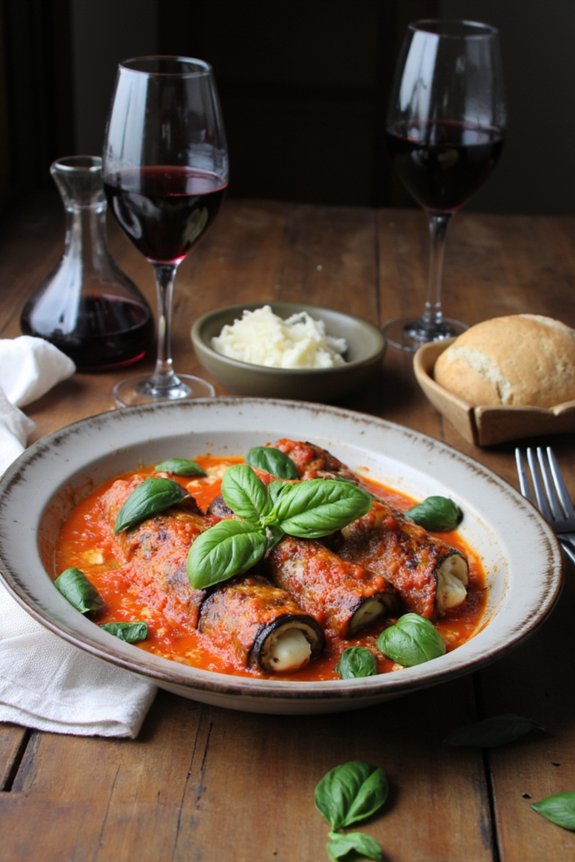
When you’re hunting for the perfect red to go with your eggplant rollatini, medium-bodied wines are your best friends because they won’t overshadow all that cheesy, herby goodness you’ve got going on. Here’s the thing: those wines pack just enough acidity to cut through the richness of the cheese and bring out flavors you didn’t even know were hiding in there, kind of like turning up the brightness on a photo. You’ll want something with enough backbone to stand up to the dish without stealing the spotlight, and that’s exactly where a solid medium-bodied red steps in to save the day. Consider pairing your rollatini with wines like Pinot Noir, which features silky texture and bright cherry notes that beautifully complement the roasted eggplant and herbs in your dish.
Medium-Bodied Reds Work Best
Medium-bodied reds are honestly your best bet when we’re serving eggplant rollatini, and there’s good reason why. These wines strike that perfect balance between light and heavy, matching the dish’s richness without overwhelming it. You’ll want something with herbal undertones that echo the basil and oregano in your filling. Look for wines with earth-driven minerality too, since they complement the eggplant’s subtle earthiness beautifully.
Think Barbera or a solid Chianti. They’ve got enough structure to stand up to the cheese and tomato sauce, but they won’t bulldoze your palate. The acidity cuts through richness nicely, rejuvenating your mouth between bites. Basically, you’re looking for wines that play nice with others rather than trying to steal the spotlight. That’s where medium-bodied reds absolutely shine. Remember that acidity balance is crucial when pairing wine with rich, creamy dishes like rollatini, as the wine’s acidity helps cleanse your palate and enhance the overall dining experience.
Acidity Enhances Cheese Flavors
The magic really happens when you pair rollatini with wines that’ve got serious acidity, because that brightness cuts right through all that creamy, melty cheese and makes everything taste even better. You’ll notice how a wine with good citrus lift actually wakes up your palate between bites, preventing that heavy feeling you sometimes get with rich dishes. The cheese brightness gets amplified too, creating this beautiful dance where neither the food nor wine overwhelms the other. Think of acidity as your taste buds’ best friend here. It cleanses and refreshes, letting you experience each bite like it’s the first one. That’s why wines with zippy character work so well alongside your rollatini. They’re not competing, they’re complementing. Just as decanting enhances wine flavors for rich dishes, allowing the wine to fully express its complexity, the same principle applies to cheese-forward preparations where proper aeration brings out the wine’s acidity.
White Wine Options for a Lighter Pairing
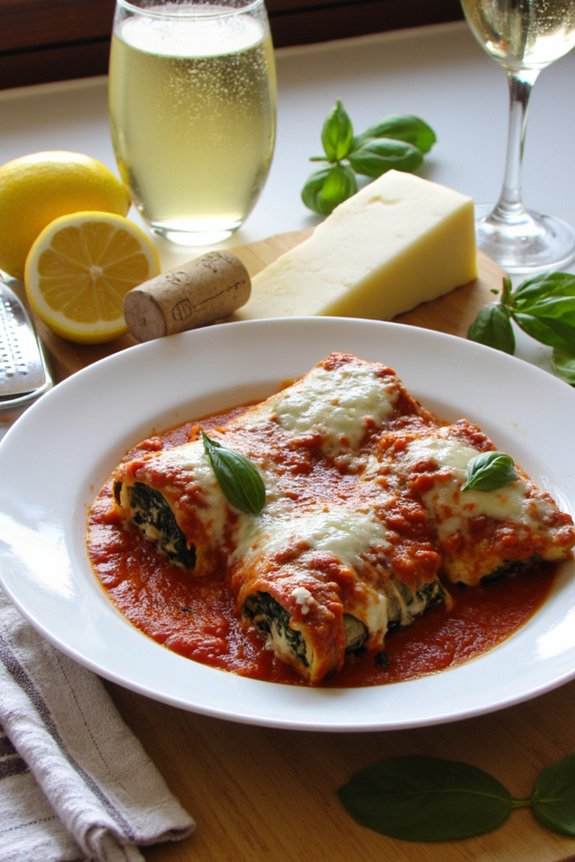
If you’re looking to keep things light and fresh with your eggplant rollatini, white wine’s your best friend. A citrus driven Vermentino brings bright, zesty notes that’ll cut right through the richness of that creamy cheese filling without overwhelming your palate. It’s invigorating and pairs beautifully with the eggplant’s subtle earthiness.
Then there’s the herbal driven Sauvignon Blanc, which offers a crisp minerality and vegetal undertones that complement the dish in unexpected ways. You’ll find it pairs nicely with the tomato sauce, adding complexity without heaviness.
Both options keep things elegant and straightforward. They won’t compete with your rollatini—instead, they’ll enhance each bite and let the delicate flavors shine through. That’s the whole point of a lighter pairing, really.
How Tannins and Texture Affect Your Choice
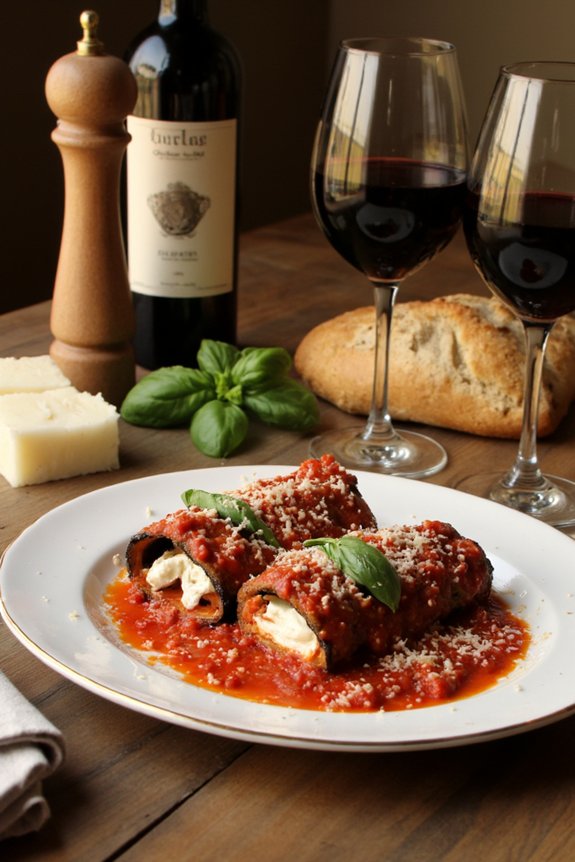
When you’re picking a wine for eggplant rollatini, you’ve gotta think about tannins and how they’ll play with all that creamy, cheesy goodness on your plate. The texture of your wine matters just as much as its tannin levels, and you’ll want something that won’t feel too heavy or too thin alongside the rich, layered flavors, while the acidity cuts through that richness and keeps your palate fresh between bites.
Tannin Levels and Balance
Since eggplant rollatini’s creamy, rich filling and tender texture demand a wine that won’t overwhelm your palate, understanding tannins becomes pretty essential to nailing your pairing.
You’ll want to focus on structured tannins that complement rather than compete. Here’s what matters:
- Medium tannin wines work best since high-tannin reds can clash with the dish’s delicate flavors and richness
- Tannin evolution matters too, meaning how the wine softens as it breathes or ages, making older vintages often smoother choices
- Balance is key between the wine’s tannins and the eggplant’s subtle sweetness, so you’re not fighting flavors
Think of it like matching energy levels. You don’t want an aggressive wine steamrolling over your dish. Instead, pick something with enough backbone to feel satisfying without dominating your meal. That’s the sweet spot.
Texture’s Role in Pairing
Because eggplant rollatini’s got that luxurious, almost creamy mouthfeel, you’ll find that texture matters just as much as those tannins we talked about earlier. Think about it—when you’re biting into those tender eggplant layers stuffed with cheese, you want a wine that complements that silky mouthfeel rather than fighting against it. That’s where mouthfeel contrast comes in handy. A wine with too much grip’ll clash with your dish’s softness. Instead, reach for something smooth and velvety that glides alongside your pasta without demanding all the attention. Medium-bodied reds work wonders here. They’ve got enough presence to stand up to the richness without overwhelming your palate. It’s all about creating harmony, not competition.
Acidity Meets Eggplant Richness
Now here’s where things get interesting—while texture keeps your wine and dish from clashing, acidity’s the real MVP that ties everything together. You see, eggplant’s rich and creamy nature needs a wine with enough punch to cut through all that decadence.
Here’s what makes acidity work so well:
- It balances the dish’s heaviness without overpowering delicate flavors
- Acidic vinaigrettes in your rollatini actually amplify bright wine notes
- Citrus brightness from crisp wines refreshes your palate between bites
Think of acidity like a helpful friend who keeps things from getting too heavy. A zesty wine with good acid structure won’t let the cheese and eggplant weigh you down. You’ll find yourself wanting another bite, then another sip. That’s the magic happening right there.
Tips for Selecting the Ideal Bottle for Your Meal
When you’re standing in front of that wall of wine bottles, it’s easy to feel a little overwhelmed—but picking the right one to go with your eggplant rollatini doesn’t have to be complicated. Start by considering seasonal winepairing options that match what’s fresh when you’re cooking. Summer calls for lighter, crisper choices, while fall invites something with more body. Pay attention to serving temperatures too, since chilling your white to around 50 degrees Fahrenheit makes a real difference in how well it complements those rich, cheesy layers. Don’t overthink it. Look for something with good acidity that won’t break the bank. Ask the wine shop staff for recommendations if you’re stuck. They usually know what works and genuinely love helping folks find their perfect match.
Frequently Asked Questions
Can I Pair Eggplant Rollatini With Sparkling Wine or Champagne?
Yes, you can pair eggplant rollatini with sparkling wine or champagne. The sparkling acidity cuts through the dish’s richness perfectly, while the celebratory texture complements your meal beautifully. You’ll find the effervescence refreshes your palate between bites.
What Temperature Should I Serve Wine With Eggplant Rollatini?
You’ll want to serve your wine slightly cool—around 50-55°F for whites or sparkling varieties. This cool-ish temperature complements eggplant rollatini’s rich, creamy textures while keeping acidity brisk and balanced throughout your meal.
How Does the Cheese Filling Affect Wine Pairing Choices?
Your cheese filling’s ricotta texture demands lighter wines, while aged cheeses in the mix call for fuller-bodied reds. You’ll want to balance the creamy richness with acidity or tannins that cut through effectively.
Is Rosé Wine a Suitable Option for Eggplant Rollatini?
Yes, rosé wine’s fruity acidity and versatility make it you’re ideal choice for eggplant rollatini. You’ll appreciate how its balanced flavors complement the rich cheese filling while cutting through the dish’s heaviness effectively.
Can Dessert Wines Work as an After-Dinner Pairing Option?
Yes, dessert wines work wonderfully as after-dinner pairings. You’ll find sweet fortifications like port and late harvests offer rich complexity. They’re perfect for concluding your meal elegantly while complementing dessert courses beautifully.
Conclusion
You’ve got solid options here. If you’re craving red, go with a lighter Pinot Noir or Chianti—they won’t overpower your dish. Prefer white? Pinot Grigio or Vermentino work great. The key’s finding something with good acidity to cut through all that creamy cheese and tomato sauce. Honestly, you can’t really go wrong as long as you avoid heavy, oaky wines. Trust your taste buds and have fun experimenting.