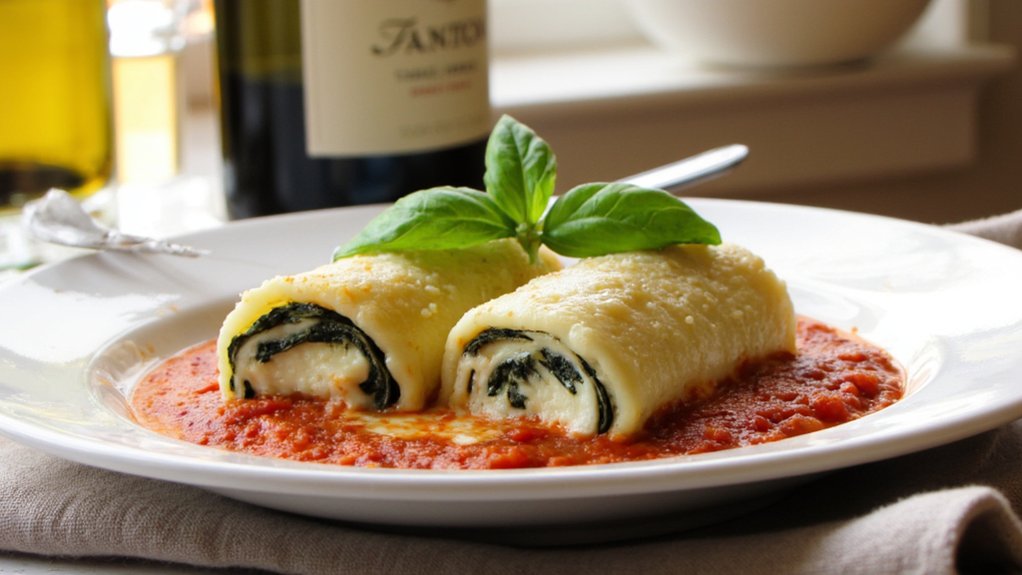
You’ll want a bright, food-friendly wine that won’t smother the ricotta or flatten the spinach. Try a chilled Vermentino or unoaked Chardonnay for clean fruit and mineral lift, or a dry rosé if you like something fruity but crisp; light Pinot Noir or Gamay are great if you want red. Sparkling Prosecco/Cava will cut the richness with bubbles. Start light and move richer if needed—scroll on for specific bottle picks and serving tips.
Key Takeaways
- Match wine weight to the sauce: lighter wines for tomato sauces, rounder whites or gentle reds for béchamel or creamy ricotta.
- Crisp, unoaked whites (Pinot Grigio, unoaked Chardonnay) cut creaminess and highlight spinach without overpowering herbs.
- Vermentino, Soave, or dry Fiano add texture and saline lift for richer, herb-forward fillings.
- Bone-dry rosé or sparkling (Prosecco/Cava) refresh the palate and balance both tomato tang and creamy ricotta.
- Avoid heavily oaked or tannic reds and oxidative whites that clash with the dish’s delicate herbaceousness and cream.



Best Wine Styles for Spinach & Ricotta Cannelloni (Quick Picks)
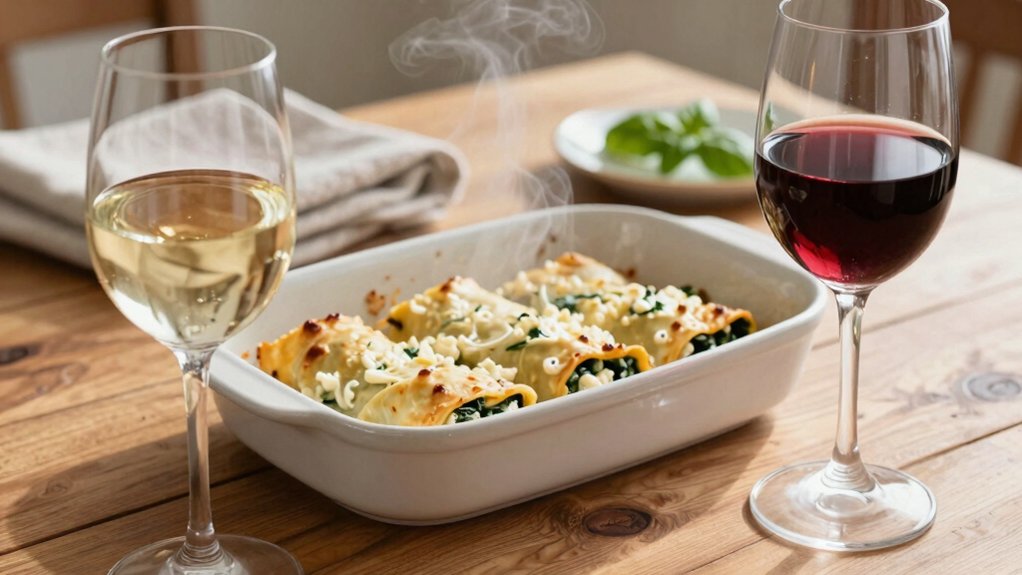
If you’re serving spinach and ricotta cannelloni, you’ll want wines that feel fresh and a little creamy — not something that’ll stomp all over the delicate cheese and greens. Go for a light-bodied Chardonnay with subtle oak or a unoaked version if you like herbaceous aromatics to echo the spinach. Vermentino and Soave bring citrus lift and a bit of salinity, nice with the ricotta. For reds, try a chilled Gamay or a light Pinot Noir; they won’t overwhelm and add a pleasant texture contrast. Sparkling wine is a smart, cheerful choice too — tiny bubbles cut through richness and make the dish feel lighter. The bright acidity from these wines refreshes your palate and complements the earthiness of spinach without overshadowing the creamy ricotta filling. Pick wines that play along, not steal the show.
How Tomato vs. Béchamel Sauce Changes the Wine
Whether you stick with a bright tomato sauce or go the silky béchamel route, the sauce you choose pretty much steers the whole wine plan, so it’s worth thinking about. If you pick tomato, its acidic backbone calls for wines with matching energy — think medium acidity and good fruit, wines that cheer on that tomato affinity without getting lost. Switch to béchamel and you want something that handles dairy contrast, creamy mouthfeel and a softer profile; a rounder, lightly oaked white or gentle red works. Herbs in the filling add an herbaceous lift, so don’t ignore that when tasting. In short, match acidity to acidity or creaminess to creaminess, and you’ll be smiling at the table. Remember that acidity balance is essential—pairing wine acidity with the richness of your sauce creates harmony on the palate.
White Wines That Pair With Light, Herb-Forward Cannelloni
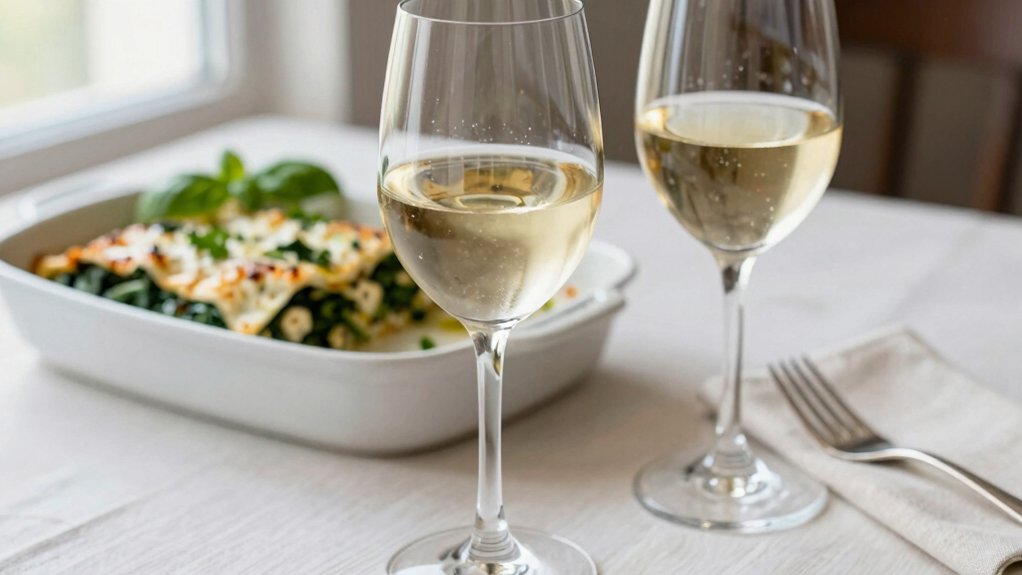
Looking for a white that’ll sing with light, herb-forward spinach and ricotta cannelloni? You want wines with bright herbaceous acidity to cut the cream and highlight the herbs, plus a touch of flinty minerality for texture. Try a young Sauvignon Blanc for zippy green notes, or a Vermentino if you like a bit more body and salinity. Crisp, unoaked Chardonnay works too—clean fruit, subtle weight. Since Sauvignon Blanc is the parent of Cabernet Sauvignon, it brings distinctive brightness and energy that makes it particularly suited to herb-forward dishes. Playful tip: chill slightly less than usual so aromas pop.
| Wine | Why it works | Try with |
|---|---|---|
| Sauvignon Blanc | herbaceous acidity, lively herbs | fresh basil ricotta |
| Vermentino | saline lift, light body | lemony herb fillings |
| Unoaked Chardonnay | flinty minerality, creamy balance | ricotta-rich bites |

Reds That Work With Tomato-Based or Richer Cannelloni
When your cannelloni is smothered in tomato sauce or stuffed with a richer filling, you don’t need a heavy-handed wine — lighter reds like a chill Pinot Noir or Gamay can freshen the dish without stealing the show. Medium-bodied options such as Sangiovese or a young Chianti bring bright cherry notes and enough tannin to stand up to tomato acidity and richer cheeses, so you get structure without feeling like you’re wrestling the plate. Try a sip of both kinds side-by-side and you’ll quickly see how one lifts the herbs while the other keeps the meal grounded — fun little test, and yes, you can call it research. For budget-conscious diners, Italian Chianti under $15 delivers the same bright acidity and cherry character without the premium price tag.
Light-Bodied Red Options
If you prefer red with your tomato-sauced or richer spinach and ricotta cannelloni, go for lighter-bodied wines that won’t drown the dish or fight the cheese—think Pinot Noir, barbera, or a juicy Gamay. You’ll want wines with bright acidity and gentle tannins, ones that lift the tomato and cradle the ricotta without stealing the show. Look for crowd pleasing blends or single-variety bottlings from cooler regions; they often balance fruit and savory notes nicely. Pay attention to seasonal vintage effects — some years bring more ripe fruit, others more earth and spice — and pick accordingly. Chill them a touch, ideally around 55-60°F to enhance the earthy notes that complement creamy, herb-forward dishes. Sip slowly. They’re friendly at the table, forgiving if you over-sauce, and fun to experiment with.
Medium-Bodied Reds
You’ll often find medium-bodied reds sit right in that sweet spot for tomato-based or richer spinach and ricotta cannelloni — not too light, not overpowering, and with enough backbone to stand up to tomato acidity and creamy filling. You’ll want wines with bright fruit and firm tannins, like Sangiovese Texture that adds savory cherry, herbs, and a little grip to cut through ricotta without stealing the show. Think of Earthy Pinot as a quieter cousin; it brings mushroomy, savory notes that cozy up to spinach and baked cheese, especially if the sauce leans rustic. These wines are versatile. They’re food-friendly and forgiving. So grab one, try a sip before you dig in, and don’t be surprised if you go back for seconds.
Sparkling and Rosé Options for Celebratory or Acidic Bakes

When your spinach and ricotta cannelloni hits the table with a zippy tomato top or a rich, cheesy bake, a bright sparkling wine will cut through that richness and keep every bite feeling fresh. Bubbles lift the texture — they scrub the palate a bit — so you won’t get weighed down, and that fizzy lift also makes the meal feel a little more celebratory (party in a glass!). Rosé is the friendly middle ground: it usually has enough fruit to match the dish but enough acidity to balance saucy tang, so you get both charm and balance — pretty neat, huh?
Brightness Cuts Richness
Looking for a bubbly match that’ll cut through the creamy richness of spinach and ricotta cannelloni? You want wines with acidic brightness and real palate refreshment—think lively rosés and off-dry sparkling wines that wake up the dish. They’ll trim the fat, lift the herbs, and keep each bite from feeling heavy, so you can eat another piece without regret. Try a Provençal rosé for strawberry notes and brisk acidity, or an Italian rosato if you prefer herb-driven flavors. For sparkle, a dry Prosecco or Cava brings citrus snap and tiny bubbles that tease your tongue. They’re festive but practical. Plus, they make the meal feel special, like you accidentally celebrated dinner.
Bubbles Lift Textures
Since rosé and sparkling already brighten the plate, they’re a natural next step if you want the whole meal to feel lifted. You’ll love how airy acidity cuts through ricotta’s creaminess without shouting — it’s like a friendly nudge rather than a shove. Pick a dry sparkling or a bone-dry rosé and you’ll get tactile effervescence that plays with the pasta’s textures, making each forkful feel lighter. For celebratory dinners, bubbles add fizz and fun; for slightly acidic bakes, they tame sharp tomato edges while keeping herbs lively. Don’t overthink labels. Look for freshness, balance, and modest alcohol. You’ll end up with something fizzy and approachable, perfect for sharing, small talk and seconds.
Rosé Balances Acidity
If you want a wine that tames tomato tang and keeps ricotta from feeling too rich, rosé is your best friend — especially the bone-dry styles. You’ll find rosé brings an acidic contrast that cuts through creamy filling and brightens baked tomato sauce, so each bite stays lively. Pick a dry Provence-style or a sharper Spanish rosado for summer freshness vibes, or go for a slightly herbaceous one if your spinach is bold. It’s great chilled, casual, and forgiving if the bake runs a touch too acidic. Pour, taste, adjust. Sometimes a little fizz helps, sometimes you want still. Either way, rosé keeps things balanced, friendly, and delicious — like a reliable friend at dinner.
Bottle Picks: Budget, Midrange, Splurge for Cannelloni

Alright — let’s pick some bottles you’ll actually want to drink with spinach and ricotta cannelloni, not just stare at like a museum piece. For budget, grab a bright Vermentino or unoaked Pinot Grigio from a happy small producer you’d spot after a vineyard tour or at food trucks outside a festival; they’re lively, cheap, and forgiving if you worry about cork taint. Midrange, aim for an aged Soave or a dry Fiano — more texture, nice weight, vintage comparisons show they pair with creamy ricotta without overwhelming the spinach. Splurge on a top-quality Verdicchio Classico Riserva or a white Burgundy; they’ve depth, minerality, and length that turn a simple weeknight dinner into something memorable.
Quick Pairing Rules When You Don’t Know the Recipe
When you don’t know the recipe, don’t panic — you’ve got a few easy rules that’ll save the meal and your dignity. Aim for balance: match the wine’s weight to the dish. Lighter cannelloni? Go with crisp whites like Pinot Grigio or unoaked Chardonnay. Richer, creamier filling? Try a fuller white or a light red with gentle tannins. Think acidity—it’s your secret weapon; it cuts richness and refreshes the palate. When in doubt, pick something versatile. Use prep shortcuts and pantry substitutions to guess flavors: jarred marinara hints tomato, frozen spinach means fewer bitter notes. Avoid overly oaky or tannic bottles that’ll clash. Trust your instincts, keep it simple, and remember wine’s here to be enjoyed, not over-analyzed.
How to Serve Wine With Spinach & Ricotta Cannelloni
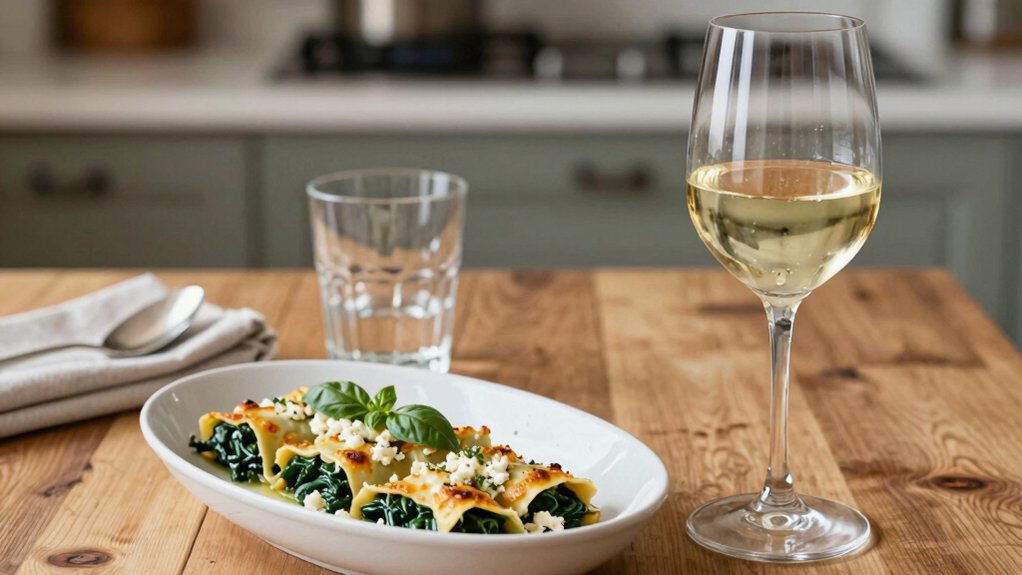
On a casual night in, you’ll want the wine to feel like a helpful sidekick, not a show-off — something that refreshes, frames the creamy ricotta and bright spinach, and makes every bite sing. Keep glass temp in mind: chill whites to about 45–50°F, and lighter reds slightly cooler than room temp. That helps acidity pop and stops the cheese from tasting flabby. Think serving order too — start with the lightest wine and move to richer bottles if you’ve got them. Small steps keep flavors clear.
- Pour small tastings first, then adjust.
- Use tulip-shaped glasses for aromatics.
- Let fuller wines breathe briefly.
- Cleanse with simple bread or salad between pours.
Serve relaxed. Don’t overthink it.
Wines to Avoid With Spinach & Ricotta Cannelloni
You’ve got the serving basics down, so now let’s talk about what not to bring to the table. Don’t reach for oxidative whites with this dish; their sherry-like nuttiness and dried-apricot notes can feel stale against fresh spinach and creamy ricotta. Skip big buttery Chardonnays too — they fight the delicate herbiness. Watch out for tannic clashes from bold reds; heavy Cabernet or tannic Syrah will make the ricotta taste thin and the spinach bitter. Super-sweet wines can also overwhelm the savory balance, unless you’re pairing with a sweet sauce on purpose. Stick to light, fresh choices instead, but if curiosity bites, try a small pour first. You’ll learn faster that way, and maybe save the bottle.
Frequently Asked Questions
Can I Pair Cannelloni With Non-Alcoholic Wines or Mocktails?
Yes — you can pair cannelloni with Alcohol free sparkling wines or Herbal nonalcoholic mocktails; they’ll refresh and complement the ricotta’s creaminess, so choose crisp, herbal, or citrus-driven options to balance richness and herbs.
Does Spinach Ricotta Cannelloni Pair With Dessert Wines?
You can, but dessert wines’ sweetness may overpower the dish; choose a lightly sweet, high-acidity dessert wine to offer sweet acidity and a creamy contrast, so the ricotta remains balanced rather than cloyed.
What Cheese Substitutions Affect the Wine Pairing?
Yes — if you swap ricotta for cream cheese or goat cheese, your wine choices shift: cream cheese leans toward richer whites like Chardonnay, while tangy goat cheese calls for higher-acid wines such as Sauvignon Blanc or a dry rosé.
How Long Should the Wine Breathe Before Serving With Cannelloni?
You should decant for 20–40 minutes; lighter wines need minimal decanting while fuller reds benefit from longer aeration. Use a standard decanter or aeration method like a carafe or aerator to speed breath and flavor opening.
Can Asian or Spicy Sides Change the Ideal Wine Choice?
Yes — Asian spices and chili heat can shift things; you’ll want wines with slightly higher sweetness or softer tannins, like off-dry Riesling or Gewürztraminer, so the spice and aromatics stay balanced, not overwhelmed.