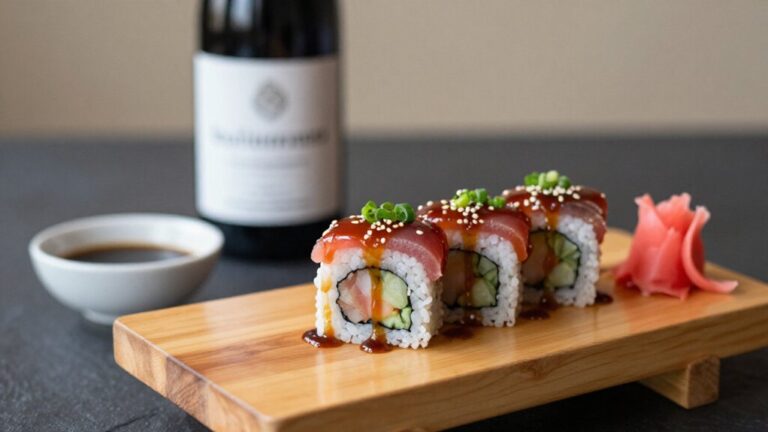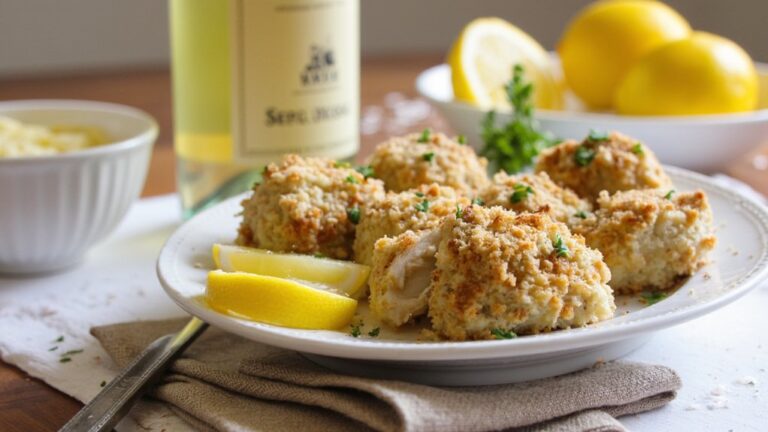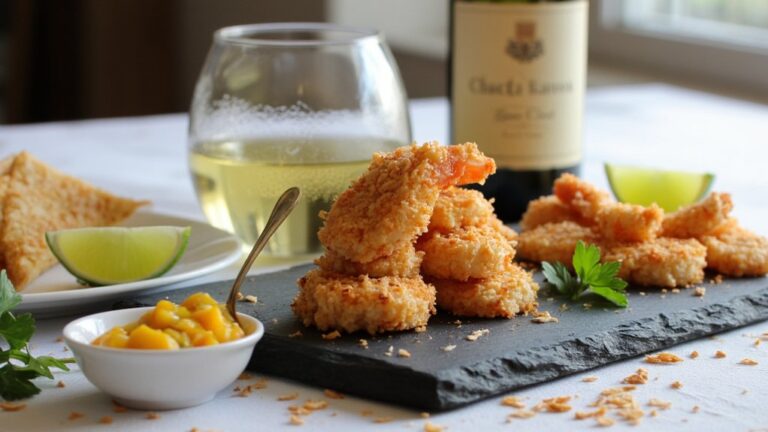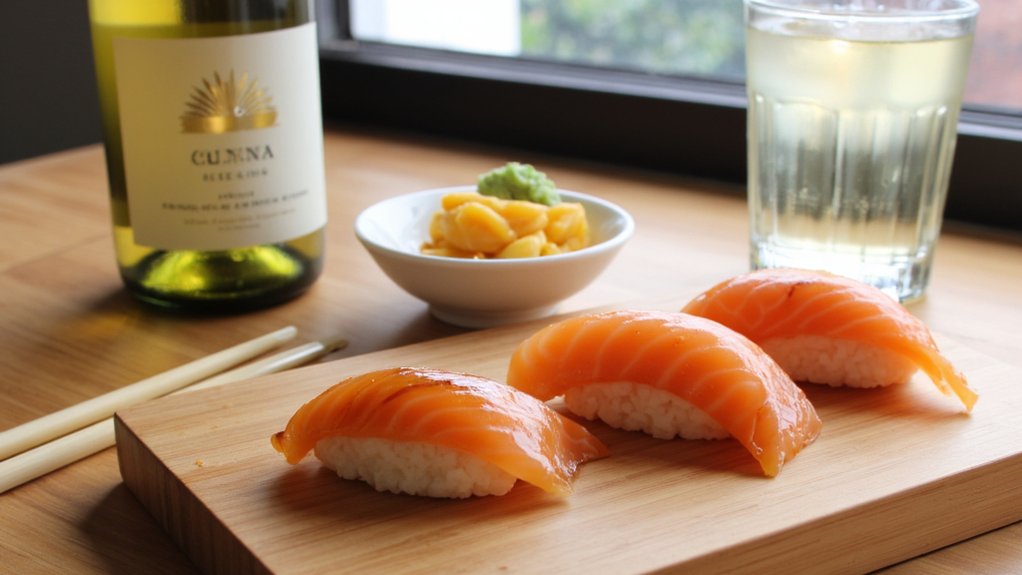
You’ll want a crisp, lively wine that cuts the salmon’s oil without stealing the show. Think unoaked Sauvignon Blanc or Albariño for zippy citrus and minerality, a dry Riesling for bright lift, or a lightly chilled Pinot Noir if you want red—low tannins only. Sparkling wine refreshes between bites, and sake is an easy, forgiving match. Try a few and see what sings with your roll; keep going to find your favorites.
Key Takeaways
- Choose crisp, unoaked whites (Sauvignon Blanc, Albariño, unoaked Chardonnay) to cut salmon’s oiliness and refresh the palate.
- Dry sparkling wines (Brut/Extra‑Brut) use bubbles to cleanse fat and handle spicy soy or wasabi accompaniments.
- Light, low‑tannin reds (Chilled Pinot Noir or Gamay) complement seared or soy‑glazed salmon without overpowering delicate flavors.
- Aromatic whites or dry rosés (Gewürztraminer, Viognier, Loire Chenin, Provence rosé) add floral and fruity lift without masking texture.
- Consider sake styles (cold ginjo for brightness, warmer junmai for earthiness) to match umami, rice, and nori flavors.

Top Wines for Salmon Sushi : Quick Picks and Why
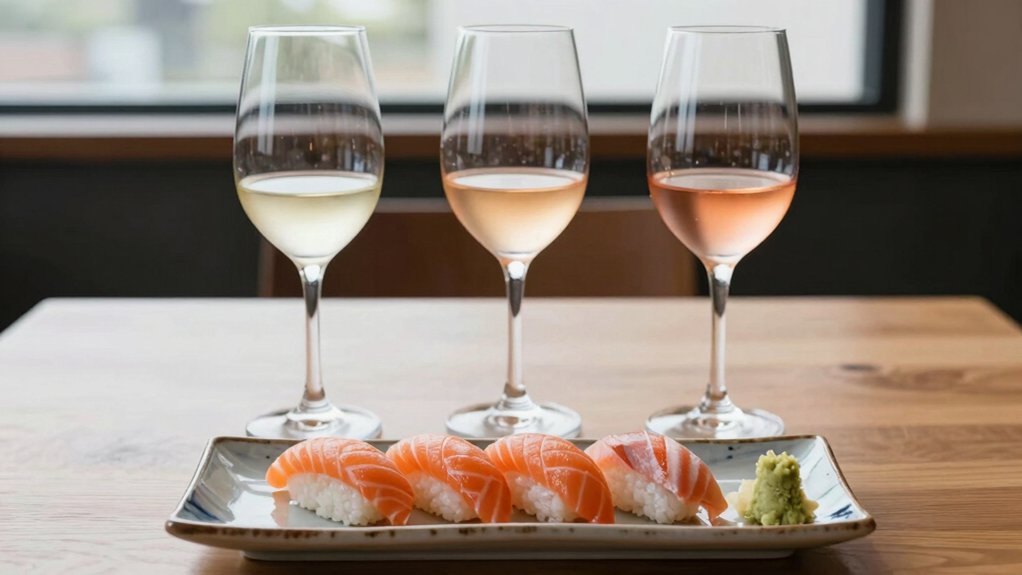
If you’re diving into salmon sushi tonight, you’ll want a wine that plays nice with its rich, oily texture and that subtle sweetness from the rice — think balance, not battleground. Go for a crisp unoaked Chardonnay or a lively Albariño; they cut through oil without stealing the show. Light Pinot Noir is great if you want red, fruity and gentle, especially with a touch of earth. Watch oak influence; too much vanillin or butteriness will clash. Also consider regional differences — New Zealand Sauvignon is zippy, Loire Chenin is rounder, Oregon Pinot is cooler and more restrained. Wine acidity enhances the subtle oceanic and umami notes in salmon sushi while balancing the richness of the fish and creaminess of the rice. Try small sips, swap a bite, and you’ll learn fast. Have fun, and don’t overthink it.
How Salmon’s Fattiness and Flavor Affect Pairing
Think of salmon as the comfy sweater of sashimi — warm, cozy, and a little bit indulgent — because its fattiness is what really steers your wine choices. You’ll notice a rich texture that cushions flavors, and wines need enough backbone to match that. The fish’s umami interplay with soy or wasabi pulls savory notes forward, so you don’t want a timid bottle. That buttery mouthfeel asks for wines with a bit of roundness, ones that won’t clash or taste thin. At the same time, a bright citrus lift can cut through oil and refresh your palate between bites. Sauvignon Blanc’s vibrant citrus acidity makes it particularly effective at balancing the salmon’s richness while providing the crisp, zesty qualities needed to cleanse your palate. So pick wines that balance weight and acidity, ones that nod to creaminess while slicing cleanly, and you’ll be smiling through the whole roll.
Crisp Whites for Salmon Sushi (Sauvignon Blanc, Albariño)
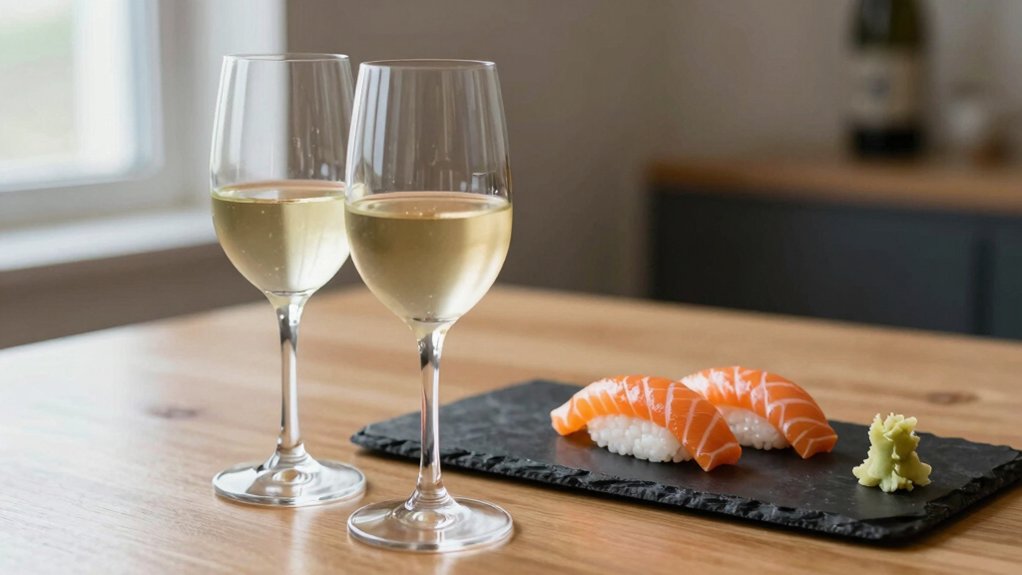
Why do crisp white wines work so well with salmon sushi? Because they cut through the fish’s fattiness and lift the flavors without stealing the show. You’ll find Sauvignon Blanc and Albariño bring bright acidity, a revitalizing minerality contrast to rich salmon, and that pop of herbal brightness that plays nicely with wasabi or a squeeze of lemon. Sip and you’ll notice the wine cleans your palate, making each bite feel new. Go for young, unoaked examples—think citrus, green apple, maybe a hint of sea breeze. Sauvignon Blanc’s vibrant citrus acidity makes it particularly effective at enhancing the delicate flavors of raw fish while maintaining its own personality. They’re versatile, easy to love, and forgiving if your chopstick game isn’t perfect. Try a few and you’ll see how these whites make salmon sushi sing.
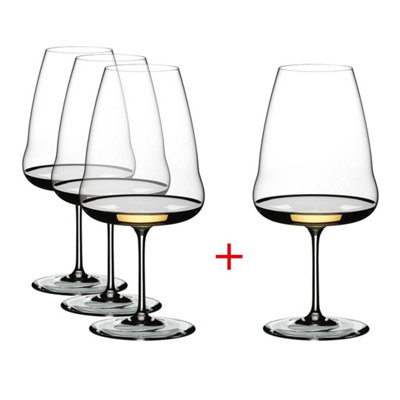

Aromatic Whites and Dry Rosés for Salmon Sushi
Aromatic whites and dry rosés often make for a surprisingly perfect match with salmon sushi, and you’ll soon see why — they bring fragrant complexity and a revitalizing lift that won’t overpower the fish. You’ll like how floral notes and herbaceous citrus snap against fatty salmon, cutting richness without stealing the show. Think Gewürztraminer or Viognier trimmed by a zesty rosé, maybe something with peachy minerality that echoes the fish’s silkiness. Serve slightly chilled; it wakes flavors up. They’re playful choices, great if you want wine that chats with sushi instead of lecturing. Albariño, with its zesty citrus and saline notes, offers another excellent option that pairs beautifully with the delicate flavors of salmon sushi. Try a small sip before each bite, notice the pairing shift, and grin when it clicks. Easy, tasty, and a little bit fun.
Light, Low‑Tannin Reds for Seared or Soy‑Glazed Salmon Sushi
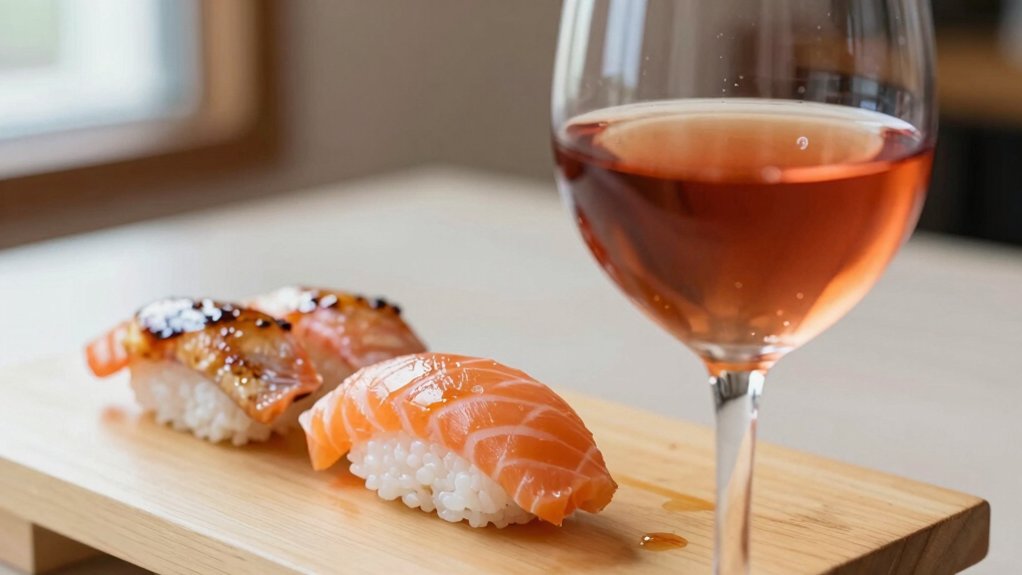
If you like a bit more structure with your seared or soy‑glazed salmon, lighter red wines can be surprisingly great partners — think Pinot Noir or Gamay that won’t fight the fish. You’ll want low‑tannin, fruit‑forward bottles that play off the caramelized edges and soy glaze instead of clashing, so look for gentle acidity and plush red fruit. Try matching a chilled, slightly earthy Pinot to richer bites, or a fizzy Gamay for a fun contrast — they’re both friendly, forgiving choices that keep the meal balanced (and your dinner guests impressed). Similar to how regional wines enhance the pairing experience with duck dishes, selecting wines from specific regions known for lighter reds can elevate your salmon sushi experience.
Light Red Matchups
Let’s talk light reds — the ones that won’t overpower seared or soy‑glazed salmon but will still bring some charm to the plate. You’ll love a chilled pinot with that gentle smokiness; it cools the palate, offers red fruit, and won’t fight the soy. Gamay freshness is another go‑to — bright, juicy, slightly floral, and fun, like a friendly wink across the table. Look for wines labeled Beaujolais or young Pinot Noir from cooler regions. Serve slightly cool, not fridge cold. Keep tannins low so the fish stays the star. These wines give you balance, a little lift, and they pair without trying too hard. Easy, tasty, and a bit cheeky — just how sushi nights should be.
Low‑Tannin Pairing Tips
When you want red with your seared or soy‑glazed salmon but don’t want the wine chewing up the fish, reach for low‑tannin, light‑bodied reds — they’ll be your best move. You’ll want wines that handle acid management well; a little bright acidity lifts the soy and caramelized edges without making the fish taste metallic. Think Gamay, young Pinot Noir, or lighter Sangiovese from cooler spots. Aim for texture contrast: delicate salmon meets silky, gentle tannins that slide past the palate instead of grabbing it. Serve slightly chilled. Don’t overthink oak or heavy extraction. Keep it simple, food-friendly, and relaxed. Try a few bottles and trust your taste — you’ll find a go-to that makes sushi night feel fancier.
Sparkling Wine and Sake as Versatile Alternatives
You can’t go wrong reaching for a chilled sparkling wine with salmon sushi — the bubbles cut through the fattiness and keep things fresh, whether the fish is raw or seared. Sake’s another winner because it comes in so many styles, from crisp and dry to rich and slightly sweet, so you can match the rice, the soy, or the glaze without breaking a sweat. Try both and you’ll notice how they each bring out different flavors — sparkling adds snap and lift, sake brings roundness and umami, and honestly it’s fun to mix it up.

Sparkling Wine Versatility
Ever thought sparkling wine could be your go-to for salmon sushi nights? You’ll love how citrus fizz lifts the fish, cutting through richness and brightening each bite, while the creamy mousse of a well-made bottle adds a soft cushion that plays nicely with salmon’s texture. Try these simple approaches to keep things fun and easy.
- Start with a brut or extra‑brut if you want crispness that cleanses the palate quickly.
- Pick a sparkling with subtle fruit notes when soy or wasabi’s in play; it won’t overpower the flavors.
- Consider a richer style for buttery salmon, it echoes the mouthfeel and makes the meal feel a little luxe.
It’s versatile, forgiving, and honestly, a bit of a crowd-pleaser.
Sake Pairing Flexibility
Sparkling wine’s fizz is great, but sake’s a whole other kind of friend for salmon sushi — and you’ll find it’s just as flexible. You can sip chilled, slightly warmed, or room temp, and each choice shifts the mood. Temperature control matters; colder highlights crispness, gentle warmth brings out sweetness and umami. Think about brewing region too — a Niigata ginjo will be bright and floral, while a Kansai junmai might feel richer and earthier, so match accordingly. Sake plays well with soy and wasabi, cleans the palate between bites, and won’t overpower the fish. It’s forgiving. You don’t need perfect pairing skills. Try a few styles, laugh at the misses, learn from the hits, and enjoy the ride — sloppy chopsticks optional.
Serving Tips and Exact Pairing Combos to Try
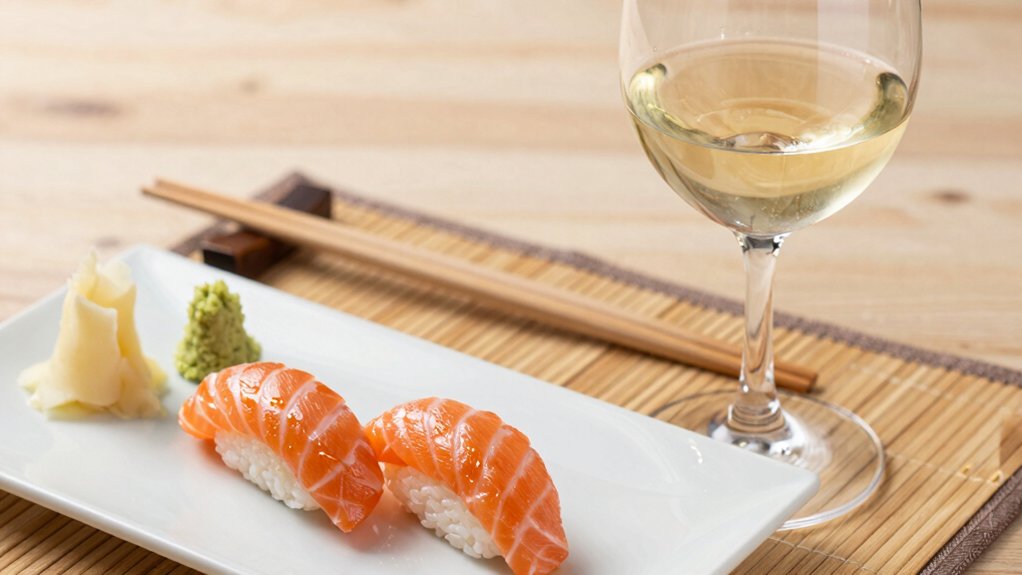
Start by laying things out so they’re easy to grab — plates, chopsticks, a small dish for soy, maybe a splash of wasabi on the side for the brave. Think about texture contrasts and temperature contrasts; cold fish and chilled wine, crunchy nori and silky rice, it all matters. Try these combos:
- A dry Riesling with seared salmon nigiri, bright acidity cutting through the fattiness.
- Light Pinot Noir for classic salmon rolls, earthiness matching smoky notes, easygoing and cozy.
- Sparkling wine with spicy rolls, bubbles cleanse the palate, keeps things lively.
Serve wines slightly cooler than room temp, reds cool but not cold. Pour small tastings. Sip between bites. Laugh at your mistakes. Share discoveries. You’ll learn fast, and enjoy every imperfect, tasty moment.
Frequently Asked Questions
Can Salmon Sushi Pair With Sweet Dessert Wines?
Yes — you can pair salmon sushi with sweet dessert wines, but you’ll want sugar contrast and acidity balance: try a late harvest or ice wine, which offer sweetness yet enough acidity to cut the fish’s richness and enhance flavors.
Are Oak-Aged Chardonnays Ever a Good Match?
Yes — you can enjoy oak-aged Chardonnays with salmon sushi, but you’ll want moderate oak influence so the buttery richness complements the fish without overpowering delicate flavors; lighter oak, brisk acidity, and balance are key.
How Does Wasabi Affect Wine Pairing Choices?
Wasabi sharpens spice, so you’ll want palate cleansing wines with a spicy lift that cut heat; choose lower tannins to avoid aromatic clash, seek intensity contrast with bright acidity or slight sweetness to balance wasabi’s punch.
What Wine Pairs With Vegetarian Salmon Alternatives?
You’ll want a crisp, unoaked rosé or light Grüner; they’ll complement smoked carrot and marinated tomato flavors without overpowering them. Don’t overdo tannins — choose freshness and bright acidity to lift the dish.
Can Beer Substitute for Wine With Salmon Sushi?
Yes — you can substitute beer for wine with salmon sushi. You’ll want lighter craft beer choices like crisp lagers or session ales to complement richness without overpowering delicate flavors, and avoid heavy stouts or overly bitter IPAs.