Skip the tannic reds—they’ll clash hard with that creamy sweetness. You’re looking for Moscato d’Asti, which actually gets it right. Its gentle fizz cuts through the richness while subtle floral notes play nice with vanilla and cinnamon. The wine’s got just enough sweetness and low alcohol to complement without overpowering your pudding. Chill it around 45–50°F for that invigorating pop. But here’s the thing: the pudding style you’re serving totally changes which wine works best.
Key Takeaways
- Moscato d’Asti is ideal: low alcohol, gentle sweetness, and light fizz complement creamy pudding without overpowering delicate flavors.
- Serve Moscato chilled to 45–50°F and keep pudding slightly warm (60–65°F) for optimal flavor and texture contrast.
- Gewürztraminer works well for spiced puddings, offering floral aromatics and bright acidity that echo cinnamon and nutmeg notes.
- Alternative options include off-dry Riesling, Prosecco, Champagne, and Tawny Port depending on pudding style and spice profile.
- Avoid tannic reds and high-alcohol wines, which clash with sweetness and overpower the pudding’s delicate vanilla and spice notes.




Why Rice Pudding’s Sweetness and Texture Matter for Wine Pairing

When you’re thinking about pairing wine with rice pudding, the dessert’s sweetness and texture are actually your best friends in figuring out what’ll work. See, rice pudding’s creamy richness creates a texture contrast that can either clash or harmonize with whatever wine you choose. You’ve gotta consider the sugar balance carefully, because overly sweet wines’ll make the whole thing feel like eating spoonful after spoonful of pure sugar. The pudding’s smooth, velvety mouthfeel means lighter wines get kinda lost, while heavier ones can overwhelm it. Think about wines that complement rather than compete. A wine that’s slightly sweet but has good acidity cuts through that richness beautifully. Similar to how dry sparkling wines provide refreshing contrast with rich desserts through their bright acidity, the key is finding that sweet spot where everything just clicks together and tastes genuinely delicious.
Moscato d’Asti: The Best Wine Pairing for Rice Pudding
You’ve probably figured out that finding the right wine for rice pudding isn’t exactly straightforward, so let’s talk about why Moscato d’Asti might just be your new favorite pairing. This Italian sparkler’s got the sweetness and low alcohol content that complement rice pudding’s creamy, comforting vibe without overpowering it, plus its slight fizz cuts through the richness in a way that makes each spoonful taste even better. We’ll break down how its flavor profile matches up, why temperature matters more than you’d think, and how to actually make this pairing work at your dinner table. Made exclusively from Moscato Bianco grapes cultivated on sun-kissed Italian hillsides, this wine absorbs Mediterranean sunlight to develop its naturally sweet character and floral complexity that pairs beautifully with creamy desserts.
Why Moscato d’Asti Works
Moscato d’Asti deserves the top spot when it comes to pairing with rice pudding, and there’s actually some solid reasoning behind this match. You’re looking at a wine that’s got aromatic floral notes dancing alongside creamy pudding—it just works. The low alcohol sweetness of Moscato d’Asti won’t overpower your dessert. Instead, it complements those subtle vanilla and cinnamon flavors you’ve got going on in your bowl.
Here’s the thing: you don’t want something heavy or too boozy competing with rice pudding’s delicate texture. Moscato d’Asti stays light and invigorating, almost bubbly with its gentle carbonation. The wine’s natural sweetness mirrors the pudding’s sweetness without being overkill. Unlike Sauvignon Blanc, which offers crisp, herbaceous qualities better suited to savory dishes, Moscato d’Asti’s aromatic profile naturally aligns with dessert applications. You’ll notice how the two enhance each other, creating this pleasant harmony that makes your whole dessert experience feel intentional and well-thought-out.




Flavor Profile Compatibility
Since rice pudding’s flavor profile hinges on subtle sweetness and warm spices, the pairing with Moscato d’Asti becomes something pretty special. You’re looking at a wine that doesn’t overpower your dessert but instead enhances it beautifully. Moscato d’Asti’s delicate bubbles and palate cleansing acidity work together to cut through the richness of creamy desserts while maintaining the wine’s signature elegance.
| Rice Pudding Element | Moscato d’Asti Response |
|---|---|
| Creamy Texture | Delicate Bubbles Lighten It |
| Cinnamon Notes | Floral Aromatics Echo Warmth |
| Vanilla Undertones | Natural Sweetness Complements |
| Nutmeg Spice | Aromatic Intensity Balances |
| Rich Mouthfeel | Palate Cleansing Acidity Refreshes |
The wine’s aromatic intensity won’t clash with your pudding’s gentle spices. Instead, it’ll dance alongside them. You’ll notice how the palate cleansing acidity cuts through richness without being aggressive. That’s the magic happening here. The bubbles add playful texture, while the wine’s natural fruit notes won’t compete with cardamom or nutmeg already on your plate.
Serving Temperature Tips
Temperature matters way more than most people realize when you’re pairing wine with dessert. You’ll want to nail the serving temps for both your rice pudding and Moscato d’Asti to really make magic happen.
Here’s what you’re working with:
- Chill your Moscato to about 45-50°F for that crisp, revitalizing vibe
- Keep rice pudding slightly warm, around 60-65°F, so flavors pop
- Use chilled vessels to maintain wine temperature throughout your meal
- Embrace ambient pairing by letting both rest five minutes before serving
The contrast between chilled wine and warm pudding creates this awesome dance on your palate. That temperature difference actually enhances the sweetness and aromatics you’re after. Don’t rush it, just let everything settle into the right spot. Like Riesling served in a tulip-shaped wine glass, the proper vessel design helps concentrate the delicate aromas and preserve the acidity that makes dessert pairings shine. You’ve got this.
Riesling Pairings for Spiced Rice Pudding
When you’ve got a bowl of spiced rice pudding sitting in front of you, reaching for a Riesling might just be one of your smartest moves. Here’s why it works so well. A good off-dry Riesling brings just enough sweetness to complement those warm spices without clashing. You’ll notice the wine’s crisp acidity cuts right through the pudding’s richness, keeping your palate feeling fresh. The floral aromatics add complexity that enhances the whole experience, creating this nice conversation between the wine and dessert. Think of it this way: the acidity cleanses your mouth while those delicate floral notes dance alongside the cinnamon and nutmeg. It’s honestly one of those pairings that feels almost effortless. You’re basically guaranteed a winning combination here.
Sparkling Wine Pairings for Light, Delicate Puddings
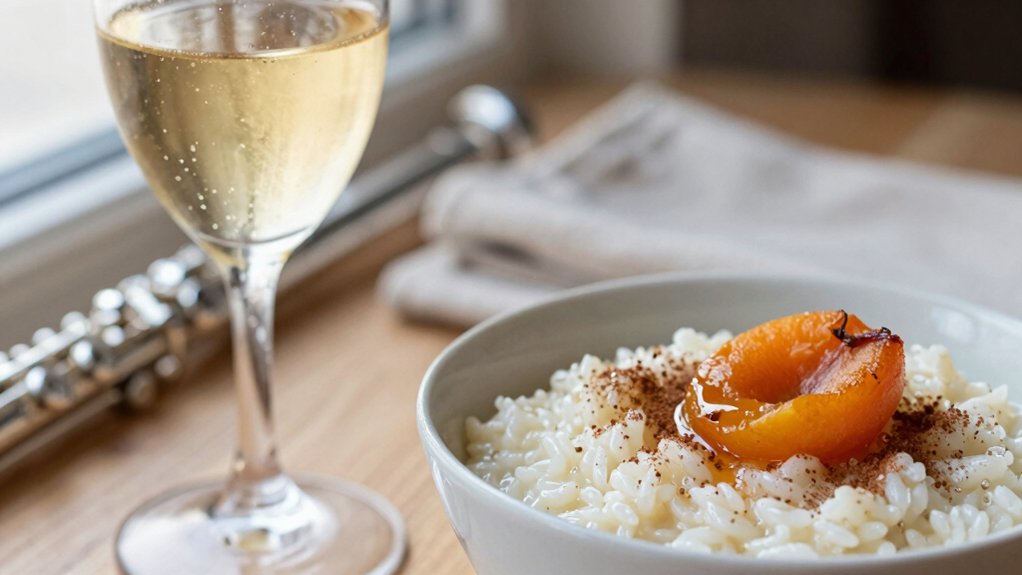
If you’ve been enjoying those rich, spiced rice puddings and want to shake things up, sparkling wine opens up a whole new world of possibilities. You’ll find that light, delicate puddings pair beautifully with bubbly because the carbonation cuts through creaminess without overwhelming subtle flavors.
Consider these sparkling options:
- Prosecco with its fruit forward profiles and gentle sweetness
- Champagne using traditional vintage method for elegance
- Cava for an affordable, crisp alternative
- Moscato d’Asti with its lower alcohol content
The effervescence acts like a palate cleanser between spoonfuls. You’re getting brightness and complexity that complements vanilla-forward or lightly flavored rice puddings. The bubbles create this playful contrast that makes each bite feel fresh and exciting. It’s honestly a game-changer for your dessert game.
Port and Sherry Pairings for Rich, Baked Puddings
Once you’ve mastered the sparkling wine route, it’s time to venture into the deeper, more luxurious territory of fortified wines. Rich, baked rice puddings deserve the complexity that Port and Sherry bring to the table. These fortified dessert wines complement the creamy, caramelized flavors beautifully while adding a savory contrast that keeps things interesting.
| Wine Type | Flavor Profile | Best Pudding Style |
|---|---|---|
| Tawny Port | Nutty, smooth | Cinnamon-spiced |
| Ruby Port | Bold, fruity | Chocolate-infused |
| Dry Sherry | Crisp, complex | Vanilla bean |
You’ll notice how the wine’s richness doesn’t overshadow your pudding, instead dancing alongside it. The alcohol content in these fortified options cuts through the creaminess, creating balance on your palate. It’s honestly a game-changer for enhanced dessert moments.

Gewürztraminer When Cinnamon and Nutmeg Dominate

Spiced rice puddings will almost always find their perfect match in Gewürztraminer, a wine that’s practically built for cinnamon and nutmeg showdowns. This aromatic spice bomb pairs beautifully with your dessert’s warm flavors, creating something really special on your palate.
Here’s what you’re getting with this pairing:
- A floral lift that dances around the pudding’s richness
- Bright acidity cutting through creamy textures like a charm
- Exotic notes that echo those warming spices you’ve added
- Just enough sweetness to complement without competing
The wine’s aromatic profile basically sings alongside those dominant spices. You’ll notice how Gewürztraminer’s natural perfume amplifies the cinnamon and nutmeg, making each spoonful feel more luxurious. It’s honestly one of those pairings that feels inevitable once you try it, and your dinner guests will definitely be impressed.
Tannic Reds and High-Alcohol Wines: Why They Overpower Rice Pudding
you’ll want to steer clear of those big, tannic reds and high-alcohol powerhouses because they’re basically the bullies of the dessert wine world, and they don’t play nice with rice pudding’s delicate, creamy nature. Those aggressive tannins actually clash with the dish’s natural sweetness, creating this weird, unpleasant dryness in your mouth, while all that alcohol just steamrolls right over the subtle vanilla and spice notes you’re actually trying to enjoy. Think of it like showing up to a dinner party in a leather jacket and sunglasses when everyone else is wearing cozy sweaters—you’re just not vibing with the vibe, and honestly, nobody wins in that situation.
Tannins Clash With Sweetness
Tannic red wines and high-alcohol beverages are basically the bullies of the wine world when it comes to rice pudding. Here’s why you’ll want to steer clear of them:
- The tannins create an astringency clash that leaves your mouth feeling like sandpaper
- Your pudding’s delicate sweetness gets completely suppressed by aggressive flavors
- The wine’s dryness fights against the dessert’s creamy texture
- You’re left with a bitter aftertaste that ruins the whole experience
When you pair a bold tannic red with rice pudding, you’re basically setting up a flavor battle where nobody wins. The wine’s structural intensity overpowers everything that makes rice pudding enjoyable. That sweetness suppression is real, and it’s frustrating when you’ve made something so comforting. Stick with lighter options instead, and you’ll actually taste what you’ve created.
High Alcohol Masks Delicate Flavors
When a wine’s alcohol content climbs too high, it basically hijacks your whole tasting experience, leaving no room for rice pudding’s subtle charms to shine through. That burning alcohol warmth floods your palate and drowns out everything else. You’re left with heat instead of harmony.
| Wine Type | Alcohol % | Result |
|---|---|---|
| High-Proof Reds | 15-16% | Overpowers pudding |
| Fortified Wines | 18-20% | Creates palate fatigue |
| Light Dessert Wines | 10-12% | Complements flavors |
Palate fatigue sets in quick when you’re dealing with powerhouse wines. Your taste buds get exhausted, making it impossible to appreciate rice pudding’s creamy texture and delicate spice notes. You want a wine that plays nice with your dessert, not one that bullies it off the plate entirely.
Bold Wines Overwhelm Creamy Texture
Rice pudding’s creamy, velvety texture is basically its superpower, and pairing it with bold, tannic reds or high-alcohol wines is like bringing a sledgehammer to a dinner party—sure, it makes an impression, but not the good kind.
Here’s why heavy hitters don’t work:
- Tannins grip your mouth like a vice, completely drowning out the pudding’s subtle sweetness
- Oak aging creates aggressive flavors that clash with delicate rice and milk notes
- High alcohol content burns your palate, leaving no room for nuance or terroir characteristics to shine
- The wine’s intensity steamrolls right over the creamy texture you’re trying to enjoy
You’ve gotta think lighter. Bold wines ignore everything special about rice pudding. Instead, reach for something gentler that’ll actually complement rather than compete with your dessert.
Serving Temperature: How It Changes Each Wine’s Impact
If you’ve ever noticed how a wine tastes completely different when it’s ice-cold versus room temperature, you’re onto something real. That’s because temperature literally changes how your taste buds perceive flavors. A chilled gently Moscato might taste bright and invigorating, but serve that same wine at room temperature and suddenly it becomes heavier, almost cloying against rice pudding’s sweetness. Cold temperatures mute subtle notes, which can actually work in your favor when you’re worried about overpowering that creamy texture. Warming a wine up releases more aromatic compounds, making flavors pop louder. For rice pudding, you’ll want to serve lighter wines chilled gently to keep things balanced. Experiment with temperature shifts—you might discover your wine suddenly pairs way better with dinner when it’s just a few degrees different.
Pudding Style Guide: Which Wine to Choose

The style of your rice pudding should basically dictate which wine you’re reaching for, and honestly, this is where things get fun. Consider these combinations:
- Creamy, vanilla-forward puddings pair beautifully with Moscato d’Asti
- Spiced varieties (cinnamon, nutmeg) match perfectly with tawny port
- Coconut-based versions shine alongside Riesling
- Chocolate rice pudding welcomes Brachetto d’Acqui
The texture contrasts between wine and pudding matter more than you’d think. A lighter wine cuts through richness, while fuller options complement delicate flavors. Regional variations also play a role—Italian wines work wonderfully with traditional European puddings, whereas Asian-inspired versions might benefit from something unexpected. You’re really just matching intensity levels and flavor profiles, so don’t overthink it. Trust your instincts and experiment.
Frequently Asked Questions
Can I Pair White Wine With Rice Pudding if I Don’t Like Sweet Wines?
You can absolutely pair white wine with rice pudding if you don’t like sweet wines. Choose dry whites like Sauvignon Blanc or Pinot Grigio. Light reds also work wonderfully for balancing the pudding’s creamy sweetness.
How Far in Advance Should I Chill the Wine Before Serving With Rice Pudding?
You’ll want to chill your wine about two to three hours beforehand. This chill timing guarantees you’re hitting the ideal serving temperature—around 45-50°F for white wine—when you’re ready to pour alongside your rice pudding.
Does the Type of Rice Used in Pudding Affect Wine Pairing Choices?
Yes, it does. You’ll find that short grain rice creates creamier puddings pairing well with dessert wines, while arborio texture offers richness complementing sweeter selections. Jasmine fragrance in rice puddings works beautifully with lighter, floral wine options.
What Wine Pairs Best With Rice Pudding Made With Coconut Milk Instead of Cream?
You’ll want a tropical acidity wine like Sauvignon Blanc or Riesling with your coconut milk rice pudding. The wine’s brightness cuts through the coconut’s savory richness, enhancing both the dessert’s creamy texture and subtle spice notes beautifully.
Can Rosé Wine Work as an Alternative Pairing for Traditional Rice Pudding Desserts?
Yes, you’ll find that light rosé works wonderfully with traditional rice pudding, offering delicate fruit notes that complement the dessert’s creamy texture. Sparkling rosé adds invigorating effervescence, making it an excellent alternative pairing choice.