You might be surprised to learn that the art of pairing wine with Beef Wellington dates back to Victorian England, where the dish first gained popularity among aristocrats. Whether you're hosting an elegant dinner party or simply treating yourself to this culinary masterpiece, selecting the perfect wine can transform your meal from impressive to unforgettable. From bold Bordeaux blends to unexpected white wine choices, there's a whole world of fascinating pairings waiting to enhance your Wellington experience.
Key Takeaways
- Full-bodied Bordeaux blends from Saint-Émilion or Pauillac are ideal matches, offering structured tannins and blackcurrant notes.
- Oregon and Burgundy Pinot Noirs complement the dish's mushroom duxelles with their earthy, truffle-like characteristics.
- Aged Cabernet Sauvignon provides robust structure and dark fruit flavors that enhance the rich, savory beef.
- Australian Shiraz adds bold peppery notes and intensity that stand up to the meat's robust flavors.
- Oaked Chardonnay offers a surprising alternative, with buttery notes that complement the golden puff pastry.


Understanding Beef Wellington's Flavor Profile
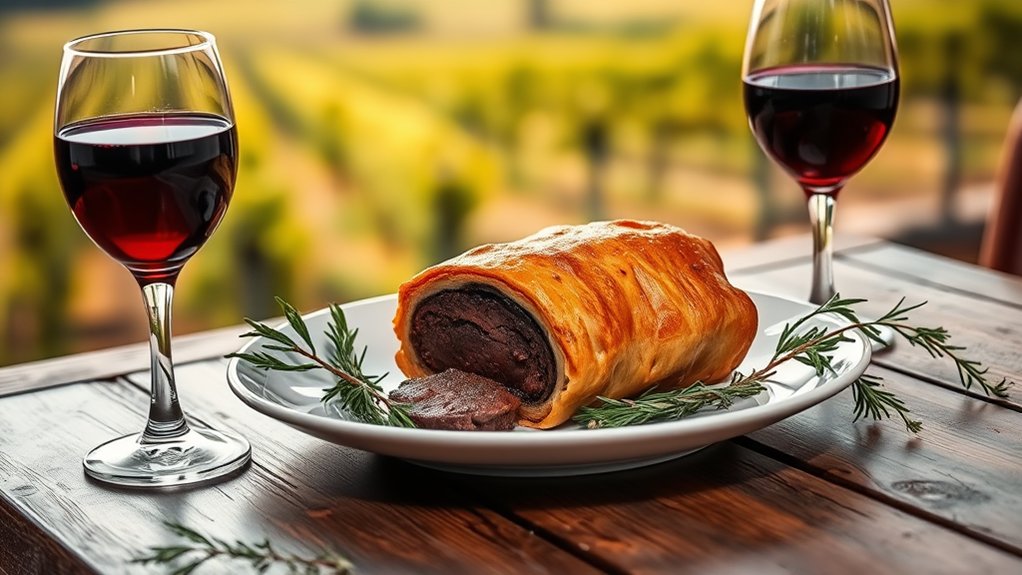
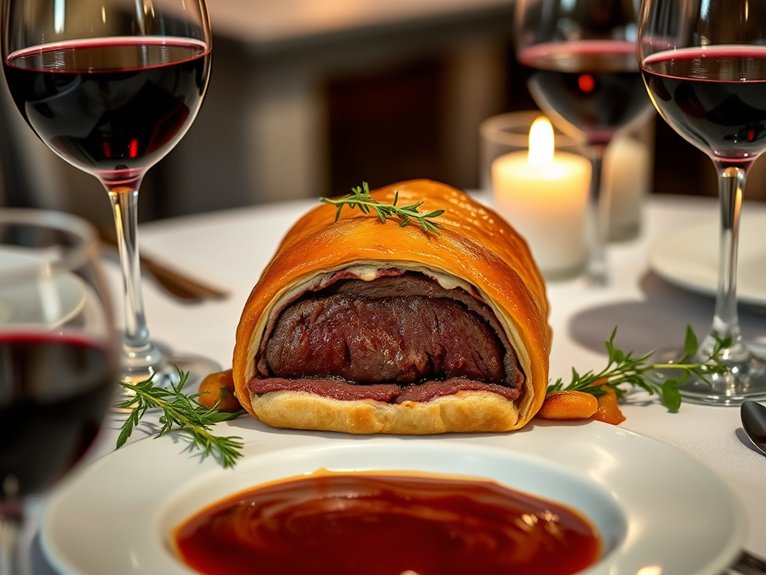
Before you can select the perfect wine pairing for Beef Wellington, you'll need to understand what makes this classic dish such a flavor powerhouse. This luxurious creation combines tender beef tenderloin, earthy mushroom duxelles, and rich, buttery puff pastry into a harmonious masterpiece that'll make your taste buds do a happy dance.
The key flavor components include the savory, umami-rich beef at its core, the earthy mushrooms that add depth, and that golden-brown pastry that brings everything together. You'll also find subtle notes from herbs like thyme and sometimes prosciutto or pâté. The texture balance is equally important, with the crispy exterior giving way to succulent meat – it's like unwrapping a delicious present with every bite!
Classic Red Wine Pairings for Beef Wellington
When it comes to classic red wine pairings for Beef Wellington, you'll want to reach for bottles that can stand up to the dish's magnificent richness while complementing its complex flavors. For the perfect wine tasting experience, full-bodied Bordeaux blends and aged Cabernet Sauvignons are your best friends here – they're like the trusty sidekicks to your pastry-wrapped hero.
You can't go wrong with a robust Merlot either, which brings just the right flavor balance to match the beef's tenderness and the mushroom duxelles' earthiness. If you're feeling adventurous, try an Australian Shiraz – its bold personality and peppery notes will make your taste buds do a happy dance. Trust me, these wines won't just complement your Wellington; they'll make it sing! Additionally, serving your wine at the optimal serving temperatures can enhance the tasting experience even further.
Bold Bordeaux Selections
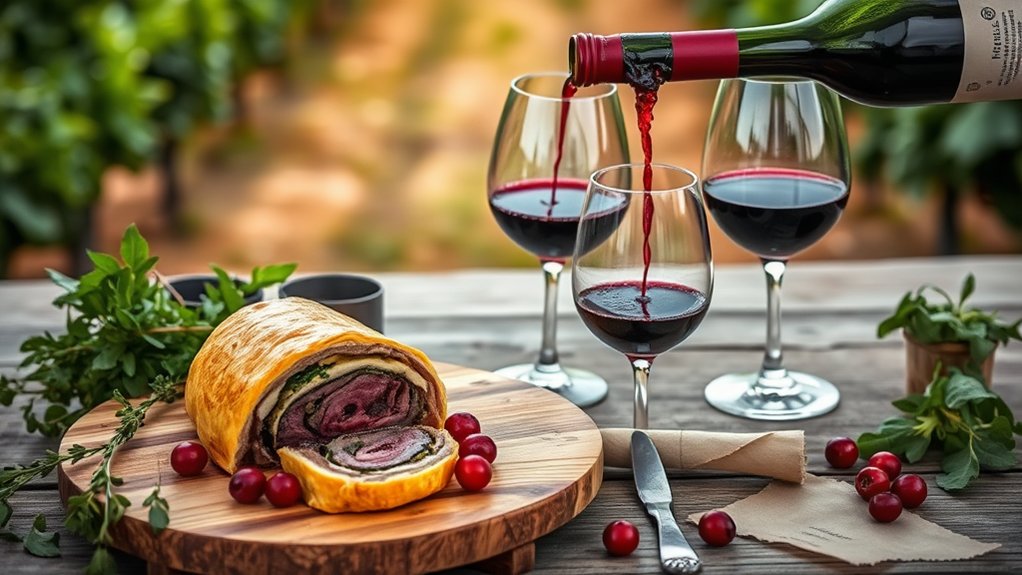
Bordeaux's finest offerings provide a perfect stage for your Beef Wellington to truly shine. You'll find that the prestigious Bordeaux regions, particularly Saint-Émilion and Pauillac, produce wines that'll make your taste buds dance with joy. These bold, structured reds showcase the perfect marriage of power and elegance.
When you're exploring Bordeaux varietals, look for blends dominated by Cabernet Sauvignon and Merlot – they're like the dynamic duo of the wine world! The Cab brings those gorgeous blackcurrant notes and firm tannins, while Merlot adds a plush, velvety texture that'll complement your perfectly cooked beef. Don't be shy about splurging on a grand cru classé – after all, you've already committed to making Beef Wellington, so why not go all in?

Perfect Pinot Noir Matches
Three stellar Pinot Noir regions stand ready to elevate your Beef Wellington to new heights. You'll find magnificent matches from Oregon's Willamette Valley, where the pinot noir characteristics lean toward bright cherries and earthy mushrooms. France's Burgundy region, the spiritual home of Pinot Noir, offers elegant wines with truffle notes that'll dance perfectly with your pastry-wrapped beef. Don't overlook California's Russian River Valley, where the grapes develop a gorgeous complexity that'll make your taste buds sing.
When exploring these premier pinot noir regions, you'll discover each bottle brings its own personality to the party. Look for wines that showcase the grape's signature silky texture and medium body – they're like that perfect dinner guest who knows exactly when to complement the conversation without overshadowing it. Additionally, the terroir influences in each region play a crucial role in shaping the unique flavor profiles of the wines.
Regional Wine Recommendations
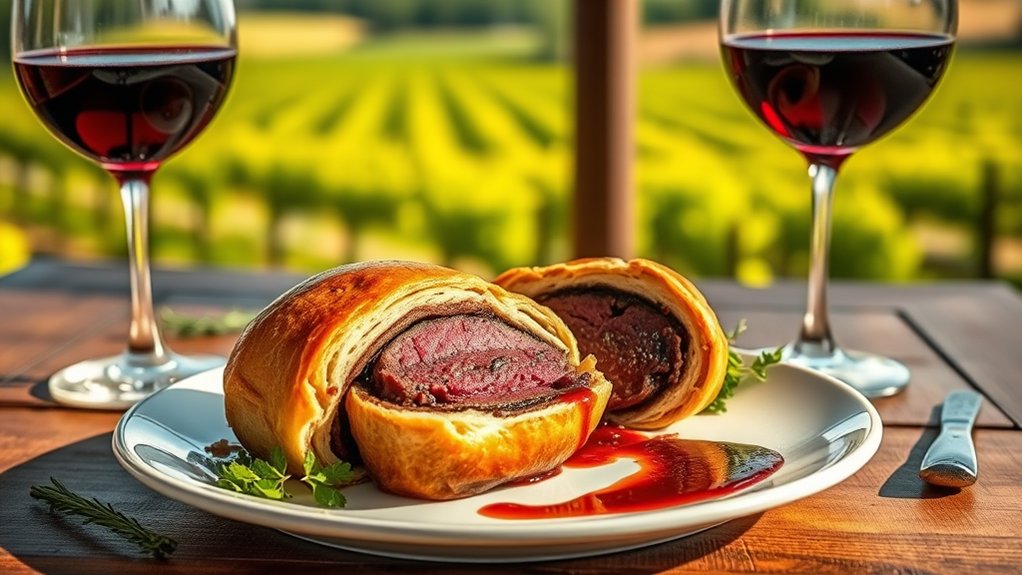
Beyond these fantastic Pinot Noir options, you'll find some remarkable regional stars that'll make your Beef Wellington sing. When exploring regional varietals, don't miss the robust Priorat wines from Spain, which pack just the right punch to complement your masterpiece. You'll love how local vineyards in Bordeaux's Saint-Émilion region produce Merlot-dominant blends that dance perfectly with the dish's rich flavors.
For a delightful surprise, try an Australian Shiraz from the Barossa Valley – these bold beauties will have your taste buds doing the cha-cha! And if you're feeling adventurous, Italy's Brunello di Montalcino offers that perfect marriage of elegance and power. Trust us, these regional gems will turn your Wellington from simply fabulous to absolutely unforgettable!
White Wine Alternatives
While red wines may rule the Beef Wellington world, don't overlook the surprising potential of white wines to create an unexpectedly delightful pairing!
For those brave enough to buck tradition, you'll find some stellar Chardonnay options and Sauvignon pairings that'll make your taste buds do a happy dance. Here's your guide to white wine rebellion:
| Wine Type | Why It Works |
|---|---|
| Oaked Chardonnay | Rich butter notes complement the pastry |
| Viognier | Apricot flavors balance the mushrooms |
| White Burgundy | Mineral notes cut through richness |
| Aged Champagne | Toasty notes match the golden crust |
| Sauternes | Sweet contrast to savory meat |
Who knew that going against the grain could taste so good? These white wine alternatives prove that sometimes the best pairing is the unexpected one!
Wine Serving Temperature and Timing
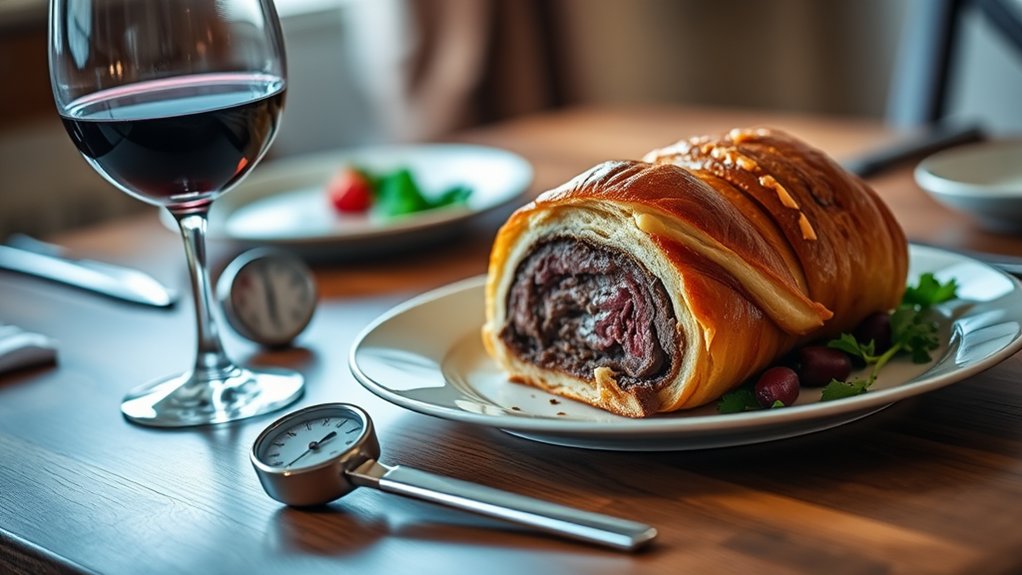
Getting the temperature and timing right for your wine can make the difference between a good Beef Wellington pairing and a spectacular one. You'll want to serve red wines at around 60-65°F (15-18°C), which means taking them out of storage about 30 minutes before dinner. If you've stored your wine in a regular fridge, give it closer to an hour to warm up.
For ideal enjoyment, open your bottle and let it breathe while you're preparing the Wellington. This serving time allows the wine to develop its full bouquet of aromas and soften any harsh tannins. Just don't leave it decanting for too long – you're aiming for peak flavor when that golden-brown pastry hits the table, not when you're doing the dishes!
Decanting Tips for Optimal Taste
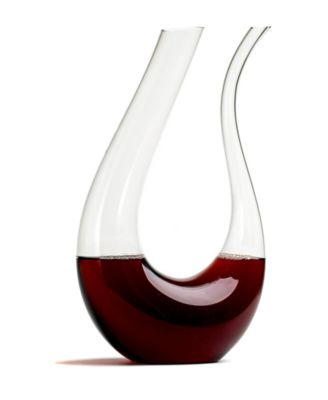
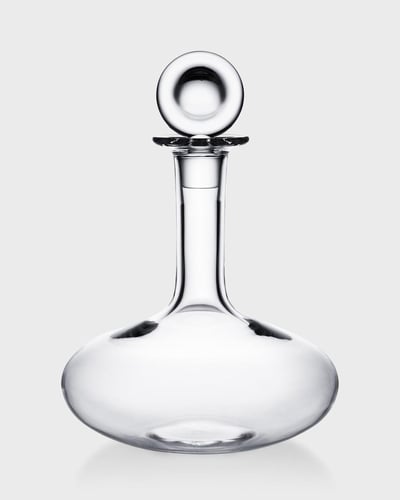
Since proper decanting can elevate your Beef Wellington wine pairing from good to extraordinary, you'll want to master a few essential techniques. To get started, gently remove the cork and let your wine breathe for 30-45 minutes before serving, especially with robust reds like Cabernet Sauvignon or Bordeaux blends.
For ideal aeration, hold your decanter at a 45-degree angle and slowly pour the wine against its inner wall, allowing it to cascade smoothly down the sides. Watch for any sediment as you near the bottom of the bottle – that's your cue to stop pouring! If you're short on time, try the "double-decanting" technique: pour the wine into the decanter, then back into the cleaned bottle for a quick oxygen boost.
Seasonal Wine Pairing Considerations
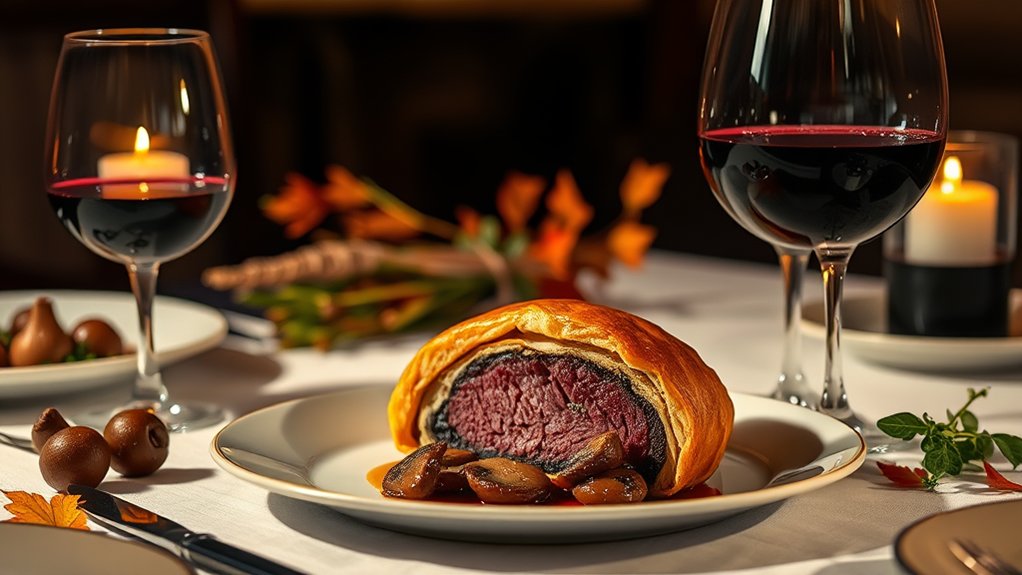
The seasons bring dramatic changes to how we enjoy Beef Wellington and its perfect wine companion. When summer's heat calls for lighter fare, you'll want to choose seasonal varietals that won't overpower your palate, like a slightly chilled Beaujolais or an elegant Pinot Noir.
As autumn and winter roll in, you can embrace fuller-bodied wines that match the cozy comfort of this classic dish. Climate influence plays a significant role here – those crisp evenings practically beg for a robust Cabernet Sauvignon or a warming Malbec. You'll find that the heartier tannins complement the rich pastry and mushroom duxelles beautifully.
Spring's moderate temperatures offer the most flexibility – it's your chance to experiment with medium-bodied gems like Sangiovese or Tempranillo. Who knew the weather could be such a wine whisperer?
Frequently Asked Questions
Can I Prepare Beef Wellington a Day Before Serving With Wine?
You can make your Beef Wellington ahead and store it uncooked in the fridge overnight. Just wrap it tightly in plastic wrap, and bake it fresh when you're ready to serve.
How Long Should Wine Breathe Before Serving With Beef Wellington?
You'll want to let your red wine breathe for 30-60 minutes using proper wine aeration techniques. Serve at ideal serving temperature of 60-65°F (15-18°C) for peak flavor development.
What's a Good Non-Alcoholic Alternative to Wine With Beef Wellington?
You'll love these divine non-alcoholic options that dance on your palate: sparkling grape juice, pomegranate juice, or beef broth. Their rich flavor profiles complement your Wellington's savory character perfectly.
Should I Use the Same Wine in the Sauce and for Drinking?
You'll want wine selection that works for both cooking and drinking. While it's not mandatory, using the same wine guarantees sauce compatibility and lets you appreciate matching flavors throughout your meal.
How Many Wine Bottles Should I Buy for Six Beef Wellington Servings?
Better safe than sorry – you'll need two bottles for six servings. Plan for one standard 750ml bottle serving 4-5 wine portions, considering serving sizes and wine quantity for both sauce and drinking.