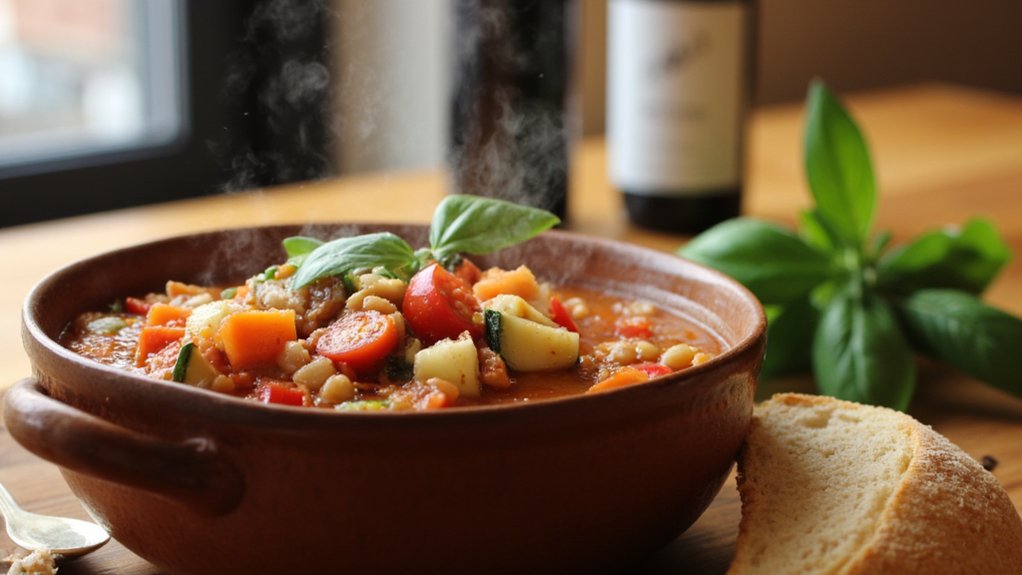
You’ll want a zippy, mid-weight wine that lifts tomatoes and herbs without stealing the show, so reach for a chilled Vermentino or Albariño for brothy bowls, a dry Rosé for versatility, or a young Sangiovese/Chianti if it’s tomato-and-bean heavy. Grüner Veltliner or Pinot Grigio work for veggie-forward versions, and a light Gamay is fun with heartier minestrone. Try a sip first — it’ll tell you everything — and if you keep going you’ll find more nuances.
Key Takeaways
- Match acidity to tomato brightness: choose wines with zesty acids (Sangiovese, Chianti, Barbera) so neither soup nor wine overwhelms.
- For light brothy minestrone, pick crisp whites or a dry rosé (Vermentino, Albariño, Pinot Grigio, or chilled rosé).
- For hearty, bean- or sausage-forward bowls, use medium-bodied reds with modest tannin (Dolcetto, Grenache blends, Tuscan Sangiovese).
- If herbs and green vegetables dominate, favor herbaceous whites like Sauvignon Blanc or Grüner Veltliner to echo garden flavors.
- When in doubt, a versatile dry rosé or value Prosecco/Cava handles varied minestrone styles and seasoning reliably.


Quick Pairing Cheatsheet: 5 Go-To Wines for Minestrone
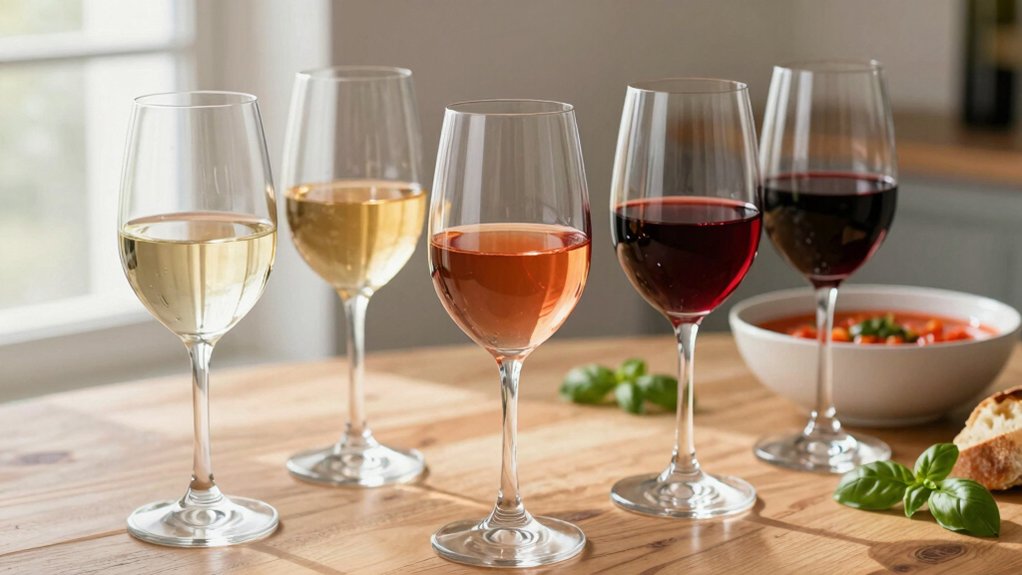
If you’re serving minestrone and want a quick, no-fuss wine pick, here are five reliable choices that’ll make your meal sing. You’ll like a crisp Pinot Grigio for lighter, veggie-forward bowls; it’s clean and friendly, and seasonal pairings lean toward summer produce. Try a Chianti when beans and tomatoes dominate; regional variations in Tuscany make it a natural match, rustic and a little chewy. A Verdicchio brings zippy citrus notes that cut through broth, especially nice in spring. For heartier, bean-heavy versions, a Sangiovese-based red holds up without overpowering. And don’t forget a dry Rosé — versatile, cheerful, and forgiving if you’ve over-salted the soup. Like Caprese salad, minestrone’s Mediterranean flavor profile benefits from wines that enhance rather than compete with its fresh, herbaceous elements. Easy choices, no stress, just tasty results.
Key Wine Traits for Minestrone: Acidity, Body, Tannin, Earth
Because minestrone is a mix of veggies, beans, and broth, the wine traits you pick really matter — they can either lift the soup or make it feel muddy. You want acidity balance so the wine brightens the bowl without shouting. Body should match the soup’s weight: light to medium keeps things harmonious, heavier wines will overwhelm. Watch tannin integration; rough tannins clash with beans and leafy greens, while smooth tannins can add structure without drama. An earthy finish is a plus, echoing root veggies and mushrooms, but don’t go so rustic it tastes muddy. A subtle mineral backbone adds freshness and keeps each spoonful lively. Like clam chowder, minestrone benefits from wines with crisp citrus notes that cut through the soup’s richness and complexity. Think of the wine as a teammate, not a soloist — supportive, friendly, and a little witty.
Match Wine Acidity to Tomato Brightness
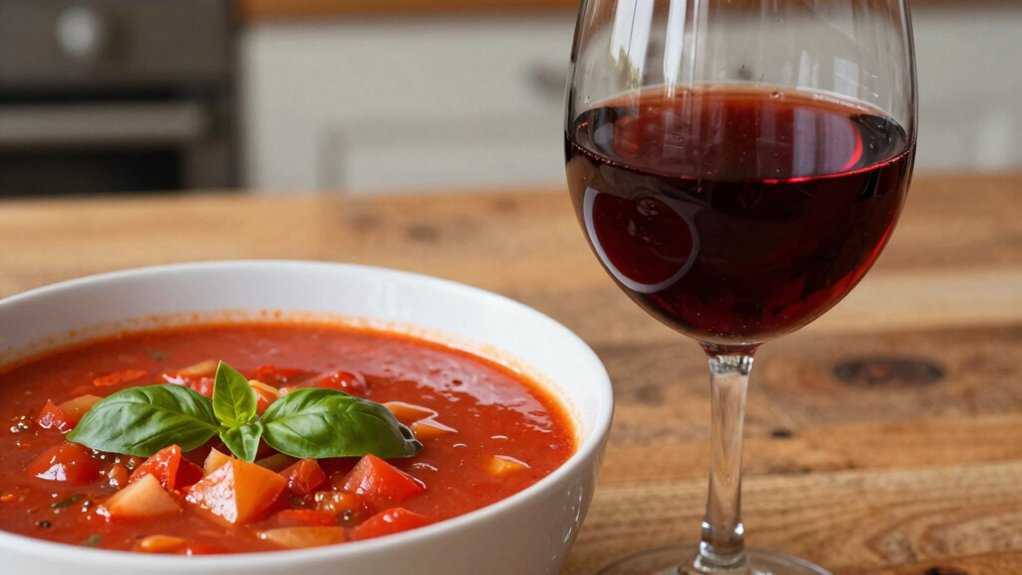
When tomatoes in your minestrone bring that bright, tangy zip, you’ll want a wine that answers back with its own lively acidity so neither one feels like it’s doing all the talking. Think of it like tuning a duet: if the wine’s too flat the tomato tension wins, and if the wine is overly sharp you’ll fight instead of harmonize. Look for bottles with good acid balance — wines that feel zesty but rounded, they lift the soup without stealing the scene. Crisp Chianti, young Sangiovese, or a vibrant rosé often do the trick. Similar to eggplant parmesan pairings, Barbera d’Alba complements tomato-based dishes with juicy fruit and earthy notes that enhance vegetable-forward preparations. Taste them with a spoonful first. You’ll notice how the right acid makes tomatoes sing and the whole bowl feel brighter, friendlier, and more together.

Wines That Echo Vegetables and Herbs
Think about wines that actually remind you of the garden — those with herbaceous green notes like Sauvignon Blanc or a dry Vermentino can echo basil and parsley in your minestrone. You’ll want enough tomato-friendly acidity to keep the soup bright, but not so sharp it steals the show, and a touch of light earthy minerals in the wine can mirror the soup’s root veggies. Like ratatouille, minestrone pairs beautifully with crisp white wines that cut through the richness of vegetables while complementing fresh herbs. Mix and match a bit — it’s okay to experiment, and hey, if it makes you smile, it’s probably worth a second sip (or a note on your phone, before you forget).
Herbaceous Green Notes
If you’re after wines that actually echo the garden in your bowl, herbaceous green-note wines are your best friends — they pick up on the basil, parsley and little vegetal whispers in a good minestrone and don’t try to overpower them. You’ll notice fresh basil aromas and subtle green bellpepper notes in some bottles, which can feel like the soup’s herbal chorus answering back. Try lighter, slightly underripe styles that keep things lively. They’re great when you want the vegetables to shine. These wines gain their distinctive character from the terroir of key regions where they’re cultivated, allowing them to authentically complement the fresh, garden-forward nature of your soup.
- Sauvignon Blanc: zippy, grassy, lemony lift
- Vermentino: herbal, slightly resinous, food-friendly
- Grüner Veltliner: white-pepper snap, green-apple crunch
They won’t steal the show; they join it.
Tomato-Friendly Acidity
Because tomatoes bring bright, zippy acidity to minestrone, you’ll want wines that can match that snap without getting lost or tasting dull. You’re aiming for acid balance that brightens vegetables and tames tomato tannins, not a wine that fights the bowl. Think lively reds with mild grip or crisp whites that echo herb flavors. They’ll lift the soup, highlight basil and celery, and keep things cheerful.
| Wine Type | Why it works | Try this |
|---|---|---|
| Sangiovese | Cherry acidity complements tomato | Chianti |
| Pinot Noir | Light tannins, earthy note | Burgundy |
| Vermentino | Zesty, herb-friendly | Sardinia |
| Sauvignon Blanc | Bright, herb echoes | Loire |
| Rosé | Fresh, versatile match | Provençal |
Light Earthy Minerals
Layering a little earthy minerality into your wine choice will make the veggies in minestrone sing — not in a weird, opera way, but in a friendly, garden-fresh chorus. You’ll notice a mineral perfume that nudges herbs and beans forward without stealing the show. Think wines with subtle flint notes, light texture, and bright, clean finish. They’ll echo carrot, celery, and basil.
- Try an unoaked white with green apple and chalky vibes.
- Consider a light-bodied Pinot with herbaceous lift.
- Explore a dry Vermentino or Assyrtiko for saline freshness.
These options help the soup feel more savory, they’re easy to sip, and they won’t fight your spoon. Give one a go — your ladle might thank you.
Light, Brothy Minestrone: Best Whites and Rosés
Want a wine that keeps the soup’s bright, veggie-forward vibe without stealing the show? Go for crisp whites or playful rosés. Think Vermentino or Albariño: they bring citrus zest and a light saline texture that echo a brothy minestrone’s snap, lifting peas, zucchini, and basil. A dry rosé can be your wildcard — it’s fruity but restrained, and it won’t overpower the gentle broth. Look for wines with lively acidity; they cut through any oil and refresh the palate. Serve slightly chilled. Don’t reach for big, oaky bottles. You’d drown the soup. Keep it simple, friendly, and food-first. Try a few small pours and you’ll quickly find a combo that feels just right.

Hearty Minestrone: Reds and Fuller Whites
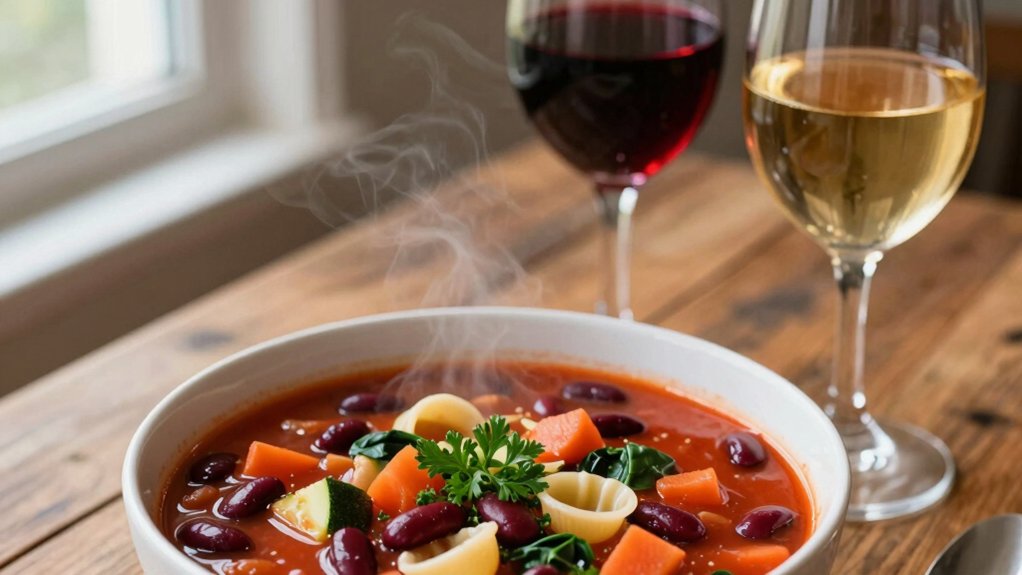
If you loved the bright, brothy minestrone suggestions, you’re going to like how wines change when the soup gets heartier—think beans, sausage, squash, or a richer tomato base. You want wines that stand up to root vegetable and the soup’s rustic texture, wines with a bit more weight and character, not something too delicate. Try fuller whites or medium-bodied reds that offer spice and a savory finish.
- A hearty white with oak and subtle barrel aging to match roasted squash and beans.
- A medium red with gentle tannins for sausage and tomato richness.
- A versatile bottle that echoes earthy root vegetable notes and adds warmth, like a friendly hug in a glass.
Italian Wines That Pair With Minestrone
When you’re matching minestrone with Italian wines, think regional common sense: the soup’s rustic, vegetable-forward character pairs beautifully with wines that are earthy, fresh, and not trying to be flashy. You’ll want a Tuscan sangiovese for its bright cherry notes and savory tannins that echo tomato and herbs, and it won’t overpower beans or greens. For a lighter, juicier option, try a Dolcetto pairing — it’s fruity, low in acidity, and has a slight almond finish that plays nicely with Parmesan rinds. Don’t forget white options like Vermentino if you’re after something zippy. Trust your palate, match weight to weight, and remember: simple, honest wines usually win. Yep, even the cheap ones can surprise.
Budget-Friendly Bottles That Consistently Work
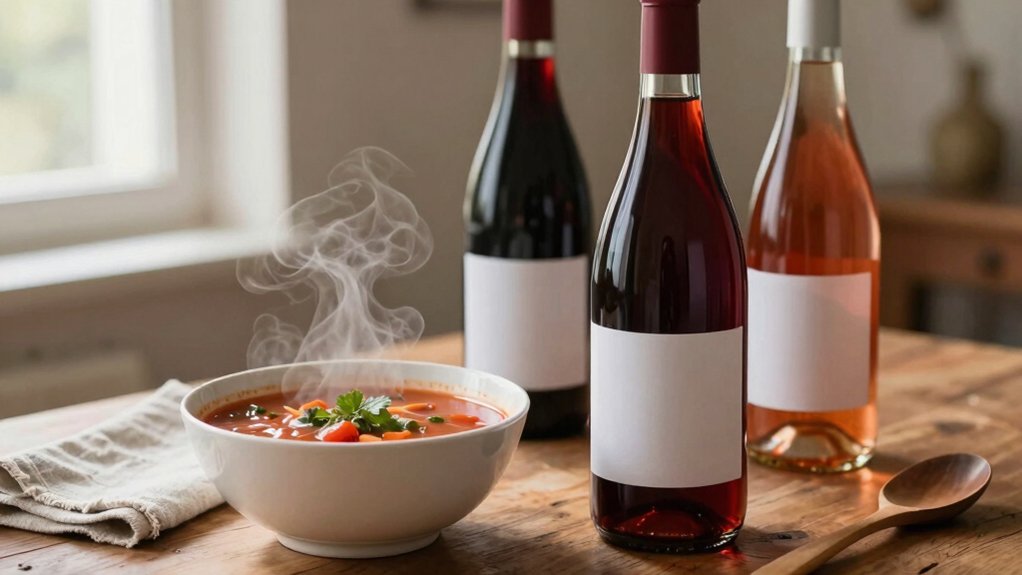
You don’t need an expensive bottle to make minestrone sing—reach for versatile everyday reds like a Sangiovese or simple Chianti that won’t fight the soup. Crisp affordable whites—think Pinot Grigio or a zippy Vermentino—cut through the broth and brighten those veg flavors, and if you’re feeling a bit festive, a value sparkling will lift the whole bowl (it’s like a tiny party in your mug). Try a couple that are under twenty and keep one in rotation; you’ll save cash and always have a reliable pairing on hand.
Versatile Everyday Reds
Lots of everyday reds will happily stand up to a bowl of minestrone, and you don’t need to blow your budget to get a good match. You’ll want wines that echo the soup’s tomato tang, herbs, and veggies without overpowering them. Think of bottles with a bit of rustic charm, modest tannin, and personality—no pretension, just good company. Try lighter- to medium-bodied options that won’t fight the broth.
- Beaujolais or Gamay: bright, berry-driven, food-friendly, you’ll smile.
- Sangiovese or Chianti: tomato-friendly acidity, a touch of earth, great value.
- Grenache/Garnacha blends: soft fruit, spice notes, easy drinking and versatile.
These choices are cheap-ish, reliable, and fun. Sip and enjoy; dinner’s sorted.
Crisp Affordable Whites
If red wines were the friendly neighbours knocking on the minestrone door, crisp whites are the cheerful friend who shows up with a picnic blanket and bright salad—light, invigorating, and totally welcome. You’ll want bottles with citrus undertones and a mineral backbone to lift the soup without stealing the show. Think unoaked Sauvignon Blancs or dry Vinho Verdes — they’re zippy, clean, and won’t break the bank. They cut through tomato’s acidity and play nice with beans and herbs. Here’s a quick guide to help you pick:
| Character | Why it works |
|---|---|
| Citrus undertones | Brightens tomato and herbs |
| Mineral backbone | Adds structure, keeps it fresh |
| Light body | Doesn’t overpower vegetables |
Grab a chilled bottle, taste as you go, and enjoy. Simple, right?
Value Sparkling Options
Often these days a bottle of bubbly won’t cost you an arm and a leg, and that’s great news when you want something bright with your minestrone. You can grab sparkling value without hunting down a sommelier-priced label. Go for crisp, off-dry styles that lift tomato and veg flavors, and don’t be shy about supermarket finds — some are surprisingly good. Festive affordability means you can pop a cork on weeknights and still feel fancy. Crowd pleasing bubbles work well with herb-forward soups, cleansing the palate between spoonfuls.
- Prosecco: light, fruity, easy to find.
- Cava: zippy, good texture, great price.
- Brut Cremant: bakery notes, reliable and festive.
Taste-Test a Bottle Before Serving
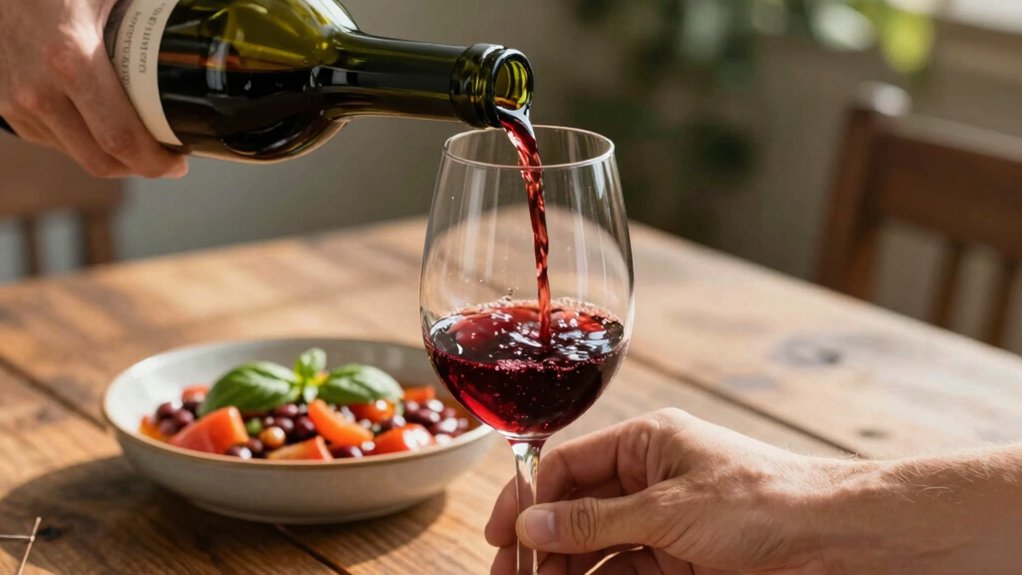
Before you pop the cork for your guests, give the bottle a quick taste—trust me, you’ll thank yourself. You’re aiming to catch any off notes before they ruin a cozy bowl of minestrone. Try a little blind tasting on your own sometime; it sharpens your senses and it’s kind of fun, like wine school without the homework. Use an aroma wheel in your head — or on paper — to name what you smell, it helps you explain things without sounding pretentious. Think about decanting timing, too; some bottles wake up fast, others need an hour. Remember vintage variation: some years are brighter, some are earthier. A quick sip tells you if it’s soup-friendly or needs a rescue plan.
Frequently Asked Questions
Can You Serve Sparkling Wine With Minestrone?
Yes — you can serve sparkling wine with minestrone; choose a light bodied fizz that complements vegetables, its high acidity contrast will cut through tomato richness and enliven broth, so it won’t overpower the soup.
What Dessert Wine Pairs After Minestrone?
You’ll want a lighter dessert wine — think late harvest Riesling or a chilled sweet vermouth served over ice; both won’t overpower the soup’s herbs, and they’ll offer honeyed fruit and gentle acidity to finish the meal.
How Long Should You Chill White Wine Before Serving?
You should chill white wine to its ideal serve temperature: light-bodied whites about 45–50°F, fuller-bodied 50–55°F. Fridge timing is roughly 2–3 hours for light whites, 3–4 hours for fuller styles, or 20–30 minutes in ice.
Is It Okay to Mix Wines at the Table?
Yes — you can mix wines at the table, but you should prioritize matching glasses and maintaining flavor balance so each wine’s character shows. Don’t overblend; try small pours to compare and enjoy contrasts thoughtfully.
What Non-Alcoholic Substitute Mimics Wine Acidity?
You can use lemon juice or apple cider vinegar to mimic wine acidity; blend them lightly with vegetable broth or sparkling water, and don’t overdo it—start small, taste, and adjust for the soup’s brightness.