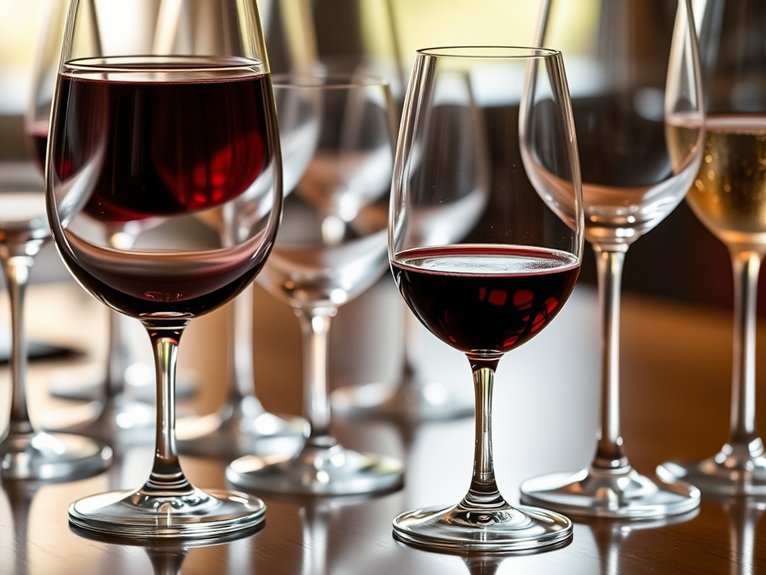
You've probably noticed that wine glasses come in all sorts of shapes and sizes, but there's more to these elegant vessels than meets the eye. While you might think one glass is as good as another for your favorite Cabernet, you'd be surprised at how much the right shape can transform your sipping experience. From bulbous bowls to tapered rims, each design element plays an essential role in revealing your wine's hidden potential.
Key Takeaways
- Bowl shape and size directly influence wine aeration, with wider bowls allowing red wines to breathe more effectively.
- Narrow openings concentrate aromas at the rim, delivering more intense bouquets to your nose during tasting.
- Glass architecture guides wine to specific areas of your palate, enhancing flavor perception and overall taste experience.
- White wine glasses feature smaller, U-shaped designs to preserve delicate aromas and maintain proper temperature.
- Red wine glasses have larger bowls to soften tannins and allow full development of complex flavor profiles.

The Science Behind Wine Glass Design
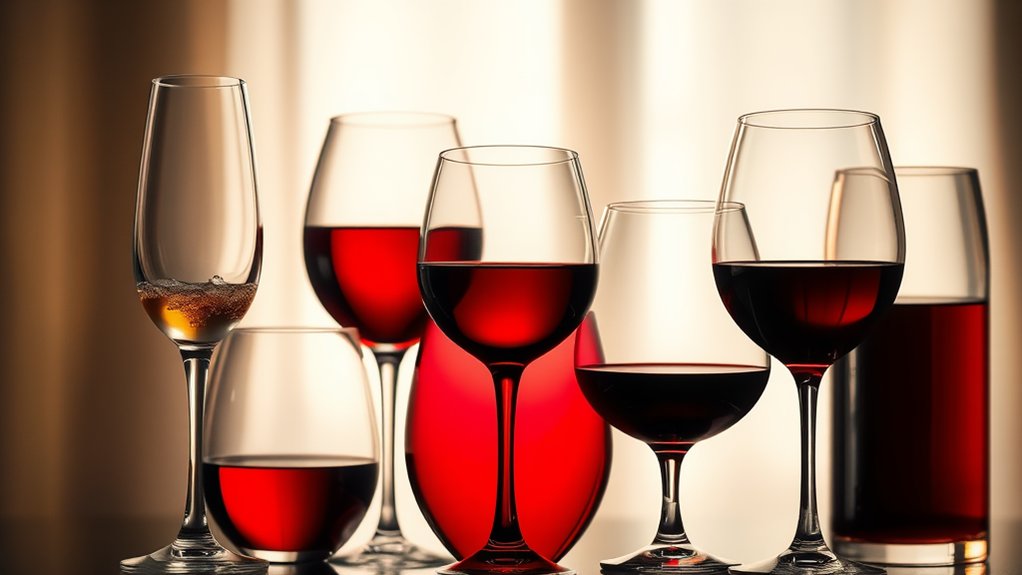
While you might think a wine glass is just a fancy container, there's fascinating science behind why different shapes can dramatically affect your wine-drinking experience. The glass curvature plays a vital role in how wine molecules interact with air, creating a dance of aromatic compounds that reach your nose. You'll notice that wider bowls allow red wines to breathe more effectively, while narrower openings concentrate those precious aromas right where you need them.
Through clever aroma enhancement techniques, modern glass designs direct those wonderful scents straight to your olfactory receptors – it's like having a built-in wine GPS! And if you're wondering why some glasses seem unnecessarily large, they're actually giving your wine the perfect amount of space to show off its full personality.
Essential Elements of Wine Glass Architecture
Now that you understand the science, let's break down what makes a proper wine glass tick! The glass rim design and bowl shape work together like a well-choreographed dance to deliver your wine's full potential. You'll find that each element serves a specific purpose, from capturing aromas to directing the flow of wine to your palate.
| Element | Purpose | Impact |
|---|---|---|
| Bowl Shape | Aroma collection | Concentrates bouquet |
| Rim Design | Flow control | Directs wine placement |
| Stem Length | Temperature control | Prevents warming |
Your wine glass isn't just a fancy container – it's an engineered marvel that's carefully crafted to enhance every sip! The rim's diameter determines where wine first hits your tongue, while the bowl's curves guide those precious aromatics right to your nose.
Red Wine Glass Varieties and Their Purpose

Since red wines come in such delightful variety, it's no surprise that their glasses are equally diverse! You'll find that each shape has been carefully designed to enhance specific wine characteristics and deliver the ultimate tasting experience.
If you're sipping a bold Cabernet Sauvignon, you'll want to reach for Cabernet glasses with their tall bowls and wider openings, which help soften those powerful tannins and showcase the wine's complex aromas. For your more delicate Pinot Noir moments, Pinot glasses feature a wider bowl but a narrower rim, creating the perfect environment for those subtle berry notes to dance on your palate. Think of these glasses as your wine's personal stage – each one specifically designed to help your favorite reds put on their best show!
White Wine Glass Characteristics
The elegance of white wine glasses mirrors the crisp, invigorating character of the wines they're designed to serve. You'll notice these glasses are typically smaller and more U-shaped than their red wine counterparts, helping preserve floral aromas while maintaining the perfect acidity balance in your favorite Chardonnay or Riesling.
| Glass Type | Best For | Key Features |
|---|---|---|
| Chardonnay | Full-bodied whites | Wide bowl, narrow top |
| Sauvignon Blanc | Light, crisp whites | Tall, slim shape |
| Riesling | Sweet, aromatic whites | Tulip shape |
| Universal White | All white varieties | Medium bowl |
When you're sipping from these sophisticated vessels, you'll appreciate how their narrower openings direct those delightful citrus and stone fruit notes straight to your nose, while the smaller bowls keep your wine perfectly chilled – because nobody likes a warm Pinot Grigio!
Sparkling Wine and Champagne Glass Specifics
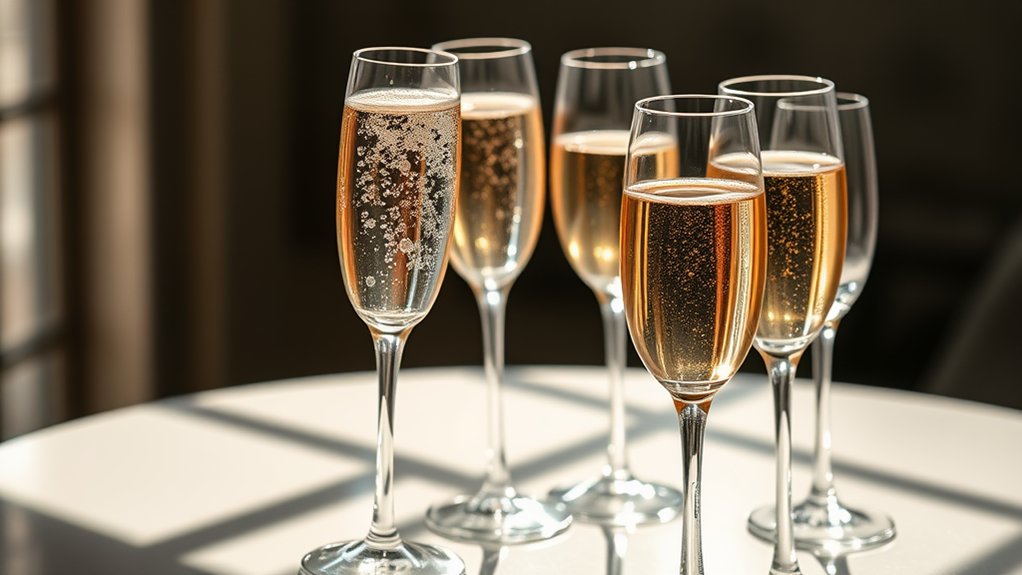
Sparkling wines deserve their own special spotlight when it comes to glassware, with the iconic flute shape standing tall and proud as a symbol of celebration. You'll notice the flute characteristics include a narrow, elongated bowl that's designed to preserve those delightful bubbles while showcasing their mesmerizing dance to the surface.
While you might spot some vintage coupe glasses at your grandmother's house (they've got quite the history, supposedly modeled after Marie Antoinette's breast!), today's experts prefer the flute's practical design. The coupe's wide, shallow bowl might look glamorously retro, but it lets those precious bubbles escape faster than your New Year's resolutions. If you're serious about your bubbly, stick with the classic flute – it's like a runway for your wine's effervescent fashion show!
Caring for Your Wine Glass Collection
Because your wine glasses deserve the same tender loving care that you give to your precious vintages, maintaining them properly will guarantee they stay ready for countless perfect pours to come. You'll want to master essential cleaning techniques and storage solutions to keep your glassware pristine and party-ready!
| Care Aspect | Do's | Don'ts |
|---|---|---|
| Cleaning | Use warm water & mild soap | Use abrasive scrubbers |
| Drying | Air dry upside down | Twist towel inside bowl |
| Storage | Store upright, dust-free | Stack glasses together |
| Temperature | Room temperature only | Extreme temperature changes |
Frequently Asked Questions
Can Wine Glasses Go in the Dishwasher?
While you can put wine glasses in the dishwasher, it's not recommended for dishwasher safety. You'll get better results hand-washing them with mild soap and following proper cleaning tips.
Does the Price of a Wine Glass Affect the Taste?
You'll find price doesn't directly affect taste, but higher-quality glasses can enhance your perception. Like seeing through a clear window versus a dirty one, better glass quality improves your overall wine experience.
How Long Do Quality Wine Glasses Typically Last?
You'll get 10-15 years from quality wine glasses if you handle them properly. Durability factors like storage and washing care matter most, while material influences like crystal versus glass affect longevity.
Are Crystal Wine Glasses Worth the Extra Cost Over Regular Glass?
You'll appreciate crystal's superior clarity and refined design when enjoying fine wines. While they're more expensive, their enhanced durability and ability to elevate your tasting experience make them worth the investment.
Can I Use the Same Glass for Different Types of Wine?
While you could be a wine glass rebel, you'll miss out on wine aroma enhancement with one-size-fits-all glassware. Different shapes truly maximize each wine's unique characteristics and overall versatility.