So, you want to know what sherry is? Imagine a wine that’s been on a wild Spanish adventure, coming back home with salty stories and nutty secrets. It’s not just something your grandma sips—sherry has swagger, with flavors that swing from bone-dry to sticky sweet, all thanks to those clever Palomino grapes. Curious? There’s way more to this Andalusian classic than meets the eye—ready to get your tastebuds dancing?
Key Takeaways
- Sherry is a fortified wine from the Andalusian region of Spain, traditionally made using the Palomino grape.
- It ranges in style from light and dry (Fino, Manzanilla) to rich and sweet (Oloroso, Amontillado, Pedro Ximénez).
- The wine is aged using unique processes that develop complex nutty and saline flavors.
- Sherry is enjoyed chilled, often paired with snacks like cheese, almonds, or ham.
- Notable sherry brands include González Byass (Tío Pepe), Lustau, and Valdespino.

Andalusian Fortified Wine Definition
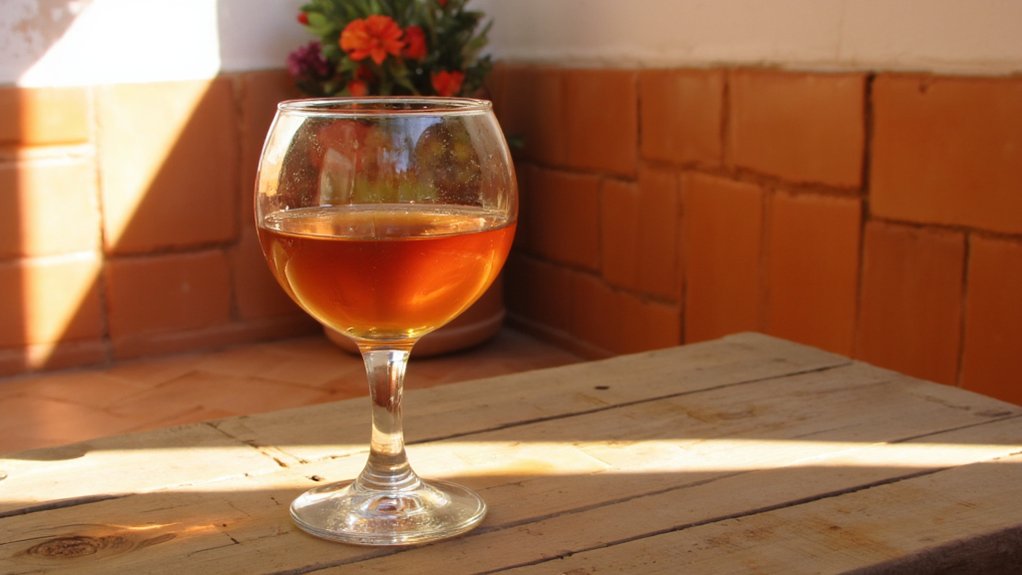
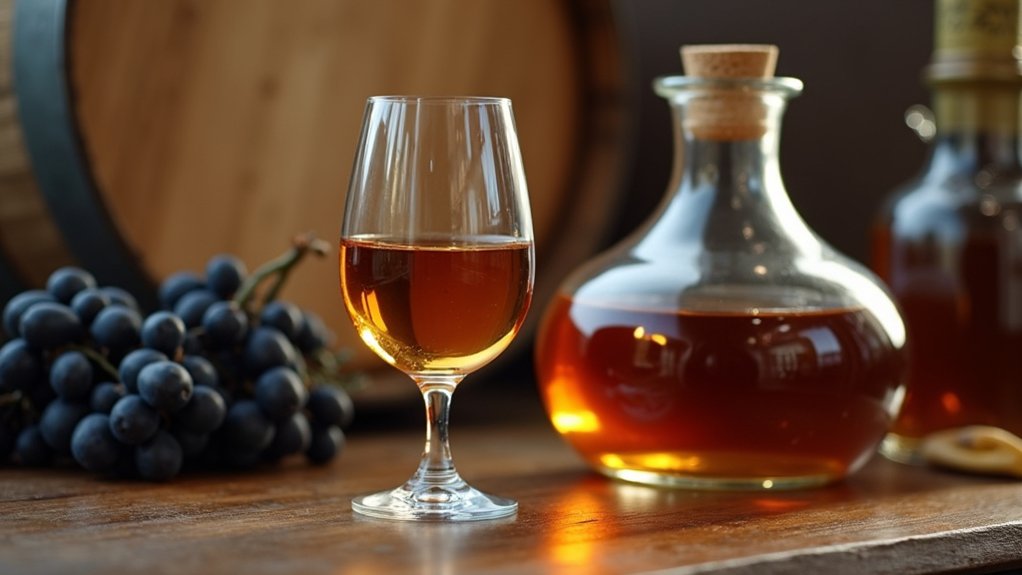
Sherry—let’s just say it’s not your grandma’s dusty bottle lurking at the back of the pantry. You’ll find sherry at the heart of Andalusian history, swirling with centuries of tradition and a dash of Spanish sunshine. So, what is it? Sherry is a fortified wine, meaning winemakers add a splash of grape spirit to boost its strength, creating a drink that’s both bold and elegant. It’s born in the sun-soaked region of Andalusia, where grapes ripen with wild abandon. The magic happens through fortified winemaking, which locks in flavors and lets sherry age into something truly special. You’ll taste everything from crisp, bone-dry fino to lusciously sweet Pedro Ximénez. Trust me, sherry’s anything but boring. It’s history with a twist!
Phoenician Roots in Jerez
If you think sherry’s story starts with Spanish flamenco and sunbaked vineyards, think again. Long before castanets and tapas bars, the story of sherry began with the bold Phoenicians sailing the Mediterranean, their ships loaded with goods for trade. Picture them—ancient navigators docking near what’s now Jerez, bringing their love of wine and clever winemaking skills to the region. They didn’t just swap silks and spices; they planted vines, forever changing Jerez history.
You can almost hear the clink of amphorae as they introduced new methods for fermenting grapes. Their influence runs deep. It’s wild to think that every glass of sherry connects you to these intrepid traders. Cheers to the Phoenicians—because without their trade, Jerez would be just another sunny Spanish town!
Palomino Grape as Foundation
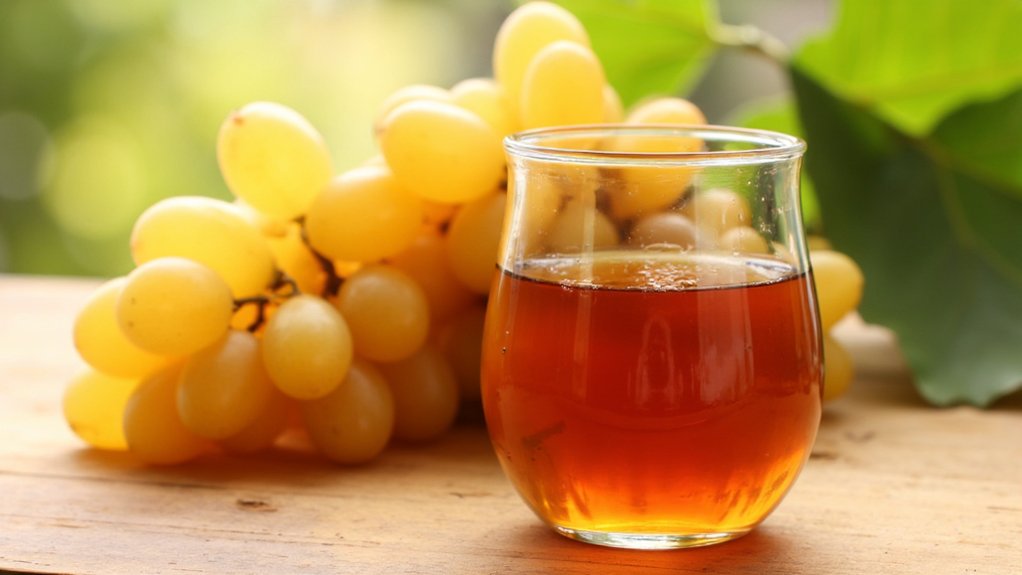
The humble Palomino grape is the real backbone of sherry, even if it doesn’t get the same love as more glamorous grapes like Cabernet or Pinot. You might not brag about it at parties, but Palomino cultivation is serious business in Jerez. This grape thrives in chalky, sunbaked soils, soaking up the Spanish rays like it’s on a lazy vacation. Palomino characteristics? They’re subtle—think gentle flavors, soft acidity, and an ability to let the winemaker work some real magic. It’s like the grape that shows up early, does all the hard work, and never asks for credit. Without Palomino, you’d have no classic sherry, just a sad, empty glass. And who really wants that? Not you.


Nutty and Saline Notes
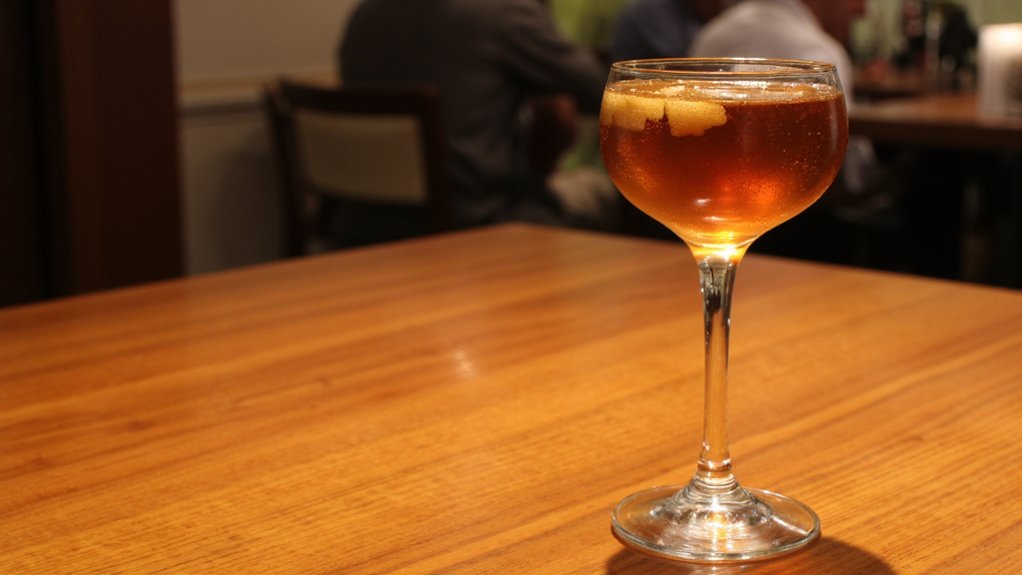
Even after just one sip, you’ll notice something special swirling around in your glass—those nutty and salty notes that pretty much define sherry’s personality. It’s like a snack and a drink all at once! The nutty flavors can remind you of toasted almonds, hazelnuts, or even a hint of walnut, making your taste buds do a happy little dance. But wait, there’s more. Sherry is famous for its saline characteristics, almost as if the ocean itself left its signature in your glass. That touch of saltiness keeps everything lively and fresh, balancing out the richness. It’s this combo—nutty and saline—that makes sherry so interesting. Go ahead, take another sip. It’s a flavor party and everyone’s invited.
Famous Sherry Wine Brands
Legends and little bottles—sherry’s world is packed with both. If you want to explore the best, you’ve got to check out the famous producers that have shaped this wine’s story. Each brings something special to the glass. Some lean on tradition, others tinker with unique styles that keep sherry fans guessing. You’ll find deep history and a splash of mischief in every sip.
Here are five iconic names you’ll spot on sherry shelves:
- González Byass – Makers of the playful Tío Pepe Fino.
- Lustau – Renowned for variety and bold experiments.
- Bodegas Tradición – Small, exclusive, and proud of it.
- Valdespino – Classic, ancient, and not afraid to show it.
- Emilio Lustau – Wait, did we mention them twice? Oops. They’re *that* good!
Popular Sherry Choices For Any Budget
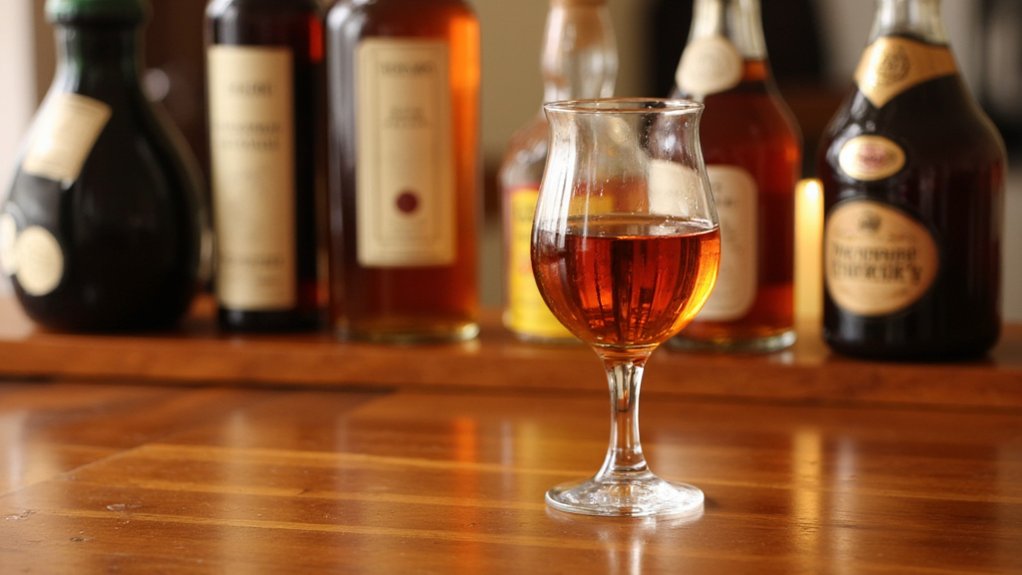
No matter what your budget is, there’s a sherry out there with your name on it—seriously, even if your wallet’s feeling a little light after taco night. You’ll find tasty bargain bottles under $20, some impressive mid-range picks between $20 and $100, and, for those feeling extra fancy or just trying to impress their in-laws, high-end sherries that tip the scales above $100. Let’s check out what each price range offers, because sherry doesn’t have to be expensive to make you feel like a million bucks.
Bargain Sherry Wines Under $20
- Lustau Los Arcos Amontillado (Jerez) – nutty, dry, versatile, excellent value
- La Gitana Manzanilla (Sanlúcar) – crisp, saline, invigorating, great with seafood
- Osborne Medium (Jerez) – sweet, caramel, approachable, crowd-pleaser
- Hidalgo La Gitana Fino (Sanlúcar) – delicate, dry, floral, aperitif classic
- Fernando de Castilla Classic Cream (Jerez) – rich, smooth, toffee, dessert-friendly
Mid-Range Sherry Wines Between $20-$100
- Lustau Almacenista Fino del Puerto (Jerez) – complex, saline, aged, almond, persistent finish
- Valdespino Inocente Fino (Jerez) – elegant, layered, floral, mineral, benchmark fino
- Fernando de Castilla Antique Amontillado (Jerez) – intense, nutty, dried fruit, balanced, long-lasting
- Barbadillo Solear Manzanilla Pasada (Sanlúcar) – mature, savory, sea breeze, oxidative hints, food-friendly
- González Byass Vina AB Amontillado (Jerez) – expressive, hazelnut, dried citrus, smooth, versatile

High-End Sherry Wines Above $100
- Valdespino Cardenal Palo Cortado VORS (Jerez) – rare, profound, complex, nutty, dried fruit, endless finish
- González Byass Matusalem Oloroso VORS (Jerez) – intense, rich, fig, toffee, walnut, luxurious texture
- Equipo Navazos La Bota de Amontillado (Jerez) – layered, saline, oxidative, tangy, extraordinary balance
- Lustau VORS Pedro Ximénez (Jerez) – luscious, dense, raisin, molasses, chocolate, very concentrated
- Barbadillo Reliquia Amontillado (Sanlúcar) – ancient, ethereal, piercing acidity, savory, legendary rarity
Classic Sherry Wine Food Pairings

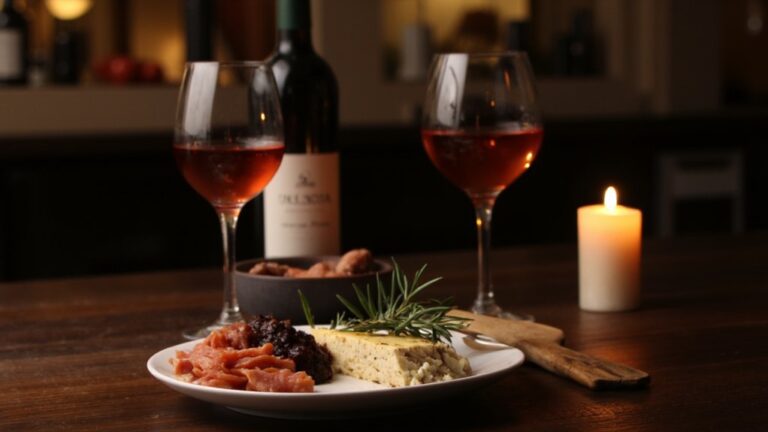
Few things in life are as satisfying as nailing the perfect food and sherry pairing. You want sherry pairings that sing, right? The trick lies in food compatibility. Dry Fino or Manzanilla loves salty, briny snacks, while nutty Amontillado pairs with roast chicken like they’ve been best friends forever. Creamy Oloroso? It’ll hug your blue cheese like a long-lost cousin. Don’t even get me started on Pedro Ximénez over vanilla ice cream—it’s dessert magic. If you’re ready to turn dinner into a fiesta, here are some classic pairings to try:
- Fino with olives and salted almonds
- Amontillado with mushroom risotto
- Oloroso with aged cheddar
- Palo Cortado with duck confit
- Pedro Ximénez with sticky toffee pudding
Try these, and thank me later!
Sherry Casks Flavor Scotch Whisky
Magic happens when Scotch meets sherry casks. Suddenly, that whisky you thought you knew gets a whole new personality—bolder, richer, almost like it’s putting on its best suit and heading out for a fancy night. During cask maturation, the whisky sits quietly inside barrels that once held sherry, soaking up all kinds of delicious flavors. You’ll notice hints of dried fruit, nuts, even a touch of chocolate or orange peel. That’s the sherry influence doing its thing, turning an ordinary dram into something special.
If you ever taste a Scotch and think, “Wow, what’s that sweet, spicy kick?”—it’s probably those sherry casks working their magic. Honestly, it’s like a secret handshake between Spain and Scotland, and you’re invited.
Does Sherry Wine Age Well?
After seeing what sherry casks can do for Scotch, you might start wondering about the sherry itself. Can sherry age like a fine Bordeaux, or does it just wilt away? Good news: sherry’s aging potential is actually pretty impressive, thanks to its unique sherry characteristics. Some styles, like Fino, are best enjoyed young—think fresh bread right out of the oven. Others, especially Oloroso and Amontillado, age gracefully for decades, growing richer, nuttier, and more complex over time. You could say they go from high school band to full-on symphony. But don’t expect every bottle to improve; some sherries, if left too long, can lose their sparkle faster than soda left open. So, age matters, but style matters even more.
Sherry Wine Serving Tips
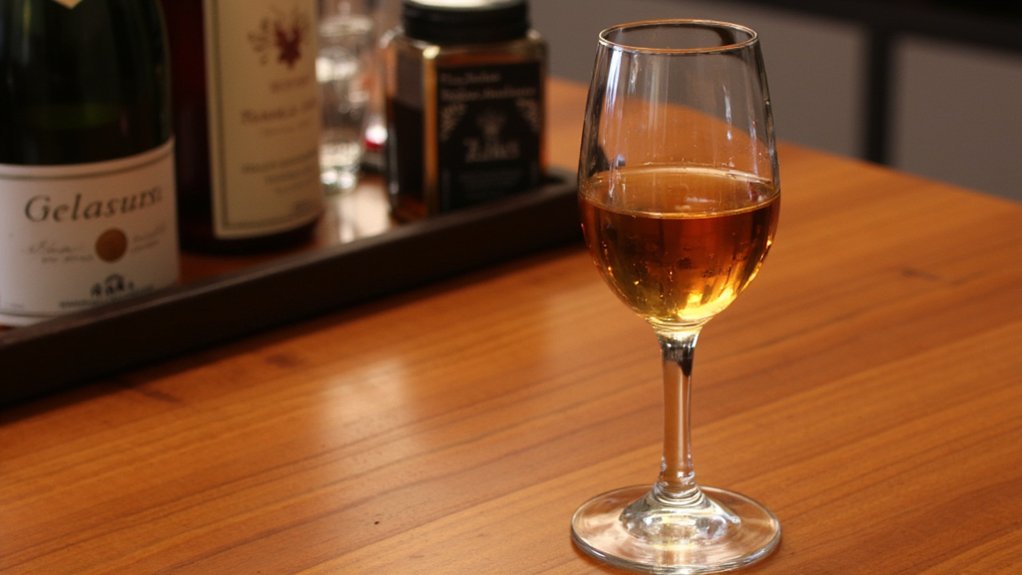
Whether you’re a total sherry newbie or just want to step up your sipping game, serving sherry is way more fun than you might think. It’s not just about pouring a glass and looking fancy—there’s a bit of an art to it. Want to impress your friends, or maybe just your cat? Here are some tips that’ll make you look like a sherry superstar.
- Serve chilled Fino or Manzanilla sherry for maximum freshness.
- Try sherry cocktails for a creative twist—hello, Sherry Cobbler!
- Use sherry garnishes like orange peel, olives, or even a cheeky sprig of mint.
- Pair sherry with snacks like almonds, cheese, or salty ham.
- Don’t overthink it—grab a tulip glass and enjoy the moment!
Now, go forth and pour with panache.
Similar Wines to Sherry Wine
If you’ve ever found yourself enchanted by a glass of sherry and thought, “What else out there tickles my tastebuds like this?” you’re in for a treat. There’s a world of fortified alternatives just waiting for you to explore. Port is a classic choice, rich and bold, perfect for sipping by the fire or pairing with blue cheese. Madeira? Oh, that one’s a real character—nutty, sweet, and perfect for dessert pairings. Vermouth is another fun option, especially in cocktails or with a twist of orange. Don’t forget about Marsala, which can go from savory to sweet quicker than you can say “cheese plate.” Try these, and you’ll never look at a wine list the same way again!
Frequently Asked Questions
Is Sherry Suitable for Vegans or Vegetarians?
When you look for vegan sherry or vegetarian sherry, check labels or ask producers since some sherries use animal-based fining agents. Not all sherry is vegan or vegetarian, but many brands now offer suitable options.
Can Sherry Be Used in Cooking and Baking?
You can use sherry in various cooking techniques to enhance savory sauces or marinades, and it’s great in baking recipes for added depth. Just splash it in soups, deglaze pans, or flavor cakes and desserts.
What Is the Alcohol Content of Sherry Wine?
You’ll find that alcohol levels in sherry wine depend on the sherry types. Fino and Manzanilla usually have 15-17% ABV, while Oloroso and Cream sherries reach 18-20%. Always check the label for specifics.
How Should Opened Sherry Be Stored?
When considering opened sherry storage, you should reseal the bottle tightly and refrigerate it. This helps extend sherry shelf life. Fino styles last about a week, while richer types like Oloroso keep for several weeks.
Is Sherry Considered a Dessert Wine?
You might wonder if sherry is considered a dessert wine. Actually, only some sherry varieties, like Pedro Ximénez or Cream, are sweet enough for dessert pairings. Others, like Fino or Amontillado, are dry and best served before meals.