Wine vintages aren’t just fancy numbers on bottles—they’re time capsules of weather conditions that shaped your drink! Each year brings unique sunshine, rain, and temperatures that influence grape ripening. Hot years create bold, jammy wines, while cooler seasons yield delicate, acidic flavors. That’s why some vintages fetch hefty price tags while others fly under the radar. Discover these annual differences, and you’ll reveal a whole new dimension of wine appreciation.
Key Takeaways
- Vintage years reflect unique weather patterns that directly influence grape maturity, flavor development, and overall wine quality.
- Annual variations in temperature, rainfall, and sunshine create distinct flavor profiles, from bold jammy wines in hot years to delicate acidic ones in cooler seasons.
- Regional terroir determines how significantly vintage years impact wine quality, with places like Burgundy more affected than consistent regions like California.
- Vintage charts provide useful guidelines for wine selection, though skilled winemakers can produce excellent wines even in challenging years.
- Building a collection of the same wine from different vintages allows for comparative tasting and greater appreciation of how climate shapes wine character.

The Science Behind Great Vintage Years
While you’ve probably heard wine enthusiasts raving about certain vintages, you’ve likely wondered what actually makes one year’s wine better than another’s. It’s actually all about perfect timing and Mother Nature’s cooperation!
The secret lies in grape maturity, which depends on that year’s specific weather conditions. You need just the right balance of sunshine, rain, and temperature to create those perfectly ripened grapes, bursting with ideal sugar levels and flavor compounds. Too hot? You’ll get overly sweet wines. Too wet? Hello, diluted flavors!
Once harvested, these climate-affected grapes undergo fermentation effects that are equally important. The yeast’s activity during this process can either amplify those exceptional grape qualities or, sadly, fail to capture what made that year’s crop special. No wonder vintners get so obsessed with the weather!
How Climate Shapes a Vintage’s Character
When you’re sipping a glass of that amazing Cabernet, you’re actually tasting the weather that year, with temperature extremes leaving their unmistakable mark on every drop. You’ll notice that hot summers can create bold, jammy wines with higher alcohol content, while cooler years might give you more delicate, acidic flavors that dance on your palate. The timing of rainfall is equally significant, as too much during harvest can dilute flavors and promote rot, but just the right amount during the growing season can yield perfectly balanced grapes that make you go “wow, that’s good stuff!”
Temperature Extremes Matter
Temperature extremes don’t just affect your choice of outfit—they’re essential shapers of a wine’s personality and quality. When vines experience dramatic temperature fluctuations between day and night, they develop more complex flavors and balanced acidity. Think of it as the plant equivalent of character-building!
Those scorching summer days you complain about? They’re concentrating sugars and developing rich fruit flavors in your future Cabernet. But beware, extreme weather events like unexpected frost or heatwaves can devastate an otherwise promising vintage. A spring frost might kill tender buds, while excessive heat can litterally cook grapes on the vine.
You’ll notice these weather stories in your glass—that’s why wine lovers talk about vintages like they’re discussing old friends with unique personalites.

Rainfall Timing Impacts
Rainfall timing plays an essential role in determining whether you’ll be raving about a vintage or pouring it down the drain! When vineyards receive moisture matters just as much as how much falls from the sky, creating those vintage fluctuations you notice year after year. A perfectly-timed spring shower nourishes developing vines, while rain during flowering can disrupt pollination and reduce your harvest yield. Oops!
The trickiest period? Harvest time! Too much rainfall right before picking and you’ll end up with diluted flavors and potentially moldy grapes. But a moderate drought during ripening? That’s when magic happens—concentrated flavors develop as the vines struggle just enough. These rainfall patterns explain why you might adore a winery’s 2018 cabernet but find their 2019 a bit, well, underwelming. Mother Nature’s timing is everything!
Regional Variations in Vintage Importance
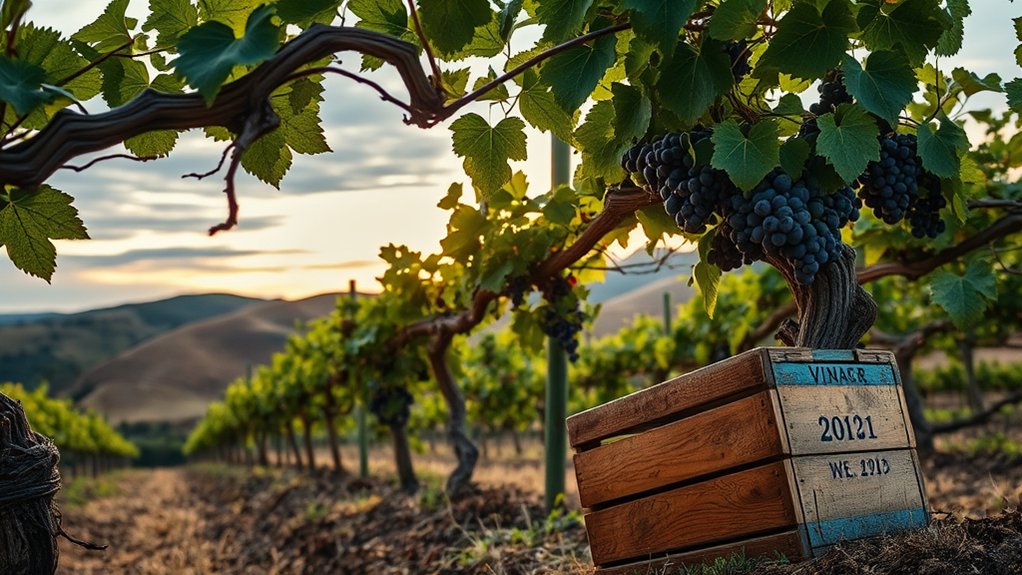
You’ll notice that vintages don’t matter equally across all wine regions, with terroir-driven areas like Burgundy and Barolo hanging their reputations on specific years more than others. In regions where climate is more consistent, such as many New World vineyards in California or Australia, producers can often achieve similiar quality regardless of the year. The contrast between Old World’s vintage-dependency and New World’s consistency explains why European wine collectors frantically hunt down “great years,” while you’re typically safe grabbing any recent vintage from many international producers.
Terroir Drives Significance
While experts often debate the varying importance of vintages across regions, there’s no denying that terroir plays an absolutely essential role in how much a specific year matters to your wine experience. The terroir influence—that magical combination of soil, climate, and terrain—creates dramatic differences in how grapes respond to yearly weather patterns.
| Region | Climate Type | Vintage Importance | Why It Matters |
|---|---|---|---|
| Bordeaux | Maritime | Very High | Rainfall varience |
| Napa | Mediterranean | Moderate | Consistant warmth |
| Mosel | Continental | Extremely High | Frost risk & sun |
| Barossa | Hot, Arid | Low | Drought tolerance |
You’ll find vineyard diversity even within small areas can create “micro-vintages,” where one hillside produces stunners while another struggles. It’s like Mother Nature’s playing favorites, but that’s what makes wine so darn fascinating!
Climate’s Regional Impact
How dramatically does climate shape a vintage’s significance across the world’s wine regions? The answer might surprise you! In cooler regions like Champagne or Burgundy, vintage variations can be make-or-break affairs, with a single frost or hailstorm potentially devastating an entire harvest. You’ll notice these wines proudly display their vintage year when conditions were ideal.
Meanwhile, in sun-soaked places like Australia’s Barossa Valley or California’s Central Coast, regional climate remains relatively stable year after year. Vineyard microclimates may still experience subtle variations, but you’re less likely to encounter dramatic quality swings. That’s why many warm-climate producers blend across multiple years for consistancy—they don’t need to brag about specific vintages! Remember, the next time you’re wine shopping, that vintage matters most where Mother Nature likes to play tricks.
Old vs. New World
When it comes to vintage importance, the divide between Old and New World wine regions couldn’t be more striking! In France, Italy, and Germany—classic Old World territories—vintage variations can make or break a wine’s quality due to their unpredictable climate patterns. You’ll find vintage charts are essential tools for European wine shoppers!
New World regions like California, Australia, and Chile typically enjoy more consistent weather, meaning vintages matter less. Here’s why this matters to you:
- Old World wines show dramatic year-to-year differences that affect price and aging potential
- New World producers often blend across vineyards to maintain consistent flavor profiles
- Your budget stretches further with New World wines from “off” years that still taste fantastic!
Next time you’re splurging on that special bottle, remeber the vintage rules differ depending on which hemisphere you’re drinking from!
Decoding Vintage Charts and Ratings

Three essential tools will transform you from a confused wine shopper into a vintage-savvy enthusiast: vintage charts, critic ratings, and your own taste buds. When confronted with intimidating vintage terminology, don’t panic! Those charts with their colorful graphs aren’t secret codes—they’re your new best friends. Most rating systems use a simple 100-point scale, with anything above 90 considered excellent.
You’ll notice patterns emerge as you explore these resources; certain years shine across entire regions, while others might be stellar in just one tiny vineyard. Remember, these charts aren’t gospel—they’re guidelines! The most valuable vintage chart is the one you create yourself, based on wines you’ve actually enjoyed. After all, what’s the point of buying that “perfect 100” vintage if you can’t stand Cabernet’s tanins?
Collecting With Purpose: Building a Multi-Vintage Cellar

Building a thoughtful multi-vintage wine collection isn’t just for wealthy connoisseurs with massive underground cellars—it’s an achievable goal for anyone who’s fallen in love with the stories each bottle tells. Start by focusing on cellar diversity rather than just accumulating random bottles. Your vintage selection should reflect both your personal taste and opportunities for comparison.
Here are some practical tips to guide you:
- Choose wines from both “great” years and challenging vintages to experience the full spectrum of what a region can produce
- Buy multiples of the same wine from different years, allowing you to taste how climate affects flavor development
- Set a realistic budget and pace yourself—even just two bottles per month builds a fascinating collection over time
Vintage Myths Worth Debunking
Despite what you’ve probably heard from wine snobs at dinner parties, most vintage-related “wisdom” is more myth than reality. Let’s bust some common vintage misconceptions that might be keeping you from enjoying great wines!
First off, newer doesn’t always mean worse. That “drink within a year” advice on your $15 bottle? Pure nonsense for many wines. Conversly, those aging myths about “all fine wines improve with age” need debunking too – even expensive bottles can peak early!
Remember that “bad vintage” year everyone warns you about? It might’ve produced some amazing wines from creative winemakers who adapted brilliantly. And here’s a fun secret: in today’s climate-controlled wineries, the difference between “outstanding” and “average” years isn’t as dramatic as your pretentious uncle claims it is. Trust your taste buds, not the calender!
Tasting Across Vintages: Practical Comparison Methods
The most revealing way to understand vintage differences isn’t through wine magazines or expert ratings—it’s through your own comparative tasting experiences. Setting up a vintage tasting at home isn’t complicated, and it’ll transform how you appreciate wine’s annual variations.
For your own comparative analysis session, try these approches:
- Host a “vertical tasting” with the same wine from different years (three to five vintages is perfect)
- Take notes on a simple scale: fruit intensity, acidity, tannin, and overall balance
- Taste from oldest to youngest, which helps highlight the evolution of flavors over time
Don’t worry about sounding like a pro—the goal isn’t perfection but rather developing your own understanding of how weather and time shape what’s in your glass!
Value Hunting: Finding Overlooked Vintage Gems
Now that you’ve learned how to taste and compare different years, let’s talk about how vintage knowledge can save you serious money! The wine world’s hidden treasures often lurk in so-called “off years” that critics didn’t rave about. While everyone scrambles for that perfect 2016 Bordeaux, you can swoop in and grab the surprisingly delicious 2014 for half the price!
Your best budget finds will come from researching regions with consistent climates, where even “bad” years produce solid wines. Don’t be fooled by the vintage chart gospel – sometimes a skilled winemaker turns lemons into liquid gold! Trust your own taste buds, keep notes on surprises, and don’t be afraid to ask your local wine shop about overlooked gems. Remember, one person’s “mediocre vintage” might be your new favorite weeknight sipper.
Beyond the Bottle: How Vintages Reflect Global Climate Patterns
While you’re swirling that Cabernet in your glass, you’re actually holding a tiny time capsule of weather history! Each vintage tells a unique climate story that shaped those grapes, from drought to perfect rainfall. Winemakers have become unofficial meteorologists, tracking climate trends that affect their harvests year after year.
Vintage forecasting isn’t just for wine snobs—it’s becoming essential as our planet changes. You’ll notice these patterns reflected in your wine in several ways:
- Warmer years often create bolder, higher-alcohol wines
- Cooler vintages typically yield more acidic, structured bottles
- Extreme weather events (like hail or frost) can make certain vintages incredibly rare
Next time you uncork a bottle, remember you’re not just tasting grapes—you’re experiencing a snapshot of our changing world!
Frequently Asked Questions
How Long Should I Age Wine From Different Vintages?
You’ll need to evaluate each wine’s aging potential. Generally, you should keep reds for 2-10 years and whites for 1-3 years, though ideal years vary by vintage quality.
Can Vintage Quality Vary Within the Same Winery?
You’d think a prestigious winery guarantees vintage consistency, wouldn’t you? Surprise! Even top wineries experience quality variations between vintages due to weather, harvesting decisions, and winemaking approaches that affect their reputation year to year.
Do Vintages Matter Equally for Red, White and Sparkling Wines?
No, vintages don’t matter equally. Red wines often show greater climate impact and aging potential. White wine vintages affect flavor profiles differently, while sparkling wines’ varietal differences create unique vintage-specific tasting experiences you’ll appreciate.
How Do Vintages Affect Wine Pricing at Restaurants?
You’ll notice prestigious vintage wines carry higher restaurant markups. You’re paying premium for exceptional years, while lesser vintages may offer better value despite the standard markup percentages.
Are Vintage Differences Noticeable to Casual Wine Drinkers?
Like noticing subtle changes in your favorite song, vintage perception often escapes casual tasting. You’ll likely spot dramatic differences between poor and exceptional years, but nuances require developed palates.