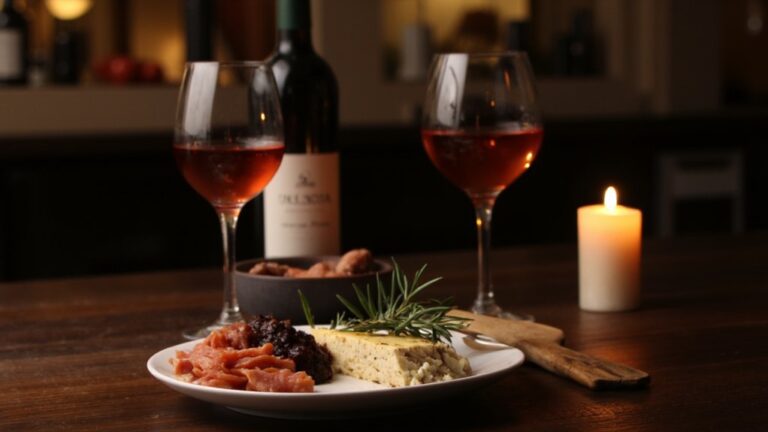
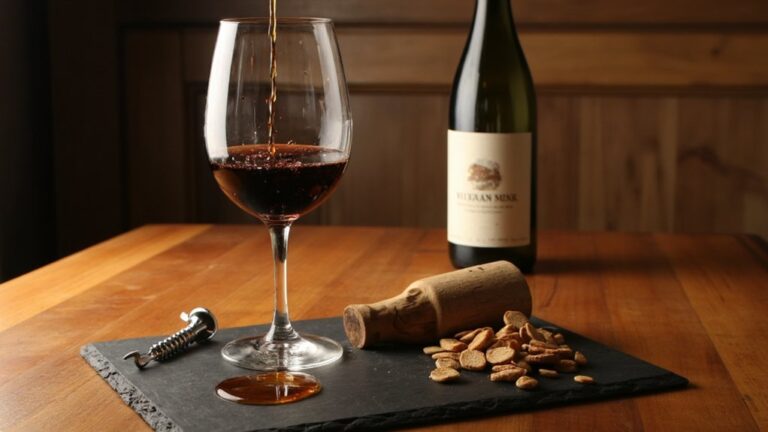
Though it’s not made from oranges, orange wine is actually white wine that gets its amber color from extended grape skin contact during fermentation, just like red wine. This ancient winemaking style, dating back 8,000 years to Georgia, creates unique flavors like dried fruit, honey, and black tea. You’ll find these intriguing wines pair beautifully with bold cheeses and exotic curries. There’s so much more to discover about this mesmerizing style of wine.
Key Takeaways
- Orange wine is a unique style made from white grapes fermented with their skins, creating amber-colored wines with distinctive flavors.
- Ancient winemaking traditions from Georgia’s Caucasus region pioneered orange wine production using clay vessels called qvevri about 8,000 years ago.
- These wines offer complex flavors like honey, dried apricots, and black tea, making them perfect partners for bold cuisine.
- Modern production methods combine traditional techniques with temperature-controlled tanks for consistent quality and innovative flavor profiles.
- The best places to discover orange wines include specialized wine shops, natural wine bars, and online retailers with curated selections.


What Makes Orange Wine “Orange”?
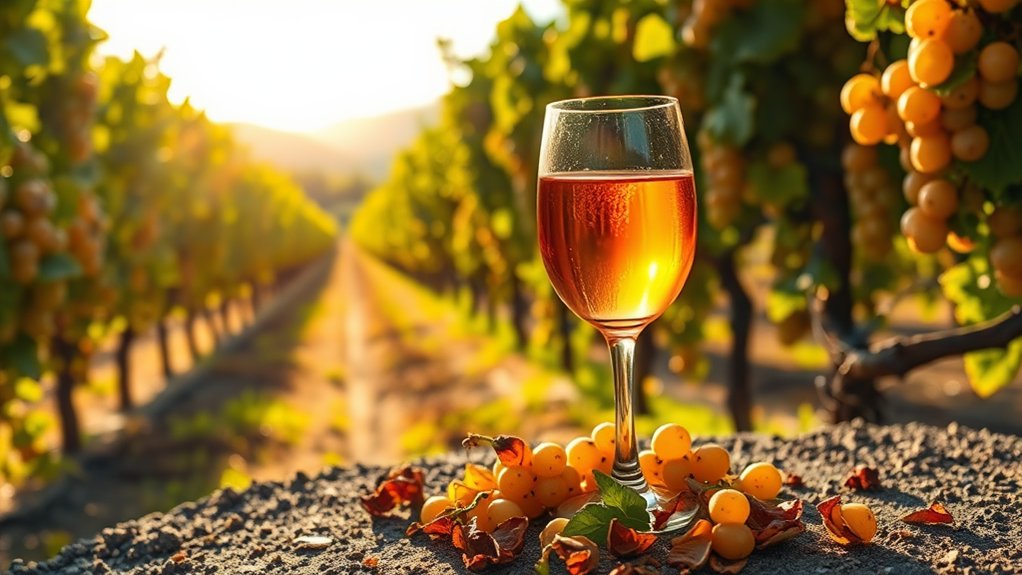
Despite its name, orange wine isn’t made from oranges – it’s actually a unique style of white wine that gets its amber hue from extended skin contact during fermentation. You’ll find that white grape varieties like Ribolla Gialla, Pinot Grigio, and Gewürztraminer are the stars of this show, but it’s how they’re treated that makes all the difference.
Think of it as giving white grapes the red wine treatment. During the fermentation process, instead of quickly separating the juice from the skins, winemakers let them hang out together for weeks or even months. This extended party lets the skins transfer their color, tannins, and complex flavors to the wine, creating that signature orange-amber glow that’s turning heads in wine bars everywhere. Many enthusiasts appreciate this style for its unique flavor profile, which can include notes of dried fruit, herbs, and spices.
The Ancient Origins of Skin-Contact Wines
While modern wine enthusiasts are just discovering orange wine, this ancient style of winemaking has been turning heads for nearly 8,000 years in Georgia’s Caucasus region. You’ll find evidence of skin-contact wines in clay vessels called qvevri, which these clever ancient winemakers buried underground to maintain perfect fermentation temperatures.
This historical significance runs deep, as archaeological findings show that orange wine wasn’t just a happy accident – it was a deliberate choice that spread from Georgia throughout the Mediterranean. Ancient winemaking techniques involved fermenting white grapes with their skins in these earthen vessels, a practice that’s surprisingly similar to what you’ll see in modern natural wine cellars. Who knew our ancestors were such trendy wine hipsters? They’d probably get a kick out of seeing their traditional methods making such a splash today.
Traditional Georgian Qvevri Method

The ancient art of qvevri winemaking lives on in Georgia today, where skilled artisans continue to craft these enormous clay vessels by hand. You’ll find these egg-shaped wonders buried underground in cellars, where they’ve been used for wine fermentation since 6,000 BCE.
The traditional qvevri fermentation process follows three essential steps:
- Crushing fresh grapes and adding them, skins and all, to the clean qvevri
- Sealing the vessel with clay and allowing nature to work its magic for up to six months
- Opening the qvevri to reveal a complex, amber-colored wine that’s rich in tannins
These ancient techniques might seem simple, but they’re anything but! The resulting wines are so distinctive that UNESCO recognized Georgian qvevri winemaking as part of humanity’s cultural heritage.



Modern Orange Wine Production Techniques
Modern winemakers have taken the ancient art of orange wine production and given it an exciting technological twist, blending time-honored traditions with contemporary innovations. You’ll find them using temperature-controlled modern fermentation tanks, which let them fine-tune the process with surgical precision. They’re also experimenting with innovative maceration techniques, like using rotating tanks that gently massage the grape skins (think of it as a spa day for your future wine).
While some purists might raise their eyebrows at these new methods, you can’t deny the results – these modern techniques are producing some seriously impressive orange wines. You’ll get cleaner flavors, more consistent quality, and even some surprising new taste profiles that wouldn’t be possible with traditional methods alone.
Tasting Notes and Flavor Profiles
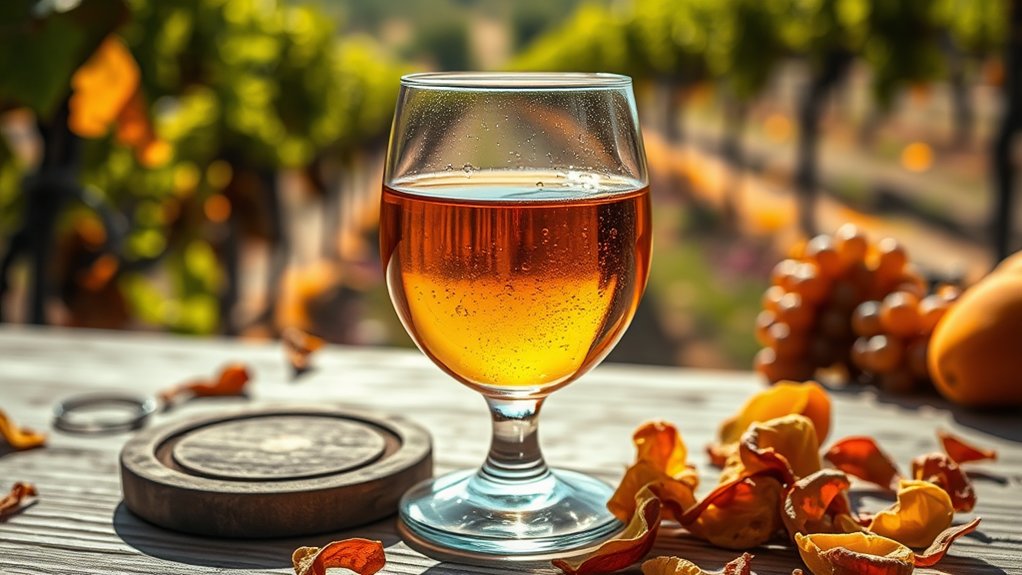
Diving into an orange wine reveals a fascinating spectrum of flavors that’ll make your taste buds do a double-take. The aroma profiles range from honey and dried apricots to exotic spices and Earl Grey tea, while texture characteristics can vary from silky to grippy, thanks to those hardy grape skins.
You’ll typically encounter these delightful sensations when sipping orange wine:
- A tangy, nutty first impression that dances between dried fruits and fresh herbs
- A robust mid-palate featuring black tea, sourdough bread, and bruised apple notes
- A memorable finish with hints of orange marmalade and that signature skin-contact grip
Don’t be surprised if you find yourself tasting something completely different from your wine buddy – that’s part of the fun!
Food Pairing Recommendations
Because orange wines possess such distinctive characteristics, they create magical partnerships with bold, aromatic dishes that might overwhelm other wines. You’ll love how these amber-hued beauties stand up to exotic curries, tangy fermented foods, and those spicy dishes that make your taste buds dance.
When it comes to cheese pairings, you’re in for a treat! Orange wines play nicely with funky, washed-rind cheeses and aged varieties that pack a punch. Think bold alpine styles or that perfectly ripe camembert you’ve been saving for a special occasion. They’ll also cozy up to earthy dishes like mushroom risotto, grilled meats, and even that kimchi you’ve been fermenting in your basement (we won’t tell anyone about your secret stash!).
Notable Orange Wine Regions

The fascinating world of orange wine stretches across multiple continents, with some regions emerging as true masters of this ancient craft. You’ll find some of the most exciting producers in northeastern Italy’s Friuli Venezia region, where winemakers have perfected their amber-hued creations through generations of expertise.
Here are three regions where orange wine truly shines:
- Slovenia’s western region, where the unique Slovenia Terroir produces wines with incredible mineral complexity
- Georgia’s Kakheti Valley, where winemakers still use Ancient Techniques like qvevri clay vessels
- Sicily’s Mount Etna area, where volcanic soils add an unexpected twist to skin-contact whites
Whether you’re a curious newcomer or a seasoned wine enthusiast, these regions offer a delightful journey into the amber side of winemaking.
Serving and Storage Tips
Once you’ve explored these remarkable wine regions, it’s time to master the art of serving and storing your orange wine treasures. For ideal enjoyment, you’ll want to serve your orange wines slightly warmer than traditional whites, around 55-60°F (think less Netflix-and-chill, more cozy sweater weather). When it comes to glassware selection, opt for a white wine glass with a broader bowl – it’ll help release those complex aromas that make orange wines so fascinating.
Store your bottles in a cool, dark place away from vibrations and direct sunlight, just like you would with other wines. And here’s a pro tip that’ll save you some awkward moments: don’t panic about those floating particles – they’re totally normal in unfiltered orange wines and actually contribute to their unique character.
Top Orange Wine Producers to Know
Whether you’re diving into orange wines for the first time or building your dream cellar, knowing the rockstars of skin-contact winemaking will help guide your journey. Among the top producers, you’ll find passionate artisans who’ve mastered this ancient craft while putting their own modern spin on unique varieties.
- Gravner in Italy’s Friuli region, where the legendary Josko Gravner ages his wines in clay amphorae buried underground (talk about old school!)
- Pheasant’s Tears from Georgia, crafting stellar examples from indigenous grapes like Rkatsiteli and Mtsvane
- Paolo Bea in Umbria, whose family has been making mind-bending orange wines for generations, including their famous “Santa Chiara” that’ll make your taste buds do a happy dance
Where to Find and Buy Orange Wines
Ready to plunge into the wonderful world of orange wines but not sure where to score these golden gems? You’ve got plenty of options these days, from specialty wine shops to online retailers who’ll deliver liquid sunshine right to your doorstep.
| Where to Look | What to Expect |
|---|---|
| Wine Bars | Knowledgeable staff, tasting opportunities |
| Natural Wine Shops | Curated selections, passionate experts |
| Online Wine Shops | Wide variety, detailed descriptions |
| Local Markets | Seasonal selections, community vibe |
Your best bet is to start with dedicated orange wine retailers like Chambers Street Wines or Primal Wine, who specialize in these amber beauties. Don’t forget to check out European-focused wine shops, where you’ll often find hidden treasures from Georgia and Slovenia. And hey, if you’re feeling adventurous, many online wine shops now offer orange wine “discovery boxes” – perfect for starting your journey!
Frequently Asked Questions
Is Orange Wine Suitable for People With Sulfite Sensitivities?
If you have a sulfite sensitivity, you’ll find orange wines can be a good choice since many are made naturally with minimal added sulfites, though you should verify with producers.
Can Orange Wine Cause More Intense Hangovers Than Other Wines?
You’ll be shocked – those killer hangovers aren’t just in your head! The extended fermentation effects and similar alcohol content to other wines can actually intensify hangover symptoms you’ll experience.
How Long Can an Opened Bottle of Orange Wine Stay Fresh?
You’ll want to drink your opened bottle within 3-5 days, as the oxidation process continues. Keep it refrigerated and properly sealed, following these storage tips, to maintain its unique flavors.
Are There Any Non-Alcoholic Alternatives That Taste Similar to Orange Wine?
Like a golden sunset in a glass, you’ll find non-alcoholic options that mirror orange wine’s tangy complexity. Try kombuchas, hopped tea, or natural cider as revitalizing orange wine substitutes.
Does Orange Wine Contain More Antioxidants Than Regular White Wine?
You’ll find more antioxidant benefits in orange wine compared to white wine since the extended skin contact during fermentation transfers additional compounds like polyphenols and tannins into the final product.