If you want to wow your crew with a meat and cheese platter, grab a bold Cabernet Sauvignon—this stuff loves tangy cheddar and salty prosciutto, making every bite a party in your mouth. But don’t sleep on bubbly Prosecco, either. Its fizz slices right through creamy brie, turning snack hour into a mini celebration. Looking for something wild? Rosé’s a crowd-pleaser that tackles almost everything. Want even more magic on your board? There’s a trick or two coming up next.
Key Takeaways
- Classic red wines like Cabernet Sauvignon and Malbec pair perfectly with robust meats and aged cheeses.
- Sparkling wines are versatile, enhancing both salty meats and creamy cheeses with their refreshing bubbles.
- Rosé is a crowd-pleasing choice, offering balance and adaptability across a variety of meats and cheeses.
- Crisp white wines such as Sauvignon Blanc cut through rich, creamy cheeses and lighter meats for a refreshing contrast.
- For a balanced platter, match bold wines with strong flavors and lighter wines with delicate meats and cheeses.

Understanding Flavor Profiles: How Wine, Meat, and Cheese Interact
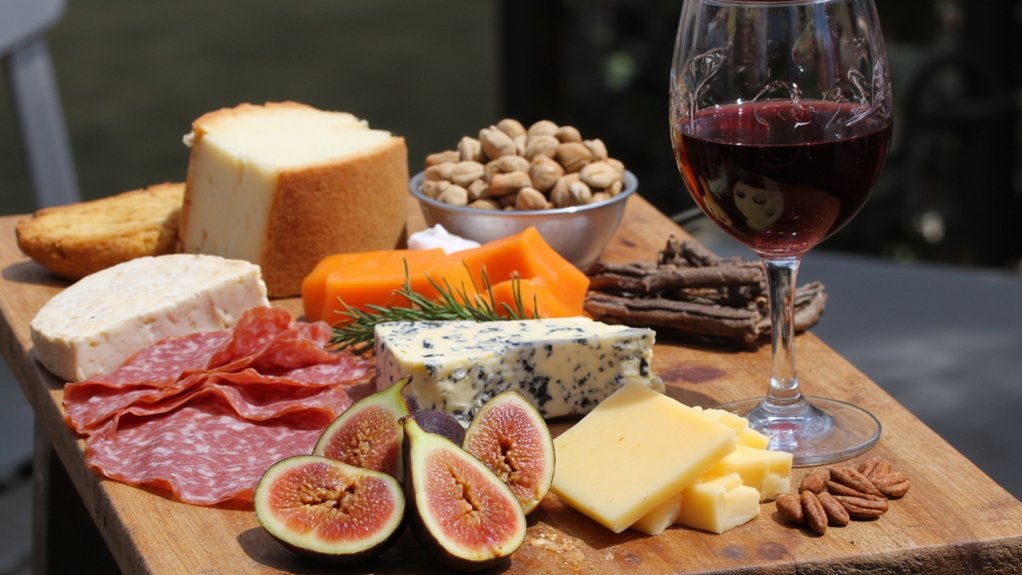
Even if you think you’ve got wine, meat, and cheese all figured out, the way their flavors dance together can totally surprise you. Imagine a smoky salami meets a creamy brie, and suddenly your taste buds are at a party they didn’t even know was happening. It’s all about flavor harmonics—how the salty, the sweet, and the tangy notes from each bite bounce off the wine, creating palate balance that’s more satisfying than nailing the high score in your favorite game. You don’t want one flavor crashing the party and taking over, right? Let the wine smooth out sharp edges, or let a zingy cheese give a mellow red some pep. Trust me, it’s a flavor adventure you’ll wanna repeat! Proper serving temperatures for both wine and charcuterie enhance the overall experience.
Classic Red Wines and Their Perfect Pairings
So, now that you know how flavors can throw a surprise party in your mouth, let’s talk about the real VIPs of the wine world—classic reds. Cabernet Sauvignon is like the bold friend who always brings steak to the party—it thrives next to sharp cheddar or aged gouda. Merlot pairings? Think smooth operator. It cozies up to roast beef or creamy brie, mellowing every bite with its soft tannins. Malbec flavors? They’re dark, juicy, and just a bit wild—perfect for spicy sausage or Manchego, when you want a little drama. Syrah characteristics shine with peppery salami or smoked meats, adding a rich, spicy kick. Trust me, with these reds, your platter transforms from snack time to headline event. Tannins and proteins engage in a molecular interaction that can either clash or complement, enhancing the overall cheese experience. Cheers!
White Wines That Shine With Lighter Meats and Cheeses
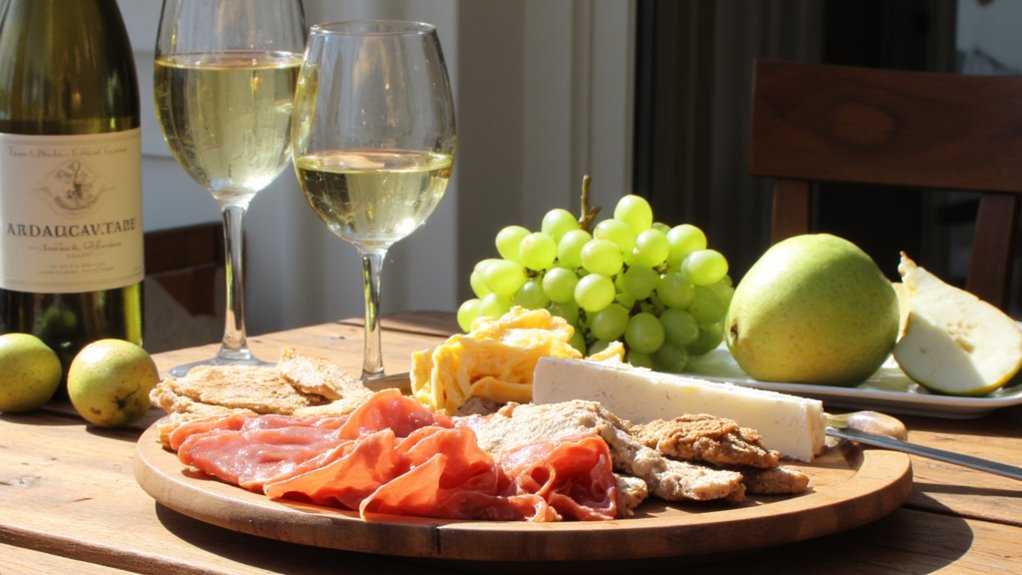
Let’s switch gears and talk about white wines that absolutely sing with lighter meats and cheeses—yes, this is your cue to grab that goat cheese and chicken! You’ll find a crisp Sauvignon Blanc brings out the best in delicate flavors, while a buttery Chardonnay cozies up to soft cheeses like they’re old friends at a reunion. Honestly, if you haven’t tried this combo yet, your taste buds are missing out on the party of the year (and don’t worry, there’s no awkward small talk required). Exploring light-bodied reds like young Pinot Noir can also enhance your meat and cheese platter, balancing the flavors beautifully.
Crisp Sauvignon Blanc Choices
If you’ve ever found yourself standing in front of the wine aisle, squinting at endless white wine labels and wondering which one will actually make your platter of prosciutto, turkey, and soft Brie sing—Sauvignon Blanc is about to be your new best friend. This zippy white, famous for its crispness, comes from sauvignon blanc regions like New Zealand, California, and the Loire Valley. It’s the champion of food acidity; it slices through creamy and salty flavors like a culinary ninja.
Picture this:
- Zesty lemon and fresh-cut grass in your glass
- Delicate Brie melting on a cracker
- Paper-thin turkey, just begging for a bright sip
- Salty prosciutto wrapped around a juicy grape
You’ll wonder why you ever hesitated to grab that bottle!
Chardonnay With Soft Cheeses
Ever wondered why Chardonnay seems to pop up everywhere when there’s a cheese platter in sight? It’s not just a coincidence—it’s practically a cheese board law. Chardonnay characteristics, like its creamy texture, light oakiness, and hints of apple or melon, make it a superstar with soft cheese varieties. Think Brie, Camembert, or even a velvety triple-cream. You’ll notice how the wine’s natural acidity slices right through the richness, sort of like a food-friendly ninja, making every bite and sip feel balanced and bright.
Don’t stress if your cheese is a little funkier or runnier—Chardonnay’s up to the challenge. It’s adaptable, playful, and honestly, the easiest guest at your party. Just pour, nibble, laugh, repeat. You’ll never look at cheese the same way again.
Sparkling Wines: A Festive Choice for Every Platter
You can’t go wrong with sparkling wine—it’s like a little party in your glass, bringing out the best in both meats and cheeses, whether you’re working with salty prosciutto or creamy brie. Its bubbles dance around the flavors, making everything you eat pop, fizz, and sing (yes, even that slightly questionable hunk of blue cheese your cousin brought). And let’s be honest, nothing says “celebration” like the sound of a cork flying across the room—just watch out for Aunt Linda’s knickknacks! For a truly delightful pairing, consider how sparkling wines’ fruit-forward profile matches perfectly with mild cheeses.
Enhancing Flavor Combinations
Although reds and whites tend to steal the spotlight, nothing says celebration like popping open a bottle of sparkling wine. You’ll find that the bubbles aren’t just for show—they actually work wonders for flavor enhancement. Envision those effervescent sips cutting through rich salami and creamy brie, making each bite taste even better. Sparkling wines bring lively acidity and playful tasting notes that lift up the whole meat and cheese experience. Imagine this on your platter:
- Crispy prosciutto meeting the citrusy zing of Brut Champagne
- Creamy camembert getting a lift from fruity Prosecco
- Smoked gouda dancing with the yeasty notes of Cava
- Salty blue cheese mellowed by a sweet Moscato d’Asti
Versatility Across Pairings
When it comes to versatility, sparkling wine is basically the Swiss Army knife of the wine world—ready for anything, never out of place, and always up for a good time. Seriously, if you’re staring at a meat and cheese platter that looks like a culinary United Nations, you can’t go wrong popping a bottle of bubbly. The fizz cuts through fat, the acidity balances salt, and there’s just enough fruitiness to tie everything together. That’s flavor harmony in action. The best pairing principles say to match intensity and contrast flavors—guess what, sparkling wine totally nails both. It’s as happy with salty prosciutto as it is with a creamy Brie or a sharp cheddar. Honestly, it’s almost suspicious how well it gets along with everyone.
Celebratory Atmosphere Boost
Even before the first cork pops, there’s a kind of magic that sparkling wine brings to the table—literally and figuratively. You know the scene: laughter’s bubbling up, glasses are clinking, and suddenly, your meat and cheese platter feels like it’s dressed for a ball. Sparkling wines don’t just pair well—they turn your get-together into a real festive gathering, infusing the room with a celebratory ambiance that’s downright contagious. Envision this:
- Golden bubbles dancing in the glass, catching candlelight
- Friends toasting, grinning ear-to-ear
- The playful “pop!” that says, “let’s party!”
- Effervescent sips that cut through rich meats and creamy cheeses
Seriously, nothing says “we’re here to celebrate” quite like sparkling wine. If you want your platter to sparkle, start with the wine!
Choosing Rosé for Versatility and Balance
If you’re feeling overwhelmed by the endless wine options out there, let’s pause for a second and give a shoutout to rosé. Seriously, this pink wonder is like the Swiss Army knife of wines—ready for just about anything your meat and cheese platter can throw at it. There are so many rosé varieties, from bone-dry Provençal to juicy California styles, and they’ve all got that secret weapon: flavor balance. Not too heavy, not too light—just right.
Rosé dances between red and white, so whether you’re munching on salty prosciutto or a creamy brie, it won’t overpower or disappear. It’s the ultimate team player. Plus, with its versatility, rosé can be enjoyed with various dishes, making it an ideal pairing choice for any gathering. And hey, who doesn’t love a glass of something pretty and pink? Your Instagram feed certainly will.
Tips for Building a Balanced Meat and Cheese Board
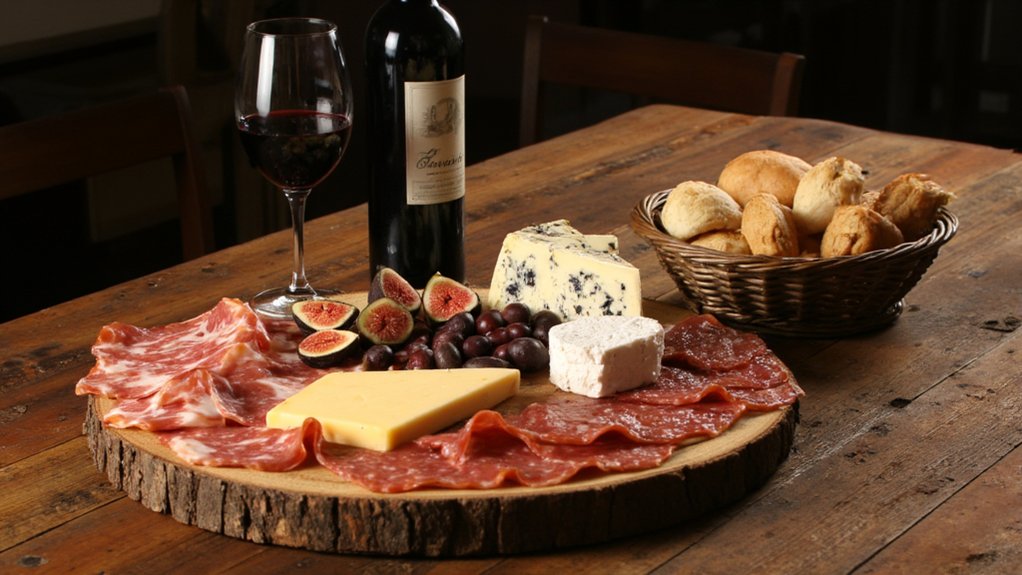
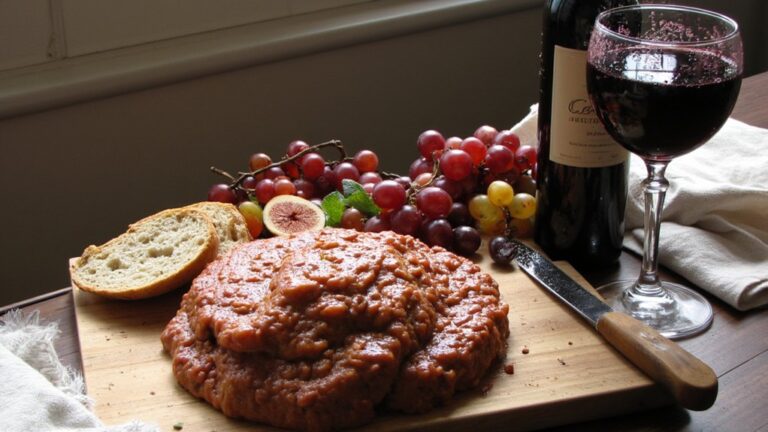
Let’s face it—picking the wine was just the warm-up. Now it’s time to tackle the real party trick: building a balanced meat and cheese board. You want everyone to swoon, not squint in confusion at your meat selection or cheese variety. The trick? Mix textures, flavors, and colors for a spread that excites the eyes and the tastebuds. Here’s how you can paint your edible masterpiece:
- Pile on both hard and soft cheeses—think cheddar and creamy brie, because opposites attract.
- Choose a meat selection with salty, spicy, and mild options—salami, prosciutto, and roast turkey, anyone?
- Add pops of color with grapes, berries, and a few pickles to cut the richness.
- Don’t forget crackers and nuts! Crunch is essential, and nobody likes a soggy board.
Creative Pairings: Unexpected Matches That Work
While you might think wine and cheese pairings are set in stone, the real fun starts when you toss the rulebook out the window and experiment a little. Imagine pairing funky, uncommon cheeses like aged Gouda with unique reds—think a smoky Syrah or even a peppery Zweigelt. Or maybe you’re feeling wild, so you grab surprising whites, like a zippy Grüner Veltliner, and partner it with blue cheese. Bold flavors? Absolutely. Why not try regional specialties—Spanish Manchego with a Tempranillo, or even Brie with sparkling cider for those seasonal selections?
Additionally, consider how younger cheddars can complement lighter wines like Pinot Grigio or Rosé to create an unexpected yet delightful pairing experience. Add a few gourmet touches, like honeycomb or dried figs, and suddenly you’ve created artisanal pairings that’ll have everyone talking. Don’t just follow tradition—make your own delicious chaos!
Frequently Asked Questions
How Should I Store Leftover Wine After Serving With My Platter?
After serving, you’ll want to use wine preservation techniques like recorking tightly and refrigerating. Leftover wine keeps for days—try leftover wine recipes like sauces or stews if you won’t finish it soon. Don’t waste it!
What Temperature Should I Serve Wine With My Meat and Cheese Board?
You’ll want to focus on wine serving temperatures for the best experience. Reds are ideal at 60-65°F, while whites and rosés benefit from ideal wine chilling at 45-55°F. Don’t forget to chill sparkling wines colder!
Are There Non-Alcoholic Wine Options for Pairing With Meat and Cheese?
You’ve got great non alcoholic options for pairing with meat and cheese. Look for dealcoholized wines or sparkling grape juices with balanced flavor profiles—something crisp or fruity, so you don’t miss out on the classic wine experience.
How Many Bottles of Wine Should I Buy per Guest for a Platter Party?
When planning wine serving for your platter party, consider guest preferences and typical consumption. A good rule is one bottle per two guests. If your guests love wine, you’ll want to have a little extra on hand.
Can I Pair Dessert Wines With a Meat and Cheese Platter?
You can definitely try dessert wine pairings with a meat and cheese platter. Sweet wine options like Moscato or Sauternes balance salty cheeses and cured meats, offering a unique contrast that’ll surprise your guests and delight your palate.