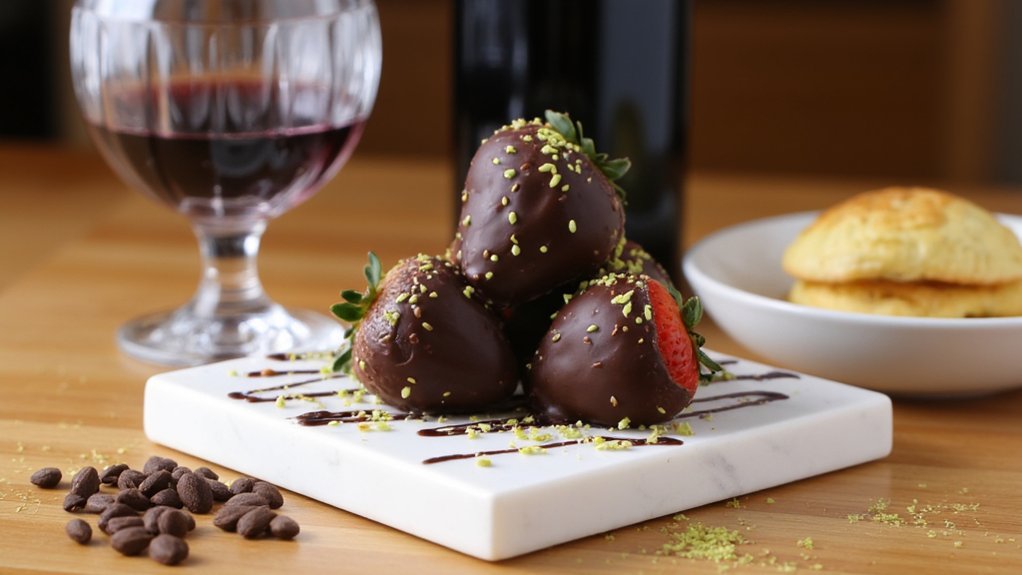
Pick a chilled, slightly off‑dry rosé or a light, low‑tannin red like Pinot Noir and you’ll be doing most chocolate‑covered strawberries a big favor — the rosé echoes the berries and softens the chocolate, while Pinot won’t fight the cocoa. For very sweet milk chocolate try Moscato or a lightly fizzy Lambrusco; for darker chocolate go with brut bubbles or a richer, slightly sweet red. Want more tips on chocolate, ripeness and service?
Key Takeaways
- Match sweetness: choose a wine sweeter than the chocolate to avoid bitterness or a dull finish.
- For dark chocolate (70%+), pick fuller-bodied, fruit-forward reds or brut sparklings to stand up to bitterness.
- For milk chocolate, favor off-dry rosés, Moscato, or light Pinot Noir to complement creaminess without harsh tannins.
- Ripe strawberries call for zippy rosé or chilled Gamay; tart berries pair better with slightly sweeter Prosecco or Riesling.
- Serve in progression—start with bubbles or rosé, move to light red, finish with late-harvest or fortified dessert wine.
Quick Picks: Best Wines for Chocolate-Covered Strawberries
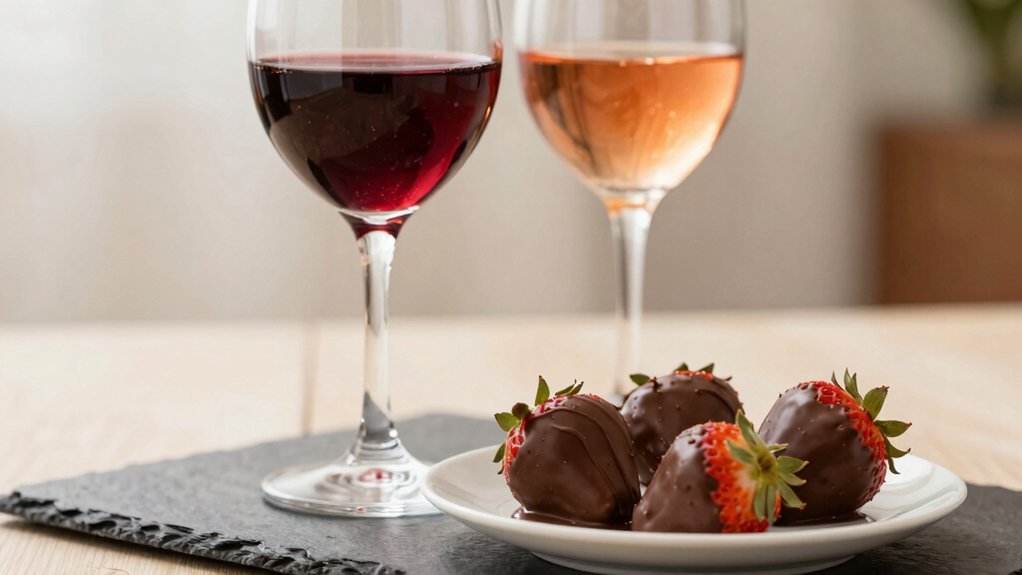
If you’re short on time but still want a killer pairing, here are a few go-to wines that almost always work with chocolate-covered strawberries. You’ll want something that balances the chocolate tannins without overpowering the sweet fruit. Try a fruity rosé — it’s bright, easy, and the strawberry aroma in both the wine and the berry makes for a lovely echo. A light-bodied sparkling wine is fun, cleansing the palate between bites, and it keeps things festive. If you prefer red, pick a low-tannin Pinot Noir that won’t fight the chocolate. For a sweeter route, a late-harvest Riesling or Moscato can match the dessert’s sweetness. Remember that wine should always be sweeter than the dessert to prevent the pairing from tasting dull or sour. Quick, simple, and usually crowd-pleasing — you can’t really go wrong.
Best Wine Styles for Chocolate-Covered Strawberries
You’ve already got a few quick go-to bottles in mind, so now let’s look at the broader styles that reliably play well with chocolate-covered strawberries. You’ll like fruit-forward rosés — bright, fresh, and they hug the berry flavor without heavy fruit tannins that fight the chocolate. Light-bodied sparkling wines also shine; their bubbles cleanse your palate, and lively dessert acidity keeps things from feeling cloying. If you want something richer, a medium-sweet red like a Brachetto d’Acqui or Lambrusco brings floral berry notes and gentle fizz, which is charmingly flirty. For a decadent finish, try a late-harvest Riesling or a Moscato; they match sweetness but keep balance with crisp acid. Remember that dessert wines should be sweeter than the chocolate coating to avoid any bitter aftertaste and ensure the flavors work in harmony. Mix and match, have fun — it’s dessert, after all.
How Chocolate Type Affects Wine Choice
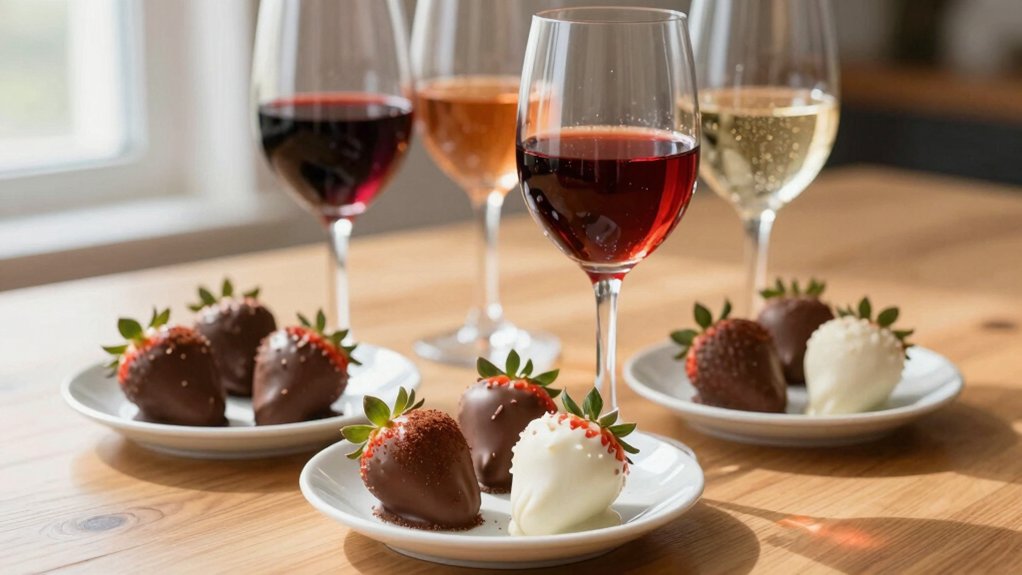
You’ll notice dark and milk chocolate call for different kinds of wine, so it’s worth thinking about what you’re pairing. Dark chocolate, with its bitter, intense cocoa, usually wants a wine that can match its strength—think bold reds or a rich tawny for a smoother contrast. Milk chocolate is sweeter and creamier, so lighter, fruitier wines or a sweeter rosé often make the strawberries sing (and yes, that combo’s a little bit of dessert heaven). The sweetness level of the wine should match or exceed that of the chocolate-covered strawberries to create a balanced flavor experience.
Dark Chocolate Pairings
When dark chocolate shows up—bitter, intense, or somewhere in between—it changes the whole wine game, so you’ll want to pay attention to cocoa percentage and texture before you grab a bottle. You’ve got that bittersweet nuance to reckon with; it’s not just sweet or bitter, it’s layered, and cocoa tannins can cling to your palate like a tiny velvet glove. Lighter darks (around 55–65%) play nicely with fruity reds like Grenache or a bright Merlot, while deeper bars (70%+) beg for structure — think aged Zinfandel or a bold Cabernet with soft oak. Merlot’s characteristic silky mouthfeel and plum notes make it particularly versatile for pairing with various chocolate intensities. If the chocolate’s oily or has added salt, try a slightly sweeter red or a fortified wine. Trust your taste, experiment, and don’t be shy.
Milk Chocolate Matches
Milk chocolate’s softer, creamier profile opens up a whole different set of pairing options, and if you like things easygoing, this is your sweet spot. You’ll notice creamy nostalgia in every bite, that warm, familiar hug of flavor that makes you smile. Pick wines that match that softness — think off-dry Riesling or a fruity rosé — they won’t overpower the milk chocolate’s caramel undertones and they let the strawberry brightness sing. For those interested in exploring premium options, the finest Riesling wines can elevate your chocolate and strawberry pairing to new heights. A light-bodied red like a Gamay can work too, if you prefer red; it’s playful and low-tannin. Don’t force heavy tannins or big oak here; they’ll clash. Relax, sip slowly, and maybe try a few combos. You might find a surprising favorite.
How Strawberry Ripeness Affects Pairings
You’ll notice that ripe strawberries bring brighter acidity and juicier flavors, which can lift a wine and keep things fresh. Less-ripe berries are tarter and firmer, so you might want a wine with more fruit and a touch of sweetness to balance the bite. Play around — sometimes a tart berry with a slightly sweet rosé is a surprisingly happy match, and yes, it’s worth trying even if it sounds odd.
Brightness And Acidity
Even though strawberries all look similar at the market, their brightness and acidity can change the whole mood of a chocolate pairing — and you’ll notice it the second you bite in. If your berry is tart and lively, that acidity contrast wakes up dark chocolate, cutting through richness and making the wine feel fresher, too. Riper, less bright berries nudge you toward softer wines so flavors don’t fight. Think of brightness balancing as the quiet referee: it decides whether a zippy rosé or a plush red will sing or just muddle. So taste a berry first. Trust your palate. Play around. You might be surprised how a little zing turns an ordinary chocolate-covered strawberry into a mini revelation.
Sugar Level And Texture
If a strawberry’s sugar has taken the spotlight, you’ll notice it the second you bite in — that’s the fruit’s texture and sweetness working together, and they change everything about the pairing. You’ll want wines that respect sugar contrast and offer texture interplay with the chocolate. Riper berries bring softer flesh and louder sweetness modulation, so think lighter, fizzy wines or off-dry rosés to keep mouthfeel balance. Firmer, tarter berries call for fruit-forward reds or a crisp Prosecco to play with the snap. Here’s a quick guide:
| Ripeness | Wine match | Why it works |
|---|---|---|
| Very ripe | Off-dry rosé | Soft texture, balances sweetness |
| Tarty | Prosecco | Bright contrast, lively mouthfeel |
| Medium | Light red | Smooth texture interplay, subtle tannins |
Best Sparkling Wines & Rosés for the Treat
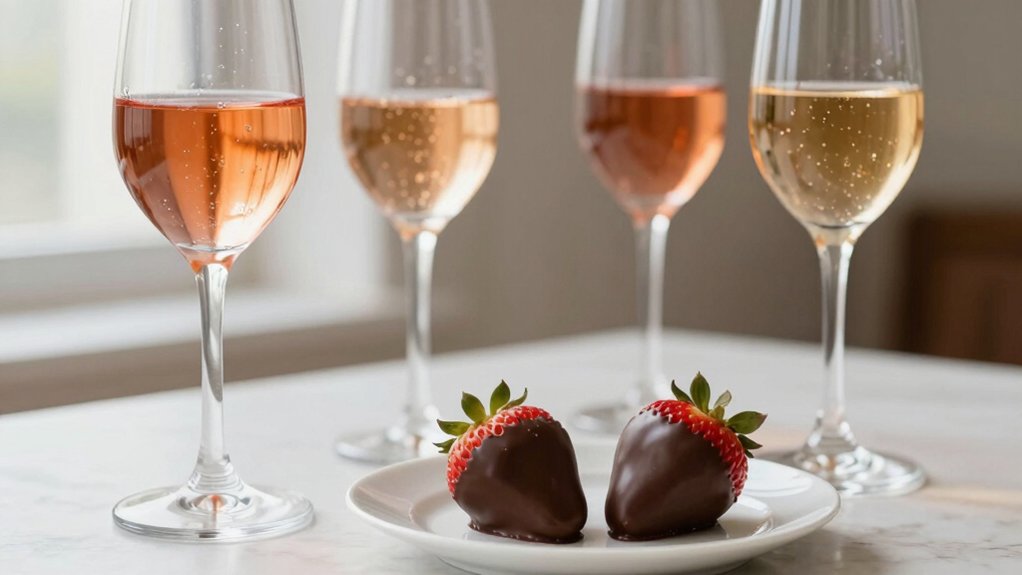
When you’re pairing chocolate-covered strawberries with sparkling wines or rosés, think bright, not heavy — bubbles and a touch of fruitiness are your friends here. You’ll want a vintage pairing that complements ripe berry sweetness without overpowering it; older vintages can add toasty, biscuity notes that echo chocolate, while younger bottles keep things zippy and fresh. Go for Brut or Extra Brut sparklers if the chocolate is darker, or a slightly off-dry rosé if the coating is milk or sweet. Pay attention to toast textures in the wine — subtle creaminess from lees aging can play nicely with smooth chocolate. Don’t forget temperature: chilled but not freezing. Sip, smile, repeat.
Best Light-to-Medium Red Wines for the Treat
You’ll often find that light-to-medium red wines are the most playful partners for chocolate-covered strawberries — they’ve got enough fruit and charm to match the berry sweetness without bulldozing the chocolate. You’ll like a berry forward Pinot for its bright cherry notes that echo the strawberry, with soft tannins that won’t fight the chocolate. Try light Gamay if you want something fizzy in spirit, juicy and floral, easy to sip and fun to share. Keep it slightly chilled. Don’t overthink things. Below’s a quick cheat-sheet to help you decide.
| Wine | Flavor Notes | Why it works |
|---|---|---|
| Pinot Noir | Cherry, strawberry | Mirrors berry, gentle finish |
| Gamay | Red fruit, floral | Juicy, light, playful |
| Grenache | Raspberry, spice | Fruit-forward, smooth tannins |
Best Sweet and Aromatic White Wines for the Treat
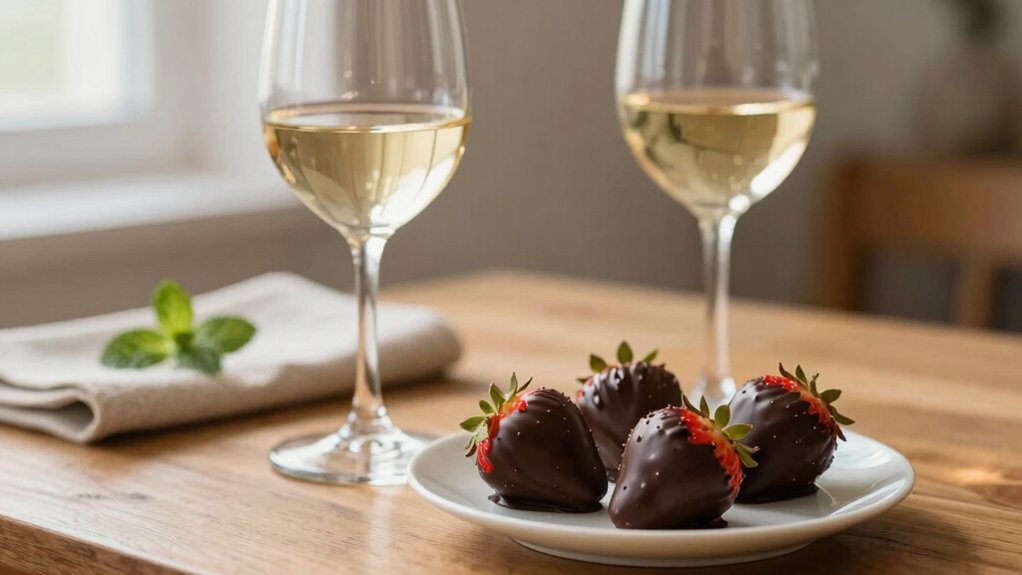
Often a sweeter white can feel like dessert in a glass, and it’s a lovely match for chocolate-covered strawberries — not heavy, but the aromatics and sugar help the chocolate and berry flavors pop. You’ll find aromatic Riesling brings juicy peach and citrus notes that cut through dark chocolate while playing nicely with the strawberry’s tartness. Try a slightly off-dry style; it won’t feel cloying and it keeps the pairing lively. Floral Moscato is lighter, spritzier, and a bit playful — it’s like candy without trying too hard, and complements milk chocolate versions especially well. Don’t overchill them; let aromas open up. Small glasses, relaxed mood. You’ll smile. Maybe spill a little wine.
Fail-Safe Bottles: Under $25, $25–50, and Splurges
If you want something that won’t let the evening down, start by thinking in price bands — under $25, $25–50, and the splurge column — because each one buys you a different kind of confidence and a different vibe. Under $25: grab a fruity rosé or a lightly sweet Lambrusco, something fun that matches chocolate and strawberry without breaking the bank; perfect for budget cellaring if you’re stocking up for casual nights. In the $25–50 zone you’ll find richer fortified wines or a refined Brachetto d’Acqui that feels thoughtful and grown-up. Splurges: think aged tawny port or a top Valpolicella — affordable splurges? Sort of an oxymoron, but you’ll see value in special bottles that actually make the moment.
Step-by-Step Tasting & Serving Tips (Temperature, Glassware, Presentation)
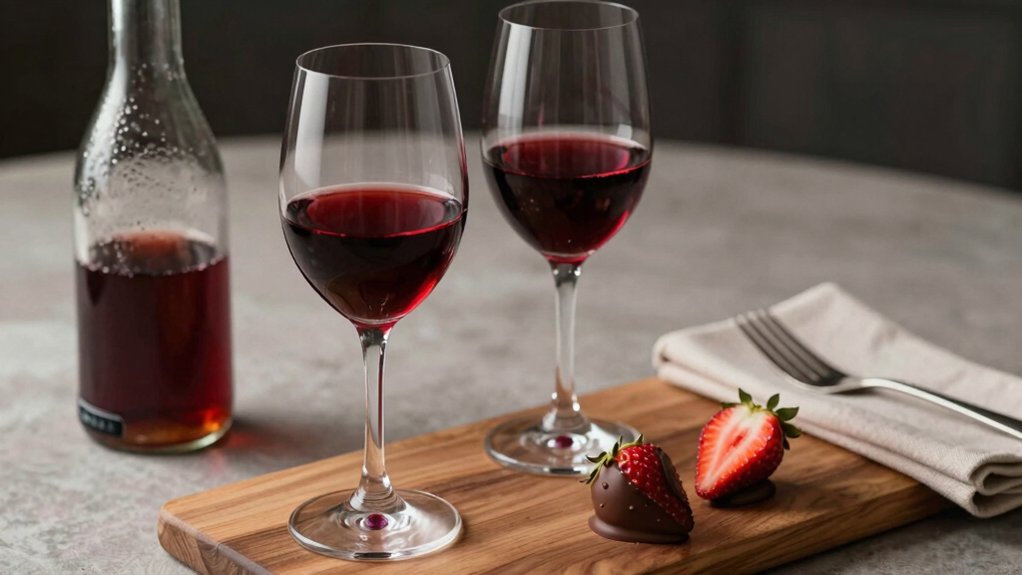
Now that you’ve picked a bottle that fits the vibe and the budget, let’s talk about how to actually serve and taste it so the strawberries and chocolate sing together. Keep temperature control in mind: chill sparkling and rosé to 40–45°F, lighter reds a touch warmer, sweeter wines slightly cooler. For glassware selection use tulip or flute for bubbles, white-wine glass for aromatics, and a small-bowled red for lighter reds. Think plating aesthetics: leave space, alternate dipped and plain strawberries, add mint or sea salt flakes for contrast. Follow a clear serving sequence — start with lighter wine, then move to richer, ending with the sweetest. Taste between bites. Sip, bite, think, repeat. It’s simple, fun, and yes, you’ll look fancy.
Frequently Asked Questions
Can Chocolate-Covered Strawberries Be Frozen for Later Pairing?
Yes — you can freeze chocolate-covered strawberries, but freezing texture changes occur; expect softer berries and potential chocolate bloom. For best results, flash-freeze, store airtight, and plan thawing timing: thaw briefly in the fridge before serving.
Can Non-Alcoholic Wines Pair Well With the Treat?
Yes — you can enjoy alcohol free, fruit forward options; pick sparkling, nonalcoholic rosé or a berry-forward fizz. They’ll complement chocolate-covered strawberries’ sweetness and acidity without alcohol, keeping flavors bright and invigorating for sharing.
What Cheeses, if Any, Complement This Pairing?
You can add fresh goat for tang and mild creaminess, or blue cheese for bold contrast; both complement chocolate-covered strawberries depending on sweetness and salt balance, so taste combinations and adjust portions to avoid overpowering the dessert.
Can Chocolate-Covered Strawberries Be Used in Cocktails With Wine?
Yes — you can: muddle strawberry-infused syrup, add chocolate bitters, top with chilled rosé or sparkling wine, and garnish with a chocolate-covered strawberry; you’ll get a festive, balanced cocktail that’s fruity, bitter, and bubbly.
How Should Leftovers Be Stored After Pairing?
Store leftovers in airtight containers and pop them in short term refrigeration; you’ll keep texture and flavor for a day or two. Avoid stacking to prevent squishing, and let them reach room temperature before serving.