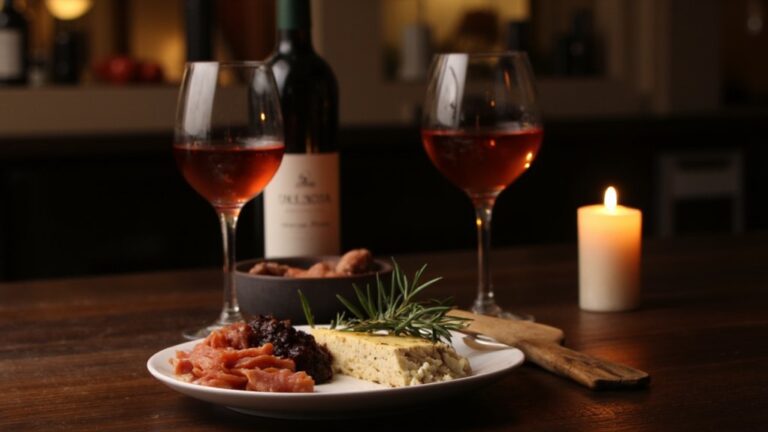
You’re about to discover a delicious secret that’ll revolutionize your wine game: fortified wines! These enhanced wines pack a flavorful punch by adding brandy or spirits, creating rich, complex sips with alcohol levels between 17-20%. From sweet Ports to dry Sherries, they’re steeped in fascinating history and crafted through unique production methods that’ll make your taste buds dance. Get ready to unveil a world of intense flavors and centuries-old traditions that’ll transform your wine journey.
Key Takeaways
- Fortified wine is created by adding brandy to regular wine, resulting in higher alcohol content (17-20%) and complex flavors.
- Historical significance traces back to 15th-century preservation methods, leading to renowned styles like Port, Sherry, and Marsala.
- Sweet fortified wines serve chilled (55°F), while dry varieties serve warmer, offering diverse tasting experiences from caramel to nuts.
- Quality fortified wines require proper storage at 55-65°F with 70% humidity and typically start at $25.
- Modern producers experiment with innovative aging techniques and global influences, creating exciting new flavor profiles and styles.




What Makes a Wine “Fortified”?
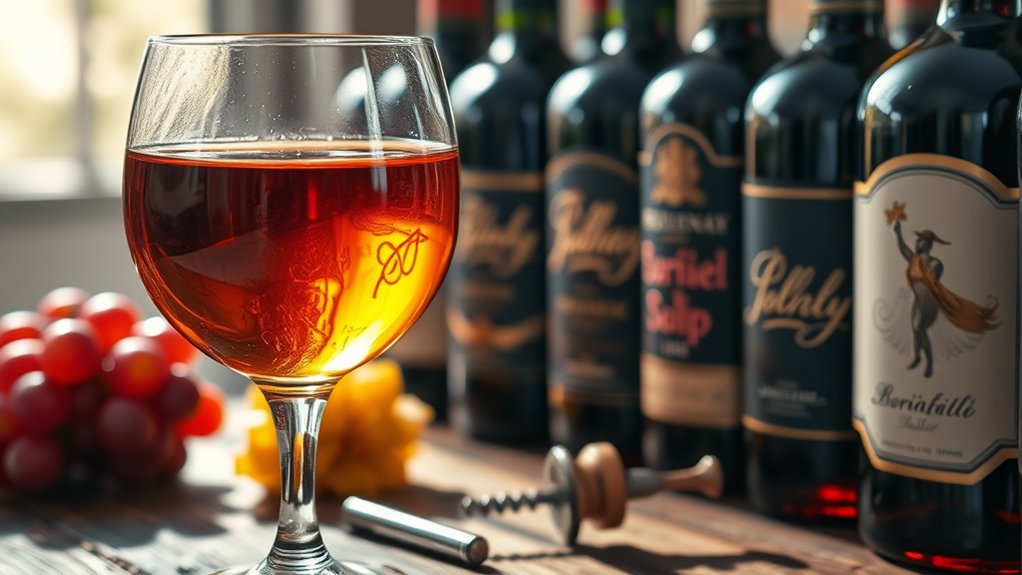
While regular wine might get you in the spirit, fortified wine takes things up a notch by adding a splash of brandy or neutral spirits to the mix. You’ll find that these special wines pack quite a punch, typically ranging from 17% to 20% alcohol content, making your standard table wine seem like grape juice in comparison!
The magic happens through various fortification techniques, where winemakers play a bit of mixology with their creations. If you’re wondering about the timing, they’ll either add the spirits during fermentation (which keeps things sweeter) or after it’s complete (resulting in a drier taste). It’s like giving your wine a power-up in a video game, except this boost comes with delicious complexity and centuries of tradition behind it! Additionally, the choice of fortification techniques can greatly influence the final flavor profile of the wine.
The Historical Journey of Fortified Wines
Although fortified wines are popular party drinks today, their origin story reads more like a thrilling tale of maritime adventure! Back in the 15th century, you’d find sailors adding brandy to their wine barrels to prevent spoilage during long sea voyages. This practical solution turned out to be a game-changer, leading to the historical significance of ports and sherries we recognize today.
You can thank those resourceful Portuguese and Spanish merchants who discovered that fortified wines not only survived the journey but actually tasted better! The cultural impact was enormous – from British aristocrats demanding their beloved port to the establishment of famous wine houses in Porto and Jerez. Who realized that a simple preservation method would create an entirely new category of wines that’d become symbols of sophistication and celebration across Europe?
Key Types of Fortified Wines Around the World

Since every corner of the wine-producing world has its own special take on fortified wines, you’ll find an incredible variety to explore! From Spain’s diverse Sherry styles, ranging from bone-dry Fino to luxuriously sweet Pedro Ximénez, to Portugal’s rich Port regions producing ruby, tawny, and vintage treasures, there’s something for every palate.
You haven’t lived until you’ve tried Sicily’s Marsala varieties, which can transform an ordinary chicken dinner into a gourmet feast. And let’s not forget about Vermouth classifications – those aromatic game-changers that’ll make your cocktails sing! Whether it’s the sweet red varieties from Italy or the dry white French versions, these herb-infused fortified wines have been making martinis magnificent and Manhattans marvelous for centuries.
The Art of Fortification: Production Methods
When you’re diving into the world of fortified wines, you’ll discover that the magic happens through a fascinating process called fortification. This clever technique involves adding a spirit (usually brandy) to wine, which not only cranks up the alcohol content but also creates some seriously interesting flavors. The timing of this boozy boost is essential – adding the spirit before fermentation gives you a sweeter wine, while waiting until after creates a drier style.
You’ll find that different fortification techniques yield distinct results. For example, Port gets its signature richness from a mid-fermentation spirit addition, while Sherry’s unique character comes from fortifying after fermentation’s complete. It’s like being a wine wizard, really – these alcohol enhancement methods transform ordinary wines into extraordinary elixirs!
Tasting Notes and Serving Suggestions
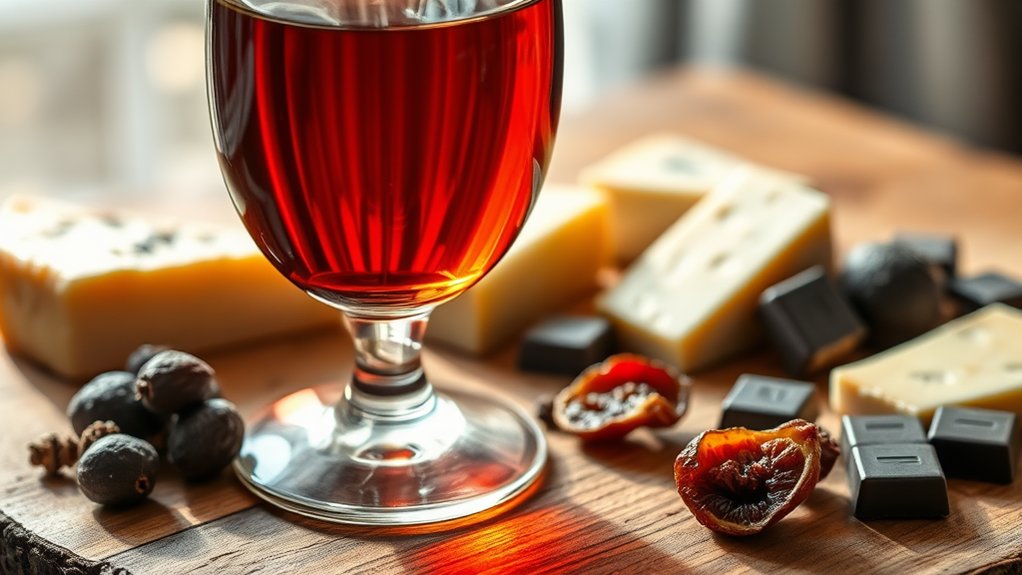
As you immerse yourself in the delightful world of fortified wines, you’ll discover a symphony of rich flavors that dance across your palate, from deep caramel and dried fruits to nutty, complex notes. Each style offers unique tasting profiles that’ll make your taste buds do a happy dance – from the honeyed sweetness of Muscat to the bold intensity of vintage Port.
To truly appreciate these liquid treasures, you’ll want to nail the serving temperature. While your Uncle Bob might think “room temperature” works for everything, you’re savvier than that! Serve your sweet fortified wines slightly chilled (around 55°F), and your dry varieties a touch warmer. And remember, these aren’t your chug-at-the-party drinks – they’re meant for sipping and savoring, preferably while wearing your fanciest slippers.
Food Pairing With Fortified Wines
The art of pairing fortified wines with food is like matchmaking for your taste buds, where the right combination can create pure culinary magic. You’ll find that these robust wines can elevate your dining experience, especially when you’re exploring cheese pairings or indulging in decadent chocolate desserts.
- Let a glass of tawny Port dance with blue cheese – it’s like they were meant to waltz together on your palate
- Watch sweet Pedro Ximénez sherry fall head over heels for dark chocolate truffles
- Experience how a chilled fino sherry flirts shamelessly with Spanish jamón and marcona almonds
Storage and Aging Recommendations
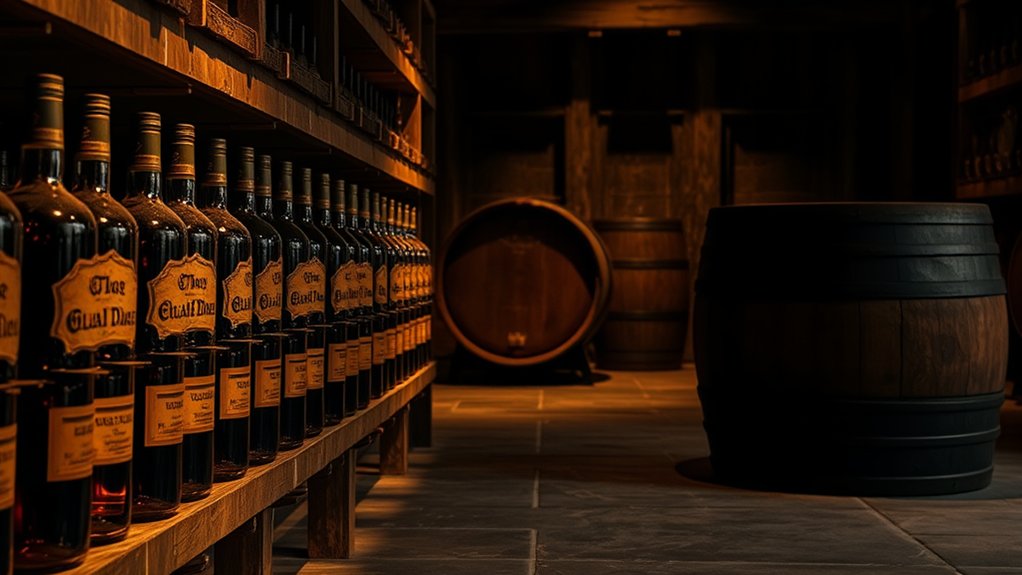
Since fortified wines represent a significant investment in both money and pleasure, proper storage can make the difference between a bottle that improves with age and one that’s destined for the drain. You’ll want to keep your liquid treasures in a cool, dark place where temperature control remains steady, ideally between 55-65°F (13-18°C). Think of your fortified wines as Goldilocks – they don’t like it too hot or too cold!
Maintaining proper humidity levels (around 70%) helps prevent those precious corks from drying out and letting unwanted air sneak in. While most fortified wines come in dark bottles that protect against light damage, you’ll still want to store them away from windows and fluorescent lighting. And here’s a fun tip: unlike your ex, these bottles actually prefer to be ignored – store them upright and resist the urge to shake or disturb them!
Lesser-Known Fortified Wine Varieties
While Port and Sherry might steal the spotlight, there’s a whole world of lesser-known fortified wines waiting in the wings to dazzle your taste buds. From the sun-kissed vineyards of Sicily comes Marsala Varietals, ranging from the honeyed dolce to the crisp secco styles that’ll make your pasta dishes sing. You’ll also find fascinating Sherry Styles beyond the usual suspects, like Palo Cortado, the mysterious rebel that breaks all the rules.
- Discover Banyuls, France’s best-kept secret that tastes like chocolate-covered cherries in a glass
- Explore Rutherglen Muscat, Australia’s liquid gold that’ll make your dessert jealous
- Try Madeira’s Rainwater style, the ultimate “oops, I left it in the sun” success story
Buying Guide: What to Look For
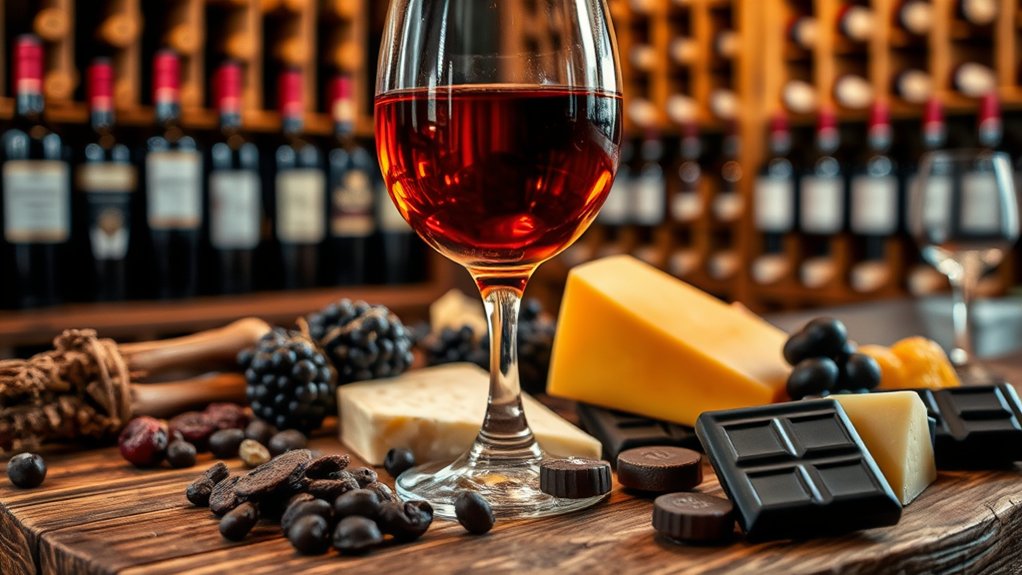
Ready to plunge into the world of fortified wines but feeling overwhelmed by all those fancy labels? Don’t worry – you don’t need a sommelier’s certification to make smart choices. First, consider your price range: quality fortified wines typically start around $25, though you’ll find some gems in the $15-20 range.
Watch for key quality indicators on the label, like aging statements and production methods. Terms like “Aged 10 Years” or “Solera System” usually signal better quality. For Port lovers, look for “Vintage” or “LBV” (Late Bottled Vintage), while Sherry enthusiasts should spot terms like “VORS” or “VOS.” And here’s a fun tip: contrary to what your bargain-hunting instincts might tell you, those dusty bottles aren’t necessarily better – proper storage matters more than age alone!
Modern Trends in Fortified Wine Production
Despite its traditional roots, the fortified wine industry is experiencing a fascinating evolution that’s breathing new life into these cherished beverages. Modern techniques are revolutionizing production methods, while global influences from unexpected regions like China and Brazil are reshaping traditional styles. You’ll find innovative producers experimenting with new grape varieties and aging vessels, creating exciting hybrid styles that’ll make your taste buds dance.
- *You’re seeing a delightful surge in small-batch, artisanal fortified wines that showcase local terroir*
- *You’ll discover surprising fusion styles that blend Eastern and Western winemaking traditions*
- *You can experience groundbreaking temperature-controlled aging methods that produce incredibly complex flavors*
These modern approaches are making fortified wines more accessible and appealing to younger wine enthusiasts, who’re discovering these gems aren’t just their grandparents’ after-dinner drinks anymore.
Frequently Asked Questions
Can Pregnant Women Drink Fortified Wines in Small Amounts?
You shouldn’t drink any fortified wine while pregnant, as even small amounts pose serious health risks to fetal development. Medical experts recommend completely avoiding alcohol during pregnancy.
Why Do Some People Get Headaches Specifically From Fortified Wines?
Like a storm brewing in your head, your body’s reactions to higher levels of histamines and sulfites in fortified wines can trigger those splitting headaches you’re experiencing.
Are There Any Alcohol-Free Alternatives That Taste Similar to Fortified Wines?
You’ll find non-alcoholic options like grape juice blends, dealcoholized wine, or specialty mocktails that mimic fortified wines’ flavor profiles through spices, caramelized sugars, and concentrated fruit essences.
Do Fortified Wines Have More Calories Than Regular Wines?
Like a sugar-packed punch, fortified wines pack more calories than regular wines. You’ll find their higher caloric content and health implications stem from added alcohol and residual sugars.
Can Fortified Wines Be Used in Religious Ceremonies Like Regular Wines?
You’ll find that fortified wines can be used in religious ceremonies, though their religious significance varies. Some denominations accept them for sacramental purposes, while others strictly prefer unfortified wine.