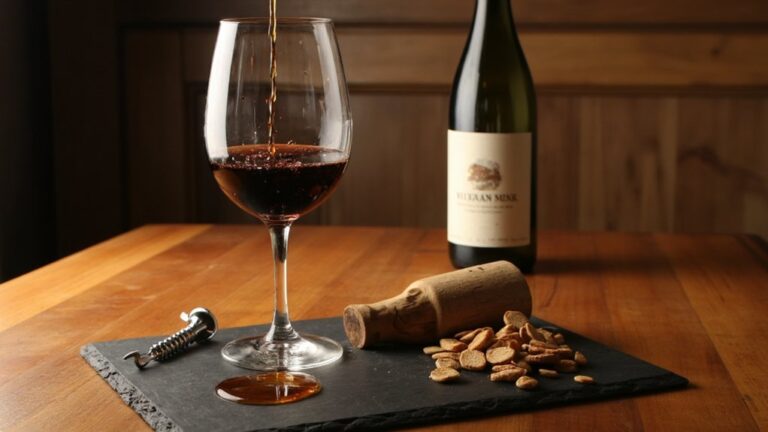
Ever wonder what’s behind that deep-red, sweet glass folks love to sip after dinner? Port wine isn’t just any dessert wine; it’s a Portuguese classic with a rich, boozy twist and a backstory full of smugglers, secrets, and grapes you probably can’t pronounce. You’ll find flavors bursting with dried fruit and caramel, all wrapped up in a cozy, warming hug. But before you start pouring, there’s a lot more to discover, so stick around—your taste buds might thank you.
Key Takeaways
- Port wine is a sweet, fortified dessert wine from Portugal’s Douro Valley, known for its rich flavors and deep ruby color.
- It is made by adding brandy during fermentation, which preserves sweetness and increases alcohol content.
- The primary grape used is Touriga Nacional, often blended with other local varieties for complexity.
- Port wine comes in several styles, including Ruby, Tawny, Vintage, and White, each offering distinct flavor profiles.
- It is traditionally served in small glasses and pairs well with chocolate, blue cheese, and nuts.
Portuguese Fortified Dessert Wine
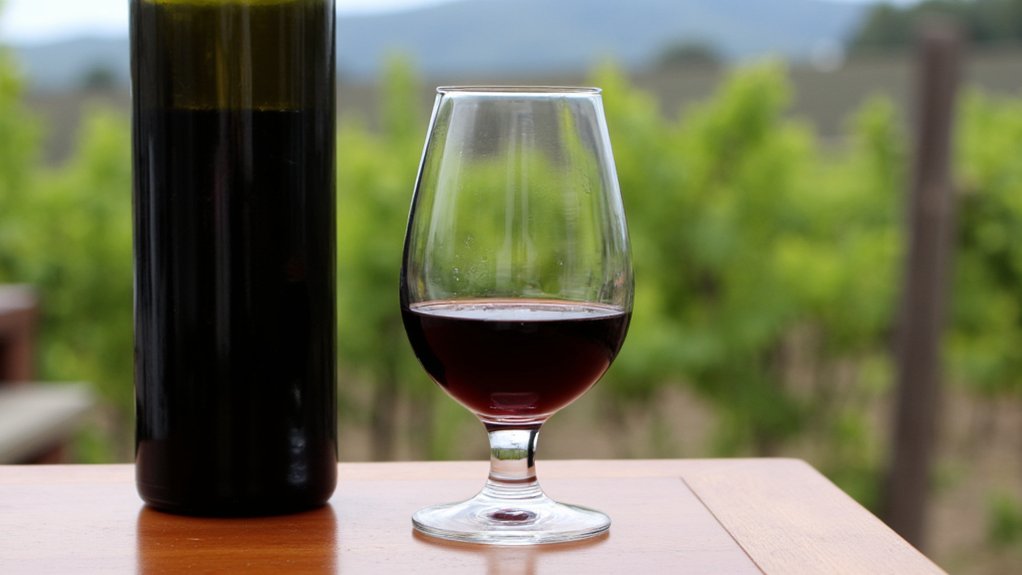
Port wine. You can almost taste the name, right? This isn’t just any wine—it’s a luscious Portuguese treat with a kick of fortified sweetness that sets it apart from the crowd. Picture yourself swirling a glass, marveling at that deep ruby color, and thinking about what delicious dessert pairing you’ll try next. You might go classic—chocolate cake, blue cheese, or even a handful of nuts. The flavors are bold, rich, and just a little bit cheeky, like a friend who always brings the best jokes to the party.
You’ll notice Port wine doesn’t just sweeten your palate; it warms your soul. It’s a hug in a glass, perfect for cozy nights or celebrations. One sip, and you’re hooked.
Douro Valley’S 17th-Century Beginnings
Sweetness and warmth in a glass don’t just happen by magic—there’s a story swirling inside every bottle, and it all begins in the rolling hills of Portugal’s Douro Valley. Picture yourself striding through those sunbaked slopes, back in the 17th Century, when winemakers first realized they had something special growing on those terraces. The Douro Valley isn’t just beautiful, it’s legendary. Back then, folks figured out that the region’s rocky soil and wild climate made for bold, rich wines that could travel long distances without spoiling. They got clever, too, adding a splash of brandy to help their wine survive the journey. That’s how Port wine’s journey from local secret to global sensation kicked off. Not bad for an old valley!
Touriga Nacional and Friends
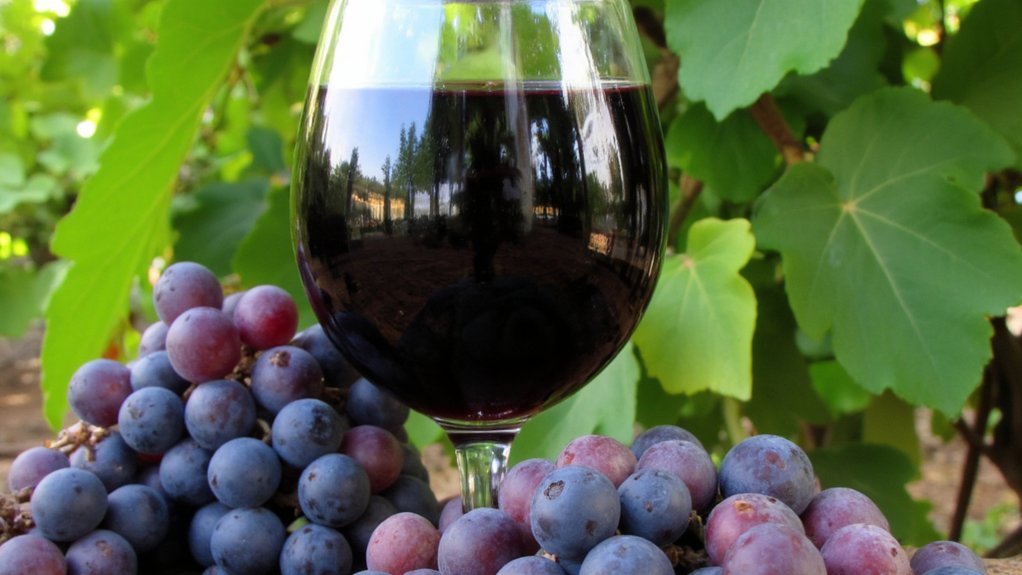
Even if you’re new to the world of Port, you’ve probably heard whispers about Touriga Nacional—the grape with a name that sounds like it should be starring in its own adventure movie. This grape is the hero of many Port wines, bringing bold color and structure. But Touriga Nacional doesn’t work alone. It’s got a whole crew—Touriga Franca, Tinta Roriz, Tinta Barroca, and more—tagging along for the ride. Think of them as the ultimate grape blending team, with each variety adding its own flair. Some bring deep, juicy flavors, while others give body or aromatic notes. Together, these Touriga Nacional varieties create a symphony in your glass. So next time you sip Port, remember, it’s never a solo act.
Rich Notes of Dried Fruit
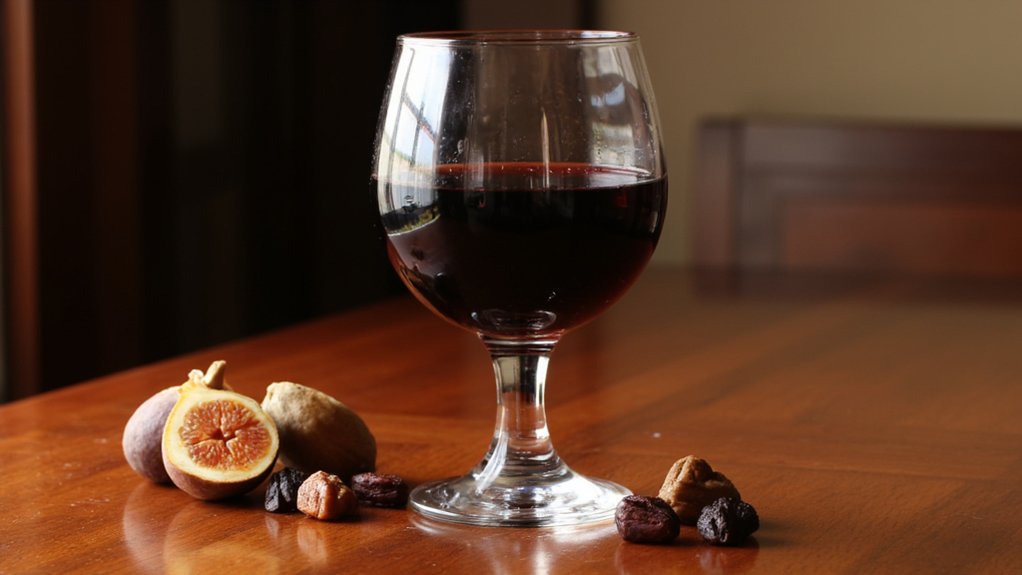
Treasure chests don’t always glitter with gold—sometimes, they burst with the deep, sweet aroma of dried fruit. When you sip Port wine, you’re not just tasting grapes. You’re diving into a world brimming with dried fruit flavors—think figs, raisins, plums, and dates, all packed into a single glass. It’s like your grandma’s holiday fruitcake, but way cooler and without the suspicious green bits. The tasting notes jump out with each sip, layering sweetness and depth, making your tongue do a happy dance. You might catch a hint of apricot or a sly whisper of prune. As you swirl, sniff, and savor, you’ll find Port wine isn’t shy about showing off its rich, fruity personality. Go ahead, taste the treasure.
Famous Port Wine Brands
Your tastebuds are still tingling from all those dried fruit flavors, right? Now, let’s explore the world of famous Port wine brands. If you want to discover the best, you’ll want to know the notable producers that have made this fortified wine legendary. And trust me, these names are easy to remember—especially after a glass or two!
Here are some of the most famous brands you’ll spot on shelves (and maybe in your dreams):
- Graham’s: Known for rich, complex Ports that practically sing with flavor.
- Taylor Fladgate: This house is a legend, offering both classic and innovative Ports.
- Fonseca: Famous for bold, velvety wines that hug your tastebuds.
- Sandeman: Recognizable by the caped logo, but unforgettable for its smooth style.
Ready to taste history?
Popular Port Choices For Any Budget
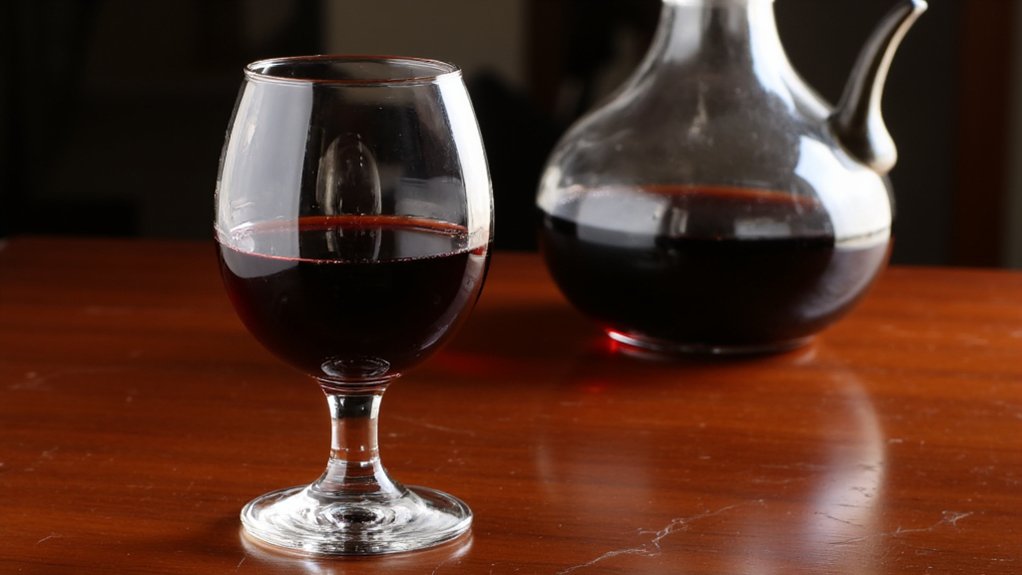
No matter what your wallet’s saying, there’s a Port out there with your name on it. You can snag a tasty bottle for under $20, treat yourself to something special in the $20 to $100 range, or go all-in and splurge on a high-end masterpiece that’ll make your tastebuds do the cha-cha. Let’s check out some crowd-pleasers, wallet-winners, and a few show-off bottles for when you’re feeling extra fancy.
Bargain Port Wines Under $20
- Sandeman Fine Ruby (Douro) – fresh, fruity, balanced, classic, approachable
- Fonseca Bin 27 (Douro) – rich, velvety, dark berries, smooth, versatile
- Graham’s Six Grapes (Douro) – bold, spicy, plummy, intense, easy-drinking
- Warre’s Warrior (Douro) – vibrant, elegant, red fruits, subtle, affordable
- Taylor Fladgate Fine Ruby (Douro) – lively, robust, cherry, straightforward, reliable
Mid-Range Port Wines Between $20-$100
- Dow’s Late Bottled Vintage (Douro) – rich, complex, dark fruits, peppery, structured
- Niepoort LBV (Douro) – elegant, fresh, raspberry, floral, balanced
- Graham’s 10 Year Tawny (Douro) – nutty, caramel, figs, smooth, lingering
- Taylor Fladgate 20 Year Tawny (Douro) – refined, dried fruit, toffee, silky, luxurious
- Quinta do Noval Black (Douro) – bold, spicy, chocolate, modern, versatile
High-End Port Wines Above $100
- Taylor Fladgate 40 Year Tawny (Douro) – profound, dried fruit, honeyed, nutty, endlessly complex
- Graham’s Vintage Port 2011 (Douro) – opulent, black cherry, spice, velvety, collectible
- Quinta do Noval Nacional Vintage (Douro) – legendary, intense, rare, floral, powerful
- Fonseca Vintage Port 2017 (Douro) – rich, dense, blackberry, chocolate, age-worthy
- Sandeman Cask 33 Tawny (Douro) – ultra-rare, caramel, fig, balanced, elegant
Classic Port Wine Food Pairings
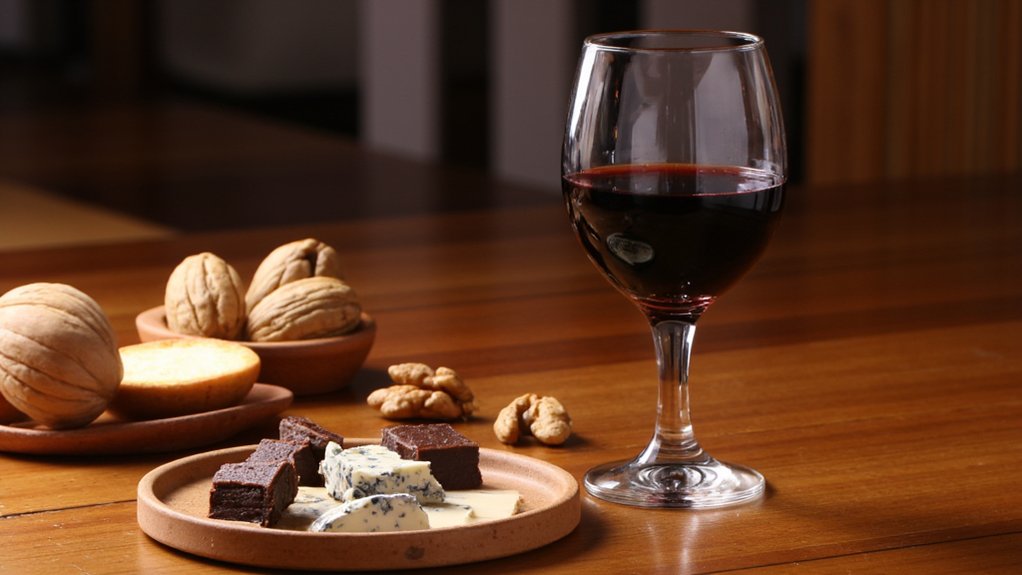
When you’re ready to release the magic of Port wine, pairing it with the right foods is like finding the perfect dance partner—suddenly, everything just works. Imagine the creamy tang of blue cheese meeting a rich ruby Port, or the deep sweetness of chocolate desserts with a velvety Tawny. You can create an entire evening around these classic combos, and, trust me, your taste buds will thank you. Explore these pairings and let the flavors sing:
- Cheese pairings: Stilton, Roquefort, or even a sharp aged cheddar
- Chocolate desserts: flourless chocolate cake, brownies, or truffles
- Roasted nuts: almonds or walnuts, lightly salted
- Dried fruits: figs or apricots, sweet and chewy
Port’s British Smuggling Origins
You’ve got your cheese, your chocolate, and maybe even a glass of Port in hand, but did you ever wonder how this sweet, rich wine ended up on British tables in the first place? Well, it wasn’t exactly a simple journey. Back in the day, British merchants were absolutely obsessed with finding new wines to bring home. France and England weren’t always on friendly terms, so the Brits started looking south, toward Portugal. But taxes and trade embargoes got in the way, so they got creative. Smuggling routes popped up everywhere—think cloak-and-dagger, only with barrels. British merchants snuck Port up rivers, across borders, and straight onto ships headed for England. The result? A legendary wine with a past as bold as its flavor!
Does Port Wine Age Well?
If you’ve ever stared at a dusty old bottle of Port and wondered whether it’s turned into liquid gold or just grape juice with an attitude, you’re not alone. Port wine is famous for its aging potential. Some bottles—especially those with a vintage classification—are basically time machines for your taste buds. Let’s be real: not every Port improves with age. Ruby styles are meant for drinking young, but vintage Ports? Oh, those are the show-offs. They can develop rich, complex flavors over decades, teasing you with every year they wait in your cellar. Of course, patience is key. Open a vintage Port too soon and it’ll sulk. Wait long enough, and you might just get a symphony in a glass—cheers to you!
Port Wine Serving Tips

Okay, so you’ve got a bottle of beautifully aged Port and you’re ready to taste what all that waiting was about. But here’s the thing—Port is a diva. She needs the right stage, the right spotlight, and definitely the right glassware selection. Don’t just grab whatever’s clean. Choose wisely and you’ll taste every juicy note. Serving temperature matters too. Too warm and it’s a boozy mess. Too cold and you’ll miss the magic.
Here’s how to make your Port shine:
- Use a small tulip-shaped glass to concentrate those lovely aromas.
- Chill Tawny and White Ports slightly, but serve Vintage Port just below room temperature.
- Decant older Ports to avoid sediment surprises.
- Pair with cheeses, nuts, or even dark chocolate for a flavor explosion.
Now, raise that glass!
Similar Wines to Port Wine
Even though Port is the star of the show with its bold flavors and luscious sweetness, it’s not the only wine that knows how to steal the spotlight. If you love Ruby Port for its juicy, berry punch or prefer the caramel notes of Tawny Port, you’re in luck—there’s a whole cast of characters to explore. Try Late Bottled or Vintage Port when you crave a deeper, more complex adventure. White Port offers a crisp twist, perfect for mixing or sipping straight. Curious about cousins from afar? Australian Fortified wines bring sunny swagger, while Madeira Wine dazzles with its nutty, baked flavors. And don’t forget Sherry Wine, the Spanish sensation, which can be bone-dry or decadently sweet—talk about versatility!
Frequently Asked Questions
Is Port Wine Suitable for Vegans and Vegetarians?
If you follow a vegan or vegetarian diet, you’ll need to check for vegan certification and confirm vegetarian ingredients. Some port wines use animal-based fining agents, so you can’t assume every bottle meets your requirements.
Can Port Wine Be Used in Cooking or Baking Recipes?
You can absolutely use port wine in cooking or baking recipes. Try adding it to sauces or desserts for depth and sweetness. Explore port pairings, like chocolate or blue cheese, and follow cooking tips for best results.
What Is the Alcohol Content of Typical Port Wine?
When you choose typical varieties of port wine, you’ll notice alcohol measurements usually range from 19% to 22% ABV. You can enjoy these fortified wines with confidence, knowing their higher alcohol content enhances both flavor and preservation.
Does Port Wine Contain Added Sulfites or Allergens?
You’ll find that port wine usually contains added sulfites, which help preserve it but can affect sensitive individuals. Always check allergen labeling on the bottle, as sulfites effects vary and some people may react to other potential allergens.
How Should Leftover Port Wine Be Stored After Opening?
After opening, you should seal the bottle tightly and store leftover port wine in the fridge to maximize wine preservation. Proper leftover storage slows oxidation, letting you enjoy its flavors for up to three or four weeks.