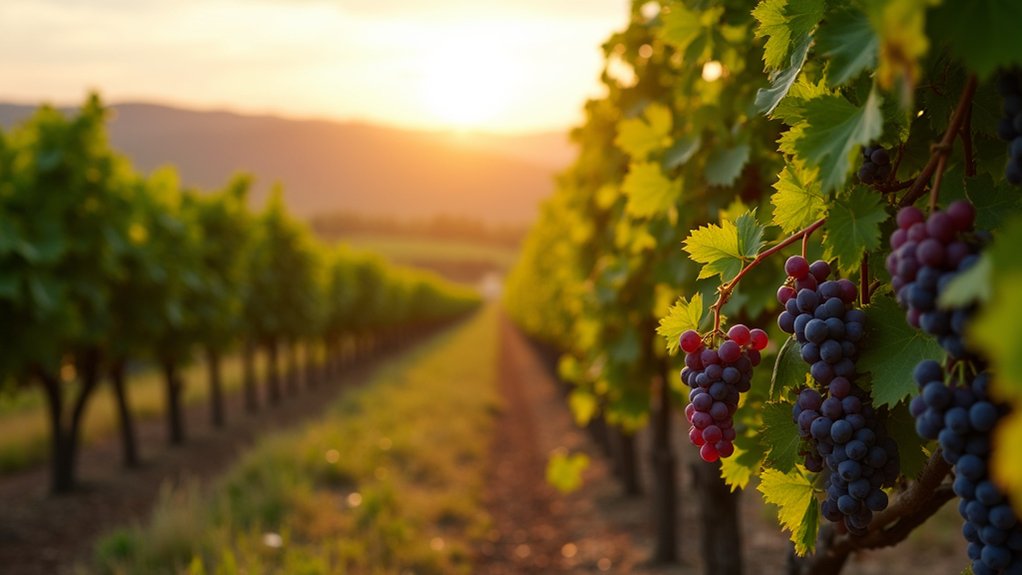
So, you’ve stumbled across the word Nebbiolo and you’re wondering what the fuss is all about—well, you’re in for a treat. Imagine a grape that looks a bit shy with its pale color, but then packs a punch of flavor with cherry, rose, and even a whiff of tar (yes, really). It’s the star of Italy’s Piedmont, famous for Barolo and Barbaresco, and trust me, there’s so much more to this grape than meets the eye…
Key Takeaways
- Nebbiolo is a red grape variety from Piedmont, Italy, known for producing complex, age-worthy wines like Barolo and Barbaresco.
- It features pale color, high acidity, bold tannins, and signature aromas of rose, tar, cherries, and earthy notes.
- Nebbiolo wines are celebrated for their aging potential, often developing deeper flavors and complexity over decades.
- Classic food pairings include mushroom risotto, braised meats, and aged cheeses, highlighting the wine’s robust character.
- Notable producers include Gaja, Giuseppe Mascarello, and Bruno Giacosa, with options available from affordable to luxury price ranges.

Piedmont’s Signature Red Wine

Red gold. That’s what locals call Nebbiolo, and once you see a glass shimmer in the light, you’ll get it. You’re tasting Piedmont’s signature red wine, a creation born from the unique Piedmont terroir. Imagine rolling hills, foggy mornings, and sun-soaked afternoons—this landscape shapes every grape. You notice Nebbiolo characteristics right away: it’s pale but packs a punch, with bold tannins and bright acidity that demand your attention. Smell those roses and tar? That’s classic Nebbiolo. Take a sip, and you’ll find flavors that dance around your tongue: cherries, violets, even a hint of truffle if you’re lucky. It’s complex, passionate, and sometimes stubborn—just like an Italian grandma. And honestly, isn’t that why you love it?
First Barolo Bottled: 1800s
You’ve tasted the magic in your glass, but have you ever wondered when Nebbiolo truly became the legend it is today? Let’s rewind to the 1800s vineyards, where the story of Barolo history really kicks off. Picture rolling hills, fog swirling, and winemakers tinkering away with a grape that just wouldn’t behave. That’s Nebbiolo for you—always a bit dramatic. In the mid-1800s, the first bottles of Barolo started to appear, transforming local wine into something grand enough for royalty. People whispered about its power and elegance, probably while sneaking a second glass. Suddenly, Barolo wasn’t just a village secret; it was the pride of Piedmont. Raise your glass to those bold pioneers who bottled the future. Cheers to history in every sip!
Thin-Skinned, Tannic Red Grape
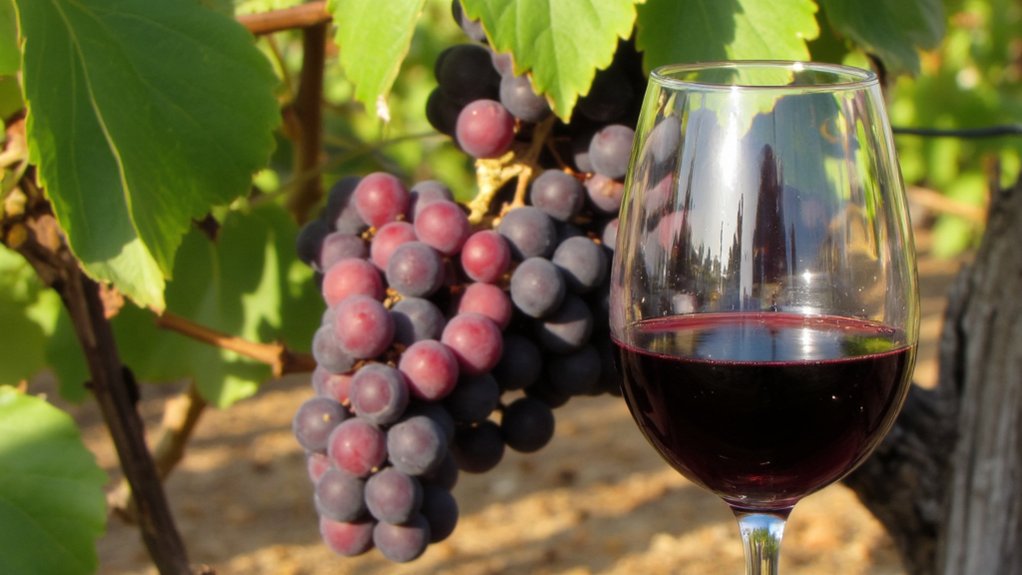
Nebbiolo’s skin is a bit of a drama queen. You’d think a grape that makes such bold, powerful wines would have armor, but nope—Nebbiolo is famously thin skinned. That means it’s sensitive to weather, easily bruised, and prone to changing moods. But don’t let its delicate exterior fool you! When you taste Nebbiolo, you’ll notice its tannic profile packs a punch.
This grape may look fragile, but it delivers a mouthful of gripping tannins that can dry your gums quicker than you can say “Barolo.” The thin skinned characteristics let the grape soak up all the sun, extracting intense flavor and color. It’s a balancing act—soft outside, tough inside, like a velvet glove hiding an iron fist.
Rose, Tar, and Cherry Notes

Even before you take your first sip, the aroma swirling from a glass of Nebbiolo can stop you in your tracks. You’ll notice it’s not shy—it leaps up with scents that might make your nose do a happy little dance. The classic aroma profiles mix delicate rose petals, earthy tar, and bright cherry. Yes, tar—sounds weird, smells amazing. These tasting notes give Nebbiolo its unique charm. One moment you’re in a flower garden, the next you’re on a freshly paved road, and finally, you’re devouring a bowl of juicy cherries. It’s like a quirky magic show for your senses. With every sniff and sip, Nebbiolo surprises, making you think, “How can one glass pack all that in?”
Famous Nebbiolo Wine Brands
Legends fill the world of Nebbiolo, and a handful of wine brands have earned almost mythical status among fans. When you start chasing famous Nebbiolo producers, you’re entering a hall of fame where the bottles practically wink at you from the shelf. These iconic Nebbiolo labels are beloved for good reason—they deliver unforgettable flavor, history, and a splash of Italian swagger.
Here are three you should definitely know:
- Gaja: This isn’t just a winery, it’s a Nebbiolo superstar. Their Barbaresco is world-renowned—like, stop-everything-and-savor-it good.
- Giuseppe Mascarello: They craft soulful, classic Barolo. People whisper about their Monprivato vineyard.
- Bruno Giacosa: Expect elegance and power in every glass. You’ll feel fancy, even in pajamas.
Popular Nebbiolo Choices For Any Budget
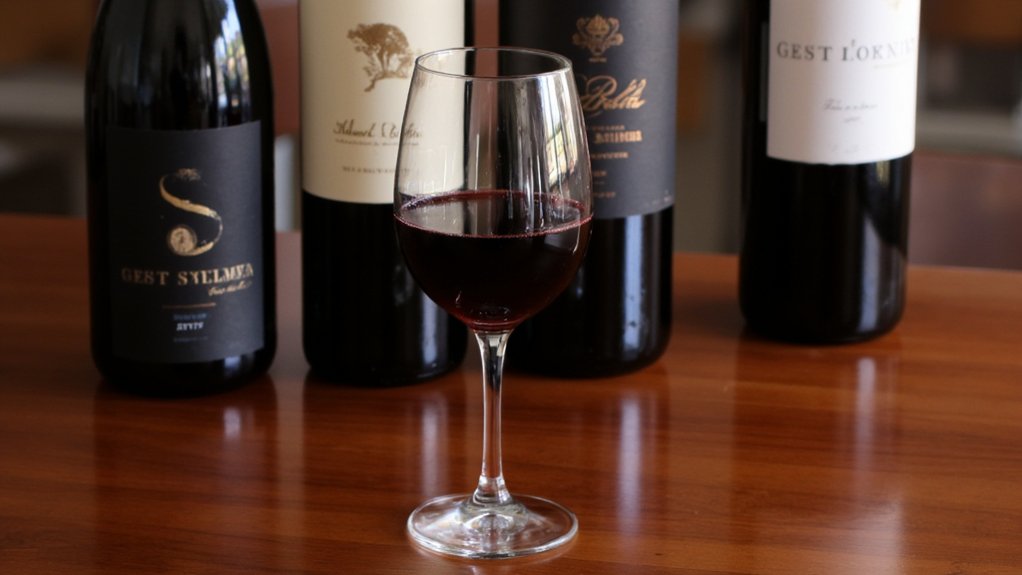
No matter what your wallet’s telling you, there’s a Nebbiolo out there waiting to make friends with your glass—bargain bottles under $20, mid-range gems between $20 and $100, and, if you’re feeling fancy, high-end splurges above $100. You don’t need to be a millionaire or a sommelier to enjoy the magic, just a little curiosity and maybe a corkscrew that actually works. Let’s see what delicious options you can grab without taking out a second mortgage (unless you want to, which, hey, that’s your business).
Bargain Nebbiolo Wines Under $20
- Vietti Perbacco (Langhe) – cherry, licorice, approachable, silky tannins, crowd-pleaser.
- Renato Ratti Ochetti (Langhe) – floral, red fruit, elegant, versatile, balanced acidity.
- Produttori del Barbaresco Langhe Nebbiolo (Piedmont) – classic, earthy, well-structured, dry, affordable.
- Giacomo Fenocchio Langhe Nebbiolo (Langhe) – spicy, fresh, youthful, light-bodied, accessible.
- Elvio Cogno Montegrilli (Langhe) – vibrant, raspberry, smooth, mineral notes, food-friendly.
Mid-Range Nebbiolo Wines Between $20-$100
- Pio Cesare Nebbiolo (Langhe) – classic, cherry, earthy, balanced, refined tannins, versatile.
- Oddero Barbaresco (Barbaresco) – floral, silky, red berry, structured, elegant, age-worthy.
- G.D. Vajra Nebbiolo (Langhe) – vibrant, fresh, cranberry, mineral, approachable, lively acidity.
- Mauro Molino Barolo (Barolo) – powerful, rose, tar, firm, complex, long finish.
- Fratelli Alessandria Barolo (Barolo) – savory, licorice, dark fruit, polished, persistent, harmonious.
High-End Nebbiolo Wines Above $100
- Gaja Barbaresco (Barbaresco) – legendary, opulent, layered, rose petal, spice, profound depth.
- Giuseppe Mascarello Monprivato (Barolo) – iconic, ethereal, red fruit, truffle, silky, extraordinary balance.
- Vietti Rocche di Castiglione (Barolo) – complex, floral, tar, precise, powerful, exceptional aging.
- Bruno Giacosa Falletto (Barolo) – classic, intense, dark cherry, licorice, elegant, velvety tannins.
- Roagna Crichet Pajé (Barbaresco) – rare, earthy, wild berry, vibrant, structured, long-lived.
Classic Nebbiolo Wine Food Pairings
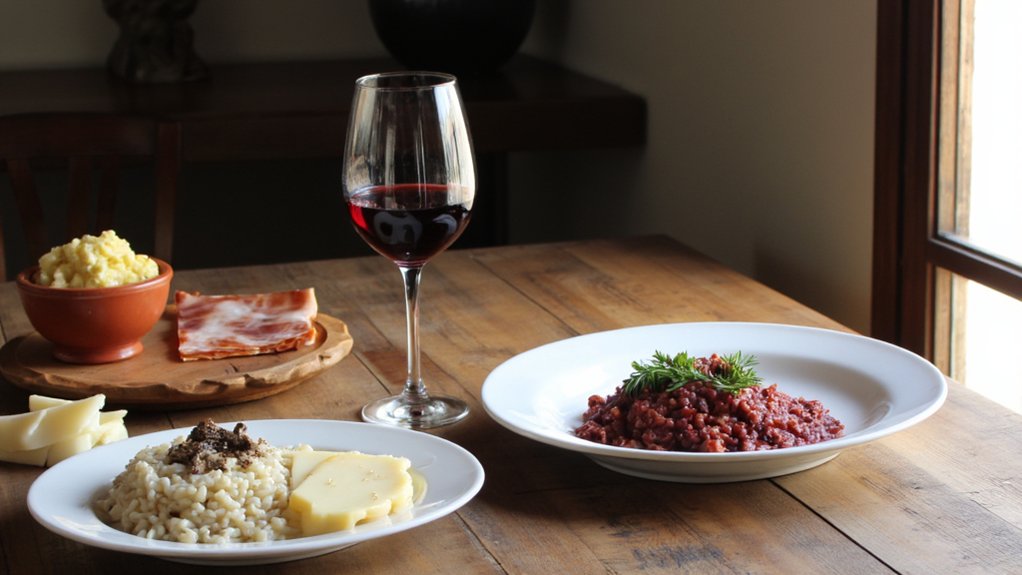
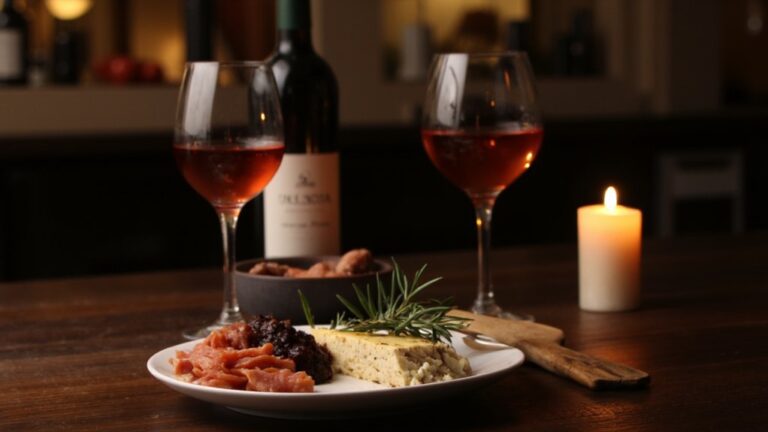
Even if you’ve never tasted Nebbiolo, you’re in for a treat when it comes to pairing this wine with food. Its bold flavors and lively acidity make it a superstar at the dinner table. You’ll find that Nebbiolo really shines with rich, savory dishes—think earthy, cheesy, or even meaty. Here are three classic food pairings that never fail:
- Mushroom Risotto: The earthy, creamy flavors are a match made in culinary heaven for Nebbiolo’s tannins.
- Braised Beef or Lamb: The wine’s structure stands up to hearty, slow-cooked meats. You’ll want seconds.
- Aged Cheeses: Hard Italian cheeses like Parmigiano-Reggiano bring out Nebbiolo’s fruit and spice.
Nebbiolo’s Name Means “Fog”
Fog. You’ll hear about it all the time when you immerse yourself in Nebbiolo origins. The grape’s name, “Nebbiolo,” actually comes from the Italian word “nebbia,” which means—you guessed it—fog! Picture rolling hills in Piedmont, Italy, blanketed by this thick, ghostly mist during harvest. It’s not just weather. It’s atmosphere, mood, even a little bit of drama. This fog isn’t just for show, though. It plays a part in shaping Nebbiolo characteristics, giving the grapes time to ripen slowly and develop their bold flavors and aromas.
Does Nebbiolo Wine Age Well?
That thick Piedmont fog isn’t just good for spooky vineyard selfies—it actually sets Nebbiolo up for greatness in the cellar, too. If you’re looking for a wine with impressive aging potential, Nebbiolo’s your hero. This grape packs powerful tannins and lively acidity, which is basically the wine world’s version of a fountain of youth. You’ll find that well-made Nebbiolo can rest for decades, slowly transforming its bold flavors into a silky, complex masterpiece. Some bottles even outlast your favorite pair of jeans—seriously! The wine longevity here is legendary. Over time, the flavors shift from bright cherry and rose to earthy leather, tar, and dried fruit. If you’ve got patience, Nebbiolo rewards you with a delicious journey worth waiting for.
Nebbiolo Wine Serving Tips
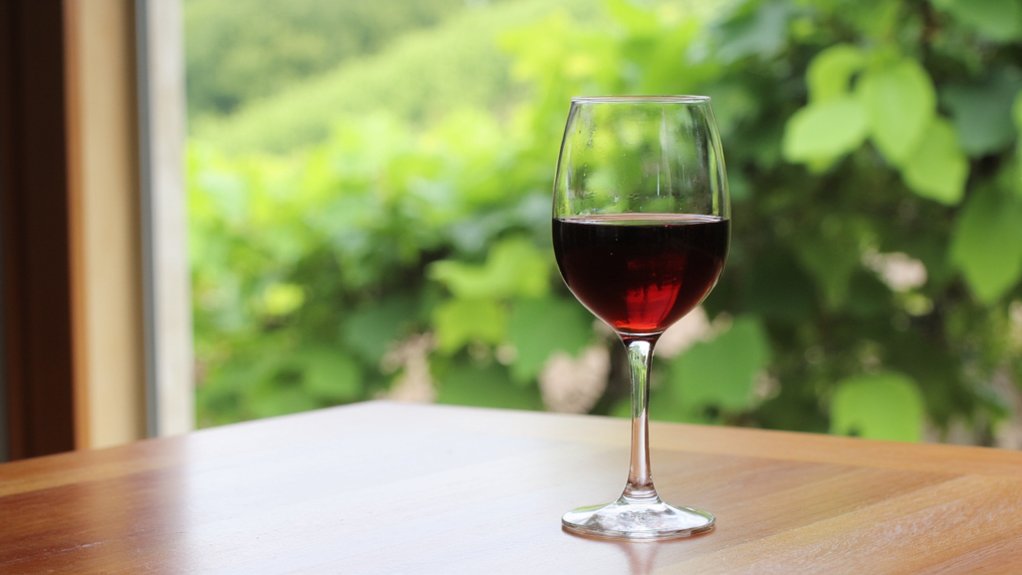
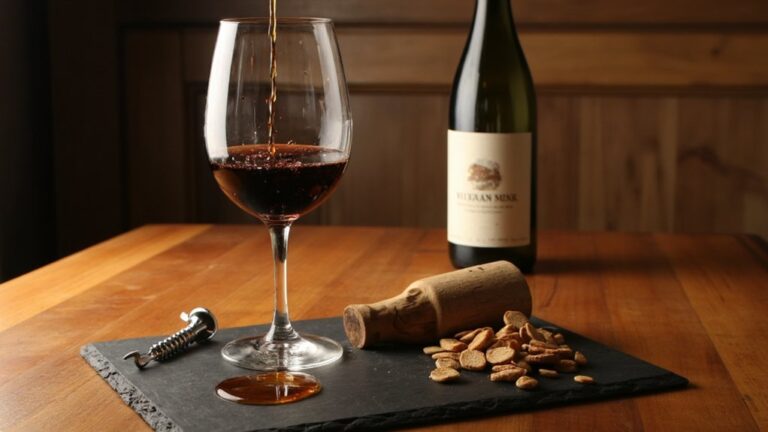
Ever wondered how to make Nebbiolo truly sing in your glass? It’s easier than you think, and you don’t need a tuxedo or a fancy sommelier pin. Start with the right serving temperature and glassware choice, and you’ll be halfway to heaven. Nebbiolo’s bold flavors and gorgeous aromas deserve the royal treatment. Here’s how you can do it:
- Serving Temperature: Aim for around 60-65°F (15-18°C). Too cold, and it mutes those lovely aromas. Too warm, and alcohol takes over.
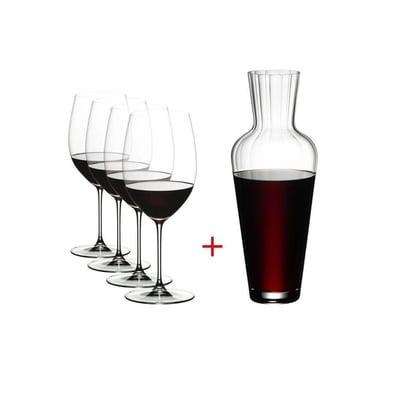
- Glassware Choice: Go for a large, tulip-shaped glass. It lets Nebbiolo’s bouquet show off like it just won the lottery.
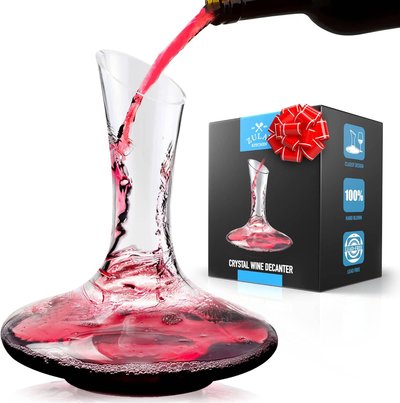
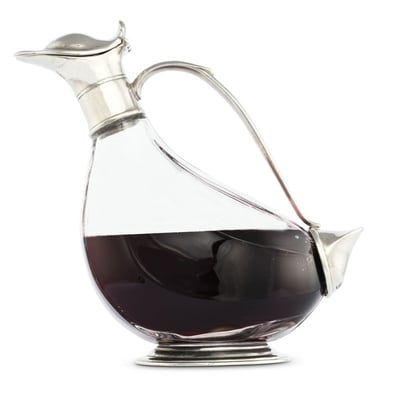
- Decanting: Give it some air! Decant for an hour to let those flavors open up and dance.
Enjoy, and don’t spill—Nebbiolo stains!
Similar Wines to Nebbiolo Wine
Once you’ve mastered the art of serving Nebbiolo like a pro, you might start wondering what else is out there that can deliver a similar thrill. Let’s explore some Nebbiolo comparisons and tasty Nebbiolo alternatives. If you love Nebbiolo’s high acidity, firm tannins, and those haunting floral aromas, go chase down a bottle of Pinot Noir from Burgundy or California. It’s got that elegance, though maybe a bit softer. Craving intensity? Try Sangiovese, especially from Chianti or Brunello di Montalcino—these Italian reds bring grit and charm. For something wilder, check out Etna Rosso from Sicily. It’s volcanic, literally. Don’t be afraid to explore lesser-known grapes like Trousseau or even a spicy Grenache. Wine’s an adventure—pack your glass!
Frequently Asked Questions
Is Nebbiolo Grown Outside of Italy?
Yes, you’ll find Nebbiolo grown outside Italy, though it thrives best in traditional Nebbiolo regions like Piedmont. Other countries try replicating Nebbiolo characteristics, but you’ll notice differences in aroma, structure, and complexity due to climate and soil.
What Is the Alcohol Content of Nebbiolo Wines?
When you enjoy Nebbiolo wines, you’ll typically find their alcohol percentage ranges from 13% to 15%. This wine strength gives Nebbiolo its bold character, balancing rich flavors with a noticeable but not overpowering alcohol presence.
Does Nebbiolo Contain a Lot of Sulfites?
You’re probably wondering about sulfite levels in Nebbiolo. Like most wines, Nebbiolo does contain sulfites, which aid wine preservation. However, it’s not unusually high, so you don’t need to worry more than with other wines.
Are Nebbiolo Grapes Used in Blends?
You usually won’t find Nebbiolo grapes in blends, especially in classic Nebbiolo regions like Barolo and Barbaresco. Winemakers highlight Nebbiolo characteristics—high acidity, tannins, and complex aromas—by making single-varietal wines instead of mixing with other grapes.
Is Nebbiolo Wine Suitable for Vegans?
If you want Nebbiolo wine that’s suitable for vegans, check for vegan certification. Not all producers use a vegan-friendly winemaking process, as some may use animal-based fining agents. Always read labels or ask the winery.