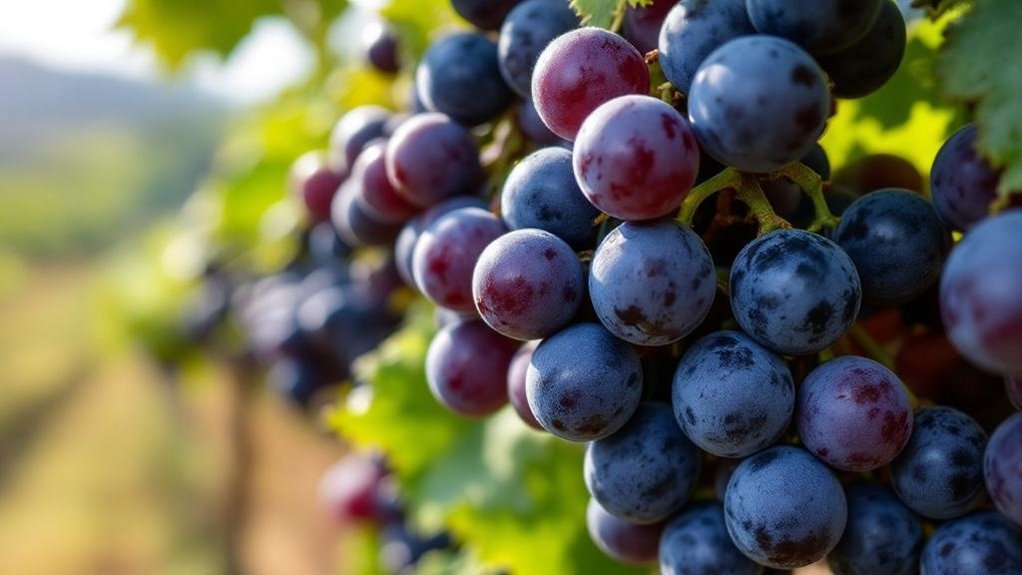
Cabernet Sauvignon isn’t just any grape, it’s royalty! Born in Bordeaux as a fluke cross between Cabernet Franc and Sauvignon Blanc, this bold beauty has conquered vineyards worldwide with its remarkable adaptability and aging potential. You’ll recognize its intense blackcurrant flavors, firm tannins, and regional variations from minty Australian to cedarwood-infused Bordeaux expressions. Pair it with grilled meats or hearty pasta for a match made in wine heaven—there’s so much more to uncork about this king of grapes.
Key Takeaways
- Cabernet Sauvignon, a cross between Cabernet Franc and Sauvignon Blanc, began in France’s Bordeaux region in the 17th century.
- Known for bold dark fruit flavors, high tannins, and pronounced acidity, this grape creates structured, age-worthy wines.
- Adaptable to diverse climates and soils, it thrives globally from Napa Valley to Australia’s Coonawarra and Chile.
- Regional variations produce distinctive flavor profiles, from Bordeaux’s cedar notes to Napa’s chocolate undertones.
- With exceptional aging potential, Cabernet transforms harsh tannins into silky complexity over decades in the bottle.
The Noble Origins: Tracing Cabernet’s French Roots
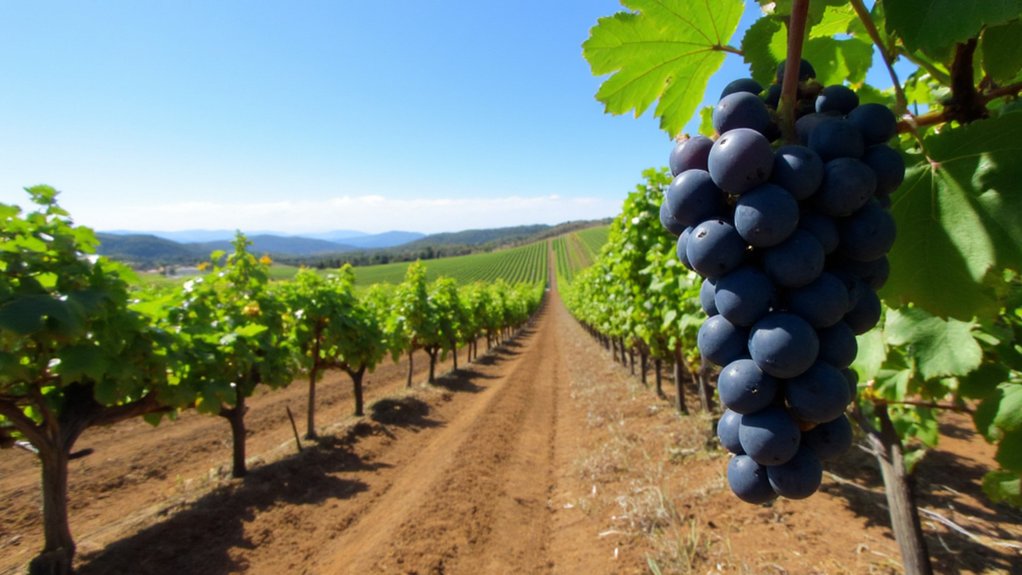
While many wine enthusiasts might assume Cabernet Sauvignon is as old as viticulture itself, it’s actually a relatively young varietal with a fascinating origin story. You might be surprised to learn it’s only been around since the 17th century, when an accidental cross between Cabernet Franc and Sauvignon Blanc occurred in Bordeaux, France!
The historical evolution of this grape changed winemaking forever, transforming from happy accident to global superstar in just a few centuries. Its cultural significance can’t be overstated – this grape effectively put Bordeaux on the map and established the region’s dominance in fine wine. When you’re sipping that glass of rich, tannic Cab, you’re not just enjoying a beverage, you’re participating in a French wine revolution that conquered the world, one vineyard at a time! This grape’s versatility also allows it to pair well with dishes like eggplant parmesan, enhancing the overall dining experience.
Global Dominance: How Cabernet Conquered the Wine World
Once Cabernet Sauvignon escaped the confines of Bordeaux’s vineyards, there was simply no stopping its global conquest! You’ll find this adaptable grape thriving in nearly every wine region worldwide, from California’s Napa Valley to Australia’s Coonawarra. Its popularity stems from both its recognizable flavor profile and its forgiving nature in the vineyard management department.
What makes Cabernet so successful worldwide? Let me tell you:
- It’s incredibly adaptable to different soils and climates.
- Modern harvest techniques allow it to ripen perfectly almost anywhere.
- It’s relatively disease-resistant compared to fussier varieties.
- The familiar blackcurrant flavor sells bottles, period!
You’ve probably noticed Cab Sauv dominates wine lists everywhere, and there’s good reason – this grape delivers consistent quality that wine drinkers can’t resist! Additionally, its bold, dark fruit flavors and optimal serving temperature make it a favorite for pairing with hearty dishes.
Signature Flavors: Decoding the Cabernet Taste Profile
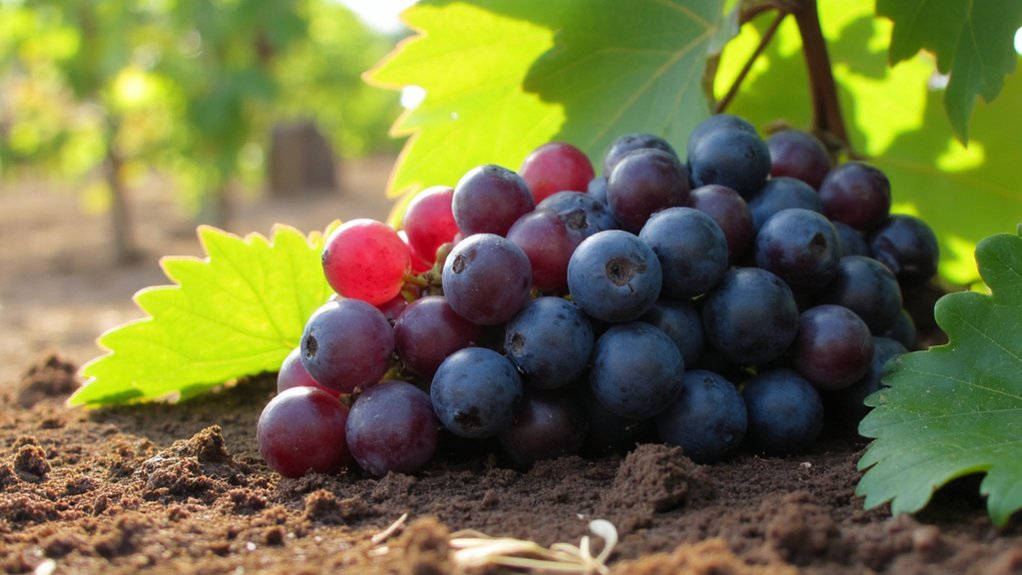
When you raise a glass of Cabernet Sauvignon to your lips, you’re about to experience one of wine’s most distinctive flavor signatures! The grape aroma hits immediately, with bold dark fruits taking center stage. Unlike lighter reds, Cab’s flavor intensity can knock your socks off, especially when young.
| Region | Primary Flavors | Aging Notes |
|---|---|---|
| Napa | Black cherry, cassis | Cedar, tobacco |
| Bordeaux | Blackcurrant, graphite | Leather, earth |
| Australia | Eucalyptus, blackberry | Chocolate, mint |
You’ll notice the flavors evolve as you sip – first comes fruit, then spice, and finally those earthy finish notes. The tannins (that’s the dry feeling) might make your mouth pucker a bit, but that’s just Cab’s way of saying “I’m serious buisness!” Don’t worry if you can’t taste everything at first – your palate will develop with practice.
Terroir Expression: Regional Variations of the King Grape
Few grape varieties showcase their birthplace quite like Cabernet Sauvignon, the chameleon of the wine world that transforms dramatically based on where it’s grown! When you taste a Cab, you’re experiencing a liquid postcard from its homeland, complete with all the local character and quirks. Soil composition and climate influence combine to create distinctly different expressions of this adaptable grape.
- Bordeaux, France: Gravelly soils create elegant, structured wines with pencil lead and cedar notes.
- Napa Valley, USA: Warm days produce bold, fruit-forward Cabs with chocolate and vanilla undertones.
- Coonawarra, Australia: Famous terra rossa soil delivers minty, eucalyptus-tinged beauties.
- Chile’s Maipo Valley: Mountain influence and diverse soils yield vibrant Cabs with bell pepper hints.
Additionally, the intensity of marinades and seasonings used with grilled vegetables can greatly enhance the overall tasting experience of Cabernet Sauvignon.
Aging Potential: Why Cabernet Wines Stand the Test of Time
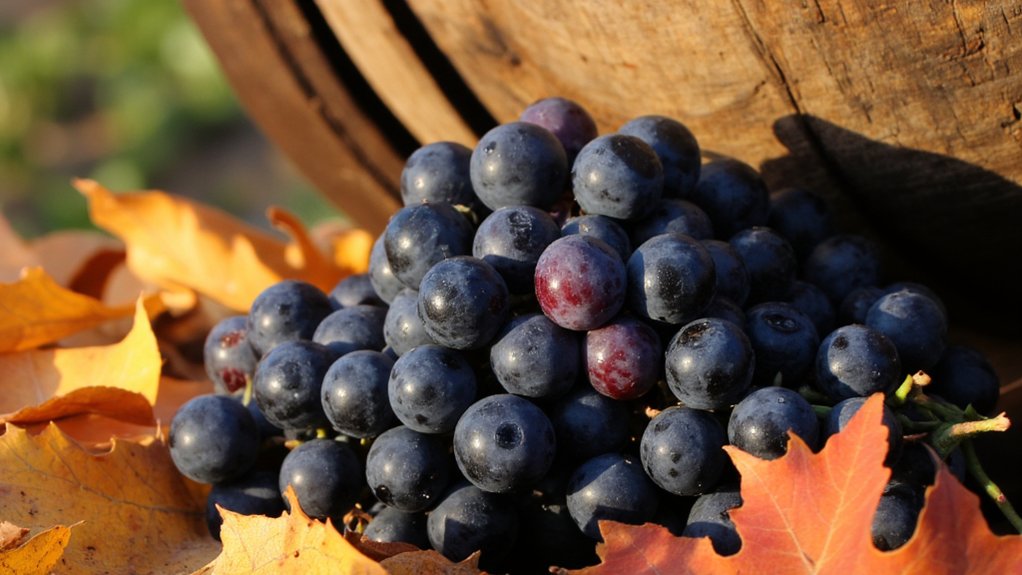
If you’ve ever wondered why wine collectors guard their Cabernet Sauvignon bottles like treasure, it’s not just snobbery—it’s science! These wines are built to last, thanks to high levels of natural preservatives like tannins and acidity. The magic starts in the vineyard management, where careful pruning and canopy control help develop thick-skinned berries packed with these aging compounds.
During grape harvesting, timing is everything. Pick too early, and you’ll miss full tannin development; too late, and you’ll lose essential acidity. The best producers nail this balance perfectly! Additionally, the Old World regions are known for their emphasis on terroir, which can enhance the depth of flavors in Cabernet Sauvignon.
You can literally taste time in an aged Cab—those harsh tannins that made your mouth feel like the Sahara Desert gradually transform into silky, complex flavors. It’s like watching a moody teenager grow into a sophisticated adult—just way more delicious!
Frequently Asked Questions
What Food Pairings Best Complement Cabernet Sauvignon?
You’ll love pairing your wine with rich steak accompaniments like ribeye or filet mignon. Don’t forget cheese pairings – aged cheddar and gouda complement it beautifully.
How Should Cabernet Sauvignon Be Served and at What Temperature?
Serve at 60-65°F, decanting younger bottles for 30-60 minutes. You’ll want large Bordeaux-style glasses with wide bowls that’ll enhance the wine’s complex aromas and flavors.
Are There Affordable Cabernet Sauvignons That Offer Good Quality?
You’ll find many affordable options from Chile, Australia, and California offering great quality. Look for recent vintages and wines in the $15-25 range for excellent value.
How Does Cabernet Sauvignon Compare to Merlot and Other Red Wines?
You’ll find that compared to Merlot’s softer profile, Cabernet Sauvignon has bolder tannins. Its Bordeaux grape origin and longer aging process create more structure than many other red wines.
What Health Benefits Are Associated With Drinking Cabernet Sauvignon?
You’ll enjoy antioxidant properties in moderate red wine consumption. It’s linked to heart health benefits, potentially reducing cardiovascular risks. Remember, these advantages only come with responsible drinking habits.