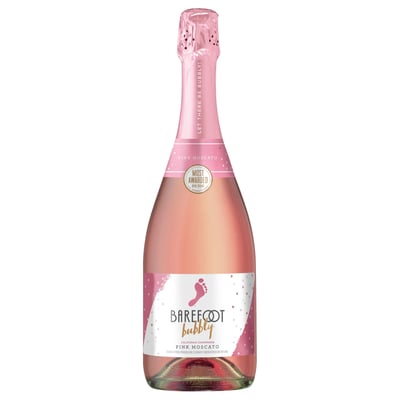
For raspberry sorbet, you’ll want a wine that complements its sweet-tartness and vibrant berry flavor. Brut Champagne or rosé sparkling wines are fantastic choices, creating a delicious contrast with their bubbles. If you’re feeling adventurous, try a Moscato d’Asti for light sweetness or a young Pinot Noir for berry harmony. Chill everything to about 45°F for the perfect pairing. There’s a whole world of exciting wine matchups waiting to tantilize your tastebuds!
Key Takeaways
- Sparkling wines like Champagne and Prosecco balance raspberry sorbet’s sweetness with refined bubbles and complementary fruity notes.
- Rosé wines from Provence or Tavel create a delightful flavor echo with their bright acidity and berry notes.
- Sweet white wines including Sauternes, ice wine, and late harvest Riesling harmonize with raspberry’s tartness.
- Light reds like Pinot Noir and Gamay offer berry harmony with raspberry sorbet, especially fruit-forward varieties.
- Lambrusco’s effervescence and natural berry flavors make it an excellent, affordable pairing that cleanses the palate between bites.

Understanding Raspberry Sorbet’s Flavor Profile
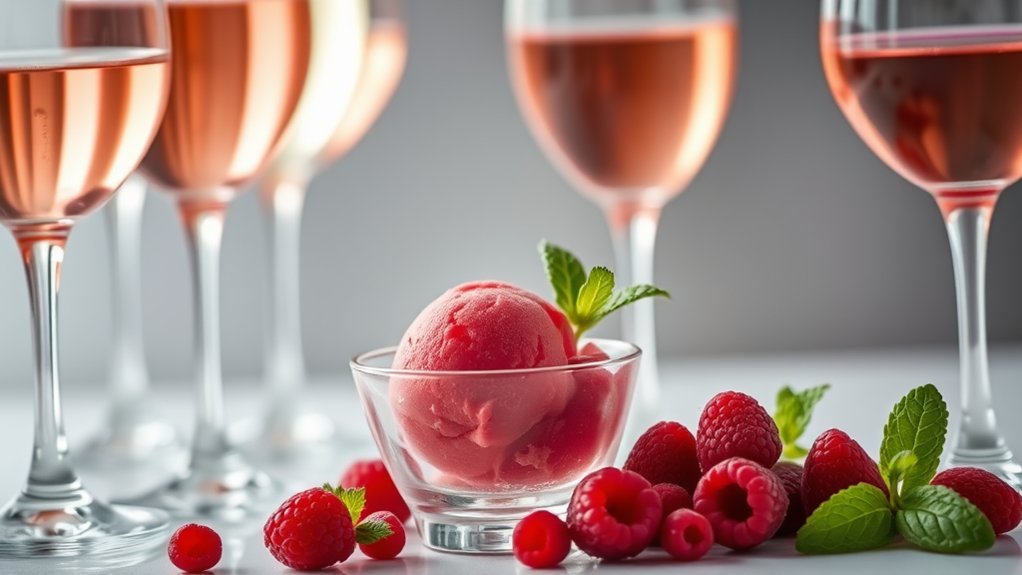
Raspberries, with their vibrant ruby hue and distinctive sweet-tart character, form the heart of a perfect summer sorbet. When you take that first spoonful, you’ll notice how the raspberry acidity creates a mouth-watering sensation that dances on your tongue, making it the perfect palate cleanser between courses or a invigorating finale to any meal.
The sorbet sweetness balances out that tartness, but unlike ice cream, there’s no dairy to mute those bold berry notes. You’re getting pure, unadulterated raspberry flavor that’s been concentrated into a frozen delight! It’s like summer captured in a scoop, with that perfect balance of sweet and tart that’ll make your tastebuds do a happy little jig. Who needs a boring dessert when you’ve got this ruby gem?
The Classic Match: Champagne and Sparkling Wines
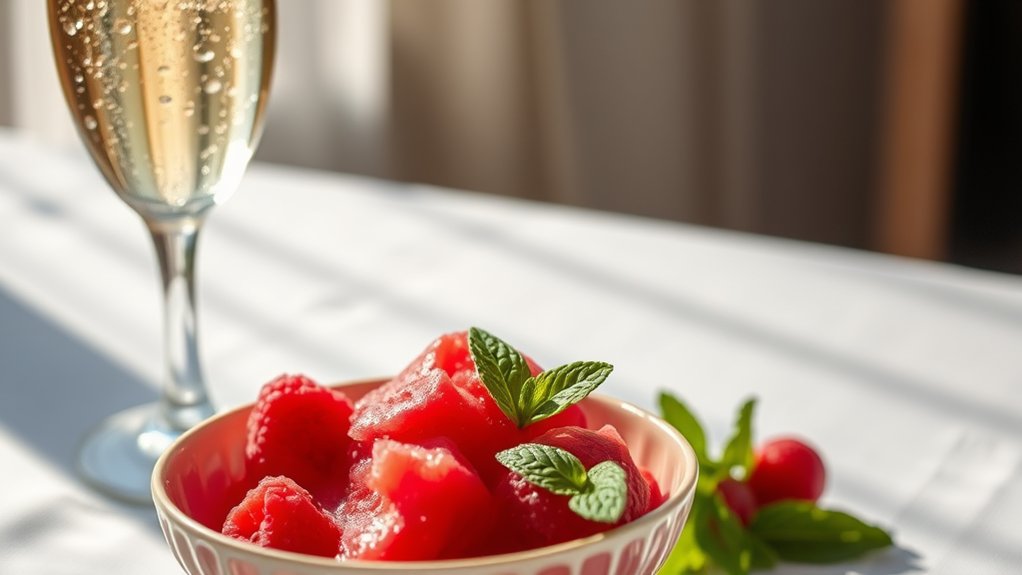
When it comes to pairing with that bright, tangy raspberry sorbet we’ve just described, nothing beats the effervescent magic of Champagne or sparkling wines! The delicate bubbles and crisp acidity create a perfect contrast to the sweet-tart berry flavors, cleansing your palate between spoonfuls of frozen delight.
Here’s why sparkling wines work so brilliantly:
- Brut Champagne varieties offer a dry profile that balances the sorbet’s sweetness.
- Rosé sparkling profiles bring complementary berry notes that enhance the raspberry flavor.
- Prosecco’s fruity character and softer bubbles make for a more casual, affordable option.
- Demi-sec options provide a touch of sweetness that mirrors the sorbet without overwhelming it.
Additionally, the method of production greatly influences the final character of the wine, with Traditional Method resulting in refined bubbles that elevate the overall tasting experience. You’ll find that bubbles have a way of making dessert time feel special, even on a random Tuesday!
Rosé Wines: A Color-Coordinated Pairing
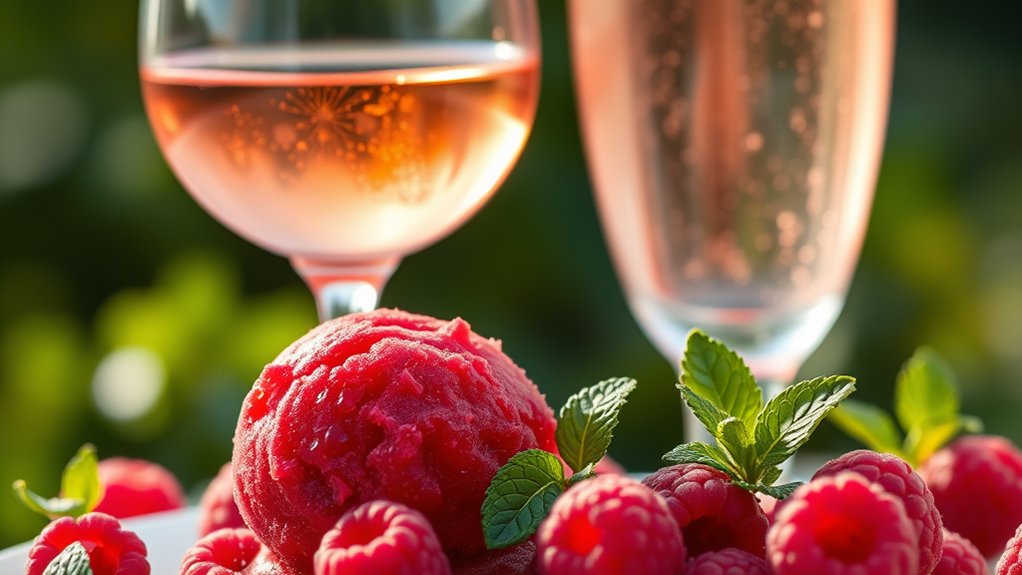
While the visual harmony might seem overly coordinated at first glance, rosé wines actually offer a sophisticated pairing that goes beyond their pretty pink color! The bright acidity and subtle berry notes in many rosé varieties complement raspberry sorbet’s tart-sweet profile perfectly, creating a delightful flavor echo rather than a competition.
You’ll want to look for drier rosé wines from Provence or Tavel, which provide just enough sweetness without overwhelming the delicate sorbet. For serving suggestions, try chilling both the wine and dessert to the same temperature, around 45°F, to maximize the pairing’s invigorating quality.
When entertaining, you can even serve them together in pretty coupe glasses – it’s both Instagram-worthy and delicious, making your guests feel like they’re at the fanciest sorbet soirée ever!

Late Harvest Whites: Sweet Harmony
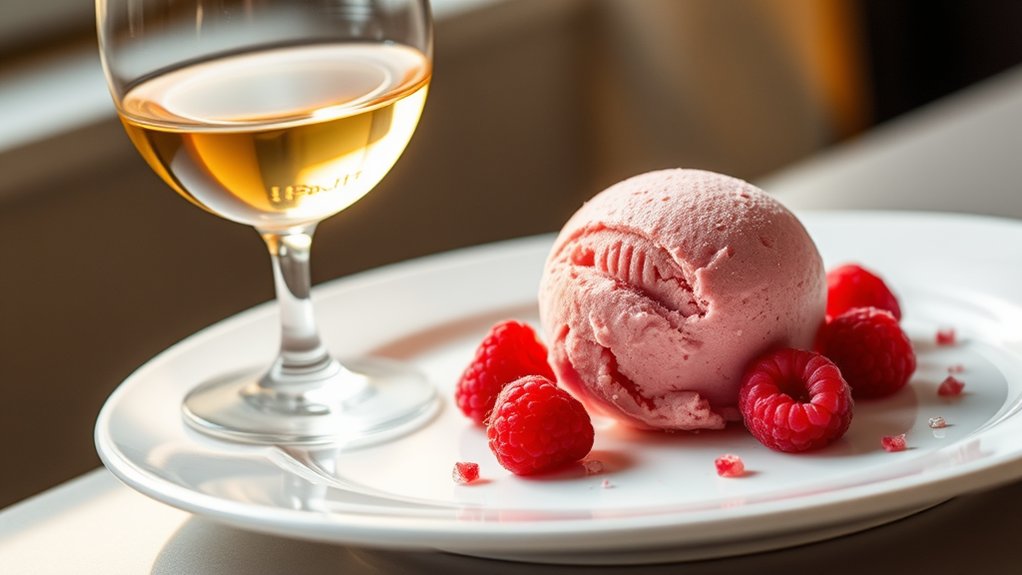
Moving from the blush tones of rosé, we’re entering an entirely different wine territory that’s pure gold! Late harvest whites create sweet harmony with raspberry sorbet because they’ve got that perfect sweet balance that won’t be overpowered by your dessert’s fruity intensity.
When selecting your late harvest companion, consider these fabulous options:
- Sauternes from France – liquid sunshine with honey notes
- Ice wine from Canada – concentrated sweetness that compliments tart raspberry
- Late harvest Riesling – floral aromas that dance with berry flavors
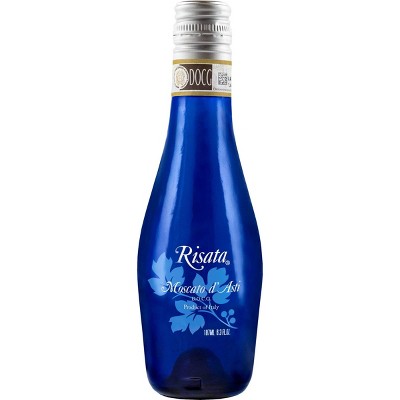
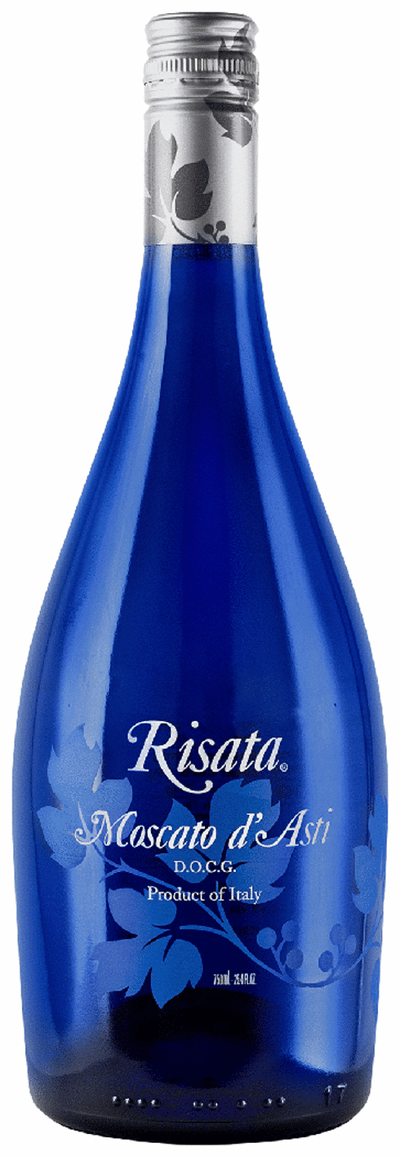
- Moscato d’Asti – light, fizzy, and invigoratingly sweet
You’ll find these wines offer just enough sweetness to match your sorbet without creating sugar overload. The luscious texture of late harvest wines creates a luxurious mouthfeel that’ll make your dessert experience absolutely unforgettable!
Moscato D’asti: Italian Effervescence
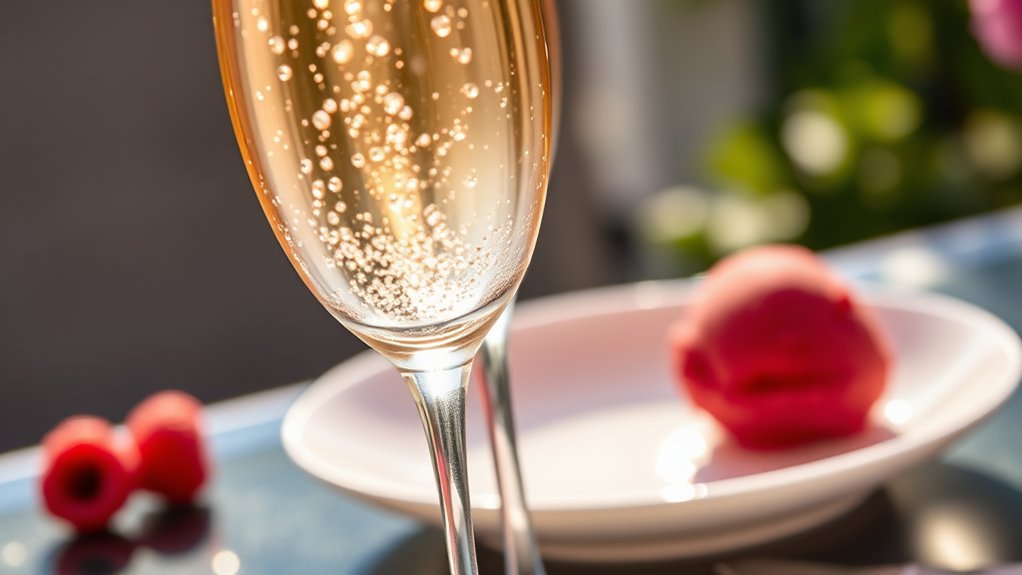
Among all the wonderful wine options we’ve explored, Moscato d’Asti deserves a special spotlight when paired with raspberry sorbet! This lightly sparkling Italian treasure, with its delicate sweetness and low alcohol content, creates a magical dining finale that’ll make your taste buds dance.
You’ll find various Moscato styles across Italian regions, but the best comes from Piedmont where cool climate vineyards produce wines with perfect acidity to balance the sweetness. The wine’s honeyed peach and apricot flavors, combined with gentle bubbles, complement your sorbet’s tartness without overwhelming it.
Don’t be intimidated—it’s an afforadable luxury! Serve your Moscato d’Asti well-chilled in a white wine glass, and watch as the fruity aromas entice everyone at the table. Trust me, this pairing is a certified crowd-pleaser!
Sauternes and Other Noble Rot Wines
If you’re seeking the absolute pinnacle of dessert wine luxury, Sauternes and other noble rot wines offer an extraordinary companion to raspberry sorbet! These golden elixirs, produced when the magical botrytis fungus (that’s the fancy “noble rot”) transforms grapes into concentrated sweetness, create a dessert pairing that’s simply heavenly.
- The honey and apricot flavors in Sauternes complement the tangy raspberry notes without overpowering them
- Noble rot wines have a silky texture that contrasts beautifully with the icy crunch of sorbet
- Their balanced acidity prevents the pairing from becoming too sweet
- They’re usually served chilled, mimicing the temperature of your desset
You’ll impress your dinner guests with this sophisticated combination that’s actually super easy to pull off!
Light-Bodied Red Wines Worth Considering
You’ll find that light-bodied reds offer surprising harmony with raspberry sorbet, creating magical flavor combinations you wouldn’t expect. Pinot Noir and Gamay bring berry notes and invigorating acidity that echo your sorbet’s bright character, while the slightly fizzy nature of Lambrusco adds a fun, celebratory element to the pairing. These lighter reds won’t overpower your dessert like their bolder cousins might, instead they’ll dance alongside the raspberry flavors, enhancing what you love about the sorbet in the first place!
Pinot Noir’s Berry Harmony
Pinot Noir, the jewel of burgundy, offers a delightful harmony with raspberry sorbet that’s truly hard to beat. The wine’s natural berry notes create an amazing berry balance when paired with the tart sweetness of raspberry. You’ll find that the gentle tannins don’t overwhelm your palate, but rather dance alongside the frozen dessert like old friends at a reunion.
- Look for younger Pinot Noirs (2-4 years old) that haven’t developed too many earthy qualities
- Oregon and California Pinots offer more fruit-forward profiles that compliment raspberry perfectly
- Serve the wine slightly chilled (about 55°F) to match the temperature contrast with the sorbet
- Pour a small glass—you dont need much to create magic on your tastebuds!
Gamay’s Bright Acidity
While Pinot Noir charms with subtlety, Gamay bursts onto the scene with its vibrant, palate-awakening acidity that’ll make your raspberry sorbet sing! This light-bodied red is a secret weapon in your dessert pairing arsenal, offering just the right balance to cut through the sweetness without overwhelming it.
Gamay characteristics include juicy red fruit flavors, often with notes of cherry, strawberry, and—you guessed it—raspberry! It’s like they were made for each other. The bright acidity in Gamay creates this wonderful tension with the tangy-sweet nature of your sorbet, each bite and sip playing off eachother in a delightful dance.
You’ll find excellent examples from Beaujolais, France, but don’t overlook the exciting new-world Gamays from Oregon and Canada!
Lambrusco’s Fizzy Appeal
When seeking something truly special for your raspberry sorbet, Lambrusco’s effervescent charm offers an exciting alternative that’ll have your taste buds doing a happy dance! This Italian sparkler, with its delightful bubbles and fruity profile, creates a perfect contrast to the icy sweetness of your dessert.
Four reasons to try Lambrusco with raspberry sorbet:
- Its natural berry flavors echo the raspberry notes
- The bubbles cleanse your palate between bites
- Lower alcohol content won’t overpower the delicate dessert
- It’s affordably priced for casual entertaining!
Various Lambrusco varieties like Salamino and Grasparossa offer different levels of sweetness to match your preference. Most Lambrusco regions are centered around Emilia-Romagna, where these wines have been perfected for centurys!
Dessert Wine Regional Specialties
When you’re looking for something truly special to pair with raspberry sorbet, you can’t go wrong with classic dessert wines from renowned regions. France’s Sauternes and Barsac offer honeyed sweetness with apricot notes, creating a luxurious contrast to the tart berry flavors. Hungarian Tokaji, with it’s amber color and complex flavors of dried fruits and spice, brings a beautiful old-world elegance that’ll make your simple sorbet feel like a royal dessert experience.
Sauternes & Barsac
As you’re exploring the perfect wine pairing for raspberry sorbet, Sauternes and Barsac from France’s Bordeaux region deserve your immediate attention. These liquid gold treasures are created when “noble rot” transforms grapes, concentrating their sugars into something magical. The sweet balance they offer compliments the tart raspberry flavors beautifully, creating a dessert experiance that’ll dance on your palate.
Here’s why they’re outstanding choices:
- Honey-like viscosity that coats your mouth, preparing it for the cold sorbet
- Apricot and peach notes that harmonize with raspberry’s brightness
- Balanced acidity that prevents the pairing from being too sweet
- Long, lingering finish that extends the dessert moment
Don’t hesitate to splurge a little—these wines make special occasions truly memorable!
Hungarian Tokaji Wine
Moving beyond France, let’s explore another European treasure that’ll make your raspberry sorbet sing! Hungarian Tokaji, with its luscious Tokaji sweetness, offers a perfect counterpoint to the tart-sweet nature of raspberry desserts. This amber-hued nectar, born from the unique Hungarian terroir, delivers honey, apricot, and spice notes that’ll dance beautifully with your sorbet.
| Tokaji Type | Sweetness | Flavor Profile | Sorbet Harmony |
|---|---|---|---|
| Aszú 3 Puttonyos | Medium | Citrus & Honey | Complementary |
| Aszú 5 Puttonyos | Very Sweet | Dried Apricot | Heavenly! |
| Aszú 6 Puttonyos | Intensely Sweet | Caramel & Orange | Mind-blowing |
| Eszencia | Syrup-like | Liquid Gold | Once-in-a-lifetime |
You’ll find these wines slightly less expensive than Sauternes but with equally impresive complexity. Don’t be intimidated—just ask for “toe-kai” and watch your dessert experience transform!
Non-Traditional Pairings That Surprise and Delight
While most wine enthusiasts stick to traditional pairings, you’re about to discover some delightfully unexpected combinations that’ll make your raspberry sorbet experience truly extraordinary. These unconventional matches invite unexpected flavor combinations that’ll wake up your taste buds and encourage adventurous palate exploration beyond the usual suspects!
- Dry sparkling rosé – The crisp, berry notes create a layered effect that’s suprisingly harmonious
- Fino Sherry – Its nutty, saline character creates a fascinating sweet-savory contrast
- Sake (especially Junmai Daiginjo) – The clean, rice-driven profile cuts through sweetness beautifully
- Mezcal (not wine, but wow!) – Just a tiny sip between bites brings smoky depth that’s mind-blowing
Don’t be afraid to experiment—sometimes the weirdest pairings create the most memorable dessert experiences!
Creating a Complete Dessert Experience: Wine and Sorbet Tasting Notes
When you’re pairing wine with raspberry sorbet, you’ll want to take into account the sweet notes in both, looking for wines that echo the berry’s tartness while adding complementary sweetness. The texture contrast is what makes magic happen—creamy sorbet melting on your tongue while the wine’s acidity cuts through, creating a sensory rollercoaster that’s greater than the sum of its parts. You can’t go wrong with a moscato d’asti or a late-harvest riesling, where the wine’s gentle effervescence or honey-like viscosity plays beautifully against the sorbet’s icy crystals.
Sweet Wine Characteristics
The four essential characteristics of sweet wines create the perfect foundation for a sublime raspberry sorbet pairing. When exploring dessert wine styles, you’ll want to take into account these key elements that make them so wonderfully compatible with the tart-sweet balance of raspberry.
- Residual Sugar – The sweetness level ranges from slightly sweet to lusciously syrupy, letting you match the exact sweetness of your sorbet.
- Acidity – A bright, zingy quality that prevents sweet wine varieties from being cloying and echoes the raspberry’s natural tang.
- Body – From light and delicate to rich and full, the body affects how the wine feels alongside your frozen dessert.
- Aromatic Profile – Look for complementary fruit notes like stone fruit, berries, or citrus that’ll sing alongside your sorbet!
Textural Harmony Notes
Beyond flavor compatibility, textural harmony between wine and raspberry sorbet creates a sensory experience that’s truly magical! When you’re enjoying this delightful combo, pay attention to how the wine’s body compliments the sorbet’s icy crystaline structure—it’s all about that textural balance. A light, effervescent wine can dance playfully with the frozen dessert, while a more viscous option provides gorgeous contrast.
You’ll notice the flavor interplay evolves as the sorbet gradually melts on your palate. This transformative moment is when the magic really happens! The wine’s characteristics—whether it’s the slight tannins, acidity, or sweetness—will shift and change alongside the melting sorbet. It’s like a tiny flavor party happening right in your mouth, and trust me, you’re definately going to want an invitation!
Frequently Asked Questions
Can Homemade Raspberry Sorbet Affect Wine Pairing Recommendations?
Yes, your homemade sorbet’s texture and flavor profile can greatly impact wine pairing choices. If it’s more tart or sweeter than store-bought, you’ll need to adjust accordingly.
How Much Wine Should Be Served With Sorbet for Optimal Tasting?
For ideal tasting, you’ll want just 2-3 ounces of wine serving with sorbet. This small portion preserves the wine’s tasting notes while preventing flavor fatigue during your dessert course.
Are There Non-Alcoholic Alternatives That Pair Well With Raspberry Sorbet?
You’ll find sparkling fruit juices like apple or pear complement raspberry sorbet beautifully. Chilled herbal teas, especially chamomile or mint, offer invigorating alternatives that won’t overwhelm the delicate berry flavors.
Does the Sorbet’s Temperature Impact Which Wines Work Best?
Frosty feelings factor in! You’ll find wine temperature affects sorbet texture interactions. Warmer wines can clash with icy sorbet, while chilled dessert wines or sparkling options maintain complementary balance as they meet.
Can I Serve Cheese Alongside Raspberry Sorbet and Wine?
Yes, you can! Mild cheese varieties like fresh chevre or mascarpone create delightful flavor contrasts with raspberry sorbet. You’ll find the creaminess balances the sorbet’s tartness beautifully.