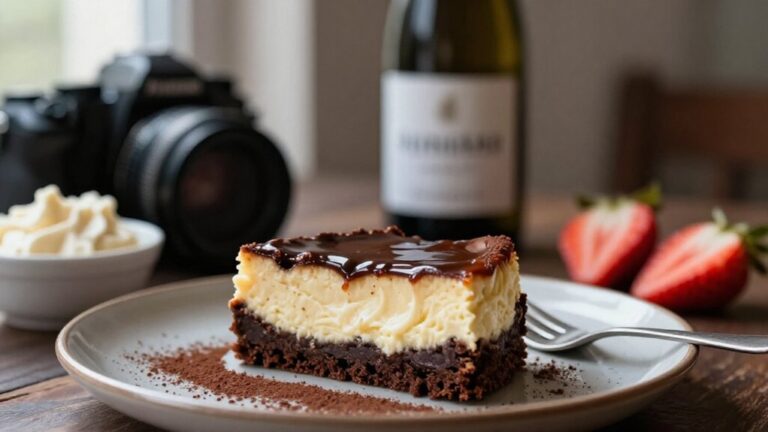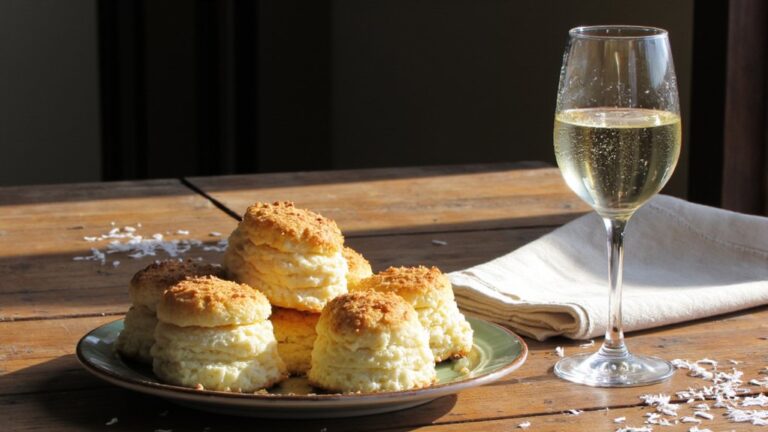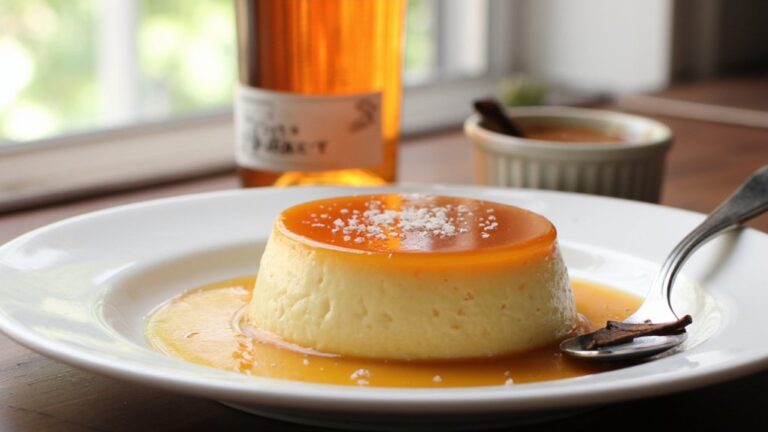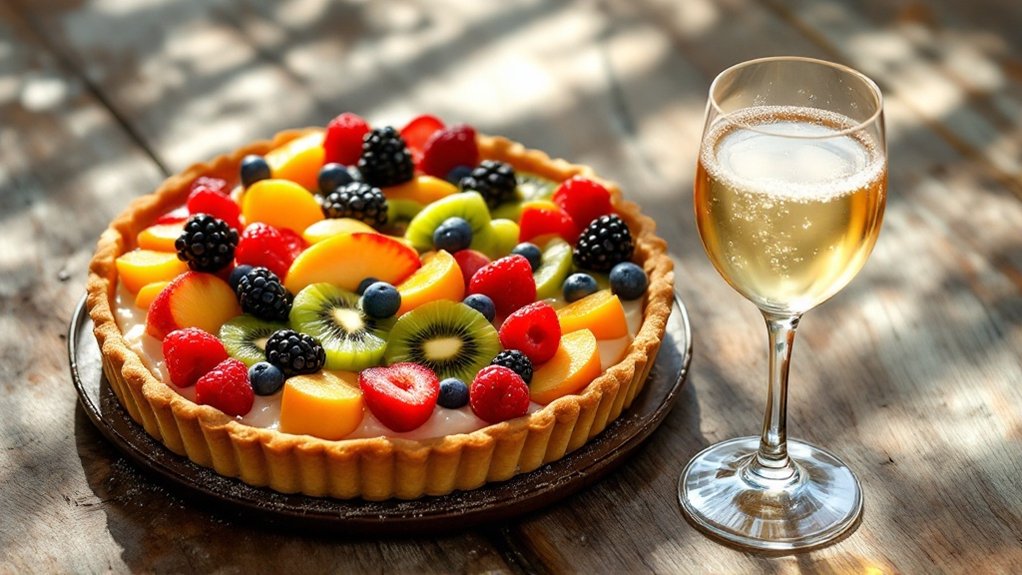
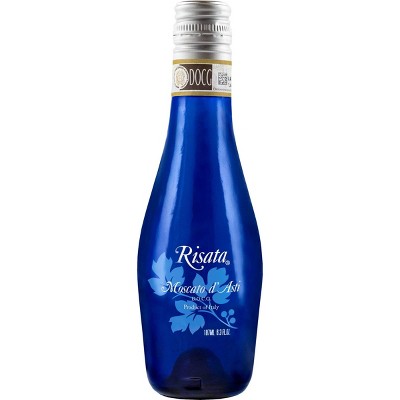
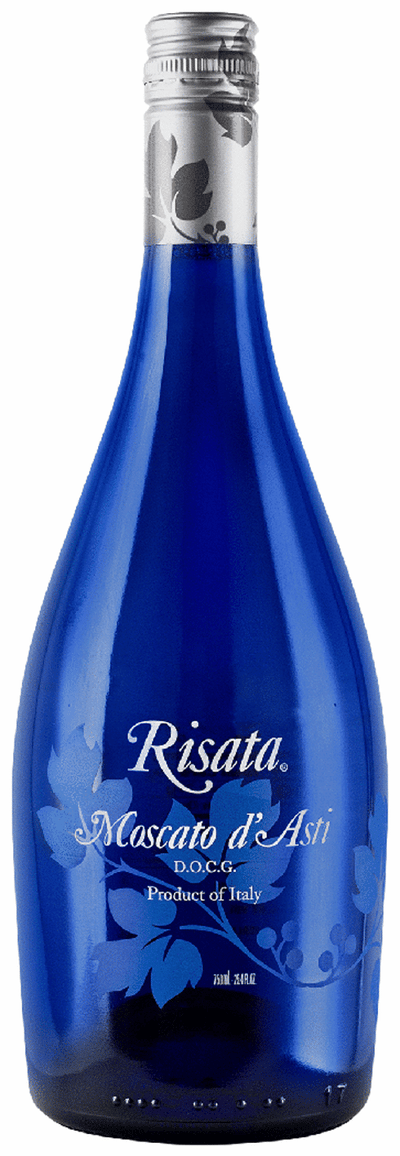
For a fruit tart, you’ll want a wine that balances the dessert’s sweetness without overwhelming it. Try a Moscato d’Asti for its invigorating bubbles and fruity profile, or a late-harvest Riesling if your tart features apples or pears. Berry tarts shine with Ruby Port, while citrus creations love Prosecco’s light, apple-forward notes. Don’t forget about temperature – serve lighter wines at 45-50°F for that perfect harmony of flavors that’ll make your tastebuds dance!
Key Takeaways
- Sweet wines like late-harvest Riesling pair exceptionally well with apple or pear tarts.
- Sparkling options such as Prosecco complement citrus tarts while Demi-sec Champagne enhances berry flavors.
- Moscato d’Asti’s gentle fizz and sweetness make it versatile for most fruit tarts, especially stone fruits.
- Consider the dominant fruit flavor—berry tarts excel with Ruby Port while citrus tarts shine with dry Riesling.
- Serving temperature matters—chill lighter wines to 45-50°F and richer dessert wines to 50-55°F for optimal pairing.


Understanding the Elements of a Fruit Tart
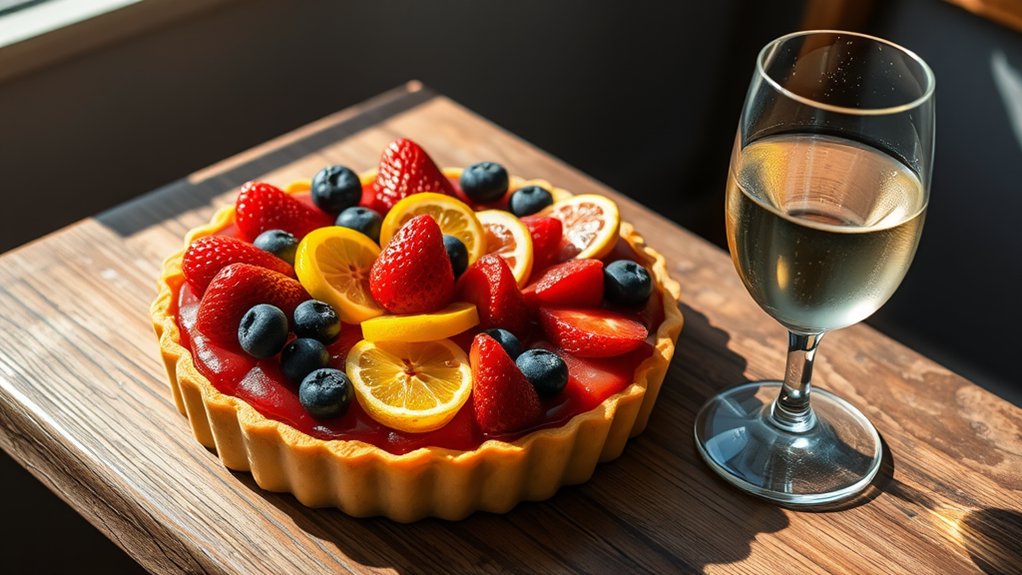
Fruit tarts, those delightful circles of sweetness, aren’t just pretty faces in the dessert world—they’re complex creations with distinct components that’ll influence your wine pairing decisions. When you’re eyeing that gorgeous tart, break it down into its parts: a buttery, flaky crust that crumbles just-so, a silky cream filling that adds richness, and those vibrant fruits on top bringing their own sweet-tart personalities to the party.
Each element contributes something unique to the flavor profile, and you’ll want to contemplate all of them! The flaky crust offers a neutral, sometimes nutty foundation, while the cream filling brings that luxurious mouthfeel that can either harmonize or clash with your wine. Think of your tart as a little orchestra—every ingredient plays a part in the final symphony that’ll dance with your wine choice.
Why Wine Pairing Matters for Desserts

Now that you’ve got the basics of fruit tart anatomy down, let’s talk about why pairing wine with your sweet finale isn’t just fancy restaurant fluff—it’s where the magic happens!
When you match the right wine with your dessert, you’re creating dessert balance that enhances both experiences. Think of it like finding your tart’s soulmate! The wine’s acidity can cut through richness, while complementary flavor profiles dance together on your palate in ways that make your tastebuds do a happy little jig. You’ll notice flavors in both that might’ve gone undetected when enjoyed separately.
It’s not about being pretentious, it’s about maximizing pleasure! After all, you’ve gone through the trouble of serving a gorgeous fruit tart—why not give it the perfect liquid companion to really make the experience sing?
Sweet Wines That Complement Fruit Tarts

When it comes to sweet wines for your fruit tart, you’re entering a delicious world of possibilities! The key to successful pairing techniques lies in matching the wine’s sweetness with your dessert, not overshadowing it. Late-harvest Riesling, with its honeyed notes and bright acidity, works wonders with apple or pear tarts, cutting through the buttery crust like a charm.
For berry-based tarts, you can’t go wrong with a ruby Port or Banyuls—these sweet dessert wines have enough body to stand up to those juicy, tart flavors. If you’re feeling fancy (and who isn’t when dessert’s involved?), a bubbling Moscato d’Asti brings a festive touch to any fruit tart, it’s like throwing a little party for your tastebuds!

Sparkling Wine Options for Fresh Fruit Tarts
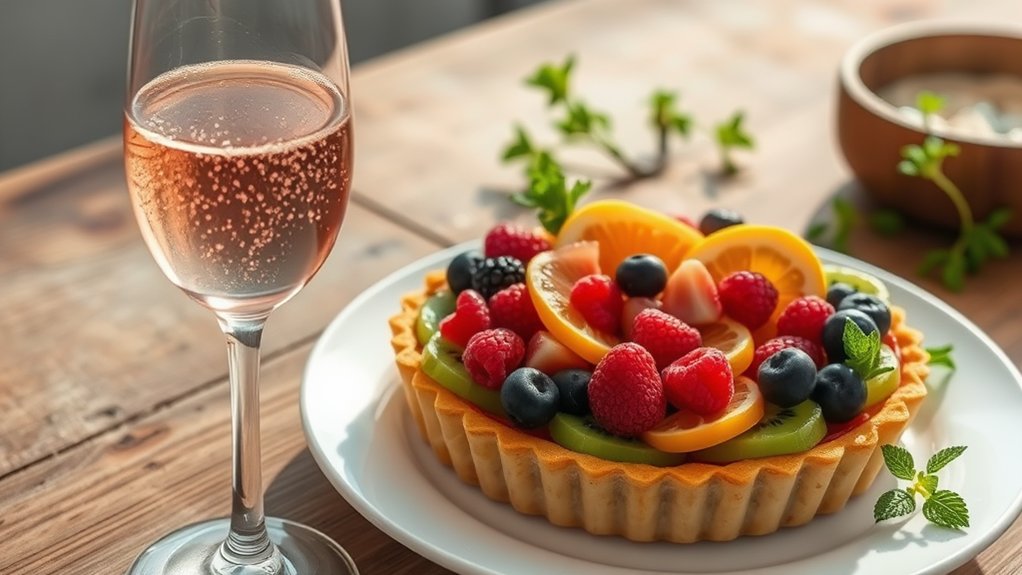
While sweet dessert wines certainly have their place, sparkling options bring an exciting new dimension to your fresh fruit tart experience! The effervescence of bubbles creates a delightful contrast to the creamy custard base and juicy fruit toppings, cleansing your palate between each heavenly bite.
When exploring sparkling varieties, consider Prosecco’s light, apple-forward profile for citrus tarts, or a demi-sec Champagne for berry-focused creations. Moscato d’Asti, with its gentle fizz and honeysuckle notes, works wonderfully with peach or apricot tarts!
Don’t overthink the flavor profiles—the key is finding balance between the wine’s sweetness and the tart’s sugar level. Trust me, there’s something magical about that “pop” of the cork that just makes dessert feel like a celebration, even on a regular Tuesday!
Matching Wine to Specific Fruit Varieties

When you’re matching wine to fruit tarts, it’s essential to take into account whether your tart features sweet or acidic fruits, as this dramatically changes the ideal wine pairing. For tarts loaded with strawberries, blueberries, or raspberries, you’ll want to reach for a Moscato d’Asti or a fruity Beaujolais that can compliment those bright, berry notes without overwhelming them. The magic happens when your wine echos the dominant fruit flavor in your tart, creating that “wow” moment when the flavors dance together on your palate, making both the dessert and the wine taste even better.
Sweet vs. Acidic Fruits
The fruits in your tart don’t just determine its flavor profile, they’re key players in finding that perfect wine match. When working with sweet fruits like ripe berries or stone fruits, you’ll want a wine with enough fruit sweetness to complement without being overpowered—think a fruity Moscato or a late-harvest Riesling. On the flip side, tart acidity from apples, citrus, or underripe berries calls for wines that can match that zing!
For those super-sweet fruit tarts, you might be suprised that an off-dry Prosecco works wonders, cutting through the sugar while adding a celebratory fizz. With more acidic fruit combinations, try a Chenin Blanc that mirrors that brightness. Remember, it’s all about creating balance—like that delicate dance between eating dessert and pretending you’re a sophisticated wine connoisseur!
Wine for Berry-Forward Tarts
Many berry-forward tarts showcase nature’s candy at its finest—juicy strawberries, plump blueberries, tart raspberries, and mysterious blackberries all bring their unique personalities to the dessert party.
When pairing wine with these berry beauties, you’ll want something that complements the tart sweetness without overwhelming the delicate berry selection. A light, slightly chilled Moscato d’Asti works wonders with strawberry tarts, while a Brachetto d’Acqui—with its own berry notes—creates a delightful echo effect with mixed berries. Don’t be afraid to try a sparkling rosé, which can dance playfully with the acidity of raspberries!
For blackberry or blueberry-dominant tarts, you might enjoy a late harvest Zinfandel, whose jammy charecteristics mirror the deeper, more intense berry flavors.
Balancing Acidity in Both Wine and Tart
Understanding how acidity works between your wine and fruit tart can transform an ordinary dessert experience into something truly memorable. When you’re sipping a glass alongside your perfectly flaky tart, you’re looking for that sweet spot of acidity balance that makes both shine. Think of it like a seesaw—if your tart is super tangy with lemon or rhubarb, you’ll want a wine that’s slightly less acidic to create flavor harmony.
On the flip side, if you’ve got a sweeter, less zingy tart (maybe peach or apple), you can go for a wine with more brightness to cut through that richness. It’s like a delicious dance party in your mouth, and everybody’s invited! Trust me, once you nail this balance, you’ll never look at dessert the same way agian.
Seasonal Considerations for Tart and Wine Pairings
When choosing wines to pair with your fruit tart, you’ll want to take into account the seasons, which affect both the fruits in your dessert and the wines that shine brightest. Summer tarts bursting with berries and stone fruits call for lighter, chilled options like Moscato or rosé, while heartier winter tarts with apples and pears pair beautifully with warming dessert wines like Sauternes or Ice Wine. You can’t go wrong embracing local traditions too, like serving Champagne with a strawberry tart on Valentine’s Day or a spiced Port alongside your holiday apple tart—these time-honored combos exist for good reason!
Summer vs. Winter Fruits
The seasons dramatically influence both the fruits that star in your tart and the wines that’ll make them shine on your palate. Summer fruits like strawberries, peaches, and blueberries call for crisp, invigorating wines that match their bright acidity—think a chilled Moscato d’Asti or a light Rosé that won’t overpower those juicy flavors. You’ll want something that feels like sunshine in a glass!
Winter fruits take a different approach, with pears, apples, and citrus bringing more subtlety to your dessert plate. These tarts pair beautifully with richer wines like Sauternes or a late-harvest Riesling, which complement the warmer spices often found in winter deserts. The golden rule? Match the intensity of your wine with the boldness of your fruit’s flavor profile!
Regional Wine Availability
As you’re planning your perfect fruit tart and wine pairing, regional wine availability becomes a crucial piece of the puzzle that many dessert enthusiasts overlook! You might have your heart set on a delicate Riesling from Germany, but sometimes wine distribution in your area just won’t cooperate with your dessert dreams.
Don’t despair though—this is your golden opportunity to explore local wineries, which often produce incredible bottles that pair beautifully with seasonal fruit desserts. They’re literally in your backyard, waiting to be discovered! Many small producers create limited-edition sweet wines that never make it to the broader market, and these hidden gems often come with a fun story to share at your dinner party. Who doesn’t love impressing guests with both amazing flavor combinations and insider wine knowledge?
Holiday Pairing Traditions
Seasonal celebrations throughout the year call for special attention to your fruit tart and wine pairings, because holiday traditions often come with their own unique flavor expectations! During Christmas, a rich port wine complements winter fruit tarts beautifully, while Easter celebrations might call for a light Moscato with your spring berry creation. You’ll find that holiday wine selections should mirror the mood of your festive traditions, so don’t be afraid to get creative!
For Valentine’s Day, why not try a sparkling rosé with your strawberry tart? It’s romantic, pink, and just the right amount of fancy without being pretentios! Summer holidays like the Fourth of July pair wonderfully with a chilled Riesling alongside a blueberry and raspberry tart, creating a patriotic desert experience your guests won’t forget.
Perfect Pairings for Custard-Based Fruit Tarts
Why settle for just any wine when you’re indulging in a luscious custard-based fruit tart? The creamy custard texture deserves a wine that can complement without overwhelming, creating that perfect flavor balance we all crave.
For tarts featuring berries or stone fruits, reach for a slightly chilled Moscato d’Asti – it’s bubbly sweetness will dance with the fruit while respecting the delicate custard. You might also try a Sauternes, which brings honey notes that’ll make your tastebuds do a happy little jig!
If you’ve got a citrus-topped tart, don’t hesitate to grab a Riesling, either dry or off-dry depending on the tartness. The acidity cuts through the richnes, leaving you ready for another heavenly bite!
Wine Regions Known for Dessert-Friendly Bottles
When looking for the perfect wine to pair with your fruit tart, you’ll want to explore regions that specialize in dessert-friendly bottles. France’s Sauternes region in Bordeaux produces golden, honeyed wines that complement fruit desserts beautifully, while Germany’s Mosel Valley offers delicate, slightly sweet Rieslings that won’t overpower your tart’s flavors. For something with a bit of effervescence, Italy’s Asti and Muscato wines bring a revitalizing bubbly quality that’ll make your taste buds dance alongside the fresh fruit and buttery crust of your tart.
Sauternes of Bordeaux
Located in the southwestern corner of France, Sauternes stands as the crown jewel of dessert wine regions, particularly when you’re looking for something spectacular to accompany a fruit tart. The Sauternes characteristics that make it perfect for your dessert include its luscious golden color, honeyed sweetness, and complex flavors of apricot, peach, and tropical fruits. There’s a special kind of noble rot (sounds gross, tastes amazing!) that concentrates the sweetness in these wines.
What’s truly magical about Sauternes aging is how these wines transform over time, developing richer notes of caramel, spice, and marmalade. You’ll find that a 5-10 year old bottle has the perfect ballance between youthful fruitiness and mature complexity—ideal for cutting through the creaminess of your tart while highlighting the fruit flavors.
Germany’s Mosel Valley
While Sauternes offers French elegance, let’s hop across the border to Germany’s Mosel Valley, where some of the world’s most enchanting dessert wines await your fruit tart.
The steep vineyard landscapes along the Mosel River create the perfect conditions for Mosel Riesling, a wine that’ll make your taste buds dance with joy. You’ll fall in love with how the unique terroir influence gives these wines their distinctive minerality and fruity character, perfectly complementing the sweetness of your tart. German winemaking traditions dating back centuries guarantee that every sip tells a story of passion and precision.
When you’re holding a glass of Mosel Riesling beside your fruit tart, you’re not just having dessert—you’re experiencing a match made in culinary heaven! It’s like the wine and tart were literally destined to meet on your palate.
Asti and Muscato
If you’re seeking a sparkling companion for your fruit tart that’s guaranteed to impress, Italy’s famous Asti region and its signature Moscato wines deserve your attention! These delightful bottles offer the perfect balance of sweetness and acidity to complement your dessert’s fruity flavors, without overwhelming the palate.
One of the primary Asti benefits is its ability to enhance your dining experience with:
- A gentle, fizzy mouthfeel that cleanses your palate between bites of creamy tart
- Affordable luxury that won’t break the bank (unlike some other dessert wines!)
- Lower alcohol content, making it perfect for afternoon gatherings or brunch
The Muscato flavors you’ll encounter range from honeysuckle to ripe peaches, with hints of orange blossom that’ll make your fruit tart sing. Trust me, it’s a match made in culinary heaven!
Hosting Tips: Serving Temperature and Glassware
Every successful wine pairing begins with attention to the serving details, which can enhance your fruit tart experience from simply delicious to absolutely memorable. When it comes to glass selection, don’t stress—tulip-shaped glasses work wonders for dessert wines by concentrating those heavenly aromas right at your nose. You’ll look like a wine pro without the snooty attitude!
For temperature guidelines, remember that your dessert wines shouldn’t be arctic cold or room temp. Aim for that sweet spot around 45-50°F for lighter wines like Moscato, while giving your richer options like Sauternes a bit more warmth (50-55°F). Pop your bottle in the fridge for about 30 minutes before serving, and voilà—you’re not just serving wine, you’re crafting an experence!
Frequently Asked Questions
Can I Pair Red Wine With Fruit Tarts?
You can pair red wine with fruit tarts, but consider red wine characteristics like tannins and acidity alongside fruit tart flavors. Light, fruity reds work better than heavy, tannic ones.
How Much Wine Should Be Served With Each Tart Portion?
You’ll want 2-3 ounces of wine per tart portion size. Wine serving recommendations suggest this modest amount allows you to appreciate both flavors without overwhelming your palate.
Are There Non-Alcoholic Alternatives That Pair Well With Fruit Tarts?
You’ll find sparkling water, fruit teas, and lemonade make excellent non-alcoholic beverages for fruit tart pairings. Their invigorating qualities complement the tart’s sweetness without overwhelming the delicate flavors.
Can I Use the Same Wine for Cheese and Fruit Tarts?
Like a chameleon adapting to its terrain, your wine can show versatility. You can use the same wine for both, but choose wisely—a semi-sweet Riesling complements fruity tarts and milder cheese selections beautifully.
How Long Before Serving Should Dessert Wines Be Opened?
You’ll want to open dessert wines about 30 minutes before serving. This allows them to reach ideal serving temperature, typically between 50-55°F, enhancing their sweet, complex flavors.