When pairing wine with goat cheese, you’ll want something with bright acidity to cut through its creamy tanginess. Sauvignon Blanc and Sancerre are your best bets, offering zingy citrus notes that perfectly complement chèvre’s distinctive zip. For something special, try Champagne or Prosecco – those bubbles beautifully cleanse your palate between bites! Rosés work wonderfully too, especially those from Provence. The science behind these pairings reveals why they’re so darn satisfying.
Key Takeaways
- Sauvignon Blanc is considered the ultimate goat cheese pairing with its citrus notes and grassy undertones matching the cheese’s tanginess.
- Champagne and Prosecco offer crisp characteristics that contrast beautifully with creamy goat cheese while cleansing the palate between bites.
- Dry Provence rosé wines cut through goat cheese’s tanginess with their mineral-forward profile and subtle berry notes.
- Sweet wines like late-harvest Riesling and Moscato d’Asti create a delightful contrast with goat cheese’s acidity.
- Regional pairings work exceptionally well, especially when matching cheese with wine from the same terroir.
The Science Behind Goat Cheese and Wine Pairings
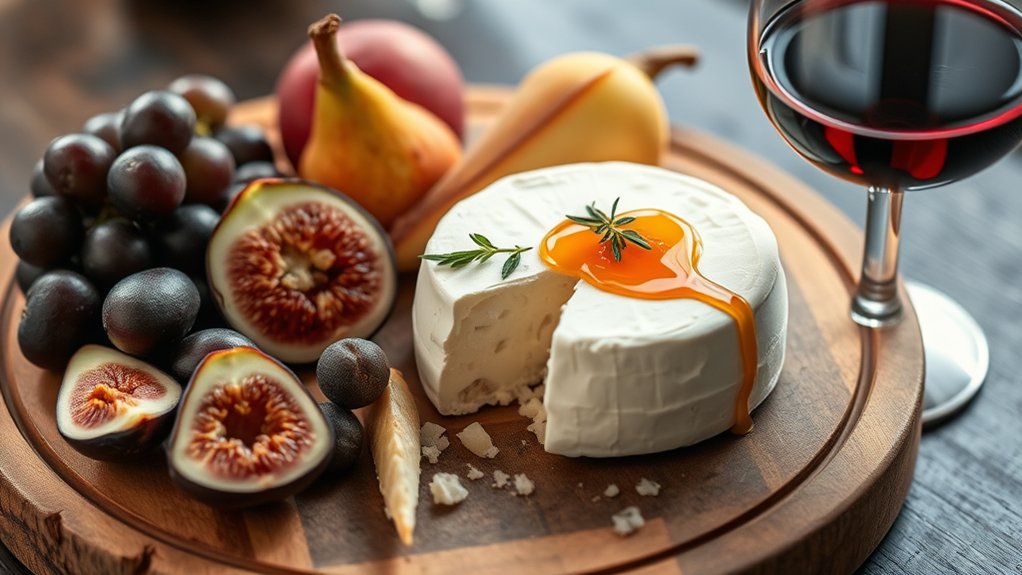
When it comes to understanding why certain wines dance beautifully with goat cheese, there’s actually some fascinating science behind it all! The chemical composition of goat cheese, with its tangy acidity and distinct flavor profiles, creates an amazing playground for wine molecules to interact with.
You’ll notice that goat cheese has a higher acidity than cow’s milk cheeses, which is why it pairs so brilliantly with crisp wines that can match its zip. The fatty molecules in the cheese coat your taste buds, while acidic wines cut through that richness, creating a balanced sensasion that’ll make your palate do a happy dance!
The science isn’t complicated—it’s just about finding harmonious flavor profiles that complement rather than overwhelm eachother.
Crisp White Wines: Sauvignon Blanc and Sancerre
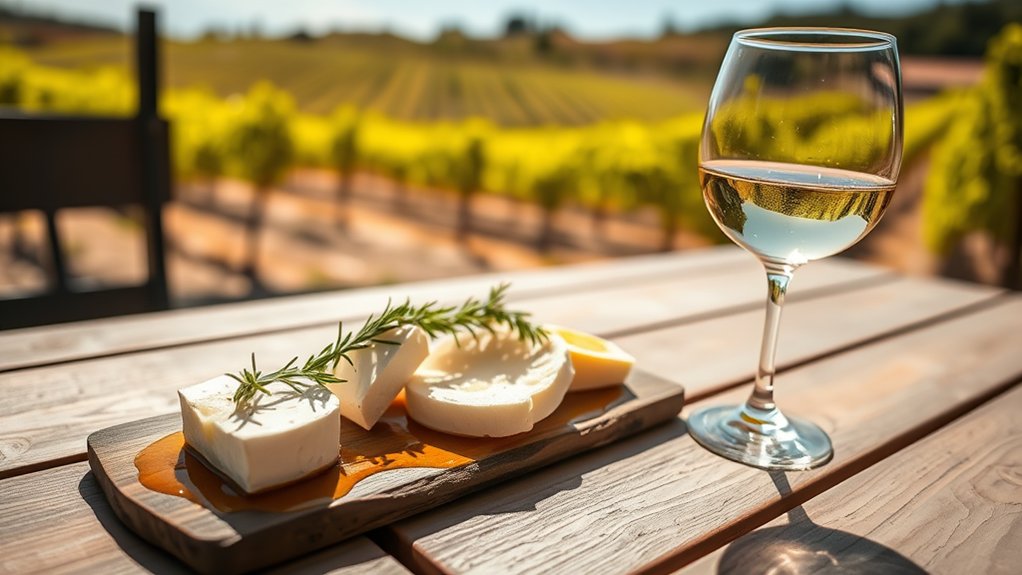
Now that we grasp the chemical tango happening on our taste buds, let’s talk about the absolute stars of goat cheese pairings – Sauvignon Blanc and Sancerre!
You’ll fall in love with how Sauvignon Blanc characteristics complement that tangy goat cheese. This crisp white brings zingy citrus notes, grassy undertones, and mouthwatering acidity that cuts through the creamy texture like a charm! It’s like they were made for each other.
Sancerre, the French cousin from Loire Valley, enhances things even further. It’s Sauvignon Blanc too, but with a distinctive Sancerre flavor profile featuring flinty minerality, subtle smokiness, and restrained fruit. When you pair this elegant wine with a fresh chèvre, you’re basically hosting a fancy French picnic right at your kitchen table! Additionally, both of these wines have bright acidity that perfectly complements the tangy flavor profile of goat cheese.
Sparkling Selections: Champagne and Prosecco
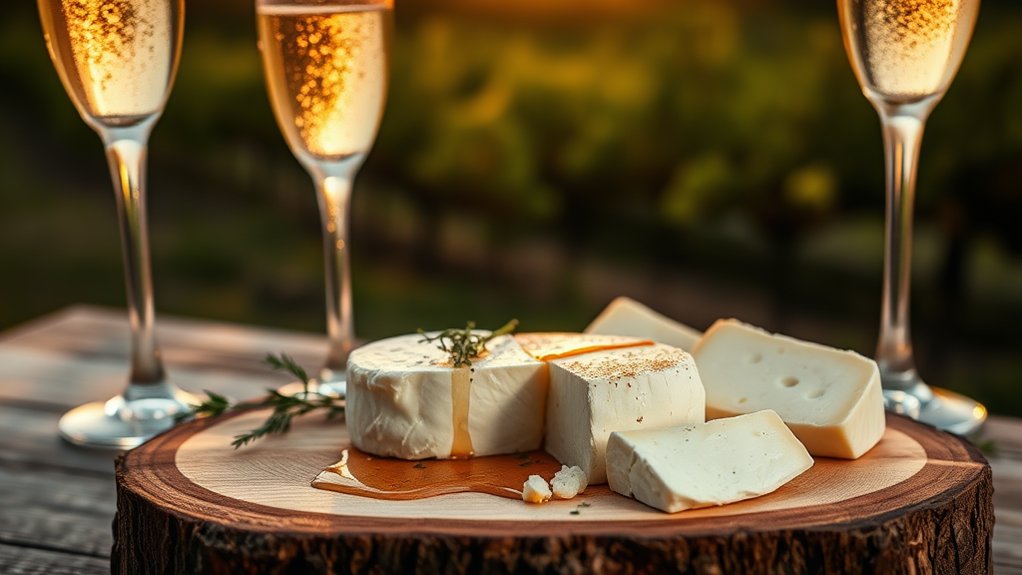
Why not enhance your next goat cheese experience with the effervescent magic of bubbles? The crisp, yeasty Champagne characteristics create a delightful contrast with creamy goat cheese, cutting through its richness while highlighting its tangy notes. You’ll love how the tiny bubbles cleanse your palate between each heavenly bite!
Prosecco profiles offer a fruitier, more affordable alternative that’s just as enchanting. Its lighter body and hints of green apple, pear, and honeysuckle make it the perfect companion for fresher goat cheese varieties. Trust me, there’s something undeniably festive about popping open a bottle of bubbly with your cheese board—it instantly transforms an ordinary snack into a celebration! Next time you’re hosting, watch your guest’s faces light up when you serve this magical pairing.
Rosé Wines: The Versatile Middle Ground
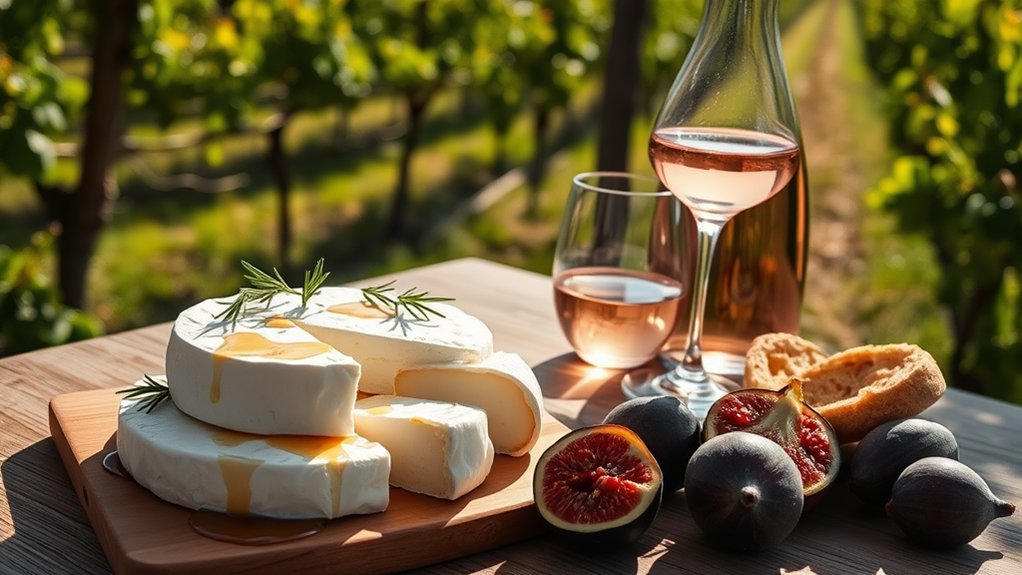
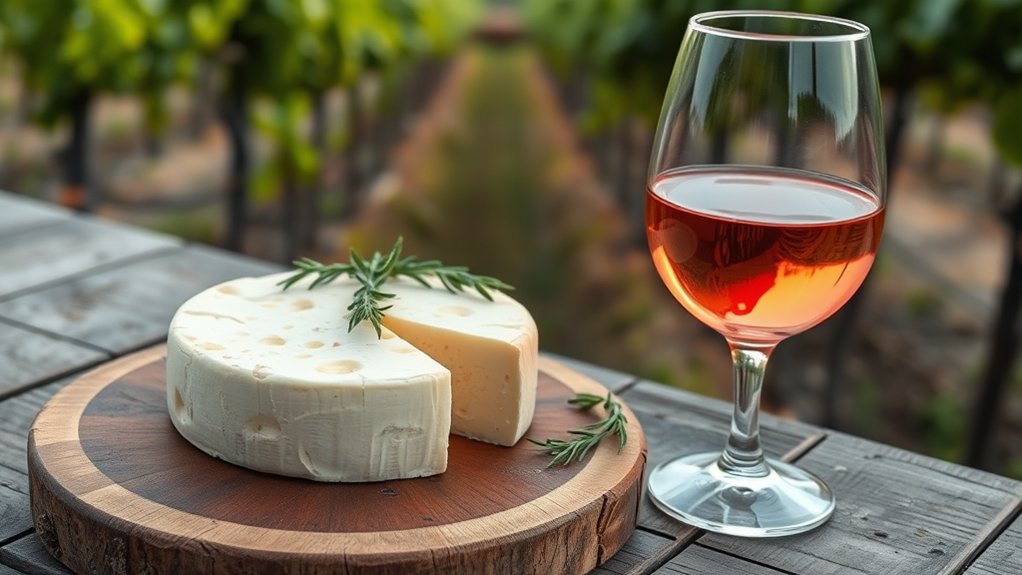
Rosé wines, with their invigorating acidity, offer you the perfect middle-ground solution for tackling the creamy richness of goat cheese. You’ll notice how the bright, crisp notes from French Provence rosés cut through the tanginess, while fuller-bodied Oregon varieties create a beautiful contrast with aged goat cheeses. Whether you’re enjoying a sun-soaked picnic or cozy dinner party, these versatile pink sippers work their magic by balancing the cheese’s creaminess without overpowering its delicate flavors.
Acidity Balances Creaminess
Harmony between contrasting elements creates the perfect wine and cheese experience you’ll remember long after the last sip. When it comes to goat cheese, acidity levels in your wine selection are absolutely essential! The tangy, creamy texture of goat cheese practically begs for a wine with bright acidity to cut through that richness.
You’ve probably noticed how your palate feels refreshed when you take a sip of crisp wine after a bite of creamy cheese – that’s the creaminess contrast working its magic! Think of it like a seesaw, where the acidity in the wine balances the fat content in the cheese. Sauvignon Blanc, with its zippy citrus notes, or a tart Chenin Blanc can transform an ordinary goat cheese into an extraordinary sensory adventure. Your taste buds will thank you!
From Provence to Oregon
When you’re looking for that perfect middle ground in your wine selection, rosés step into the spotlight as versatile companions for goat cheese! These pink delights bridge the gap between whites and reds, offering the best of both worlds. Whether from sun-drenched Provence or cool-climate Oregon vineyards, they’re the ultimate crowd-pleasers.
Here’s why rosés work so magnificently with goat cheese:
- Provence traditions emphasize dry, mineral-forward rosés that cut through the tangy creaminess
- Oregon vineyards produce fruitier versions with bright acidity that complement’s younger cheeses
- The subtle berry notes don’t overwhelm delicate cheese flavors
- Their revitalizing character cleanses your palate between bites
You’ll find these food-friendly wines bring out the best in your cheese plate without breaking the bank. What’s not to love?
Light-Bodied Reds for Aged Goat Cheese
Although aged goat cheese develops a more robust flavor profile, it’s still begging for the right light-bodied red wine to create a memorable pairing experience. When your goat cheese has been aged a bit, those nutty and earthy notes really start to shine, making them perfect partners for reds with subtlety and finesse.
Try a Pinot Noir from Oregon’s Willamette Valley, where the bright cherry flavors and silky tannins won’t overwhelm your precious aged goat cheese. Beaujolais is another killer option, especialy the cru varieties that offer a touch more body but keep that wonderful light-bodied red character.
You’ll be amazed how the slight funk in the cheese harmonizes with the fruity notes in these wines, creating a balance that’ll make your taste buds do a happy dance!
Regional Pairings: Matching Local Wines With Regional Goat Cheeses
When you’re exploring French goat cheese classics like Crottin de Chavignol or Valençay, don’t hesitate to break tradition and try them with a crisp Vouvray or even a light Beaujolais, creating surprising flavor harmonies that’ll impress your guests. For Mediterranean cheeses, you’re in for a treat if you pair Spanish Murcia al Vino with Monastrell from the same region, or Greek feta with a zesty Assyrtiko from Santorini. The magic happens when you match cheese and wine from the same terrior, as they’ve evolved together over centuries to complement eachother’s unique characteristics, making your tasting experience feel like a delicious geography leson!
French Classics Reimagined
While French cuisine has always celebrated perfect pairings, you’ll find that exploring regional connections between local wines and their neighboring goat cheeses creates magic that transcends the ordinary. Modern French Bistros are reimagining classic combinations, surprising guests with unexpected twists that honor tradition while embracing innovation.
Try these reimagined classics:
- Swap Sancerre for a mineral-driven Alsatian Pinot Gris with aged Crottin de Chavignol
- Pair a fruit-forward Beaujolais with warm, honey-drizzled goat cheese instead of traditional Sauvignon Blanc
- Experiment with sparkling Crémant d’Alsace alongside tangy Goat Cheese Desserts
- Match earthy Chinon (Cabernet Franc) with ash-coated pyramides for a daring red pairing
You’re not breaking rules—you’re creating new traditions that might just become tomorrow’s classics!
Mediterranean Perfect Matches
Mediterranean magic happens when you pair the sun-kissed regional wines with their perfectly matched goat cheeses from the same terroir. You’ll notice how a crisp Assyrtiko from Santorini dances beautifully with fresh chèvre rolled in Mediterranean herbs, creating a flavor explosion that’ll transport you straight to a Greek hillside!
Don’t hesitate to try Spain’s Albariño with a firmer goat cheese drizzled with olive oil and a sprinkle of thyme—it’s a match made in heaven, trust me. The wine’s citrus notes cut through the creaminess while complementing the herbal undertones.
For a slightly bolder experiance, reach for a Sicilian Nero d’Avola alongside an aged goat cheese from Cyprus. The wine’s robust character stands up to the cheese’s intensty, while both share that sun-drenched Mediterranean soul!
Surprising Sweet Wine Companions for Goat Cheese
Although most people immediately think of crisp whites when pairing wine with goat cheese, you’re missing out on a whole world of delightful surprises if you’ve never tried sweet wines with this tangy favorite!
Dessert wines create a magical contrast with goat cheese’s acidity, balancing the tanginess with honeyed sweetness. The fruit forward options available will make your tastebuds do a happy dance, trust me!
Try these unexpected sweet companions:
- Late-harvest Riesling with its apricot notes
- Sweet Moscato d’Asti for a light, bubbly pairing
- Port wine for a decadent, rich experiance
- Ice wine from Canada or Germany for an elegant dessert combo
You’ll wonder why you’ve stuck to dry wines all thise years!
Hosting a Goat Cheese and Wine Tasting Party
Now that you’re familiar with all those amazing wine pairings, it’s time to show them off to your friends! Hosting a goat cheese and wine tasting party isn’t just fun – it’s a chance to explore flavor profiles together while looking fancy (even if you’re secretly winging it).
Start with a diverse cheese board featuring different goat cheese varieties, from creamy to crumbly, and match them with wine selections from various wine regions. Prepare simple tasting notes cards highlighting key pairing techniques, but don’t get too technical – nobody likes a wine snob! Consider an event theme like “Mediterranean Adventure” or “Local Farmstead Faves.”
Remember to ask about guest preferences beforehand, and include serving suggestions like honey drizzles or herb garnshes. The beauty of these pairings is discovering what excites your tastebuds together!
Frequently Asked Questions
Can People With Lactose Intolerance Enjoy Goat Cheese?
Like a beacon in dairy darkness, goat cheese can be your salvation! You’ll often tolerate it better with lactose intolerance because it contains less lactose than cow’s milk cheeses.
How Long Does Goat Cheese Last After Opening?
Once opened, your goat cheese has a shelf life of 1-2 weeks if properly refrigerated. For best storage tips, keep it tightly wrapped and in the coldest part of your fridge.
Are There Non-Alcoholic Alternatives for Goat Cheese Pairings?
Like a garden of delights, you’ll find sparkling water, kombucha, or craft sodas complement goat cheese perfectly. You can also try fruit juices, herbal teas, or non-alcoholic cider for invigorating cheese alternatives.
What Seasonal Fruits Complement Goat Cheese and Wine?
You’ll love pairing goat cheese with seasonal berries like strawberries and blackberries in summer, while tropical fruits like figs and pears complement it beautifully in fall and winter months.
Can Goat Cheese Be Frozen for Later Use?
Yes, you can freeze goat cheese for later use. Wrap it tightly in plastic, then foil for ideal goat cheese storage. Freezing techniques work best with firmer varieties, maintaining quality for 2-3 months.