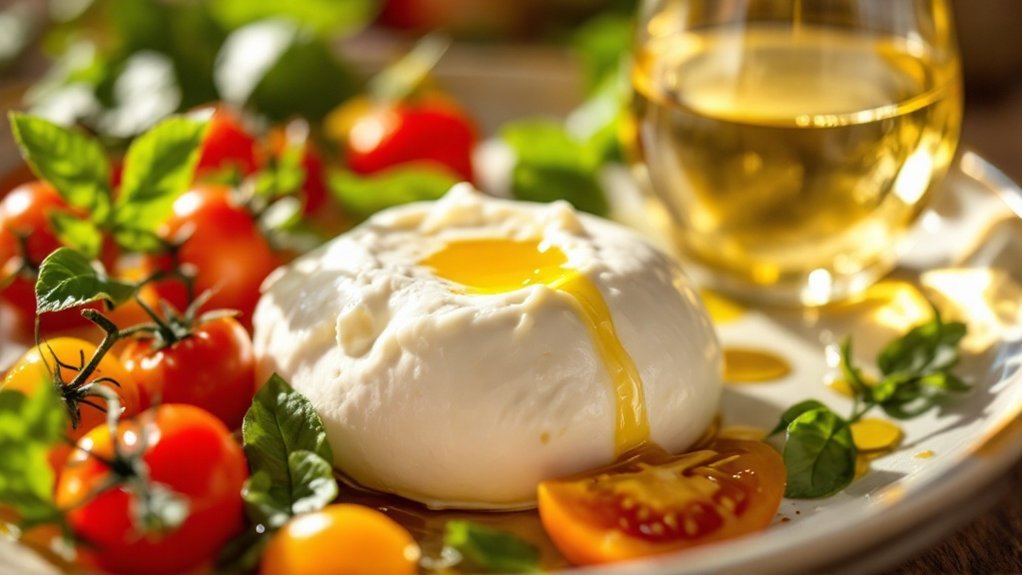
Burrata’s creamy richness pairs beautifully with several wine options! You can’t go wrong with light-bodied whites like Pinot Grigio or Vermentino, whose crisp acidity cuts through the creaminess perfectly. For something festive, try Prosecco or Champagne – those bubbles create magic with burrata’s luxurious texture. In summer, a chilled Provençal rosé works wonders, especially with tomatoes and basil. Traditional Italian whites like Fiano di Avellino honor burrata’s heritage, while adventurous souls might explore a light Pinot Noir. The perfect pairing awaits below!
Key Takeaways
- Light-bodied white wines like Pinot Grigio, Sauvignon Blanc, and Vermentino cut through burrata’s creaminess with crisp acidity.
- Sparkling wines including Prosecco, Champagne, and Franciacorta elevate burrata’s decadence through effervescence and complementary flavors.
- Rosé wines provide refreshing acidity while enhancing burrata’s flavor profile, especially when served with tomatoes.
- Regional Italian whites from burrata’s homeland like Fiano di Avellino and Falanghina naturally complement its rich, creamy texture.
- Light reds such as Primitivo, young Beaujolais, and Pinot Noir can pair with burrata when considering seasonal preparations and accompaniments.
Understanding Burrata: A Creamy Canvas for Wine Pairing
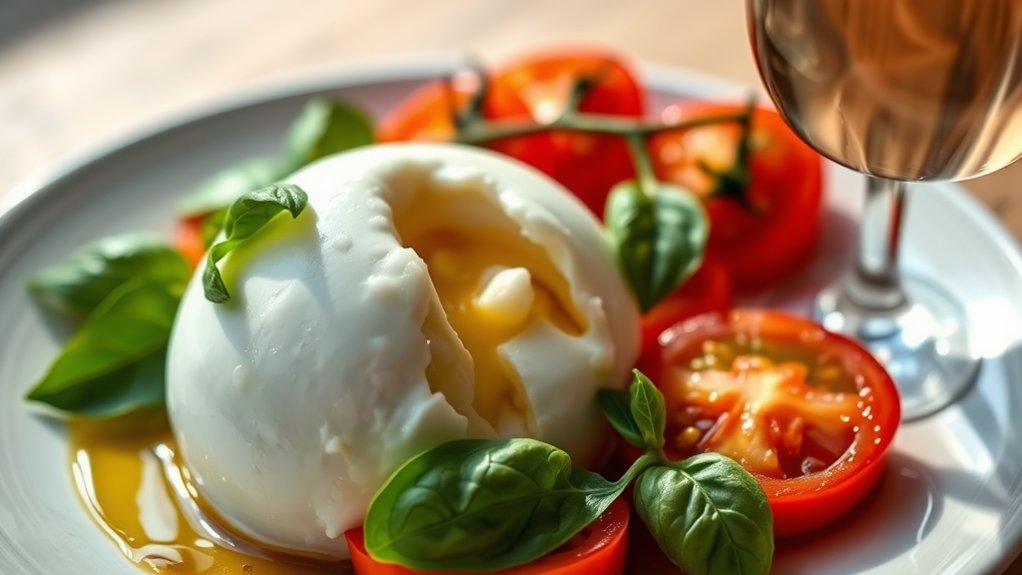
When you first encounter burrata, you’re not just meeting any cheese – you’re being introduced to one of Italy’s most indulgent culinary treasures. This heavenly creation, with its burrata history dating back to early 20th century Puglia, is fundamentally mozzarella’s luxurious cousin that decided to live life more decadently.
The magic lies in its structure: a thin mozzarella exterior that, when cut open, reveals a gloriously rich, creamy texture that spills onto your plate. It’s like the cheese equivalent of a chocolate lava cake! You’ll notice the stracciatella inside – a mixture of cream and mozzarella shreds that creates that signature oozy center we all dream about. This contrast between the firmer outer shell and the buttery interior makes burrata a fascinating canvass for wine pairing, offering multiple textures and flavor dimensions to complement.
Light-Bodied White Wines That Complement Burrata’s Delicacy

When pairing burrata with light-bodied whites, you can’t go wrong with a crisp Pinot Grigio that cuts through the creaminess while highlighting the cheese’s subtle flavors. For a brighter experience, try Sauvignon Blanc, which brings zesty citrus notes that’ll make your burrata sing on the palate, creating an exciting contrast. If you’re feeling a bit adventurous, reach for a Vermentino with it’s delicate herbal nuances and mineral finish, which cradles the milky richness of burrata without overwhelming it’s gentle character.
Crisp Pinot Grigio Options
Pinot Grigio, the elegant dance partner to burrata’s creamy waltz, offers a revitalizing counterpoint that’ll make your taste buds sing. When you’re enjoying that pillow-soft cheese, reach for a bottle from Italy’s northern regions where the crisp acidity cuts through the richness like a cool breeze on a summer day.
You’ll want to try options from Alto Adige or Friuli, where the alpine influence creates Pinot Grigios with a rejuvenating finish that cleanses your palate between bites. Santa Margherita and Jermann offer reliable choices that won’t break the bank!
Don’t be fooled by Pinot Grigio‘s light body—it’s no pushover. It’s like that quiet friend who surprisingly steals the show at dinner parties, making your burrata experience twice as delightful without ever overshadowing the star.

Sauvignon Blanc Brightness
Like the fresh breeze of a coastal morning, Sauvignon Blanc brings a zippy brightness that dances perfectly with burrata’s creamy heart. When you’re looking for a wine that won’t overpower your cheese plate, this vibrant varietal offers the ideal balance, cutting through richness with its characteristic sauvignon blanc acidity.
| Region | Flavor Profile | Best With |
|---|---|---|
| New Zealand | Intense grapefruit, tropical | Plain burrata |
| Loire Valley | Flinty, mineral-driven | Herb-drizzled |
| California | Melon, softer acidity | Tomato pairings |
| Chile | Grassy, bright herbal notes | Pesto additions |
You’ll notice how the bright herbal notes in many Sauvignon Blancs echo fresh basil or arugula that often accompany burrata. It’s like they were literally made for eachother – a match that’ll make your tastebuds do a happy dance!
Subtle Vermentino Selections
Among Italy’s coastal treasures, Vermentino stands out as burrata’s subtle yet sophisticated companion, offering delicate flavors that won’t overwhelm your creamy cheese experience. You’ll notice its crisp minerality and light citrus notes dance perfectly with burrata’s milky richness, creating a harmony that’s simply irresistable.
When exploring vermentino characteristics, look for bottles from Sardinia or Liguria, where these wines develop gentle hints of green apple, almond, and a whisper of saline. The vermentino foodpairing magic happens because of the wine’s moderate acidity and gentle structure—it’s like a soft pillow for your burrata to rest on!
Try serving both slightly chilled on a summer evening, maybe with a drizzle of olive oil and fresh basil. Trust me, your taste buds will thank you for this Italian match made in heaven.
Sparkling Options That Elevate the Burrata Experience

When bubbles meet the creamy decadence of burrata, something magical happens that transforms your dining experience into a celebration. The effervescence of sparkling wines cuts through the rich, buttery texture of burrata, creating a perfect balance that’ll make your taste buds dance! You’ll find that these pairing techniques work especially well when you’re serving burrata with fresh tomatoes or drizzled with olive oil.
| Sparkling Wine | Flavor Profile | Best Served With |
|---|---|---|
| Prosecco | Light, fruity | Classic burrata w/ tomatoes |
| Champagne | Yeasty, crisp | Truffle-topped burrata |
| Cava | Dry, nutty | Burrata with pesto |
| Franciacorta | Rich, complex | Aged burrata & prosciutto |
Don’t be afraid to experiment—sometimes the most unexpected pairings create the most memorible moments!
Rosé Selections: Summer’s Perfect Partner for Burrata
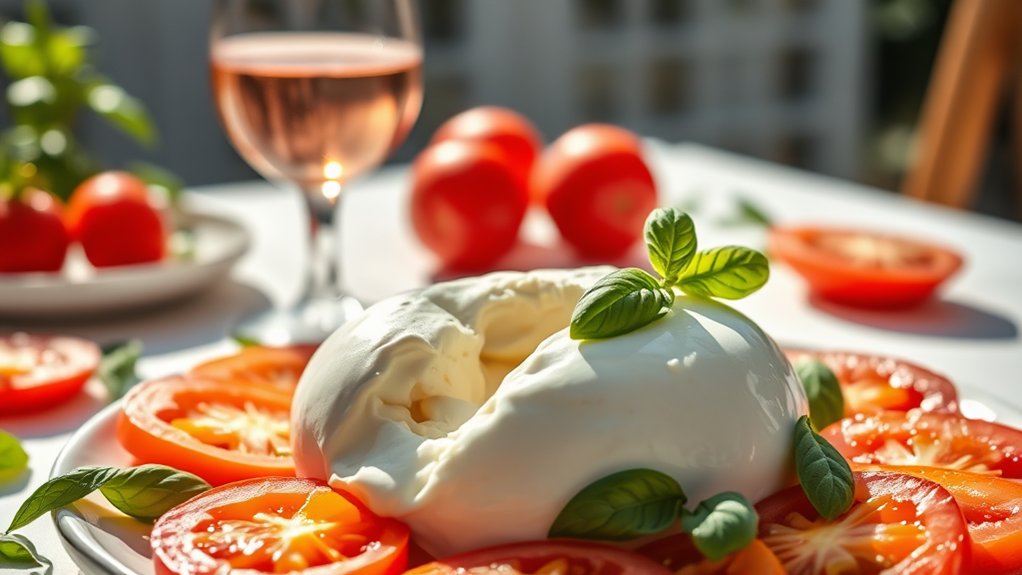
Moving from bubbles to blush, summer’s heat welcomes another perfect companion for burrata! When temperatures rise, you’ll want a wine that’s invigorating yet substantial enough to stand up to that creamy cheese center.
Provence-style rosés, with their delicate strawberry notes and crisp acidity, create magical food pairings with fresh burrata and heirloom tomatoes. Don’t be afraid to experiment with different rosé styles – from the bolder Spanish Rosados to the fruitier Italian Cerasuolos, each brings something unique to the table.
You’ll find that slightly chilled rosé cuts through burrata’s richness while complimenting its subtle flavor profile. Next time you’re hosting an outdoor gathering, watch your guest’s faces light up when you serve this dreamy combo – it’s like summer vacation in a single bite!
Italian Wines That Honor Burrata’s Heritage

Since burrata originated in Puglia, it’s only natural to pair this creamy treasure with wines from its Italian homeland! When you understand burrata origins, you’ll appreciate why southern Italian whites like Fiano di Avellino or Falanghina are perfect matches—their bright acidity cuts through the richness of this indulgent cheese type.
For red wine lovers, don’t worry! A light Primitivo from Puglia itself complements the milky-sweetness without overpowering it, much like how a good friendship works. You could even try Negroamaro, another Puglian specialty that dances beautifully with burrata’s delicate flavors.
Unexpected Red Wine Pairings That Actually Work
Surprisingly, the world of red wine offers some daring companions for burrata that you’d never expect! While conventional wisdom suggests sticking to whites, some unusual varietals create bold contrasts that’ll wake up your palate. Try a light Pinot Noir, which doesn’t overpower the cheese’s delicate flavor but adds subtle cherry notes that dance beautifully with burrata’s creaminess.
For the truly adventurous, a young Beaujolais brings fruity playfulness without the tannins that might overwhelm. You could even experiment with a chilled Frappato from Sicily – it’s like the class clown of red wines, irreverant but somehow perfect with the milky goodness of fresh burrata!
Don’t let wine snobs limit your experiance; sometimes the most delightful pairings come from breaking traditions.
Regional Pairing Principles: What Grows Together Goes Together
If you’ve ever wondered why Italian wines go so perfectly with burrata, it’s because they’ve spent centuries becoming best friends in their home regions. In Southern Italy, you’ll find that creamy burrata pairs beautifully with local Primitivo or Negroamaro wines, creating a match that’s been perfected through generations of Italian family dinners. Northern Italian options aren’t left out of the party either, with crisp Pinot Grigio from Veneto and elegant Franciacorta providing a revitalizing contrast to burrata’s rich, buttery interior that’ll make your tastebuds do a happy dance.
Southern Italy Traditions
The age-old wisdom of “what grows together goes together” couldn’t be more true when you’re exploring burrata pairings in Southern Italy. This creamy, dreamy cheese hails from Puglia, the heel of Italy’s boot, where burrata origins trace back to the early 20th century as a clever way to use leftover mozzarella curds. You’ll find that southern italy cuisine revolves around simplicity and freshness, much like burrata itself!
When in Puglia, locals reach for regional wines like Primitivo or Negroamaro, whose bright acidity and fruit-forward profiles cut through burrata’s richness. They’ve been enjoying these combos for generations, and who are we to argue with tradition? Trust me, there’s something magical about sipping a glass of Puglian rosato with your burrata—it’s like they were destined to meet on your palate!
Northern Territory Matches
While burrata hails from southern Italy, we shouldn’t overlook incredible pairings from Italy’s northern territories that’ll make your cheese plate sing! You’ll find that northern territory vineyards offer crisp, mineral-forward whites that cut through burrata’s creamy richness like nobody’s business.
Try pouring a glass of Soave from Veneto, with its almond notes and zippy acidity, it’s basically a burrata’s BFF! Or maybe grab a Gavi from Piemonte—these regional varietals have literally evolved alongside similar Alpine cheeses for centuries.
Remember that whole “what grows together goes together” philosophy? It’s not just a fancy catchphrase, it actually works! Even though buratta wasn’t historically made in these regions, the nothern Italian wine-making principals create unexpected matches that’ll have your tastebuds doing a happy dance.
Seasonal Considerations When Pairing Wine With Burrata
Seasons truly transform both your wine preferences and how you’ll enjoy burrata, creating a fascinating dance between temperature, availability, and flavor profiles. In summer, you’ll want something crisp and invigorating—think a chilled Pinot Grigio that won’t weigh you down when temperatures soar! Meanwhile, autumn calls for wines with a bit more body to complement those hearty seasonal flavors appearing on your plate.
Winter’s the perfect time to experiment with light reds, especially when your burrata’s served warm (yes, that’s a thing, and it’s heavenly!). By spring, you’re probably craving something vibrant that celebrates local ingredients like fresh herbs and early vegetables. A Provençal rosé might just be your new bestie—it’s like springtime in a glass, seriously!
Pairing Based on Burrata’s Accompaniments and Preparation
Because burrata rarely appears on your plate entirely alone, choosing the perfect wine means considering everything that’s accompanying this creamy delight! When pairing wines with burrata dishes, you’ll want to think about the complete flavor profile, not just the cheese textures.
- Tomato-based burrata dishes call for crisp, acidic wines like Sauvignon Blanc or a light Sangiovese
- Herb-forward preparations shine with herbal whites like Vermentino or Grüner Veltliner
- Grilled peach and burrata? Try a slightly sweet Riesling or Moscato d’Asti
- Burrata with prosciutto loves bubbles—Prosecco is your best freind here!
- For truffle-drizzled burrata, reach for an earthy Pinot Noir or aged Chardonnay
Expert Recommendations From Sommeliers and Cheese Mongers
You’ll find that many experts agree on light-bodied whites, but don’t be afraid to experiment! As New York sommlier Jake Weston quips, “Rules are meant to be broken! I’ve served a gentle Beaujolais with herb-infused burrata that made customers literally gasp with delight.”
Frequently Asked Questions
Can Pregnant Women Safely Consume Burrata With Wine?
Absolutely never consume alcohol during pregnancy! You should avoid unpasteurized burrata for safety. Consider burrata safety by checking if it’s pasteurized, and explore non-alcoholic wine alternatives while expecting your precious bundle.
How Long Can Opened Wine Last When Serving With Burrata?
For opened wine storage, you’ll want to refrigerate whites 3-5 days and reds 3-7 days. Wine shelf life decreases after opening, so enjoy it quickly with your fresh burrata.
Are There Any Non-Alcoholic Options That Pair With Burrata?
Like a canvas awaiting colorful strokes, your palate deserves delightful non-alcoholic beverages with burrata. You’ll find sparkling water, fresh lemonade, or alcohol-free white grape juice create beautiful flavor complements to burrata’s creamy richness.
What Wine Glasses Are Best for Burrata Wine Pairings?
For burrata wine pairings, you’ll want standard white wine glasses for crisp whites and tulip-shaped glasses for reds. Remember, glass shapes enhance aromatics while proper serving temperature highlights the wine’s character.
Does Burrata’s Fat Content Affect Alcohol Absorption?
Like clouds cushioning raindrops, burrata’s fat content can slow alcohol absorption. When you eat this creamy cheese, its richness creates a barrier in your stomach, slightly delaying alcohol metabolism.