You want something bright, low‑tannin, and invigorating that cuts the grease and won’t fight the breading. Go for chilled Sauvignon Blanc, dry Riesling, a crisp Vinho Verde, a light Provençal rosé, or a sparkling Brut — they all lift lemon, ranch, and BBQ without overpowering. For spicy tenders pick a touch off‑dry Riesling; for sweet glazes try chilled Gewürztraminer or Chenin. Stick with acidity and bubbles for safe, tasty bets, and you’ll see why more options work.
Key Takeaways
- Choose bright, high-acidity wines (Sauvignon Blanc, Vermentino, Chablis) to cut grease and brighten fried chicken tenders.
- Sparkling wines (Brut, Prosecco) refresh the palate with bubbles and lift salty, crispy textures.
- Off-dry Riesling tames spicy or sweet-glazed tenders while preserving aromatic floral notes.
- Light-bodied reds (Pinot Noir, chilled Gamay) work with herb or pepper-forward sauces without overpowering breading.
- Rosé and Vinho Verde offer versatile, food-friendly balance for lemon, ranch, or everyday tenders.


Quick Cheat‑Sheet: Best Wines for Chicken Tenders

You’ll usually want wines that don’t try to outshine the crispy, juicy simplicity of chicken tenders — think bright, friendly, and a little bit fun. You’ll grab a chilled riesling or a zippy unoaked rosé for the classic crunchy-and-dip vibe; they handle sweet and spicy dipping sauces, and they’re forgiving. For a heartier bite, try a light-bodied red from regional styles like Beaujolais or a cool-climate pinot, served slightly cool so it doesn’t overwhelm. The acidity in wine cuts through the richness of fried chicken, enhancing each bite. Think seasonal wine choices too: lighter in summer, a touch warmer in fall. Serving temperature matters — too cold dulls flavor, too warm makes alcohol obvious. Keep it easy, don’t overthink. You’ll enjoy the combo more than you expect, promise.
How to Choose Wine for Tenders (Acid, Tannin, Sweetness)
If you want your chicken tenders and wine to play nicely together, think about acid, tannin, and sweetness like the basic rules of a good pairing — not a magic spell, just common sense. You’ll want an acidity balance so the wine cuts through grease and brightens flavors, not fights them. Watch tannin grip; heavy tannins clash with delicate chicken, unless you’re into leather surprises. Residual sweetness can soothe spicy dips or salty batter, but don’t overdo it. The goal is pairing contrast that makes each bite sing, not hide. Remember that serving wine at the appropriate temperature ensures you’re getting the best taste from your selection.
- Choose lively acids for crispness and cleanup.
- Avoid big tannin grabs with light fried chicken.
- Use modest residual sweetness with hot or tangy sauces.
- Aim for contrast, not competition.
Best Wines for Classic Fried Tenders (Lemony, Ranch, Crispy)

When you’ve got classic fried tenders—think lemon-bright, ranchy, and gloriously crispy—you’ll want wines that cut through the grease and lift the flavors. Go for crisp, high-acidity whites like Sauvignon Blanc or Vermentino, try light, fruity rosés for a fun, food-friendly match, and don’t forget sparkling wines for that fizzy contrast that makes each bite pop. The right wine’s acidity cuts through the richness of fried foods, creating a balanced palate that enhances your dining experience. Trust me, it’s an easy win: one bottle to brighten, one to play nice, and bubbles to keep things lively (and yes, you can sip straight from the bottle if nobody’s looking).

Crisp, High-Acidity Whites
Even though fried chicken tenders are all about crunch and comfort, a crisp, high-acidity white can cut through the grease and brighten every bite—like a little citrusy wake-up call for your taste buds. You’ll love how zesty citrus notes play off lemony tenders and ranch, and a mineral backbone keeps things grounded so the wine doesn’t just disappear. Think clean, snappy, and rejuvenating. Sip between bites, or let it rinse your palate so the next crispy mouthful sings. It’s simple. It’s reliable. And yes, it makes fries jealous. Serve your white wine at 45-50°F in tulip-shaped glasses to maximize the aromatics and ensure every sip complements your meal perfectly.
- Pick a Sauvignon Blanc for grassy, tart zip and bright acidity.
- Try a Chablis or unoaked Chardonnay for minerality and structure.
- Riesling (dry) adds floral lift without sweetness.
- Vinho Verde is fizzy and fun.
Light, Fruity Rosés
Looking for something that’s fun, easy, and a little flirty with your classic lemony, ranch-doused chicken tenders? You’ll love a light, fruity rosé — it’s summer sipping personified and a perfect picnic pairing. Bright strawberry and citrus notes lift the fried crispiness, while gentle acidity cuts through ranch without being bossy. Chill it well. Pop a cork, sip between bites, and you’ll notice how the wine keeps things playful. Light to medium-bodied rosé wines create a playful balance with rich and savory dishes, making them particularly versatile for casual meals.
| Rosé Style | Flavor Notes | Why it Works |
|---|---|---|
| Provençal | Herbs, light berry | Refreshes and complements lemon |
| Dry Pink | Strawberry, citrus | Balances fat, cleans palate |
| Off-dry | Peach, watermelon | Friendly with sweet sauces |
| Blush | Red fruit | Easygoing, crowd-pleaser |
Sparkling Wines For Contrast
If you want a little sparkle to cut through the grease and lift those lemony, ranchy flavors, bubbly’s your secret weapon — and yes, it plays nicely with fried chicken tenders. You’ll want a citrus driven Brut for brightness that zips through mayo and lemon, cleansing your palate so every bite tastes new. Or try a toasty aged Prosecco if you like a bit more nuttiness and cream, it’s surprisingly cozy with crispy breading. Don’t overthink it. Keep chilled, pop gently, enjoy. Here are a few easy tips to get the most from the pairing:
- Serve bottles well chilled, about 45°F, bubbles stay lively.
- Use simple flutes to focus aroma and fizz.
- Try lemon wedges alongside for extra pop.
- Match the sauce intensity, don’t overpower the wine.
Honey‑Mustard, BBQ & Sweet‑Glaze Wine Pairings

When honey‑mustard, BBQ or any sweet glaze shows up on your chicken tenders, you want a wine that’s going to play nice — not one that fights the sauce for attention. Think balance: a slightly off-dry Riesling or Gewürztraminer will echo a honeyed vinaigrette without tasting too sugary. If your tenders lean mustard forward accompaniments, grab a crisp Chenin Blanc or a Viognier with good acidity to cut through the tang. For smoky, sweet BBQ, try a chilled Zinfandel or a fruit-forward Grenache — they handle smoke and molasses notes well. Don’t overcomplicate it. Keep the wine cool, sip between bites, and laugh at the inevitable sauce-on-fingers moment. Food and fun, sorted.
Wines for Buffalo & Other Spicy Tenders
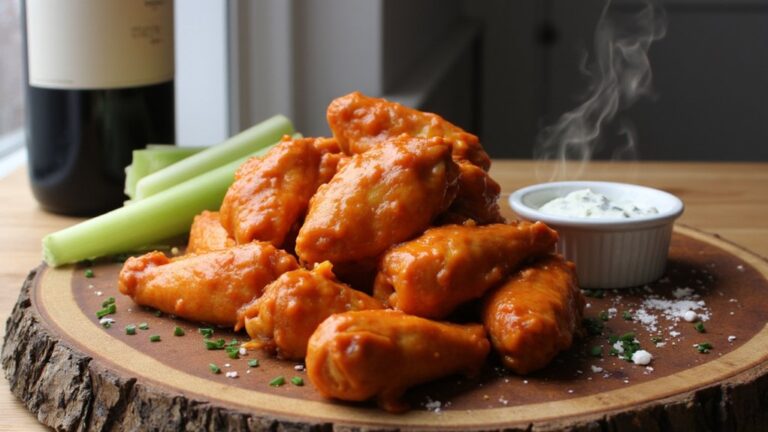
Spicy tenders usually love a wine that cools your mouth and keeps the heat from stealing the show, so you’ll want something with a touch of sweetness or bright acidity to tame the spice without sounding like a wimp. Think Cooling Riesling sweetness for Buffalo wings—off-dry Riesling soothes the burn and keeps flavors lively. If you like contrasts, try Spicy buffalo/Syrah contrasts: a chilled Syrah can stand up to smoky heat, though it’s bolder. You’ll want balance, not a flavor fight.
- Pick an off-dry Riesling for citrusy, cooling relief.
- Try a chilled Syrah for peppery, savory pushback.
- Sparkling off-dry works if you want fun fizz.
- Low-tannin reds won’t make heat worse.
Light Reds, Rosés, Sparklings & Budget Bottle Picks

You’ve already got the spicy-tenders plan sorted, so let’s swing over to wines that keep things lighter, brighter, or just plain fun — especially if you want something more delicate than a full-bodied red or a syrupy riesling. Reach for a light bodied pinot when you want gentle red fruit and low tannin; it won’t overwhelm the crispy coating and it cleans your palate between bites. Chilled gamay is another crowd-pleaser, fruity and fizz-adjacent, and it plays nicely with dipping sauces. Don’t forget rosés and sparklings for a celebratory feel — they’re great with salty, fried textures. On a budget, seek freshness and acidity over age; many inexpensive bottles deliver big enjoyment. Trust your taste, and have fun.
Frequently Asked Questions
Can Wine Be Used in Chicken Tender Marinades?
Yes — you can use white wine or red wine in chicken tender marinades; you’ll get acidity and flavor, but you’ll want shorter marinating with red to avoid overpowering, and milder white for light, bright results.
Are Non‑Alcoholic Wine Options Good With Tenders?
Yes — you’ll enjoy dealcoholized Riesling or a sparkling nonalcoholic option with tenders; they bring bright acidity and fruitiness to cut grease, refresh your palate, and pair well with dipping sauces like honey mustard or spicy mayo.
What Glassware Best Enhances Tender Wine Aromas?
You’ll want a stemmed tulip to concentrate delicate aromas, though a light bodied flute works for subtle effervescence; both let the wine breathe while directing scents, so you’ll catch nuanced fruit, florals, and brioche notes more clearly.
How Should Leftovers Be Stored With Opened Wine?
You should airtight resealing leftover bottles, pour small amounts into a smaller bottle if possible, and fridge chilling opened white or rosé; reds also benefit from fridge chilling short-term, then let them warm slightly before serving.
Can Wine Pairings Change With Dipping Sauce Temperature?
Yes — temperature and texture shift perception, so hot vs. chilled sauces and spicy vs. creamy profiles change pairing needs; you’ll prefer a chilled, fruity white for spicy or hot dips and a richer, cream-friendly wine for creamy ones.