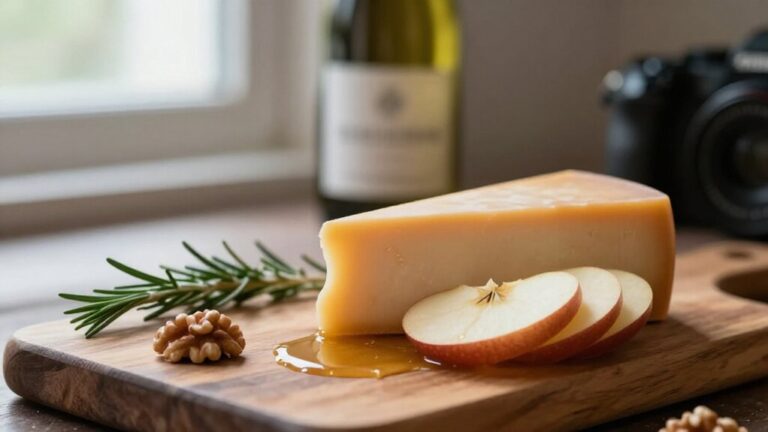
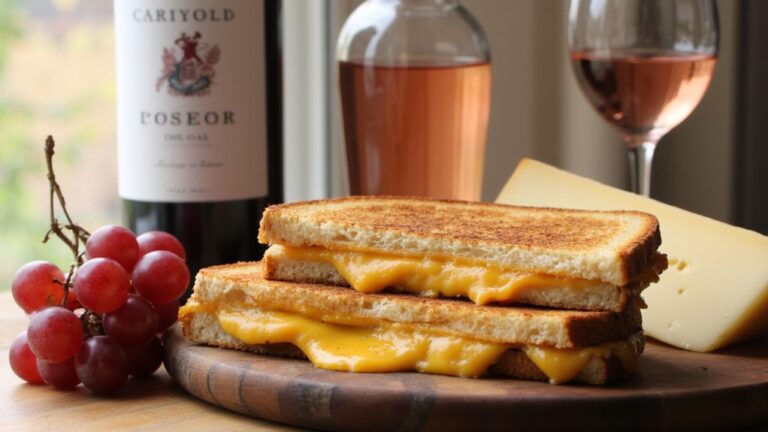
For Parmesan cheese, you can’t go wrong with Italian reds like Chianti or Barolo—they’re classic “what grows together, goes together” pairings that balance the cheese’s nutty richness perfectly. Sparkling wines like Champagne or Prosecco offer delightful contrast with their invigorating bubbles, while aged Chardonnay complements the crystalline texture beautifully. Sweet wines like Tawny Port create surprising harmony too! Serve your cheese at room temperature to reveal a world of flavorful possibilities.
Key Takeaways
- Italian red wines like Sangiovese, Chianti Classico, and Barolo complement Parmesan’s richness through balanced acidity and structure.
- Champagne and sparkling wines cut through Parmesan’s intensity with refreshing effervescence.
- Aged white wines, particularly Chardonnay and Riesling, offer nutty complexity that enhances Parmesan’s flavor profile.
- Sweet wines like Moscato d’Asti and Tawny Port create unexpected harmony by contrasting with Parmesan’s savory character.
- Regional wines from Emilia-Romagna, especially Lambrusco, provide natural synergy with Parmesan cheese from the same area.
Understanding Parmesan: A Cheese of Character and Complexity
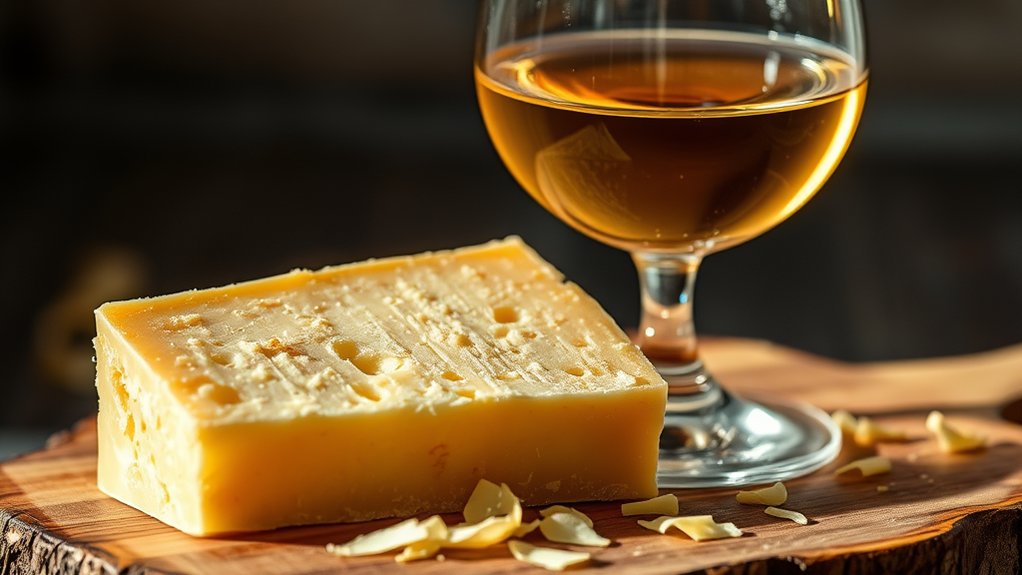
Parmesan cheese, a culinary treasure from Northern Italy, isn’t just another cheese you’ll find in your refrigerator—it’s practically royalty in the world of dairy! With a parmesan history dating back over 800 years, this crystalline, nutty delight has earned its reputation as the “King of Cheeses.” You’ve probably grated it over pasta, but there’s so much more to appreciate!
Among cheese varieties, true Parmigiano-Reggiano stands out with its protected designation of origin—meaning if it’s not made in specific Italian provinces, it ain’t the real deal! When you’re examining a wedge, you’ll notice the firm, straw-colored paste and those delicious little crunchy crystals that give it such awesome texture. It’s like nature’s umami bomb, giving dishes that “what-is-that-amazing-flavor” kick that keeps you coming back for more.
The Science Behind Wine and Cheese Pairing
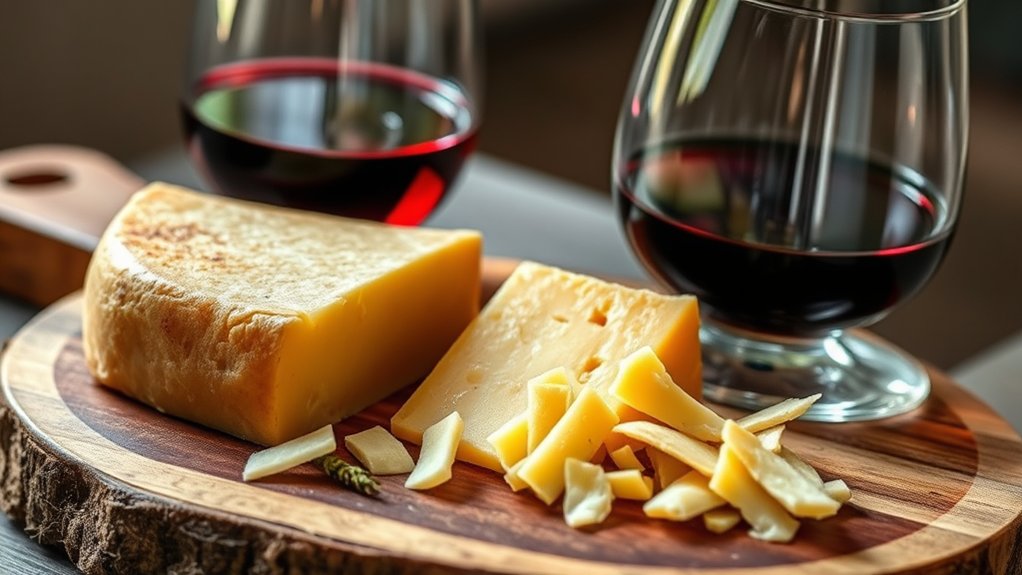
When you’re pairing wine with Parmesan, there’s actual science behind why certain combinations make your taste buds dance with joy. The fat in Parmesan creates a fascinating reaction with the tannins in red wine, softening their astringent qualities and creating a more balanced mouthfeel on your palate. Meanwhile, the microbes responsble for fermenting both the cheese and wine share similar flavor compounds that, when combined, create an almost magical resonance of tastes that amplify eachother in ways food scientists are still working to fully understand.
Fat Meets Tannins
Although the perfect marriage between wine and cheese might seem like magic, there’s actually fascinating science behind why certain pairings make your taste buds dance with joy. When you bite into a rich, fatty cheese like Parmesan, those fat molecules coat your tongue and create a protective barrier.
This is where tannins come into play! Those somewhat astringent compounds in red wine actually bind with the fat, cleansing your palate between bites. It’s like a delicious chemical dance happening right in your mouth! The fat tannins interaction creates an incredible flavor balance that neither could achieve alone.
You’ll notice this especially with aged Parmesean – the crystaline texture and nutty intensity needs something robust to cut through it’s richnes. That’s why a medium-bodied red often works wonders!

Microbe Magic
While we often focus on taste alone, what’s truly fascinating is how microbes are the unsung heroes behind both your favorite cheese and wine! These tiny organisms transform simple ingredients into complex delicacies through microbial fermentation, creating the distinctive characteristics you love.
In Parmesan, bacteria convert milk sugars into lactic acid, developing those nutty, crystalline textures over months of aging. Meanwhile, yeasts in wine perform their own magic, turning grape juice into a symphony of flavors! It’s like they’re distant cousins working in totally different kitchens.
When you pair aged Parmesan with the right wine, you’re actually matching complementary microbial signatures. The flavor development in both comes from these microscopic chefs working overtime. Pretty amazing that some of the world’s finest culinary experiences are actually microbial masterpieces, isnt it?
Italian Reds: Traditional Companions to Parmesan
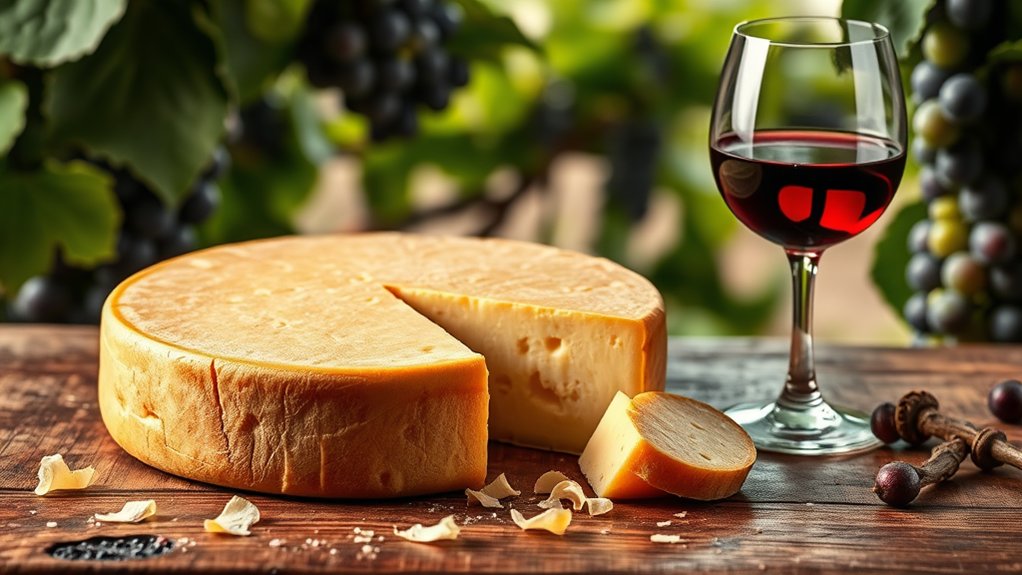
When it comes to Parmesan’s perfect Italian wine match, you’ll find Sangiovese’s bright acidity cuts beautifully through the cheese’s rich, nutty flavors, creating that magical balance we’re all looking for. If you’re feeling a bit more adventurous, Barolo’s complex structure, with its earthy truffle notes and firm tannins, offers an intresting contrast that brings out Parmesan’s crystaline texture and sweet-savory character. These traditional Italian companions have been paired with Parmesan for centuries, and trust me, there’s a good reason why the locals insist “what grows together, goes together!”
Sangiovese’s Bright Acidity
Brilliance defines Sangiovese, Italy’s most celebrated red grape variety, when paired with aged Parmesan cheese. The sangiovese profile brings vibrant cherry notes, earthy undertones, and that magnificent acidity balance that cuts through the rich, nutty characteristics of Parmesan like a hot knife through butter. You’ll notice how the wine’s bright acidity refreshes your palate between bites, preventing flavor fatigue that heavier wines might cause.
When you’re selecting a Sangiovese, don’t hesitate to grab a Chianti Classico or Brunello di Montalcino—both stellar examples that’ll make your cheese plate sing! The tannins are just firm enough to provide structure without overpowering the delicate crystaline texture of aged Parmesan. It’s like they were made for eachother, a culinary marraige that’s stood the test of time!
Barolo’s Rich Complexity
A magnificent treasure among Italian wines, Barolo offers a perfect partnership with aged Parmesan that’ll leave your tastebuds dancing in delight. Known as the “King of Wines,” Barolo’s robust tannin structure cuts through the rich creaminess of Parmesan, creating a balanced experience that’s hard to beat. You’ll notice how the wine’s complexity unfolds with each sip, much like the cheese reveals its flavors with every bite.
| Barolo Age | Tannin Level | Best Parmesan Age |
|---|---|---|
| 3-5 years | Firm | 12-18 months |
| 5-10 years | Softening | 24-30 months |
| 10-15 years | Integrated | 36+ months |
| 15-20 years | Silky | 40+ months |
| 20+ years | Delicate | 48+ months |
Barolo’s impressive aging potential (up to 30 years!) means you’ve got plenty of oprions to explore this magnificent pairing!
Champagne and Sparkling Wines: Effervescent Elegance With Parmigiano
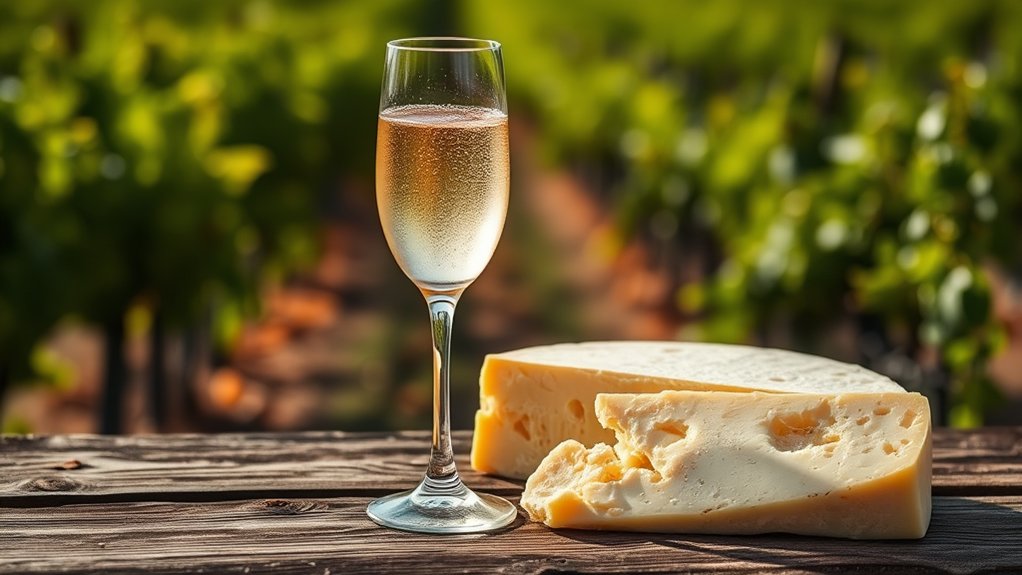
Though many wine enthusiasts focus on reds and whites, Champagne and sparkling wines shouldn’t be overlooked as exquisite companions for Parmigiano Reggiano. The effervescent characteristics of these bubbly delights create a magical contrast with the cheese’s crystalline texture, cutting through its richness while enhancing its nutty complexity.
You’ll find that the acidity and bubbles in Champagne cleanse your palate betweem bites, making every taste of Parmesan feel like the first. For festive occasions, nothing beats serving aged Parmigiano with a brut Champagne or Prosecco – it’s a food pairing that’ll impress even your snobbiest friends! Different sparkling wines offer varying flavor profiles, from the yeasty complexity of traditional method Champagne to the fruity approachability of Prosecco, giving you plenty of options to experiment with.
Aged White Wine Options for Parmesan Enthusiasts
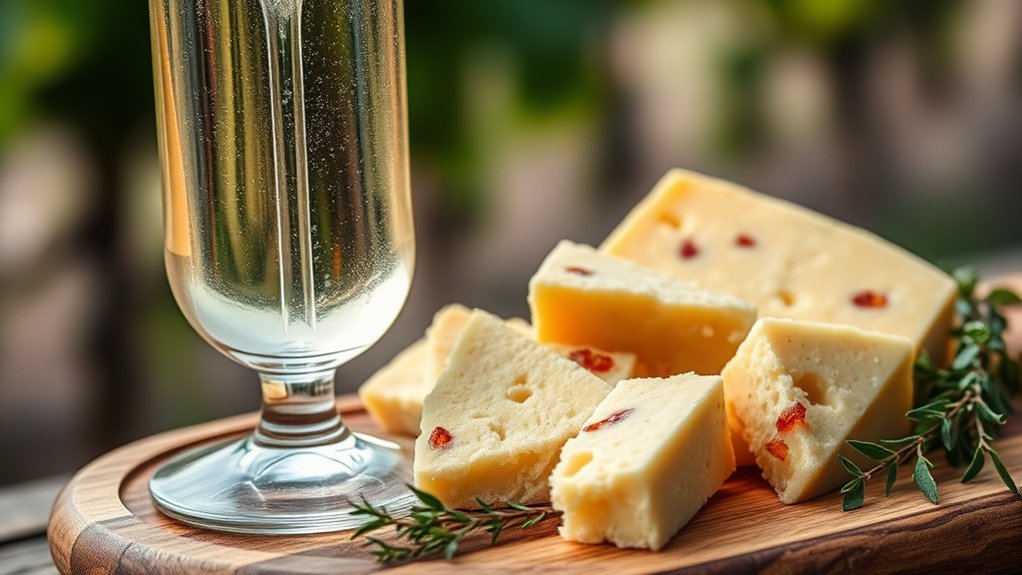
While aged reds often steal the spotlight, well-matured white wines deserve their moment to shine alongside Parmigiano Reggiano. If you’ve been overlooking these golden treasures, you’re missing out on some heavenly combinations that’ll make your tastebuds dance with joy!
Aged white wine options that’ll complement your Parmesan perfectly:
- Aged chardonnay options from Burgundy, with their toasty, buttery notes that echo the nutty complexity of aged Parmesan
- California reserve Chardonnays, offering tropical fruit flavors that cut through the cheese’s richness
- Mature Viognier flavor profiles that bring apricot and honeysuckle notes, creating a delightful contrast
- Aged Rieslings, whose subtle sweetness balences the cheese’s saltiness while their acidity refreshes the palate
Don’t be afraid to experiment – sometimes the most unexpected pairings create the most memorable experiences!
Bold New World Wines That Stand Up to Parmesan’s Intensity
Moving from the subtle elegance of aged whites, let’s shake things up with some bold New World contenders! When Parmesan’s nutty intensity hits your palate, you’ll want wines that don’t cower in the corner. California Zinfandels, with their jammy fruit and peppery kick, create a flavor explosion that’ll make your taste buds high-five each other.
Don’t overlook Australian Shiraz, another robust flavor profile that stands toe-to-toe with Parmesan’s crystaline crunch. The bold wine varieties from Argentina, particularly Malbec, offer that perfect balance of fruit and earthy notes that compliment, rather than compete with, your cheese.
If you’re feeling adventurous, try a Washington State Cabernet—it’s like the cool new kid on the block who somehow gets along with everbody!
Sweet Wine Pairings: Unexpected but Delightful Contrasts
Despite what conventional wisdom might suggest, sweet wines create some of the most memorable pairings with Parmesan cheese you’ll ever experience. The sweet contrast between a honeyed wine and the savory, nutty cheese creates an unexpected harmony that’ll dance across your palate like a culinary tango.
Here are four sweet options that’ll revolutionize your cheese board:
- Late-harvest Riesling – Its apple-honey notes complement Parmesan’s crystaline texture
- Sauternes – The French classic’s marmalade richness cuts through the cheese’s umami punch
- Port wine – Especially tawny varieties that mirror the cheese’s aged character
- Moscato d’Asti – Its gentle bubbles and peach flavors refresh between bites
Don’t be afraid to break tradition! Sometimes the most suprising combinations deliver the most delightful experiences.
Creating the Perfect Parmesan and Wine Tasting Board
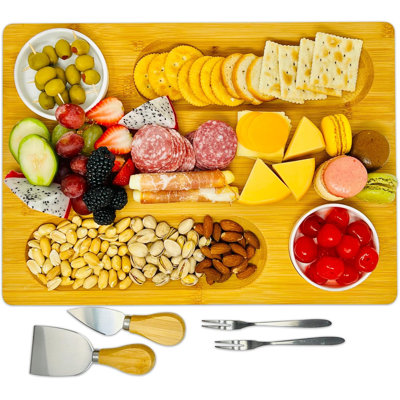
When you’re ready to enhance your entertaining game, assembling the perfect Parmesan and wine tasting board isn’t just impressive—it’s surprisingly simple! Select 3-4 cheese varieties, including aged Parmigiano-Reggiano, which offers those incredible crunchy crystals and complex tasting notes of nuts and fruit.
| Wine Type | Cheese Age | Perfect Accompaniments |
|---|---|---|
| Red Blend | 24-month | Dried figs, honey drizzle |
| Prosecco | 12-month | Green apple slices, walnuts |
| Barolo | 36-month+ | Truffle honey, black cherries |
Don’t forget to let everything reach room temprature about 30 minutes before serving—cold cheese can’t fully express its flavor profile! Label each pairing with little cards describing the tasting notes, so your guests can appreciate the journey from mild and buttery to rich and crystalized. Trust me, they’ll be impressed!
Regional Pairings: Honoring the Geographic Heritage
When pairing Parmesan with wine, you can’t ignore its birthplace in Emilia-Romagna, a region that’s produced magnificent local wines specifically meant to complement their prized cheese. The Po Valley’s winemaking traditions have evolved alongside Parmesan production for centuries, creating natural partnerships that simply make sence when enjoyed together. You’ll find that respecting these geographic connections not only enhances your tasting experience but also tells the complete story of how terroir—that magical combination of soil, climate, and tradition—shapes both the cheese and the wines that were destined to be soulmates.
Emilia-Romagna’s Native Wines
Since Parmigiano-Reggiano calls Emilia-Romagna home, it’s only natural to pair this magnificent cheese with wines from the same Italian region—a perfect “what grows together, goes together” scenario. The food terroir of this area has produced native varietals that compliment the nutty, crystalline texture of aged Parmesan perfectly.
When exploring Emilia-Romagna’s wine treasures, don’t miss these local stars:
- Lambrusco – That slightly fizzy red that cuts through the cheese’s richness
- Malvasia di Candia – A fragrant white with honey notes that dance with Parmesan’s sweetness
- Sangiovese di Romagna – Less intense than it’s Tuscan cousin, but equally deliscous
- Albana di Romagna – Italy’s first white DOCG wine, with almond hints that echo the cheese’s complexity
Po Valley Traditions
Why not journey deeper into the heart of Parmesan’s homeland by exploring the Po Valley’s rich food and wine traditions? This fertile region’s culinary heritage has evolved alongside the cheese-making craft for centuries, creating perfect natural pairings that you’ll adore.
When visiting the Po Valley, you’ll notice locals follow traditions that haven’t changed in generations – they know what works!
| Local Wine | Food Pairing | Experience Level |
|---|---|---|
| Lambrusco | Aged Parmesan | Beginner-friendly |
| Malvasia | Fresh Pasta | Intermediate |
| Fortana | Cured Meats | Advanced |
You’re not just drinking wine here, you’re participating in a cultural ritual where each sip connects you to the region’s agricultural history. It’s like time travel through your tastebuds!
Expert Tips From Sommeliers on Parmesan Wine Matching
To truly enhance your cheese-and-wine experience, professional sommeliers have developed a treasure trove of insights that you’ll want to keep handy for your next Parmesan pairing adventure. Understanding the tasting notes and flavor profiles of both your wine and cheese will boost your culinary enjoyment to new heights!
Here’s what the experts recommend:
- Trust your own palate – if it tastes good to you, that’s what matters most!
- Consider the age of your Parmesan – younger cheeses work with lighter wines, while aged varieties need something robust
- Temperature matters – serve your wine at proper temp (not too cold for reds!)
- Take small sips of wine after each bite of cheese, not before
Frequently Asked Questions
Can Lactose-Intolerant People Safely Enjoy Parmesan?
Yes, if you have lactose intolerance, you can often enjoy aged Parmesan safely as it contains minimal lactose. If you’re sensitive, try cheese alternatives like dairy-free Parmesan made from nuts.
How Long Does Parmesan Cheese Last After Opening?
Like a vigilant guardian, parmesan cheese protects its quality. You’ll find your opened parmesan stays fresh for 4-6 weeks when properly refrigerated. For ideal cheese freshness, wrap it tightly and check parmesan storage conditions regularly.
Is Parmigiano-Reggiano Vegetarian?
No, Parmigiano-Reggiano isn’t vegetarian. Traditional parmesan production requires animal rennet, making it incompatible with vegetarian diets. You’ll need to find specifically labeled vegetarian alternatives if you’re avoiding animal enzymes.
Are Cheaper Parmesan Alternatives Good for Wine Pairing?
You’ll find cheap alternatives work well for wine pairing, though flavor profiles aren’t as complex. They’re milder, so lighter wines often complement them better than bold reds needed for authentic Parmigiano-Reggiano.
Should Parmesan Be Served at Room Temperature With Wine?
Like a shy guest blossoming at a party, parmesan shines when served at room temperature with wine. You’ll experience its full flavor profile when it’s not cold during your wine serving session.