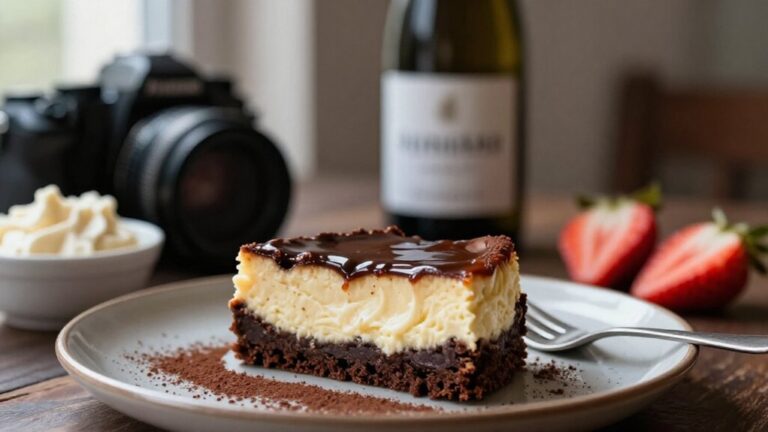
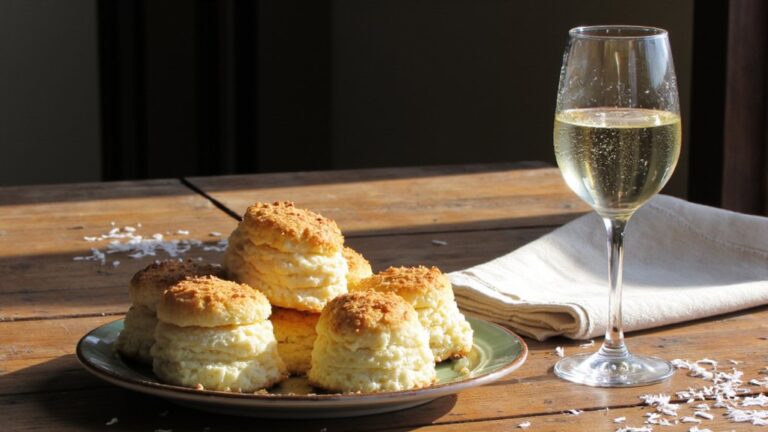
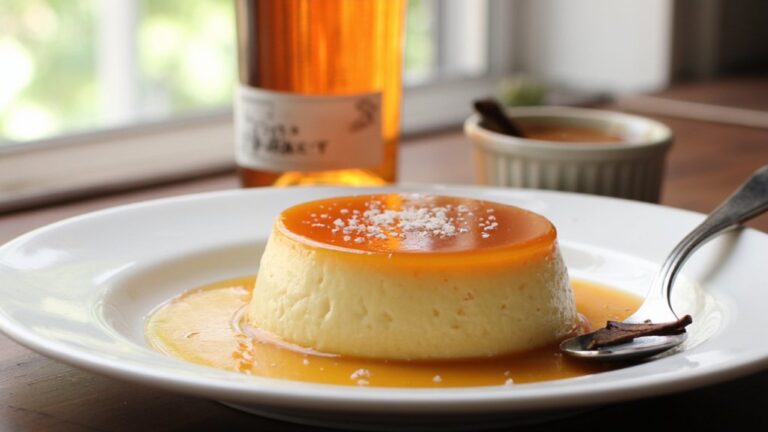
You might think crème brûlée is perfect on its own, but wait until you've tried it with the right wine! When that crackling caramel top meets a well-chosen glass of vino, magic happens. Whether you're a dessert wine devotee or prefer something unexpectedly dry, there's a perfect match waiting to transform your favorite French custard into an even more memorable experience. Let's crack into the possibilities that'll make your taste buds dance.
Key Takeaways
- Sauternes is considered the classic pairing, offering honeyed apricot notes that perfectly complement crème brûlée's creamy vanilla custard.
- Late-harvest Riesling's tropical fruit flavors and balanced sweetness enhance the dessert's rich texture and caramelized top.
- Dry sparkling wines like Prosecco provide refreshing contrast to the dessert's richness through bright acidity.
- Tokaji Aszú's complex flavors harmonize with both the caramelized sugar top and silky custard base.
- Muscat de Beaumes-de-Venise pairs excellently with crème brûlée, featuring complementary orange blossom and candied fruit notes.

Understanding Crème Brûlée's Flavor Profile
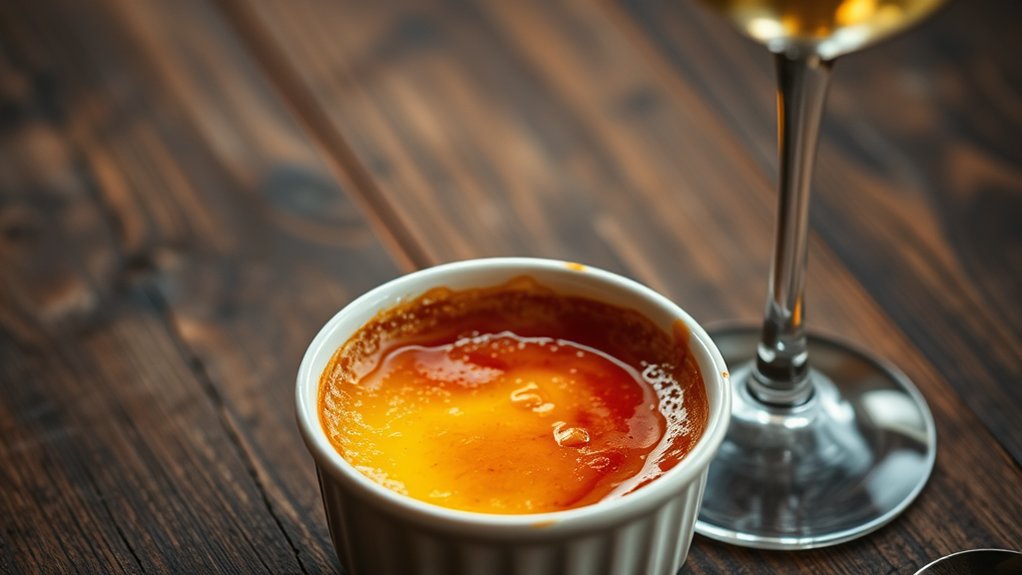
Crème brûlée, that heavenly marriage of silky custard and crackling caramel, is one of dessert's most seductive creations. When you crack through that glassy caramelized top layer, you're greeted by a velvety vanilla custard that's rich, creamy, and impossibly smooth. The flavor balance in this classic French dessert plays between sweet and slightly eggy notes, with the burnt sugar adding a delightful bittersweet complexity.
You'll notice there's very little dessert acidity in crème brûlée, which makes it particularly interesting for wine pairing. Instead, it's all about those luscious dairy notes and that caramel sweetness that coats your palate. The temperature contrast between the warm, brittle top and cool custard creates an experience that's nothing short of magical.
Classic Sweet Wine Pairings
Several classic sweet wines stand ready to dance with this decadent dessert, each bringing its own brand of magic to the partnership. You'll find that Sauternes, with its honeyed apricot notes and velvety texture, creates an absolutely dreamy match that'll make your taste buds swoon.
Don't overlook Muscat de Beaumes-de-Venise, a French charmer that'll wow you with its orange blossom and candied fruit characteristics. If you're feeling adventurous, try a late-harvest Riesling, whose sweet wine characteristics include hints of peach and tropical fruits. For something truly special, reach for a Tokaji Aszú from Hungary – it's like liquid gold with complex flavors that'll complement your crème brûlée's caramelized top perfectly.
Unexpected Dry Wine Options
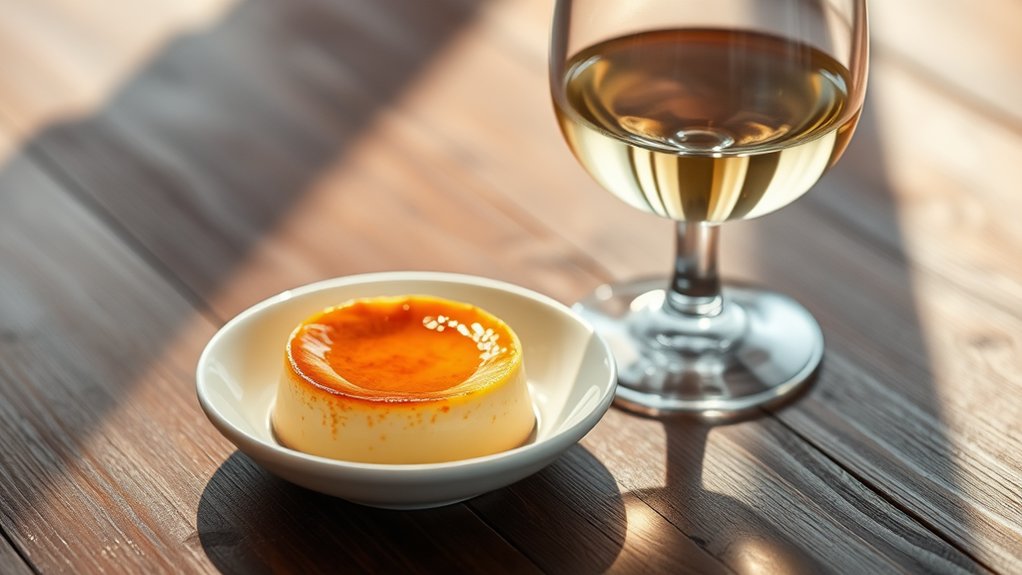
While sweet wines might seem like the obvious choice, don't be afraid to venture into the world of dry wines for your crème brûlée pairing. The contrast between a dry wine and this creamy dessert can create an unexpectedly delightful taste experience that'll wake up your taste buds.
Here are some exciting dry options that'll make your dessert shine:
- Dry sparkling Prosecco – Its bright acidity cuts through the custard's richness
- Chablis – The flinty minerality creates a fascinating contrast with the caramelized sugar
- Dry Riesling – Offers aromatic whites notes that complement the vanilla notes
- Champagne Brut Nature – Zero dosage brings out the dessert's natural sweetness
You'll be amazed at how these unconventional pairings can transform your dessert experience, making each bite a new adventure.



Regional Wine and Dessert Traditions
Different regions around the world have developed their own unique customs when it comes to pairing local wines with crème brûlée, creating delicious combinations that'll make you want to book a flight immediately.
In France, you'll find locals pairing their French desserts with regional Sauternes, while just across the border, Italian wine enthusiasts swear by their golden Vin Santo. You haven't truly experienced crème brûlée until you've tried it in Burgundy, where they'll insist on serving it with a local Muscat that's been aged to perfection. The Italians have their own twist too, often matching their vanilla-infused crème brûlée variations with sweet Italian wines like Moscato d'Asti, proving that sometimes the best pairings don't always follow traditional rules.
Tips for Temperature and Serving
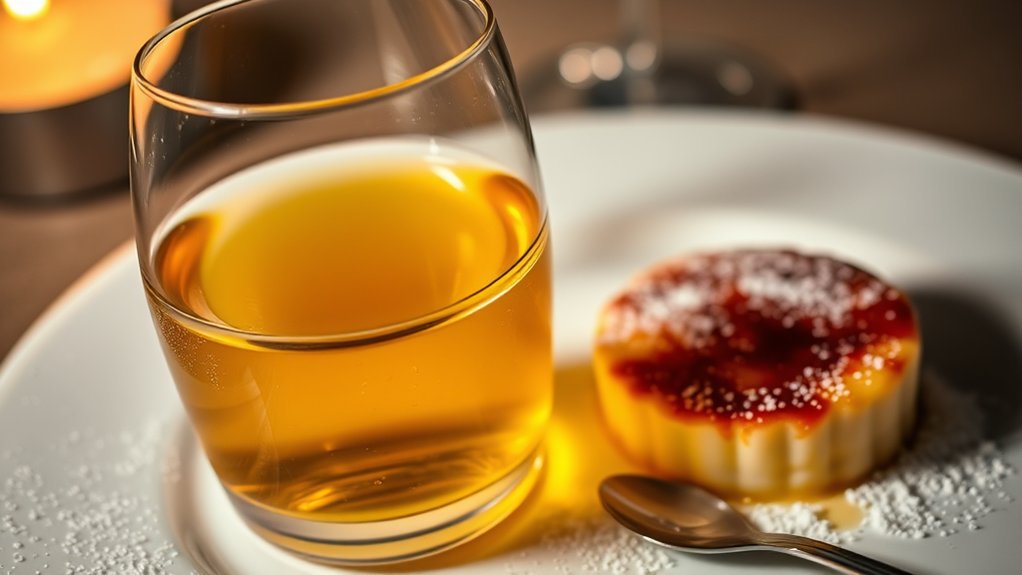
To get the most out of your wine and crème brûlée pairing, serving temperatures can make or break the entire experience. You'll want to pay attention to both the dessert and wine's ideal serving temperature to create that perfect harmony of flavors.
Here's what you need to know about serving these delightful companions:
- Serve your dessert wine slightly chilled, around 55-60°F – any colder and you'll mute those gorgeous sweet notes
- Choose small dessert wine glasses to control portion sizes and enhance the wine's aromatic qualities
- Let your crème brûlée cool for 5-10 minutes after torching that delicious caramel top
- Keep your glassware choice elegant but simple – those fancy crystal stems aren't necessary for this classic pairing
Seasonal Wine Selections
Now that you've mastered the art of serving temperatures, let's explore how the seasons can guide your wine choices for crème brûlée pairings. In summer, you'll want to embrace lighter, fruit-forward wines like Moscato d'Asti or a vibrant late-harvest Riesling that'll dance on your palate like a summer breeze.
As autumn rolls in, switch to richer seasonal grape varieties like Sauternes or aged Tawny Port, which perfectly complement those cozy fall evenings. Winter calls for holiday dessert pairings that'll warm your soul – think Ice Wine or Pedro Ximénez sherry, because nothing says "festive season" quite like these liquid gems. Come spring, lighten things up with a playful Brachetto d'Acqui or a delicate Vin Santo, which'll have you dreaming of flower-filled meadows.
Frequently Asked Questions
How Long Can I Store an Opened Bottle of Dessert Wine?
Like liquid gold, your dessert wine's sweetened splendor can last 4-6 weeks when stored properly. You'll want to keep your opened bottle refrigerated and tightly sealed to maintain its delightful character.
Can I Substitute Sparkling Wine for Sweet Wine With Crème Brûlée?
You can use sparkling wine instead of dessert wine, as it's a great alternative that offers invigorating bubbles and acidity to cut through crème brûlée's richness. Choose a demi-sec or sweet sparkling.
Does the Vanilla Bean Variety Affect Which Wine to Choose?
With over 150 vanilla varieties worldwide, you'll want to match your wine's characteristics carefully. Tahitian vanilla pairs beautifully with lighter dessert wines, while Madagascar's intense flavor needs bolder, sweeter wine options.
Will Colored or Flavored Crème Brûlée Change the Ideal Wine Pairing?
Yes, flavored variations and color influence your wine choice greatly. You'll want to match the dessert's dominant flavor – choose fruitier wines for berry variations and nuttier wines for chocolate versions.
Should I Serve Wine Before, During, or After This Dessert?
Like a medieval feast, you'll want to serve your properly chilled wine during dessert, not before or after. This lets you savor how the serving temperatures enhance both treats simultaneously.