Cottage cheese loves bright, low‑tannin wines that cut the cream and let the curds sing. Go for crisp whites like unoaked Sauvignon Blanc or dry Riesling, a pale rosé, or lively sparkling for fruit or honey toppings. For savory, herb‑heavy, or baked versions try light reds like Beaujolais or Pinot Noir, or even a tawny Port with caramelized toppings. Serve cool, match prep not just the cheese, and keep tastes balanced—keep going and you’ll pick perfect bottle combos.
Key Takeaways
- Match the wine to the dish’s preparation and toppings, not the cottage cheese alone.
- Bright-acid whites, pale rosés, or sparkling wines cut creaminess and lift fresh or sweet toppings.
- Light, low-tannin reds (Beaujolais, Gamay, Pinot) pair well with savory, baked, or mushroom-forward preparations.
- Slightly sweet or aromatic wines (off-dry Riesling, Moscato) soothe spicy or tangy seasonings and honeyed desserts.
- For smoked, caramelized, or nutty finishes, choose fortified wines (Tawny Port, Madeira) to echo roasted flavors.


How to Evaluate Cottage Cheese: Texture, Salt, Sweetness
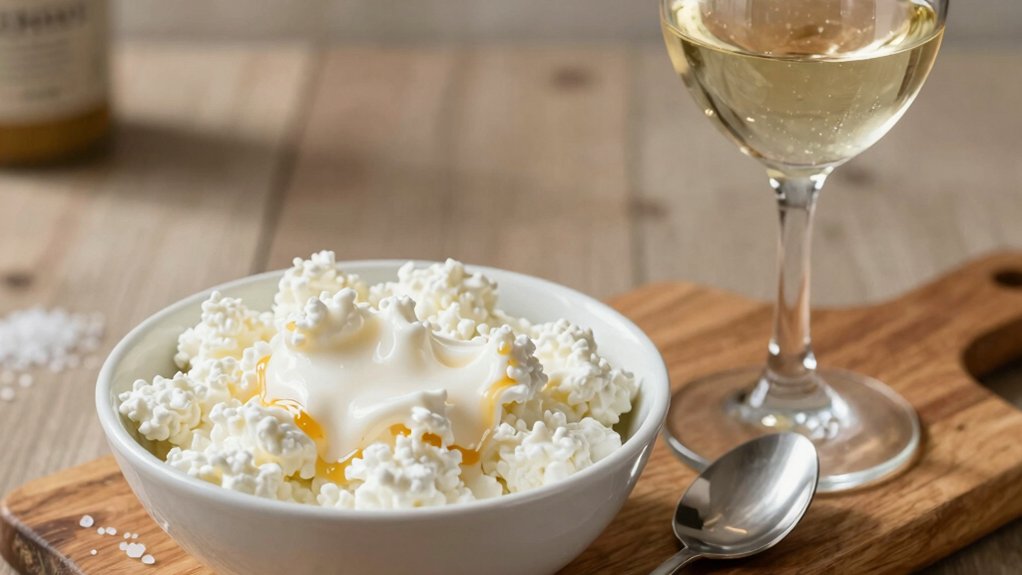
When you’re judging cottage cheese, start with the texture — it tells you a lot before you even taste it. Feel the curd size first; big curds give you a rustic bite, small curds feel smoother and almost creamy. You’ll notice salt quickly, so sniff gently and then taste a small spoonful to judge how briny it is. Sweetness is subtle, but it balances salt and can make the cheese feel fresher. Pay attention to acidity balance too; a slight tang wakes up flavors, but too much will clash with delicate toppings or wine. Consider pairing your cottage cheese with crisp white wines like Sauvignon Blanc to enhance its creamy texture with refreshing acidity. Trust your tongue. Take notes if you want, or just remember what felt right. And yes, a goofy face of surprise is allowed — cheese deserves it.
Cottage Cheese Pairing Rules by Style & Preparation
Since cottage cheese comes in so many moods — from lumpy and salty to silky and sweet — you’ll want to match the wine to how the dish’s dressed up, not just the cheese itself. If it’s savory with herbs or smoked fish, pick a wine with enough acidity and a hint of minerality to cut through richness; think lively, not heavy. For spicy or tangy preparations, choose something with a little sweetness or low tannin so flavors don’t fight. When cultural origins steer a recipe — say Mediterranean vs. Nordic twists — honor those profiles and mirror them in the wine. Mediterranean regional wines from Greece, Lebanon, and Spain can beautifully complement dishes with similar culinary traditions. Also, consider fatigue resistance: lighter wines are easier to sip all evening. Trust your palate, experiment, and have fun.
Whites, Rosés, and Sparklings for Creamy or Sweet Cottage Cheese

If you’ve got cottage cheese dressed up creamy or a touch sweet, reach for whites, rosés, or bubbles that won’t try to outshine the dish — they should feel like friends, not loud relatives at a quiet dinner. You’ll want wines with bright acidity and light body, using acidic contrasts to cut through creaminess and keep each bite lively. Think unoaked Sauvignon Blanc, dry Riesling, a pale rosé, or sparkling wine — they bring fruity aromatics that echo sweet fruit toppings without making things cloying. Serve cool, not ice-cold, so flavors show. Small bubbles add fun and texture. Try a little drizzle of honey with a floral Riesling. Like the balanced pairing of crisp Italian whites with fresh dishes, cottage cheese benefits from wines with citrus notes and herbal undertones that complement its creamy texture. It’s simple, invigorating, and you’ll smile at how well soft cottage cheese and zippy wine play together.


Light Reds and Fortified Wines for Savory, Baked, or Spiced Cottage Cheese
Boldness isn’t needed here, but you don’t want a wine that’s shy either — light reds and fortified bottles can cozy up to savory, baked, or spiced cottage cheese dishes without stealing the show. You’ll like an Earthy Gamay when herbs and mushrooms are in the mix; it’s bright, a little rustic, and won’t overwhelm delicate curds. For spiced bakes try something with gentle tannin and fruit so the spices sing without clashing. And don’t overlook Tawny Port with a smoked or caramelized top — its nutty sweetness can echo roasted flavors and make creamy textures feel richer. Pairing’s about balance. Let the wine echo a dominant note, but leave room for the dish to shine. For optimal enjoyment, serve the wine at ideal serving temperatures to enhance the pairing experience. Trust your palate; have fun.
Quick Pairing Combos + Three Bottle Picks per Wine Style

Alright — now let’s make pairing simple and a little fun. You’ll find quick combos that work with breakfast bowls, picnic pairings, or a snack topped with fresh fruit and an herb garnish. Try these fast matches and pick a bottle from each style.
- Sauvignon Blanc + cottage cheese, lemon zest, berries; bottle picks: Sancerre, New Zealand, Loire Valley. Sauvignon Blanc’s crisp acidity and citrus notes make it an ideal match for fresh, bright cottage cheese preparations.
- Rosé + melon, prosciutto, herb garnish; bottle picks: Provence, Spanish rosado, Oregon
- Light Red + mushroom toast, baked cottage cheese; bottle picks: Beaujolais, Pinot Noir, Gamay
- Sparkling + breakfast bowls with yogurt, granola, fresh fruit; bottle picks: Cava, Prosecco, Champagne
- Dessert/Fortified + honey drizzle, nuts; bottle picks: Tawny Port, Moscato, Madeira
Frequently Asked Questions
Can Cottage Cheese Be Used in Wine-Based Sauces or Reductions?
Yes — you can. You’ll stir cottage cheese into wine-based cream reductions gently, using low heat to avoid curdling, and finish with whisked savory emulsions for silky texture, adjusting acidity and seasoning to balance flavors.
Are There Non-Alcoholic Pairings That Mimic Wine Flavors?
Yes — you can mimic wine flavors with sparkling verjuice and oak aged kombucha; they’ll give acidity, tannin-like depth and effervescence, and you’ll balance them with citrus, herbs, and a touch of saline for complexity.
How Does Lactose Intolerance Affect Wine Pairing Choices?
You can still enjoy wine; lactose intolerance rarely affects wines directly, but you might use lactase supplements for dairy courses and watch fermentation sensitivity—some people react to sulfites or histamines present in certain wines, so choose gently.
Can Aged or Dry Cottage Cheese Change Pairing Recommendations?
Yes — aged texture and dry acidity in cottage cheese do change pairings: you’ll want wines with brighter acidity or light tannins to balance richness, or unoaked whites and youthful reds to complement nuttier, firmer cheese profiles.
Do Wine Pairings Differ for Plant-Based Cottage Cheese Alternatives?
Yes — you’ll find pairings differ: plant-based alternatives’ nutritional profiles and milder flavors often need brighter, higher-acidity wines, while varied fats and texture contrasts call for creamy whites or light reds to balance mouthfeel and flavor intensity.