When pairing wine with crostini, you’ll want to match the topping’s intensity with your vino. For tomato-basil, try crisp Italian whites like Pinot Grigio. Creamy cheese crostini shine with unoaked Chardonnay, while bolder cheeses call for Malbec. Mediterranean olive tapenade loves coastal wines from Sicily or Greece. Seafood? Reach for Albariño. Meaty toppings demand Sangiovese or Cabernet. Don’t forget sweet crostini with dessert wines! These perfect matches will transform your appetizer game completely.
Key Takeaways
- Match wine acidity to your crostini topping intensity for complementary flavor profiles.
- For tomato-basil crostini, choose Italian whites like Pinot Grigio or Vermentino.
- Pair creamy cheese crostini with crisp whites or light reds like Pinot Noir.
- Coastal wines from Provence, Sicily, or Greece best complement olive tapenade crostini.
- Progress from light to bold flavors when creating a crostini and wine tasting flight.
The Art of Crostini: Building the Perfect Canvas
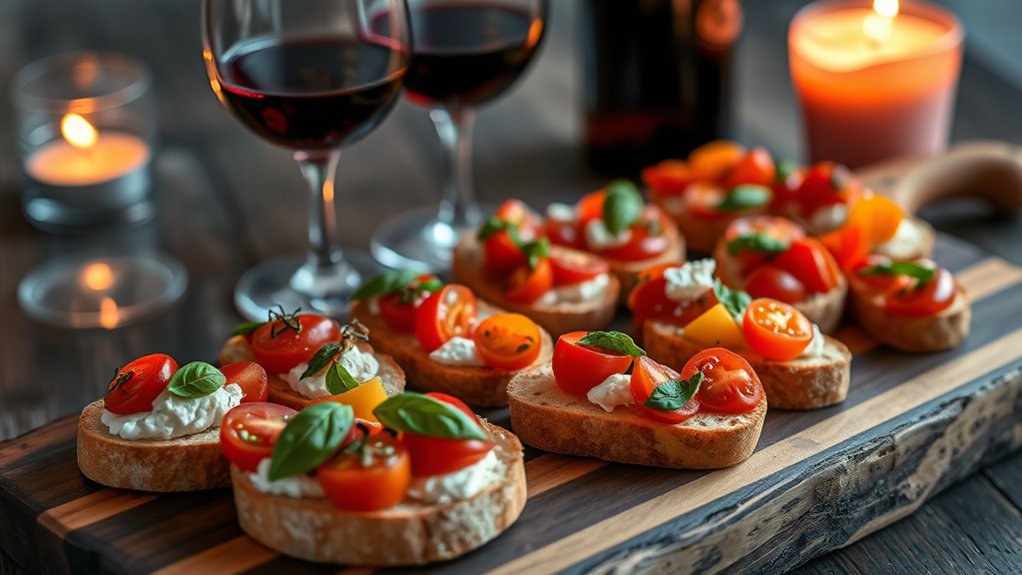
Three simple elements make the perfect crostini: bread, oil, and heat—but don’t be fooled by their simplicity! Mastering basic crostini techniques will boost your appetizer game from amateur to impressivo in minutes. Start with day-old bread (fresher stuff gets too mushy), slice it thin—about 1/4 inch—and brush generously with good olive oil. Don’t skimp here, folks!
Toast until golden and crisp, but not so much that you’ll crack a tooth. Remember, you’re creating a canvas, not a weapon! The key to flavor balance lies in that perfect crunch-to-chew ratio. When done right, your crostini should have a satisfying snap that gives way to a tender middle, ready to support whatever delicious toppings you’ve dreamed up. Trust me, your wine will thank you!
Classic Tomato-Basil Crostini Meets Italian Whites
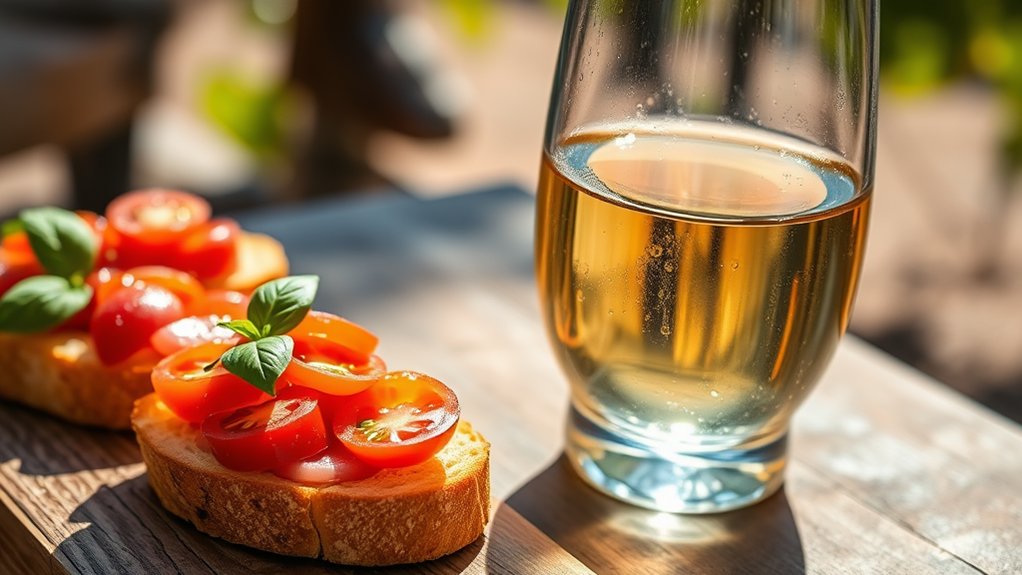
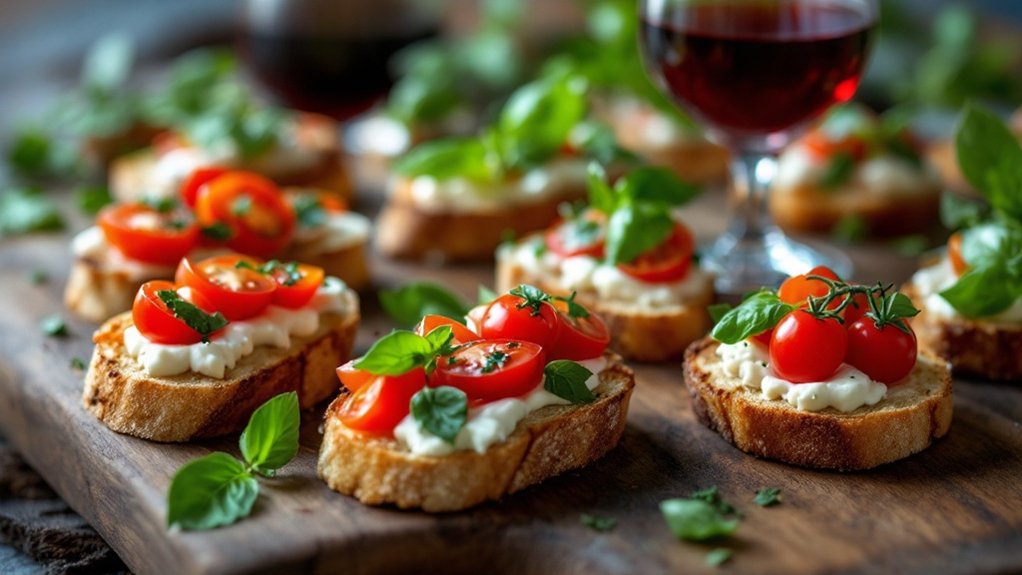
When you’re serving classic tomato-basil crostini, you’re practically begging for an Italian white wine to complete the experience! The bright acidity of wines like Pinot Grigio or Vermentino cuts through the juicy tomatoes while complementing the herbaceous basil notes. It’s a match made in appetizer heaven!
Among all crostini variations, this classic combo might be the easiest to pair, but that doesn’t mean it’s boring. Try a crisp Soave from the Veneto region, where the volcanic soils give the wine a mineral quality that’ll make your taste buds do a happy dance. The wine acidity balances the olive oil and garlic, creating that perfect harmony that’ll have your guests saying, “Wow, you really know your stuff!” Additionally, the zesty flavors of Italian whites align well with the vibrant ingredients in crostini, enhancing the overall appetizer experience.
Rich and Creamy: Wine Pairings for Cheese Crostini
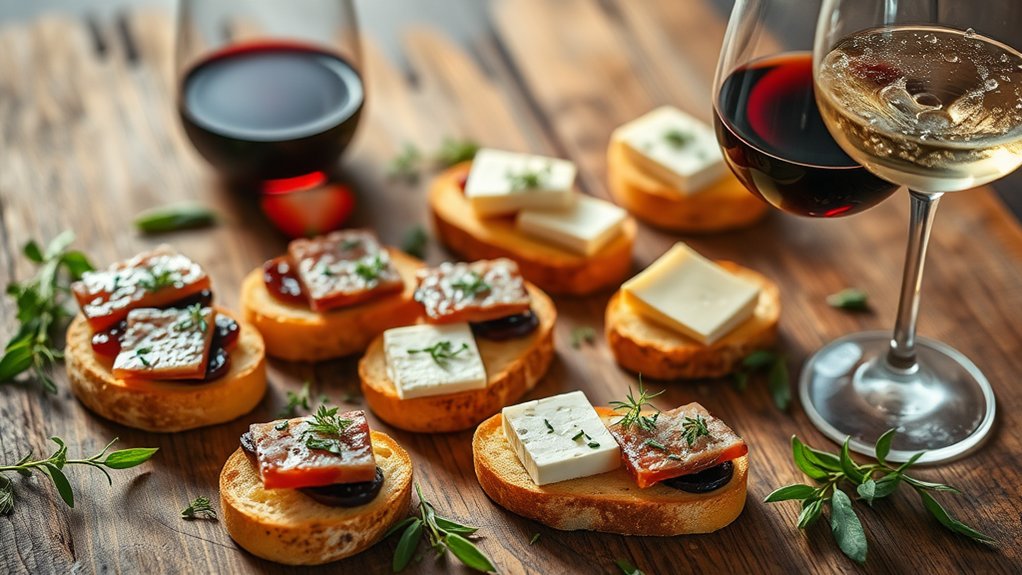
Cheese crostini, with all its creamy, indulgent glory, deserves wines that can stand up to its rich flavors while still letting those dairy notes shine! When you’re dealing with different cheese types – from tangy goat cheese to bold blue – your wine choice makes all the difference.
For those creamy textures of mascarpone or ricotta crostini, you’ll want a crisp Pinot Grigio or unoaked Chardonnay. They’re like the perfect dance partners, complementing without stepping on toes! Sharper cheeses like aged cheddar? Grab a glass of Malbec or Zinfandel – they’ve got enough muscle to handle those intense flavors.
Don’t be afraid to experiment! Sometimes the most surprising pairings (like a sweet Riesling with blue cheese) create those “where have you been all my life?” moments. Additionally, pairing with light to medium-bodied reds like Pinot Noir can enhance the overall tasting experience with creamy cheeses.
Mediterranean Inspirations: Olive Tapenade and Wine
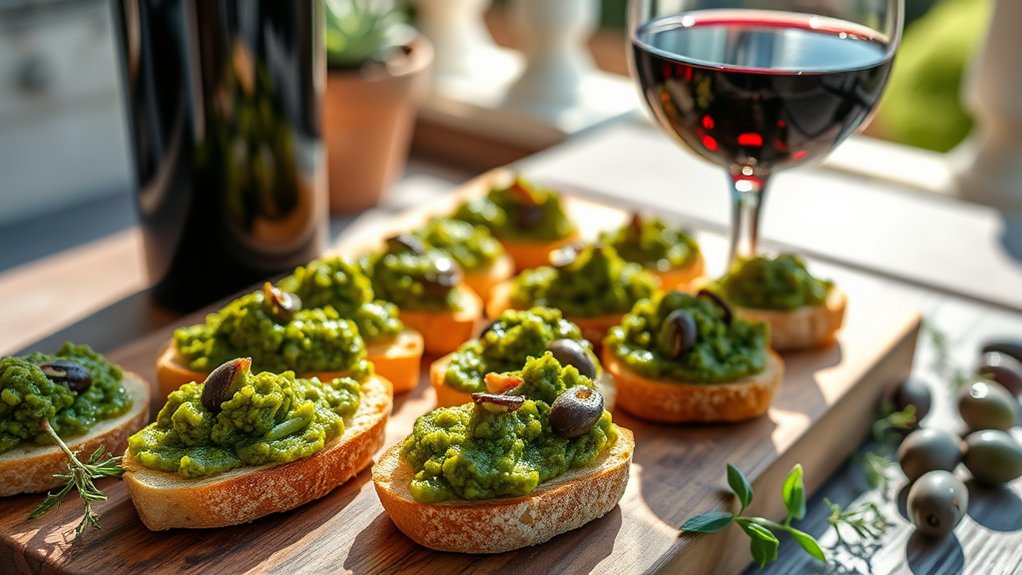
When you’re serving olive tapenade crostini, you’re entering the wonderful world of Mediterranean flavors with their complex herbal profiles and briny goodness. The mixture of olives, capers, and herbs creates a robust flavor that’s perfectly complemented by coastal wines from regions like Provence, Sicily, or Greece. You’ll find that crisp whites with mineral notes or light-bodied reds from these sun-drenched areas bring out the rustic, savory qualties of your tapenade while cutting through its richness.
Tapenade’s Herbal Complexity
Deeply rooted in the sun-drenched shores of the Mediterranean, olive tapenade brings a symphony of herbal complexity that’ll challenge even the most experienced wine enthusiast. The bold herbal notes in tapenade—rosemary, thyme, and basil—create a flavor balance that dances beautifully with certain wines.
| Tapenade Herb | Wine Pairing | Flavor Experience |
|---|---|---|
| Rosemary | Sauvignon Blanc | Crisp, herbal harmony |
| Thyme | Vermentino | Citrusy, aromatic bliss |
| Basil | Pinot Grigio | Light, invigorating contrast |
| Oregano | Grenache Blanc | Floral, spicy interplay |
| Garlic | Albariño | Zesty, pungent delight |
You’ll find the trick is matching wine acidity to the tapenade’s intensity. Don’t be afraid to experiment—sometimes an unexpected pairing creates the most memorable flavor experience!
Coastal Wine Selections
The Mediterranean coastline doesn’t just gift us with olive tapenade—it’s also home to some of the world’s most expressive wines! When pairing with your tapenade-topped crostini, look to bottles from these sun-drenched shores where coastal terroir creates magic in every sip. Wines from Provence, Sicily, and Santorini absorb oceanic influences that mirror the briny notes in your appetizer.
Try a crisp Vermentino from Sardinia, with it’s lemony zip and subtle salinity, or maybe a mineraly Assyrtiko that practically whispers “seaside” with each taste. Don’t overthink it—the wines grown within sight of the same waters that nurture those olives will naturally complement your spread! Remember, these coastal vineyards have been perfecting this pairing for centuries, so you’re tapping into ancient wisdom with every delicious bite and sip.
Seafood Crostini: From Anchovies to Shrimp
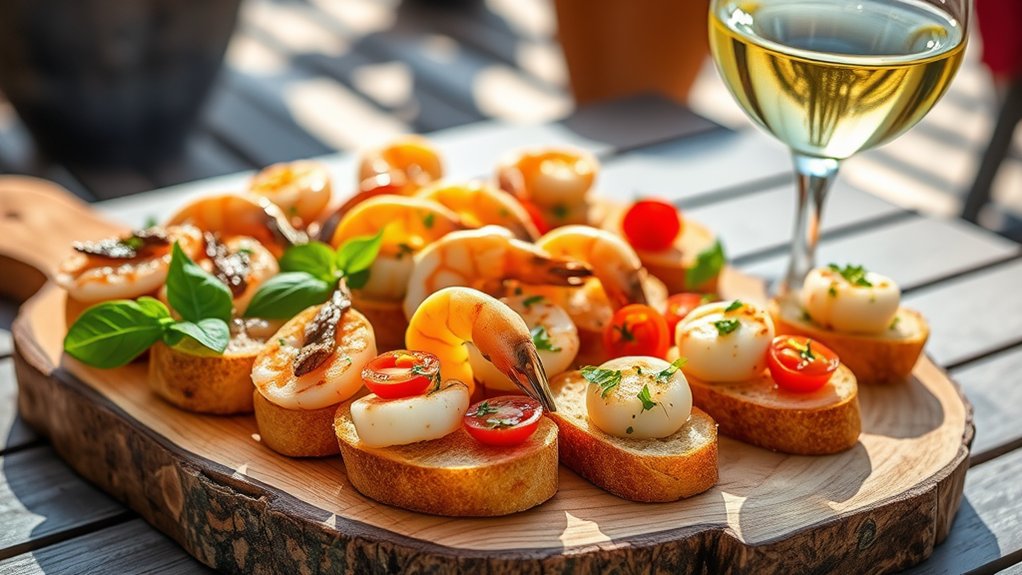
When pairing wines with seafood crostini, you’ll find that the briny punch of anchovies calls for something bright and acidic, like a crisp Vermentino or zesty Albariño that can cut through the intensity. For more delicate shrimp toppings, you’re better off with a gentle Pinot Grigio or unoaked Chardonnay, which won’t overpower the subtle sweetness of the seafood. You’ll be amazed how the right wine can transform these little ocean-inspired bites from simple appetizers into memorable flavor experiences, making your guests wonder if you’ve secretly been taking sommelier classes! A crisp, unoaked Chardonnay from Chablis or Russian River Valley can perfectly complement the flavors of your seafood crostini, enhancing the overall dining experience.
Anchovy Brightness Pairing
Seafood crostini, anchored by briney anchovies and ranging to succulent shrimp, offers a perfect canvas for bright, acidic wines that’ll cut through the richness while enhancing the oceanic flavors. When working with those distinctive anchovy flavors, you’ll want a wine with pronounced acidity – think Albariño or Vermentino. These zippy whites create a mouth-watering counterbalance that’ll make your taste buds do a little happy dance!
You might be tempted to avoid such an assertive pairing, but trust me, the punchy wine acidity actually transforms those little fish into something magical. The lemon and mineral notes in these wines act like a squeeze of citrus, brightening everything up. It’s like the difference between a dull photo and one where you’ve cranked up the contrast – suddenly, everthing pops!
Delicate Shrimp Selections
Unlike their bolder anchovy cousins, delicate shrimp crostini call for wines that won’t overpower their sweet, subtle flavors. You’ll want something crisp and invigorating that compliments rather than competes with those tender morsels on your toast.
When working with different shrimp varieties, from tiny bay shrimp to plump tiger prawns, remember that pairing techniques should focus on acidity and minerality. A chilled Pinot Grigio or Albariño works wonders here, cutting through any richness while highlighting the shrimp’s natural sweetness.
Don’t be afraid to experiment a bit—after all, wine pairing isn’t rocket science! A glass of unoaked Chardonnay or even a light Provence rosé can be your new best friend when serving these delicate treasures at your next gathering.
Meat Lovers’ Crostini: Bold Reds for Prosciutto and Pâté
Three magnificent options await meat lovers who’re pairing wines with savory crostini toppings. When you’re serving prosciutto pairings or rich pâté selections, you’ll want wines that can stand up to these robust flavors without getting lost in the mix. Bold reds are your best friends here!
- Tuscan Sangiovese cuts through fatty prosciutto with its bright acidity, creating a perfect balance that’ll make your taste buds sing.
- Cabernet Sauvignon’s firm tannins and blackcurrant notes embrace pâté’s richness like they were made for each other.
- Syrah brings peppery, smoky elements that transform simple meat crostini into a flavor explosion worthy of a standing ovation.
For an even more satisfying experience, consider how the cooking method influences your wine pairing choices! Don’t be intimidated—these combos are foolproof even if you’re new to wine pairing!
Sweet Meets Savory: Fruit Crostini and Dessert Wines
Moving from meaty masterpieces to sweeter territory, we’re now exploring the enchanting world where fruit meets toasted bread! These delightful fruit combinations create a perfect playground for dessert wines that’ll make your taste buds dance.
When you’re arranging crostini topped with ricotta and fig jam, reach for a glass of Moscato d’Asti—its light effervescence cuts through the creaminess while complementing the fruity notes. For apple and brie crostini, a late-harvest Riesling works magic, with its honey-like sweetness balancing the tangy cheese. Don’t be afraid to experiment! Even chocolate-drizzled strawberry crostini can find their soulmate in a Ruby Port. The secret to dessert balancing is matching sweetness levels, so your wine isn’t overpowered by the fruit’s natural sugars. Trust us, your guests will be impressed! A well-chosen sweet wine option can elevate your crostini experience to new heights.
Creating a Crostini and Wine Tasting Flight
When you’ve mastered the individual pairings, it’s time to enhance your entertaining game by creating a complete crostini and wine tasting flight! Arrange your spread from lightest to boldest flavors, mirroring how professional tastings in renowned wine regions progress. Your guests will love exploring different crostini variations while expanding their palates.
For a successful tasting experience:
- Provide tasting cards with brief descriptions of each pairing, mabey highlighting the origin of both the wine and ingredients
- Limit your flight to 4-5 pairings to prevent flavor fatigue
- Include palate cleansers like water crackers or cucumber slices between tastings
Don’t worry about being too fancy—even inexperienced wine drinkers will appreciate the thought you’ve put into creating this delicious journey through complementary flavors. It’s all about having fun, not passing a sommelier exam!
Seasonal Crostini Pairings Throughout the Year
The art of food and wine pairing doesn’t exist in a vacuum—it dances with the seasons just as nature does! As you move through the calendar, you’ll find endless opportunities to match your crostini with wines that complement the seasonal ingredients available at their peak.
In spring, try pairing pea and mint crostini with a crisp Sauvignon Blanc, while summer calls for tomato-basil toppings alongside a chilled rosé. When autumn arrives, you can’t go wrong with butternut squash and sage crostini matched with an oaky Chardonnay. Winter’s festive occasions practically demand truffle and mushroom crostini served with earthy Pinot Noir! Additionally, consider incorporating light to medium-bodied reds to enhance the flavors of your seasonal toppings.
Frequently Asked Questions
Can I Prepare Crostini a Day in Advance for a Party?
Yes, you can prepare crostini a day ahead for your party planning convenience. Just toast the bread, cool completely, and store in an airtight container. Add toppings shortly before serving for best crostini preparation results.
What’s the Best Bread Thickness for Crostini That Won’t Get Soggy?
Like an orchestra where every instrument plays its part perfectly, your bread texture matters. Aim for ½-inch slices—thin enough for ideal crunch but sturdy enough to hold toppings without getting soggy.
How Long Can Wine Remain Open During a Crostini Tasting Event?
You’ll notice wine oxidation begins within 3-5 days of opening. For your tasting duration, reds stay fresh 3-5 days, whites 5-7 days, and sparkling 1-2 days when properly resealed.
Should I Serve Wines at Room Temperature or Chilled With Crostini?
Like a maestro’s baton guiding the orchestra, wine temperatures conduct flavor. You’ll want whites chilled (45-55°F) and reds slightly below room temperature (60-65°F). Different wine glass types enhance each wine’s unique character.
Are There Non-Alcoholic Pairing Options That Complement Crostini Well?
Yes, you’ll find many non-alcoholic beverages that complement crostini beautifully. Sparkling water, fruit-infused teas, and virgin spritzers offer varied flavor profiles that enhance your toppings without overwhelming them.