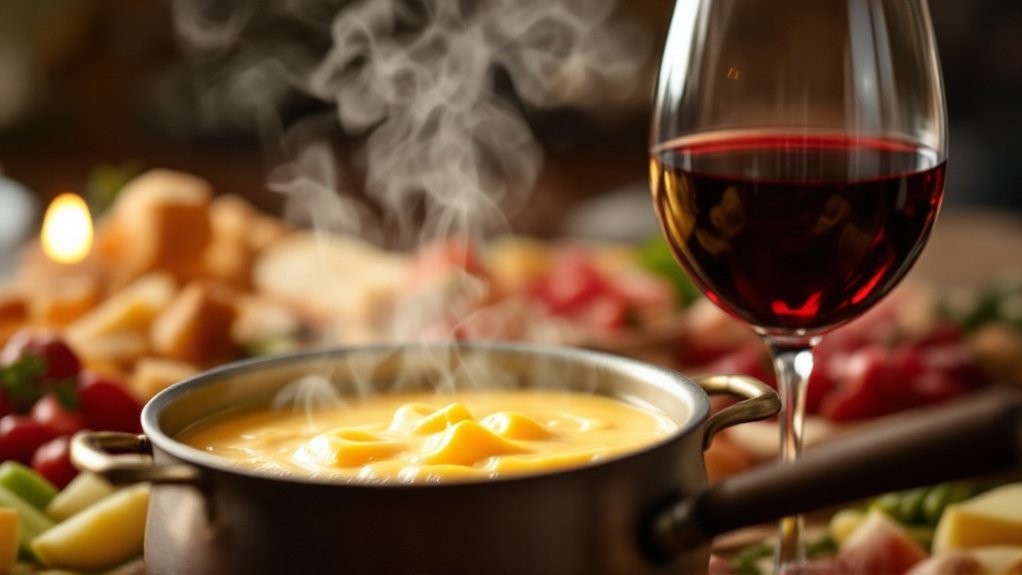
For traditional cheese fondue, you’ll want crisp white wine like Chasselas or Sauvignon Blanc – their acidity cuts through the richness perfectly! If your fondue has stronger cheeses, try a medium-bodied Pinot Noir or spicy Syrah. Sparkling wines work wonders too, as the bubbles cleanse your palate between bites. Remember, regional pairings follow the “what grows together goes together” principle, so Swiss wines naturally complement Swiss cheeses. Your taste buds will thank you for these magical combinations!
Key Takeaways
- Classic Swiss fondue pairs best with crisp white wines like Chasselas that balance the richness with high acidity.
- Medium-bodied Pinot Noir complements Gruyère and Emmental fondues without overpowering the cheese flavors.
- Sparkling wines like Champagne or Prosecco act as palate cleansers between bites of creamy fondue.
- Regional wine and cheese pairings follow the “drink what grows beside it” philosophy for enhanced flavor profiles.
- Wine temperature matters: serve whites chilled (45-50°F) and reds slightly cooler than room temperature (60-65°F).

The Science Behind Wine and Cheese Compatibility
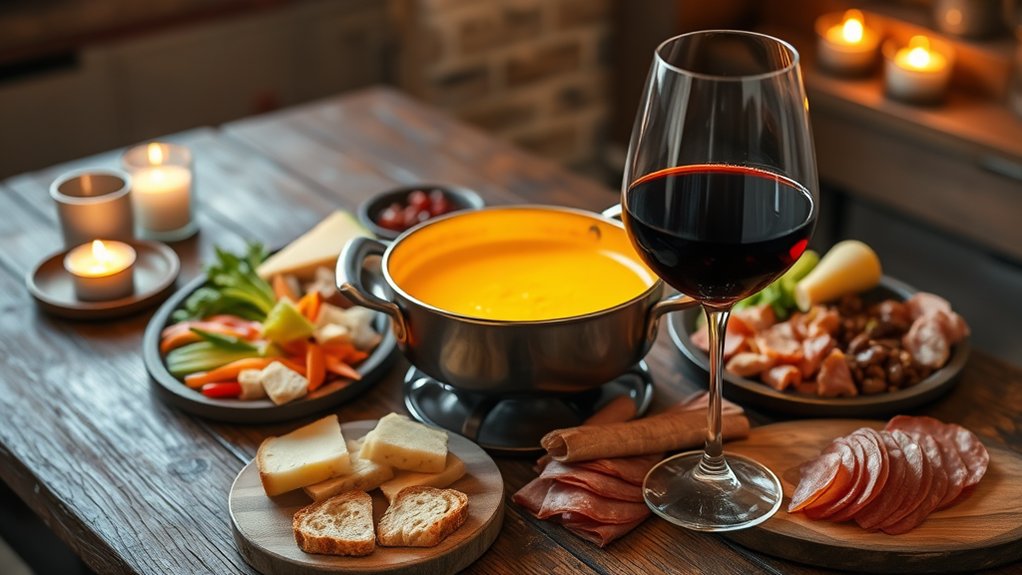
Chemistry isn’t just for laboratories—it’s happening right in your fondue pot! When you dip that crusty bread into melted cheese and take a sip of wine, you’re experiencing a fascinating dance of flavor profiles. The proteins in cheese interact with the tannins in wine, creating either harmony or discord on your palate.
Ever wonder why acidic wines like Sauvignon Blanc cut through creamy cheeses so well? It’s cheese chemistry at work! The fat in cheese coats your tongue, while the wine’s acidity scrapes it clean, readying your taste buds for the next delicious bite. You’ll find that wines with similar regional origins as your fondue cheese often pair magically—they’ve literally grown up together! This isn’t rocket science, it’s way more delicious, and you don’t need a lab coat to experiment. The interplay of tannins and proteins in wine and cheese can enhance the overall tasting experience.
Classic Swiss Fondue Meets Its Match: Crisp White Wines
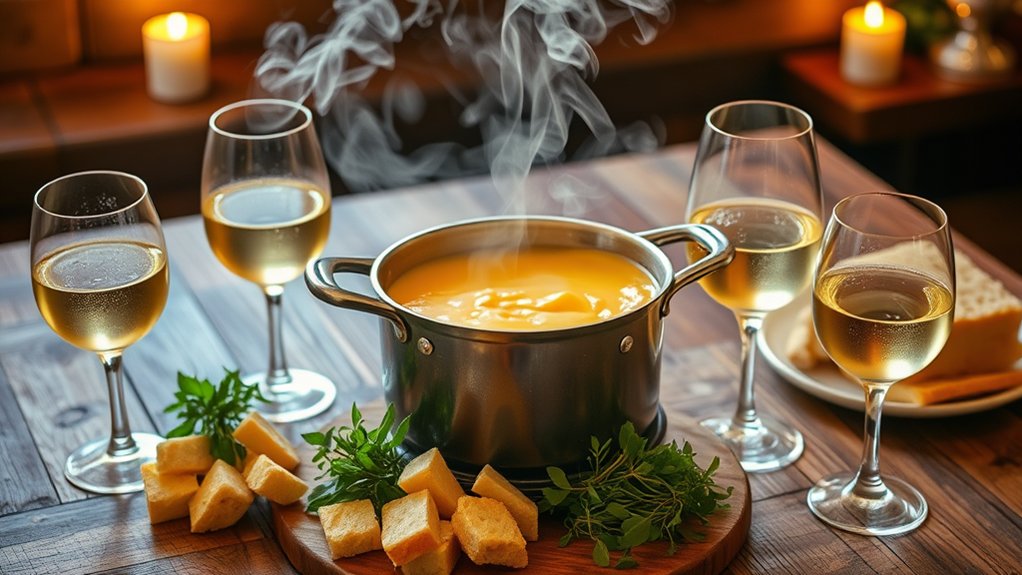
Three classic Swiss fondue styles dominate the Alpine landscape, and each one’s calling out for a crisp white wine companion! When you’re dipping crusty bread into that bubbling pot of Gruyère and Emmental, you’ll want to reach for Swiss varieties like Chasselas, which cuts through the richness with invigorating acidity.
Regional selections matter too—wines from Valais or Lake Geneva complement fondue’s flavor profiles perfectly, balancing the cheese’s saltiness with fruit-forward notes. The wine characteristics you’re looking for? High acidity, moderate alcohol, and minimal oak influence. Trust me, there’s nothing quite like the magic when a mineraly Fendant meets traditional fondue! In addition, exploring light, crisp whites can elevate your fondue experience even further, enhancing the overall flavor.
You don’t need to be a sommelier to get this pairing right—just remember that crisp whites help scrape your palate clean between bites, keeping your tastebuds ready for more cheesy goodness.
Bold Reds for Heartier Cheese Blends
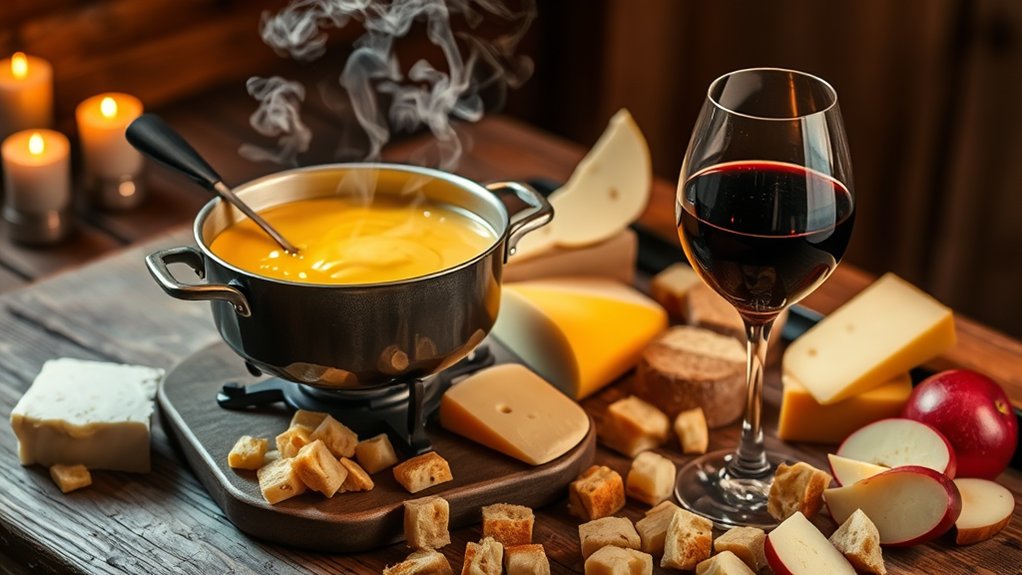
When robust fondue variations take center stage, you’ll need four fantastic red wine styles to stand up to those heartier cheese blends! Try a spicy Syrah with smoked Gouda fondue, where the wine’s peppery notes complement those savory cheese flavors perfectly. For Alpine-style fondues with Gruyère and Emmental, reach for a medium-bodied Pinot Noir that won’t overwhelm the cheese texture compatibility.
Don’t shy away from bold red varietals like Cabernet Sauvignon when you’re serving a fondue with aged cheddar or blue cheese—their tannins actually cut through the richness delightfully! And here’s a fun surprise: a fruity Zinfandel pairs amazingly with fontina and provolone blends, creating a taste sensation that’ll make your tastebuds do a happy dance. Who knew cheese dipping could be so sophisticated? Additionally, pairing with bold wines like Cabernet Sauvignon is particularly effective for sharp aged cheddar, enhancing the overall flavor experience.

Sparkling Options to Cut Through Richness
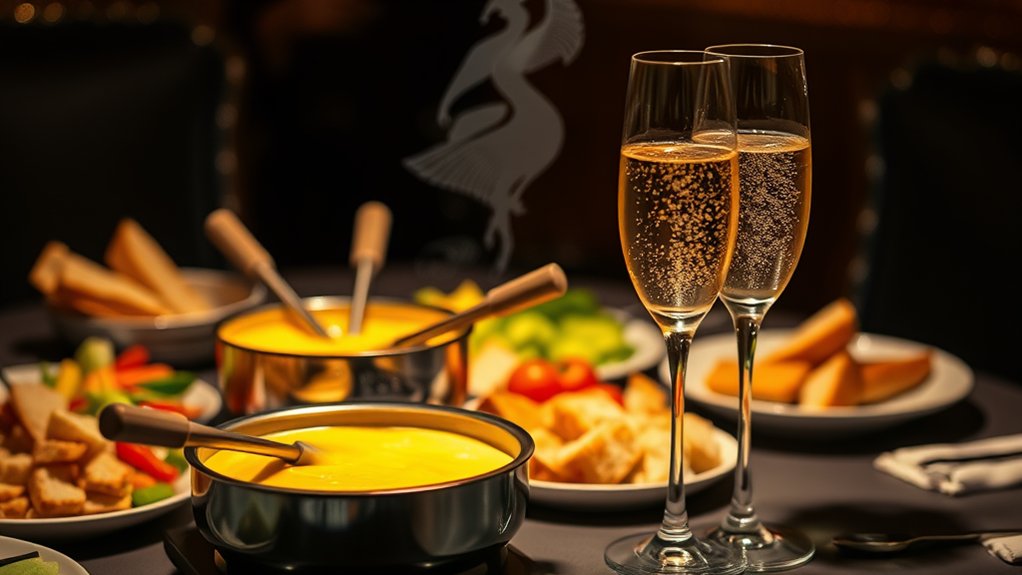
While bold reds offer robust companionship for heartier fondues, sometimes you’ll want something with a bit more effervescence to invigorate your palate! Sparkling wines create the perfect richness balance, cutting through the creamy cheese with their lively bubbles and crisp acidity. They’re like tiny flavor reset buttons for your mouth between each delicious bite!
Here’s why bubbles make the best cheese partners:
- Champagne’s fine bubbles act like little scrubbing brushes for your tongue
- Prosecco pairs brilliantly with milder Swiss-style fondues
- Sparkling rosé offers the best of both worlds – fruity notes with invigorating fizz
- Crémant d’Alsace complements traditional recipes from the Franco-Swiss border
- Cava’s toasty characters stand up to sharper aged-cheese blends
Trust me, you’ll never look at fondu the same way again!
Chocolate Fondue: Sweet Wine Pairings for Dessert
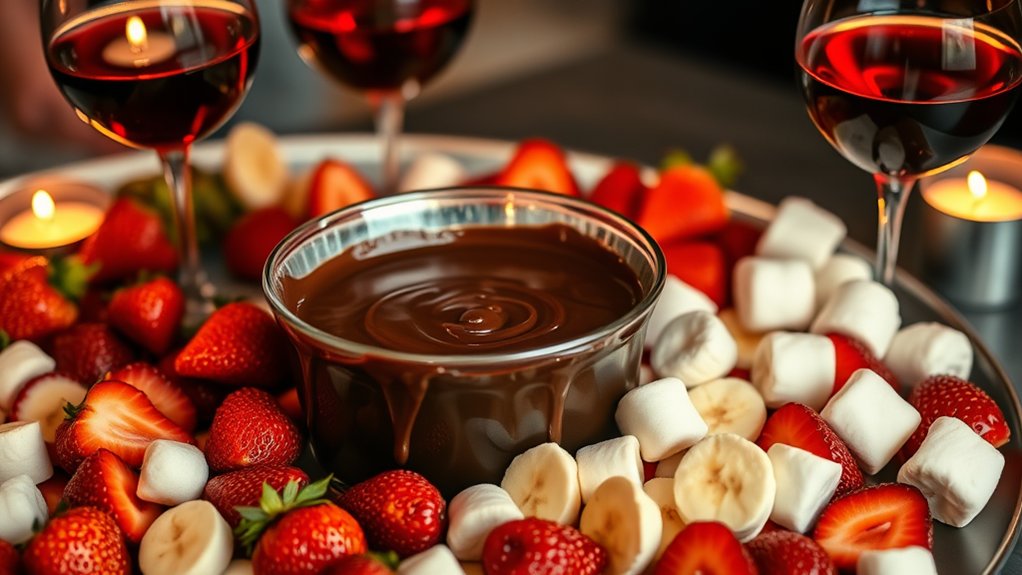
Now let’s plunge into the sweet side of fondue! When you’ve got a pot of melted chocolate waiting for your strawberries and pound cake, you’ll need a wine that can stand up to those rich chocolate varieties. For milk chocolate fondue, try a Ruby Port or Banyuls, which offer fruity notes that won’t get lost amid the creamy sweetness. Dark chocolate fans, you’re in luck—Zinfandel and Cabernet Sauvignon pair beautifully with those deeper, more intense flavors.
Don’t forget about your dessert toppings! If you’ve added nuts, caramel, or even a hint of chili to your chocolate pot, consider a Tawny Port or Madeira. These wines have enough character and body to complement creative chocolate concoctions. Just remember, your wine should be at least as sweet as your fondue—otherwise, it’ll taste sour in comparison. Additionally, dessert wines are particularly suitable for chocolate pairings, enhancing the overall tasting experience.
Broth-Based Fondue and Wine Considerations
When enjoying broth-based fondue, you’ll find that light red wines, like Pinot Noir, work wonderfully to complement the subtle flavors without overpowering them. The natural acidity in wines such as Beaujolais or a crisp Riesling helps balance the rich umami flavors that develop in your simmering broth, creating a perfect harmony on your palate. Don’t forget to take into account regional wine traditions too—Swiss fondue is traditionally paired with local wines from the Alpine regions, which creates an authentically cohesive culinary experience that’s hard to beat! Additionally, the characteristic saltiness of certain cheeses can influence your wine selection, enhancing the overall enjoyment of your fondue experience.
Light Reds Complement Broth
Unlike cheese fondue with its rich flavors, broth-based fondue calls for a different wine approach, and light reds are your perfect companion for this style of dipping. The delicate broth flavors benefit from wines that won’t overpower your carefully seasoned cooking liquid, while still offering enough character to complement your proteins.
- Pinot Noir – versatile enough for beef, chicken or seafood with subtle earthy notes
- Beaujolais – fruity and light, perfect for veggie-heavy broths
- Grenache blends – add a touch of spice that’s divine with Asian-inspired broths
- Austrian Zweigelt – slightly peppery, making it fabulous with herbs in your broth
- Lighter Sangiovese – brings acidity that’ll cut through richer meats you’re dipping
You’ll find these lighter-bodied options dance beautifuly with your broth fondue, creating a meal that’s both interactive and delicously harmonius!
Acidity Balances Umami
The vibrant acidity in certain wines creates a magical balance with the deep umami flavors found in broth-based fondues, elevating your entire dining experence! When you’re dipping into a savory mushroom or beef broth fondue, you’ll want a wine with enough acidity to cut through those rich umami flavors. Think of acidity as nature’s palate cleanser—it refreshes your taste buds between each delicious bite.
Wines like Sauvignon Blanc, with their zippy acidity levels, or an unoaked Chardonnay work wonders here. You could also try a slightly chilled Beaujolais if you’re feeling adventurous! The trick is finding that perfect balance where the wine’s brightness complements, rather than competes with, the fondue’s depth. Trust me, your taste buds will thank you for this harmonious flavor marriage!

Regional Wine Traditions
Throughout centuries of tradition, different regions across the world have developed their own unique wine pairings for broth-based fondues that you’ll absolutely want to explore! When you’re dipping into a steaming pot of savory broth, the right regional varietals can transform your meal from tasty to transcendant.
- Swiss Alpine regions favor crisp Chasselas wines that cut through rich broths
- Northern Italian vineyards produce Pinot Grigios perfect for herbal broths
- French Jura’s oxidative whites complement mushroom-infused fondues
- California local vineyards offer fruity Viogniers for Asian-inspired broths
- German Rieslings (both dry and off-dry) ballance spicy broths brilliantly
Don’t be afraid to experiment with wines from smaller, lesser-known regions! Sometimes the most magical pairings come from tiny vineyards tucked away in valleys you’ve never heard of—that’s half the fun!
Regional Pairings: Swiss Traditions and Beyond
When diving into Swiss fondue traditions, you’ll discover that regional pairings aren’t just about taste—they’re woven into the cultural fabric of Switzerland’s diverse cantons. In the French-speaking west, locals favor crisp Chasselas with their Gruyère-based fondues, while German-speaking regions might opt for a zesty Fendant to cut through rich Appenzeller cheese varieties.
You can’t go wrong following the “drink what grows beside it” philosophy! Many local vineyards produce wines specifically designed to complement their regional cheese blends, with flavor profiles that balance the fondue’s creaminess. The tasting notes often include hints of citrus or apple that dance beautifully with the nutty, earthy cheese. Additionally, the aging processes of these wines can enhance their compatibility with the rich flavors of fondue. Don’t be afraid to experiment beyond traditional Swiss pairings—an unoaked Chardonnay or even a light Pinot Noir can work wonders too!
Alternative Beverages When Wine Isn’t Your Preference
Although wine traditionally accompanies fondue, you’re never obligated to stick with fermented grapes if they don’t tickle your taste buds. There’s a whole world of non alcoholic alternatives that can complement your melty cheese experience just as beautifully, offering fresh flavor profiles that might even enhance certain fondue styles.
Consider these invigorating options for your next fondue party:
- Craft sodas with herbal notes that cut through the richness
- Infused waters with cucumber, mint or citrus for a palate-cleansing effect
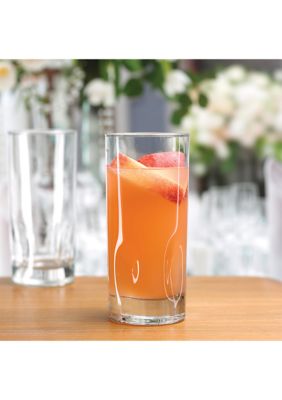
- Fruit juices (especially apple or pear) that mirror wine’s natural sweetness
- Kombucha pairings that bring a tangy, effervescent quality similar to wine
- Specialty coffees or herbal teas for an unexpectedly delightful contrast
Mocktail options can also bring sophistication to the table without the alcohol, letting everyone enjoy the fondue experience to its fullest!
Hosting Tips: Serving Temperatures and Glassware
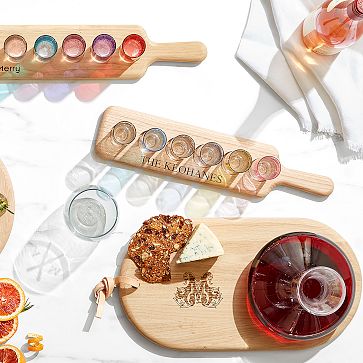
When it comes to serving fondue with wine, getting the temperatures and glassware right can transform your entire dinner experience from good to unforgettable. You’ll want to keep your white wines chilled at 45-50°F and reds at 60-65°F, while selecting stemware that compliments each varietal—wide bowls for red, narrower shapes for white, and flutes for anything bubbly. Before your guests arrive, consider setting up a small tasting station with the correct glasses, a bucket of ice for whites, and little card’s describing each wine’s profile, which adds a thoughtful touch that’ll make everyone feel like they’re at a profesional tasting!
Optimal Serving Temperatures
To fully enjoy the symphony of flavors in your fondue and wine pairing, the serving temperatures of both elements can’t be overlooked! Following serving guidelines guarantees you’ll experience the best taste experience possible. The ideal temperature for your cheese fondue should be hot enough to stay melted but not so hot that it burns your tongue or separates into an oily mess.
- Cheese fondue: Serve at 165-180°F, keeping a gentle simmer
- Red wines: Slightly cool at 60-65°F (not room temperature!)
- White wines: Chilled but not ice-cold at 45-50°F
- Chocolate fondue: Maintain at 110-115°F for smooth dipping
- Broth fondue: Keep at a steady 190°F for safe cooking
Glassware Selection Guide
Just as your fondue deserves the proper pot, your wine demands the perfect vessel to showcase its character! Understanding glass types can transform your fondue experience from amateur to expert in seconds. For light, crisp whites paired with cheese fondue, reach for tulip-shaped glasses with smaller serving sizes (about 5-6 ounces) to preserve those delicate aromas. Bubbly? Flutes are your best friends—narrow and tall to maintain those celebratory bubbles!
Red wines, especially those robust varieties perfect for meat fondues, shine in larger, rounder bowls where serving sizes can be a bit more generous (6-8 ounces). The wider opening allows your reds to “breathe” and release their full-bodied goodness. Remember, fancy glassware isn’t mandatory—it’s the shape that matters, not the price tag!
Pre-Dinner Setup Tips
Setting the perfect fondue table before your guests arrive isn’t just about appearances—it’s your secret weapon for a stress-free evening! When mastering the fondue fundamentals, preparation is key. Your wine selection will shine when everything else is ready to go.
- Chill white wines to 45-50°F and let reds breathe at 60-65°F about an hour beforehand—nothing ruins the vibe faster than lukewarm Chardonnay!
- Pre-cut all dipping ingredients into bite-sized peices and arrange them on platters
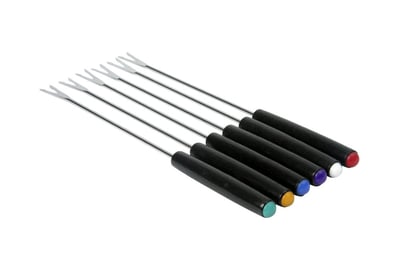
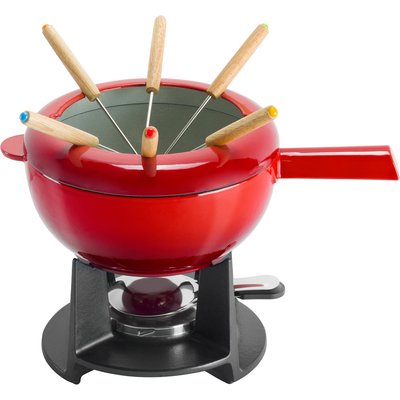
- Set out long-handled forks with different colored tips so guests can track their food
- Position wine glasses strategically—at least 12 inches from the fondue pot to avoid accidents
- Light unscented candles for ambiance, but keep them away from tipsy reach zones!
With these steps complete, you’ll be free to enjoy your own party instead of playing catch-up all night.
Creating a Complete Fondue and Wine Tasting Experience
When you’re planning an unforgettable evening around your fondue pot, pairing it with the perfect wine tasting experience can enhance the entire affair from simply delicious to absolutely magnificent. Remember that fondue etiquette suggests you never double-dip (yikes!), and always twirl your bread to catch drips before it reaches your plate. For wine selection, consider offering a flight of three options—perhaps a crisp Sauvignon Blanc, a fruity Pinot Noir, and a bold Syrah—letting guests discover their favorite pairing.
Create tasting cards with fun flavor notes for each wine, and don’t forget to provide water glasses for palate cleansing between sips. Trust me, you’ll look like a total wine conneseur without having to memorize which grape comes from where!
Frequently Asked Questions
Can Pregnant Women Enjoy Fondue With Non-Alcoholic Wine Alternatives?
Picture yourself enjoying a warm, bubbly pot of deliciousness. You can definitely savor fondue while pregnant by pairing it with non-alcoholic options like alcohol-free wine, juices, or other safe alternatives you’ll love.
How Long Can Wine Remain Open During a Fondue Party?
For proper wine storage during your fondue party, you’ll want to consume opened wine within 3-4 hours. Fondue etiquette suggests re-corking between pours to maintain freshness if you’re extending the gathering.
Are There Dairy-Free Fondue Recipes That Pair Well With Wine?
You’ll discover a universe of dairy-free fondue options! Try coconut milk or cashew-based recipes with dry white wines, or olive oil fondues with robust reds for perfect wine compatibility with these delicious dairy-free alternatives.
What Cheeses Should Be Avoided When Pairing With Tannic Wines?
When selecting cheese for tannic wine, you’ll want to avoid soft, creamy options like brie and camembert. Milder cheeses like mozzarella and ricotta also clash with bold tannins in your glass.
Can I Use Cooking Wine Instead of Drinking Wine for Fondue?
Want to save a few bucks on your cheese pot? Don’t use cooking wine for fondue. It’s high in salt and additives that’ll compromise your fondue flavor. Stick with drinking-quality wine you’d enjoy sipping.